
Hear from Our Customers
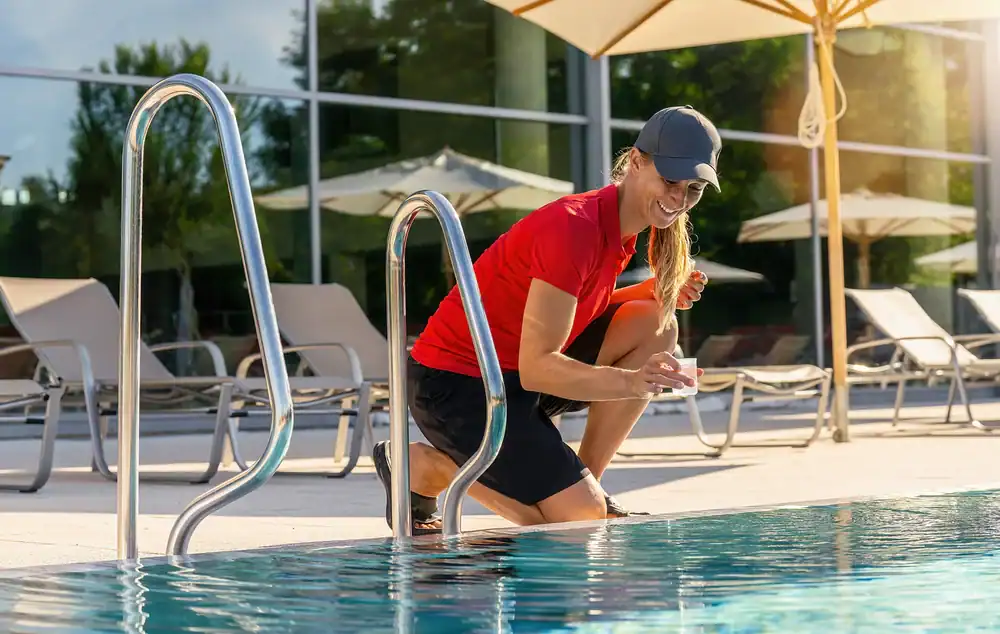
You’ve tested your pool water with strips. The color looked fine. Two days later, the water’s cloudy and your kids are complaining their eyes burn.
Here’s what most pool owners don’t realize: home test kits miss things. They don’t catch the early signs of scaling that’ll wreck your pump. They can’t tell you that your pH is slowly corroding your heater. And one contaminated strip can send you down a rabbit hole of bad chemical decisions that cost you weeks and hundreds of dollars to fix.
Professional water testing catches what you can’t see. It tells you exactly what’s happening in your pool before it becomes a problem. You get accurate readings on chlorine levels, pH balance, alkalinity, calcium hardness, and stabilizer levels. No guessing. No wasted chemicals. No expensive surprises three months from now when your equipment starts failing.
Your pool stays clear. Your equipment lasts longer. Your family swims without skin irritation or red eyes. And you stop throwing money at problems that proper testing would have prevented.
We’ve been serving families across South Georgia since 2014, but our hands-on pool experience goes back more than 30 years. We’ve built custom in-ground pools, repaired failing systems, and seen firsthand what happens when water chemistry goes wrong.
We’re located just 12 miles from Broxton in Douglas. We know South Georgia water. We understand how our heat affects evaporation and chemical balance. We’ve worked with enough pools in Coffee County and the surrounding area to recognize patterns that homeowners miss.
When you bring us a water sample, you’re not just getting a test. You’re getting three decades of knowledge about what those numbers actually mean for your specific pool. We offer this service free because we’d rather help you prevent problems than watch you deal with expensive repairs later.
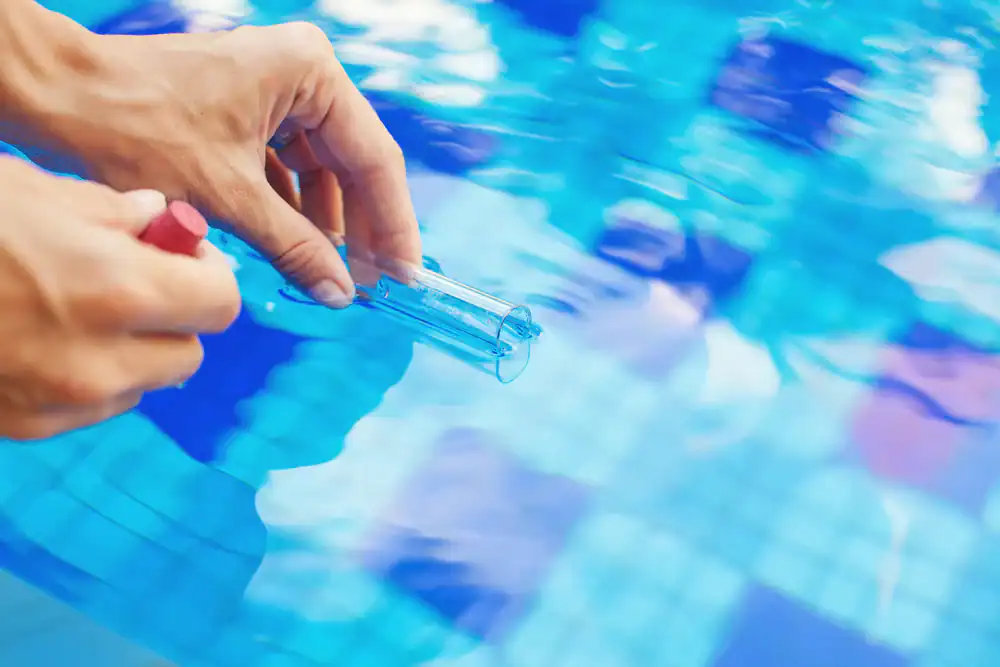
Bring us a water sample from your pool. Use a clean container and collect the sample from about elbow-deep, away from returns and skimmers. That gives us the most accurate reading of your pool’s actual condition.
We run a complete analysis that measures your free chlorine, combined chlorine, pH, total alkalinity, calcium hardness, cyanuric acid, and total dissolved solids. This isn’t a quick dip-and-read. We’re looking at how each chemical level affects the others and what that means for your pool’s health.
You get specific recommendations based on your results. Not generic advice, but exact amounts of specific chemicals your pool needs right now. We’ll tell you what to add, how much to add, and when to add it. If something looks off, we’ll explain why it matters and what happens if you don’t address it.
The whole process takes just a few minutes. You walk out knowing exactly what your pool needs, with a clear plan to keep it balanced. And if you need the chemicals we recommend, we can help with that too.
Ready to get started?
Every water analysis includes testing for the seven critical factors that determine whether your pool is safe and balanced. We measure sanitizer levels to make sure you’re protected against bacteria and algae. We check pH because even small variations cause big problems, from equipment corrosion to swimmer discomfort. We test alkalinity, which acts as a pH buffer and prevents wild swings that make your pool impossible to balance.
Calcium hardness matters more in South Georgia than most people realize. Our water tends to be harder, and if your calcium levels drift too high, you’ll see scaling on your tile and inside your equipment. Too low, and your water becomes corrosive, eating away at your pool surfaces and metal components. We catch this early.
We also measure cyanuric acid, which protects your chlorine from being burned off by our intense Georgia sun. But too much locks up your chlorine and makes it ineffective. It’s a balance most homeowners struggle with, especially during summer when you’re adding chlorine constantly.
This service is completely free. No purchase required. We test your water because we know that proper water chemistry is the foundation of pool ownership. When your water is balanced, everything else gets easier. Your chemicals work better. Your equipment lasts longer. You spend less time and money fighting problems.
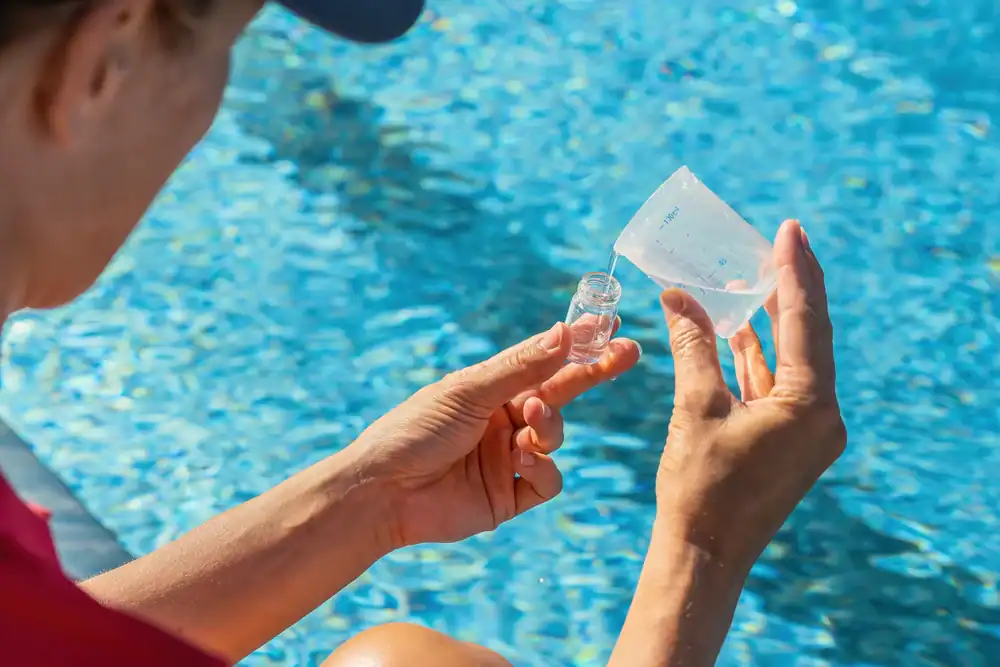
You should bring in a water sample at least once a month during swimming season, and every other month in the off-season. That’s the baseline for catching problems before they escalate.
But there are times when you need testing more frequently. If your pool has been heavily used, if you’ve had a lot of rain, if you’re fighting cloudy water or algae, or if you’ve added a significant amount of any chemical, get it tested. Major weather events, like the heavy thunderstorms we get in South Georgia during summer, can throw your chemistry off in a single afternoon.
Here’s what most pool owners miss: your home test strips degrade over time. If that bottle has been sitting in your pool shed through a Georgia summer, those strips aren’t giving you accurate readings anymore. Even fresh strips have limitations. They can’t measure some things at all, and they’re not precise enough to catch small imbalances before they become big problems.
Professional testing uses better equipment and gives you exact numbers, not color approximations. When you’re making decisions about adding chemicals that cost real money and affect your family’s safety, you want accuracy. Monthly professional testing, combined with weekly home testing for basic chlorine and pH, gives you the best of both worlds.
We test seven key factors, and each one affects your pool differently. Free chlorine is your active sanitizer, the chemical actually killing bacteria and algae right now. Combined chlorine is spent chlorine that’s already done its job but hasn’t been filtered out yet. When combined chlorine gets too high, that’s when you smell that strong “chlorine” smell and people’s eyes start burning.
pH measures how acidic or basic your water is. It should stay between 7.4 and 7.6. Below that, your water becomes corrosive and will damage your pool surfaces, equipment, and irritate swimmers’ skin and eyes. Above that, your chlorine stops working effectively, your water gets cloudy, and you’ll start seeing scale buildup.
Total alkalinity acts as a buffer for pH. When alkalinity is right, your pH stays stable. When it’s off, your pH bounces around and you’re constantly adding chemicals trying to chase it. Calcium hardness prevents your water from either becoming corrosive (too low) or forming scale deposits (too high). This is especially important in South Georgia where our water naturally runs harder.
Cyanuric acid protects chlorine from UV degradation. Our sun is intense, and without the right stabilizer level, you’d burn through chlorine so fast you couldn’t afford to keep your pool sanitized. But too much cyanuric acid locks up your chlorine and makes it ineffective. Total dissolved solids measure everything that’s accumulated in your water over time. When TDS gets too high, your water chemistry becomes unpredictable and the only fix is partially draining and refilling your pool.
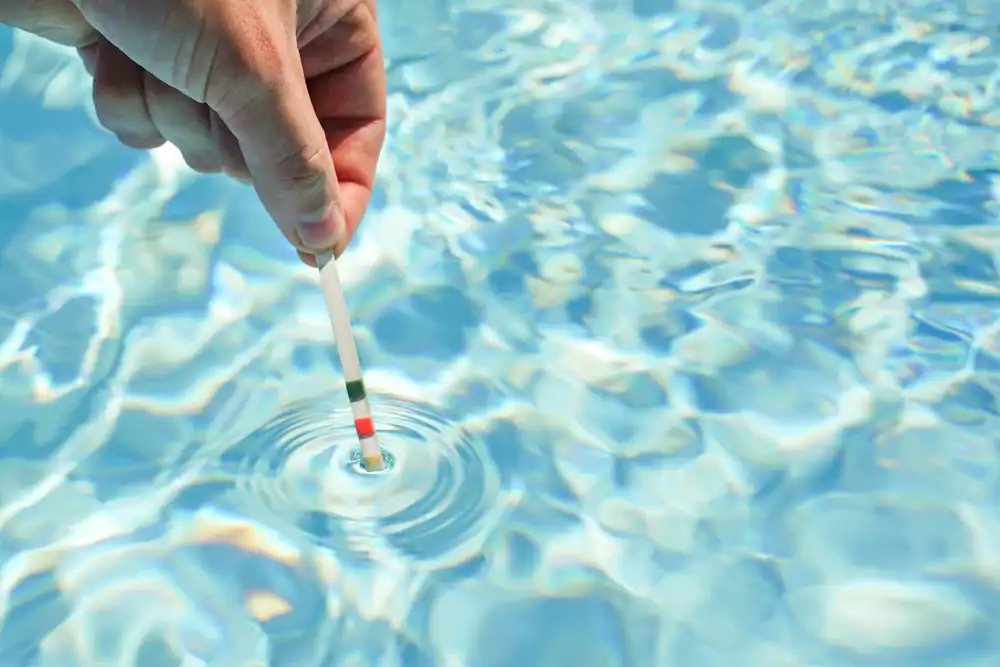
Test strips work for basic monitoring between professional tests, but they have real limitations. They give you a range, not an exact number. When the strip shows your pH is somewhere between 7.2 and 7.8, that’s a pretty wide spread. The difference between 7.2 and 7.8 is significant when you’re trying to figure out how much acid to add.
Strips also can’t test for everything. Most don’t measure cyanuric acid at all, and that’s critical for understanding why your chlorine might not be working. They’re easily contaminated. If your hands are wet, if you dip the strip wrong, if you wait too long to read it, your results are off. And strips degrade fast in heat and humidity, which means that bottle in your pool shed probably isn’t as accurate as you think.
The bigger issue is interpretation. Let’s say your strip shows low chlorine and high pH. Do you add chlorine first or adjust pH first? How much of each? Most homeowners guess, and that’s where things go wrong. You add too much of something, which throws something else off, and suddenly you’re in a cycle of corrections that never quite gets your pool balanced.
Professional testing uses liquid reagents or digital meters that give precise measurements. We test fresh samples with calibrated equipment, and we know how to read the results in context. When we tell you to add two pounds of calcium increaser, that’s based on your exact current level and your pool’s specific volume. You’re not guessing. You’re not wasting money on chemicals you don’t need. You’re making informed decisions based on accurate data.
The consequences depend on what’s out of balance and by how much, but none of them are good. Low chlorine means bacteria and algae start growing. You might not see it immediately, but it’s happening. Within days, your water turns cloudy or green. Swimmers can get ear infections, skin rashes, or stomach issues from contaminated water.
High pH makes your chlorine ineffective, even if your chlorine level looks fine on a test. The chlorine is there, but it’s not working. You’ll also see cloudy water and scale forming on your tile, in your filter, and inside your heater. That scale buildup reduces efficiency and eventually causes equipment failure. We’ve seen heaters completely clogged with scale because someone let their pH run high for months.
Low pH is corrosive. It eats away at your pool’s plaster or liner. It corrodes metal components in your pump, filter, and heater. It etches your tile and deteriorates your grout. And it makes swimming uncomfortable. People get out with stinging eyes, dry itchy skin, and their swimsuits fade faster. The damage from low pH is expensive because you’re not just fixing chemistry, you’re replacing damaged equipment and resurfacing pool interiors.
Unbalanced alkalinity makes your pH unstable. You’ll spend every week adding chemicals trying to get your pH right, but it keeps bouncing back. Calcium issues either cause scaling (high) or corrosion (low). High cyanuric acid means your chlorine stops working and you can’t shock your pool effectively. All of these problems cost money to fix, and the longer they go unaddressed, the more expensive the fix becomes. That’s why regular testing matters. You catch small imbalances when they’re easy and cheap to correct, before they turn into major repairs.
Use a clean plastic container, like a water bottle or a sample bottle from a pool store. Don’t use a container that held anything else, even if you’ve rinsed it. Residue from soap, drinks, or other chemicals will contaminate your sample and throw off the test results.
Walk to a spot away from your pool’s return jets and skimmer. Those areas don’t represent your pool’s overall water chemistry because the water there is either freshly filtered or about to be filtered. Reach down about elbow-deep, roughly 18 inches below the surface. That’s where you’ll get a sample that represents the actual condition of your pool water.
Turn the container upside down as you submerge it, then turn it right-side up underwater to let it fill. This method keeps surface contaminants out of your sample. Cap it while it’s still underwater if you can, or pull it up and cap it immediately. Don’t touch the inside of the container or the cap.
Bring the sample to us as soon as possible, ideally within a few hours. Water chemistry can change as the sample sits, especially if it’s exposed to heat or sunlight. If you can’t bring it right away, keep it in a cool, dark place. Don’t let it sit in your hot car for hours before bringing it in. The faster we test it after collection, the more accurate your results will be. And make sure you haven’t added any chemicals to your pool for at least 24 hours before collecting the sample. If you just shocked your pool yesterday, wait another day before testing.
No. Our water testing service is completely free, no strings attached. You can bring us a sample, get your results and recommendations, and buy your chemicals wherever you want. We’re not holding the test results hostage to make a sale.
We offer free testing because we believe it’s the right thing to do for pool owners in our community. Proper water chemistry is the foundation of pool ownership. When your water is balanced, everything else gets easier and less expensive. Your equipment lasts longer. You use fewer chemicals. You spend less time fighting problems. We’d rather help you maintain your pool correctly than watch you struggle with issues that proper testing would have prevented.
That said, if you do need chemicals, we carry what you’ll need and we can help you get the right products in the right amounts. We’re not going to upsell you on things you don’t need. If your calcium is fine, we’re not going to suggest you buy calcium increaser “just in case.” We’ll tell you exactly what your pool needs based on the test results, and you can decide where to purchase it.
We’ve been serving South Georgia pool owners for years, and we’ve built our reputation on honest advice and quality service. Free water testing is part of that commitment. Whether you’re a customer who bought a pool from us ten years ago or someone who just moved to Broxton and needs help with the pool that came with your house, we’ll test your water and give you straight answers about what it needs.