
Hear from Our Customers
You can’t see bacteria. You can’t see pH imbalance. You can’t see the early stages of algae growth or the calcium buildup that’s about to clog your filter.
That’s the problem with pool maintenance—most of the threats to your water quality are invisible until they become expensive problems. By the time your water looks cloudy or your kids complain about burning eyes, you’re already dealing with a chemical imbalance that takes days to fix.
Water testing removes the guesswork. You bring us a sample, we run a comprehensive analysis, and you walk out knowing exactly what your pool needs. Not an estimate from a color-matching strip. Not a guess based on how the water looks. Actual measurements of pH, chlorine levels, alkalinity, calcium hardness, and stabilizer levels.
In Relee’s heat and humidity, pools can shift from balanced to problematic in less than a week. Regular testing catches problems before they cost you money or ruin a weekend swim.
We’ve been building and maintaining inground cement pools in Georgia for over 30 years. We’re licensed, insured, and based right here in Coffee County.
We offer water testing for free because we’ve seen what happens when homeowners try to balance their pools based on drugstore test strips and internet advice. They overshoot on chlorine, under-correct pH problems, and end up with water that’s either unsafe or damaging their equipment.
Our testing service isn’t a sales pitch. It’s a diagnostic tool that helps you maintain your investment correctly. We test, we explain what the numbers mean, and we tell you exactly what to add and how much. You handle it yourself or we handle it for you—either way, you’re making decisions based on real data.
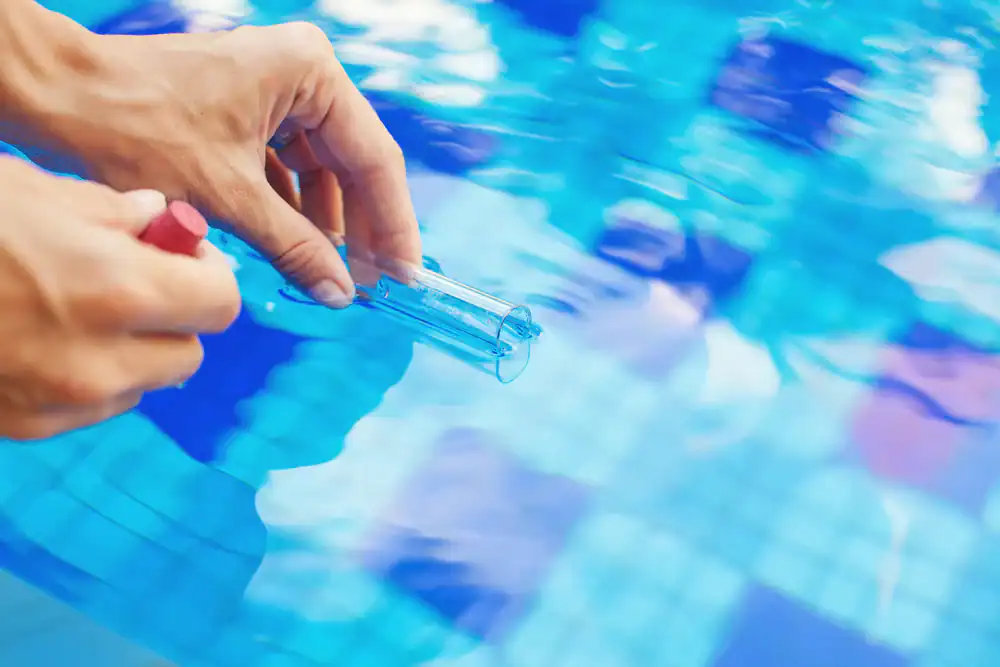
Grab a clean plastic bottle and collect water from about elbow-deep in your pool—not right at the surface, not from a skimmer. Bring it to us within a few hours of collection for the most accurate results.
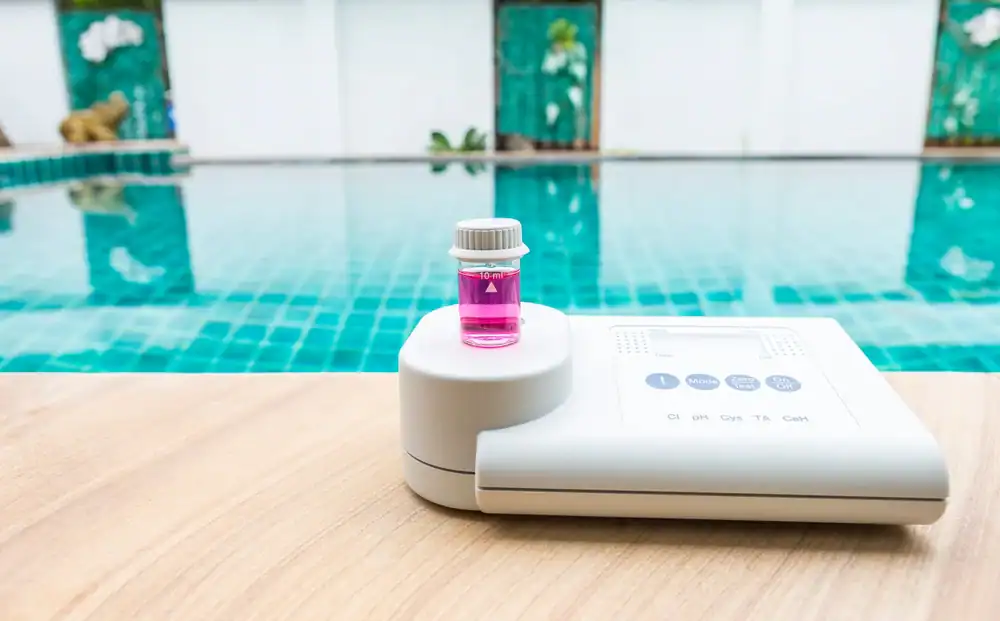
We run your sample through our testing equipment, measuring pH levels, free chlorine, total alkalinity, calcium hardness, and cyanuric acid. These aren’t estimates. They’re precise measurements that show us exactly where your water chemistry sits.
Once we have your results, we walk you through what they mean. If your pH is 7.8 and climbing, we’ll explain why that matters and how much acid you need to bring it down to the ideal 7.4 range. If your chlorine is reading low at 0.8 ppm, we’ll tell you how much shock or tablets you need to hit the safe zone of 1-3 ppm.
You leave with a printout of your levels and specific instructions. No guessing about how many cups of this or capfuls of that. Just clear numbers and clear next steps. The whole process takes about ten minutes, and it’s completely free.
Ready to get started?
pH balance is first. Water that’s too acidic corrodes your pool equipment and irritates skin. Water that’s too alkaline causes scaling on your tile and makes chlorine less effective. The target range is 7.2 to 7.8, with 7.4 being ideal.
Chlorine keeps your water safe. We measure free chlorine—the active sanitizer that kills bacteria and algae. You need 1-3 ppm to maintain safe swimming conditions. In Relee’s summer heat, chlorine burns off faster, which is why weekly testing matters.
Total alkalinity acts as a pH buffer. If it’s too low, your pH will swing wildly. Too high, and you’ll fight cloudy water and scaling. We’re looking for 80-120 ppm.
Calcium hardness prevents your water from becoming corrosive or forming deposits. Georgia’s water tends to be softer, so we watch for levels that are too low, which can damage plaster and grout. The ideal range is 200-400 ppm for cement pools.
Cyanuric acid protects chlorine from UV breakdown. Relee gets intense sun, especially May through September. Without enough stabilizer, your chlorine disappears within hours. Too much, and your chlorine stops working effectively. We target 30-50 ppm.
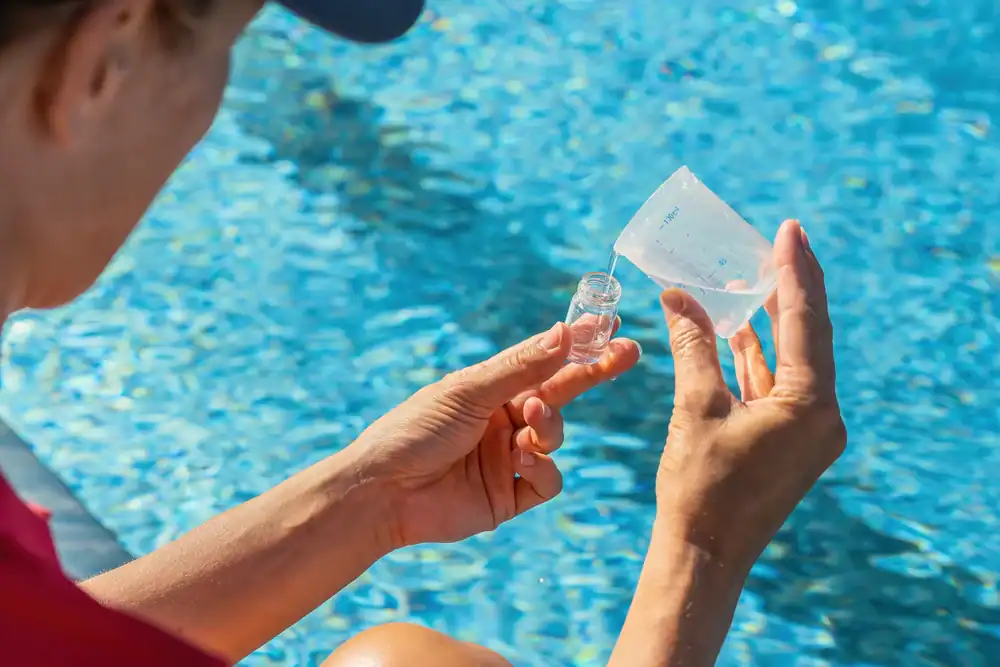
Test your water weekly during swimming season—April through October in Georgia. That’s the baseline for catching problems early.
Bump it up to twice a week if you’re getting heavy use, after big rainstorms, or during stretches of 90+ degree weather. Heat accelerates chemical consumption and algae growth. Rain dilutes your chemicals and brings in contaminants.
If you’ve just opened your pool for the season, had a party with lots of swimmers, or you’re fighting an algae bloom, test every other day until your levels stabilize. More data means faster corrections and less money wasted on chemicals you don’t actually need.
You’ll spend more money fixing problems than you would have spent preventing them. Unbalanced water eats through equipment, damages surfaces, and creates health risks.
Low pH corrodes metal components in your pump, heater, and filter. You’re looking at repairs that cost hundreds or thousands of dollars. High pH causes calcium scaling that clogs your filter and leaves white buildup on your tile that requires acid washing to remove.
Low chlorine lets bacteria and algae take hold. Once you have an algae bloom, you’re spending $100+ on shock treatments and running your filter continuously for days. If someone swims in water with low sanitizer levels, they’re exposed to E. coli, cryptosporidium, and other pathogens that cause ear infections, skin rashes, and gastrointestinal illness.
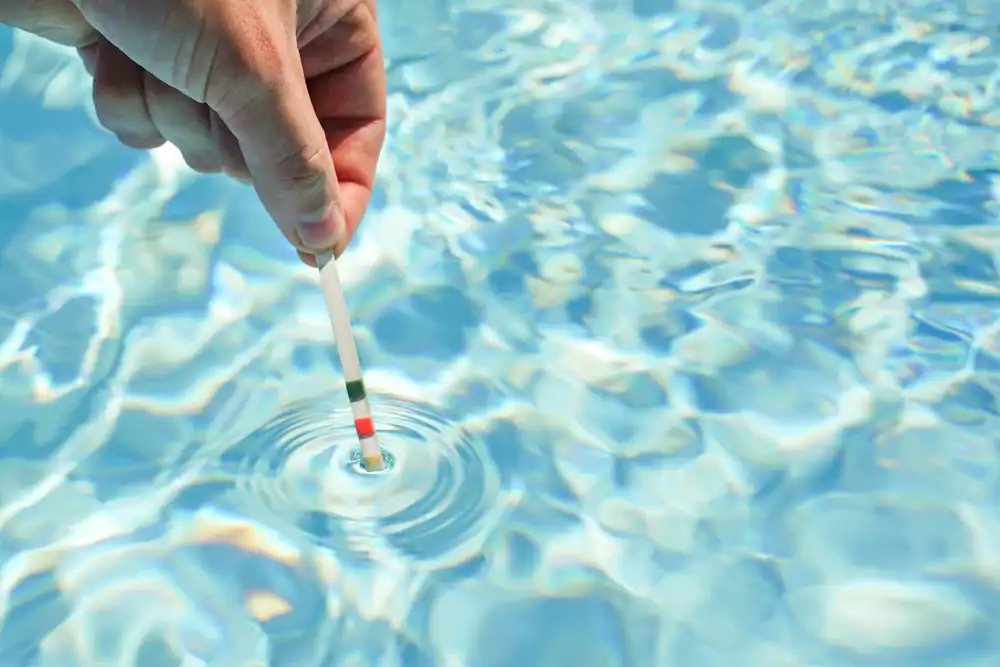
Test strips give you a rough idea, but they’re not precise enough for accurate chemical adjustments. They’re affected by how long you dip them, how you read the colors, and how old the strips are.
A strip might show your pH is “somewhere between 7.2 and 7.8,” but that’s a huge range when you’re trying to figure out how much acid to add. Our testing equipment measures pH to the tenth of a point. That precision matters when you’re balancing 15,000 gallons of water.
Strips also don’t test for everything. Most don’t measure calcium hardness or give you accurate cyanuric acid readings. You end up guessing on chemicals that directly affect how well your chlorine works and whether your pool surfaces stay intact.
Use strips between professional tests if you want to monitor trends. But base your chemical adjustments on accurate lab results, not color matching.
Because accurate water testing prevents expensive problems, and we’d rather help you maintain your pool correctly than see you waste money on repairs that could have been avoided.
We built our business on inground pool construction. We know exactly how much it costs to replaster a pool with etching damage from low pH or replace a heater that corroded from unbalanced water. Those repairs run $3,000 to $15,000.
Free testing builds relationships with pool owners in Coffee County. When your pump fails or you need renovation work down the road, you’ll remember that we helped you maintain your pool without trying to upsell you every time you walked in. We’re not making money on test strips or marking up chemicals. We’re earning your trust.
Fix them in the right order, or you’ll waste chemicals and time. There’s a sequence to water balancing that matters.
Start with total alkalinity. Get that into the 80-120 ppm range first, because it stabilizes your pH. If you adjust pH before alkalinity, you’ll be chasing your tail—the pH will keep drifting.
Once alkalinity is set, adjust pH to 7.4. This is your foundation. Chlorine doesn’t sanitize effectively outside the 7.2-7.8 range, so don’t bother shocking your pool if pH is off.
Then address chlorine levels. Add shock or tablets to hit 1-3 ppm. Wait 24 hours and retest to make sure it’s holding.
Finally, adjust calcium hardness and cyanuric acid if needed. These change slowly, so they’re not urgent unless they’re severely out of range. We’ll walk you through exactly how much of each chemical to add based on your pool’s volume and current test results.
Absolutely. Relee’s heat and humidity create conditions that accelerate chemical consumption and algae growth faster than you’d see in cooler, drier climates.
UV radiation from intense Georgia sun breaks down chlorine quickly. On a 95-degree day, you can lose 2-3 ppm of chlorine in just a few hours if your cyanuric acid is low. That’s why stabilizer levels matter here—you need that UV protection or you’ll be adding chlorine constantly.
Warm water temperatures speed up algae reproduction. Once your water hits 80 degrees, which happens by May in Relee, algae spores can bloom overnight if your chlorine drops below 1 ppm. You can’t see the early stages, but they’re there.
High humidity means more organic debris falls into your pool—pollen, leaves, dust. That organic matter consumes chlorine as it breaks down, so you’re fighting contamination from above while also dealing with heat and sun. Regular testing catches these shifts before they become visible problems.