Building a pool in Douglas County means navigating permits, soil challenges, and zoning laws. Here's what you need to know before you start digging.
Your backyard might look flat and simple, but what’s happening below the surface matters more than you’d think. Before any pool construction can begin, you need a clear picture of what you’re working with.
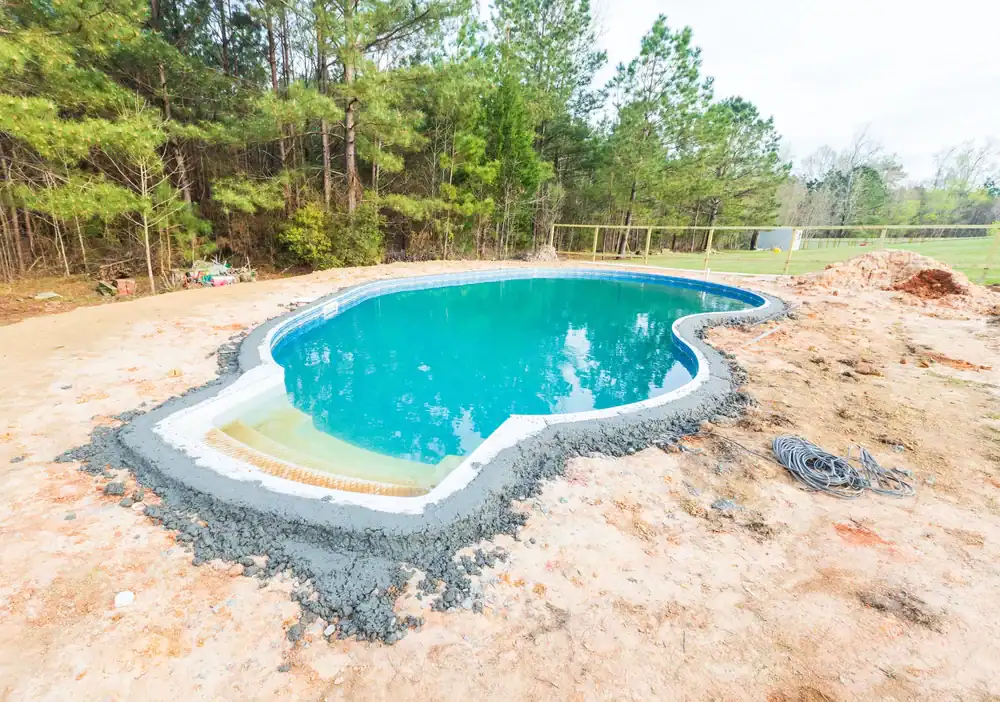
Soil conditions in Douglas County vary. Some properties have workable clay. Others hit rock three feet down. The difference can add thousands to your excavation costs or change where your pool can actually go. Slope matters too. Even a yard that looks level might need grading work or retaining walls to make the pool structurally sound.
Then there are the things you can’t see—utility lines, septic systems, drainage fields. A site assessment identifies these before excavation starts, not after you’ve already committed to a design that won’t work.
A real site assessment isn’t someone eyeballing your yard from the driveway. It’s a methodical review of everything that could affect your pool construction project.
First, we’re looking at soil composition. Georgia’s red clay is common in this area, and while it’s not impossible to work with, it requires specific excavation techniques. If there’s rock, we need to know now. Rocky soil can triple excavation costs because it requires specialized equipment, sometimes even blasting in extreme cases.
Slope and grade come next. Your pool needs to sit on stable, level ground. If your yard slopes, that might mean cutting into a hillside, building up one end, or installing retaining walls. Each option has cost and design implications. Drainage patterns matter too. Water needs somewhere to go when it rains, and your pool can’t become a collection point for runoff from your yard or your neighbor’s property.
Underground utilities are the third critical piece. Water lines, sewer lines, gas lines, electrical cables, irrigation systems—all of these could be running under your backyard. A professional assessment includes calling 811 for utility location, but it goes further. We’re also checking for septic tanks and drain fields, which have specific setback requirements in Georgia. You can’t build a pool on top of a septic system, and you need to maintain proper distance from the drain field.
Property lines and setbacks round out the assessment. Douglas County has requirements for how far your pool must sit from property lines, typically five to ten feet depending on local codes. Easements can restrict where you can build even on your own property. If you’re in an HOA, there may be additional restrictions on pool placement, fencing, or even whether certain pool types are allowed.
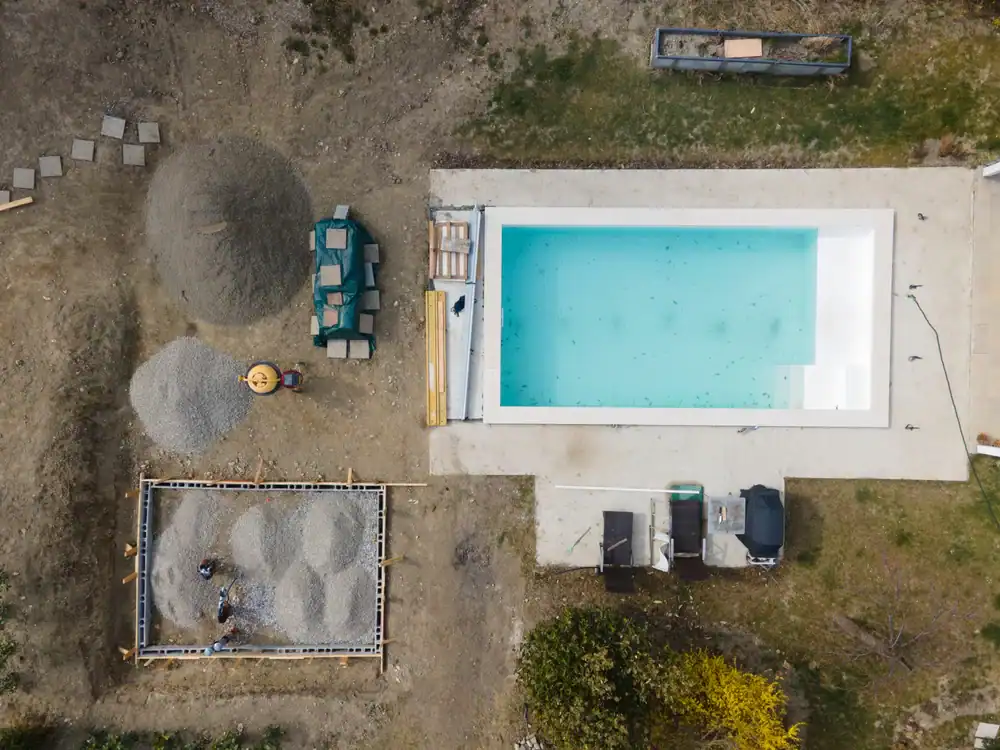
Access is the final consideration. Pool construction equipment needs to get into your backyard. Most excavation requires at least ten to fifteen feet of clear access. Tight spaces mean smaller equipment, manual labor, or creative solutions—all of which affect your timeline and budget.
Excavation isn’t just digging a hole. It’s one of the most variable costs in pool construction, and Georgia soil is the reason why.
Soft soil on your property means excavation costs around eight to twenty-five dollars per cubic yard. That’s manageable. Douglas County sits in an area where soil conditions change dramatically from one property to the next, though. Red clay is common here. It’s dense, it’s heavy, and it requires more powerful equipment than sandy or loamy soil. Clay doesn’t just slow down the dig—it affects drainage, which means we might need to install additional drainage solutions to prevent water from pooling around your pool and causing structural issues down the road.
Rock changes everything. If the excavation crew hits bedrock or large quantities of rock, costs can jump to fifty dollars per cubic yard or higher. In some cases, it can reach two hundred dollars per cubic yard if blasting or hydraulic hammers are required. That’s not a small difference. On a standard pool excavation, hitting unexpected rock can add five thousand to fifteen thousand dollars to your project.
Tree roots, old buried structures, and previously unknown utility lines can also complicate excavation. These aren’t always visible during the initial assessment, which is why we build buffer time and budget into our estimates. Weather plays a role too. Georgia’s summer storm season can delay excavation, and working around wet conditions slows progress.
Soil testing before you finalize your contract is the smartest move. It’s a small upfront cost that can prevent massive surprises later. A geotechnical test tells you exactly what’s under your yard—soil type, rock presence, water table depth. With that information, we can give you an accurate excavation estimate instead of a best-guess number that might change once digging starts.
Excavation also includes what happens to the dirt. Some builders include dirt removal in their base price. Others charge separately. Your property might be able to use the excavated soil for landscaping or grading elsewhere in your yard, which could save on removal fees. If not, hauling it away adds to the cost.
Want live answers?
Connect with a Deep Waters Pools expert for fast, friendly support.
Every residential pool in Georgia requires a building permit before construction starts. There’s no way around it, and trying to skip this step creates problems you don’t want.
Permits exist to ensure your pool meets safety standards, structural requirements, and local codes. Georgia follows the International Swimming Pool and Spa Code with state-specific amendments. Douglas County enforces these regulations, and the permit process verifies that your pool design complies.
The process starts with submitting an application to your local building department. You’ll need a site plan showing your property lines, the proposed pool location, setback distances, and any safety barriers like fencing. Some municipalities require engineered drawings. Permit fees vary but are typically calculated based on the estimated construction cost.
Permit approval isn’t instant. In Douglas County, you’re looking at anywhere from two weeks to over a month depending on the season and how backed up the building department is. Summer is peak pool season, which means permit offices are processing more applications. Plan accordingly.
Your pool builder should handle the permit application for you. We know the local requirements, we have relationships with the building department, and we understand what documentation is needed. If a builder tells you permits aren’t necessary or suggests starting before approval, that’s a red flag. Unpermitted pool construction can result in fines, stop-work orders, or requirements to remove the pool entirely. It also creates nightmares if you ever try to sell your home, because unpermitted structures show up in title searches and home inspections.
Once your permit is approved, construction can begin. But permits also mean inspections. Georgia requires multiple inspections throughout the pool construction process. There’s typically a site inspection before excavation, a steel or structural inspection for the pool shell, an inspection of concealed plumbing and electrical work before it’s covered, and a final inspection before the pool can be filled and used.
Each inspection is a checkpoint to ensure the work meets code. If something doesn’t pass, it needs to be corrected before moving forward. This is actually protection for you as the homeowner. It means your pool is being built to standards that ensure safety and longevity. We build inspection time into our project schedules because we know it’s coming.
Permit timelines also interact with weather and contractor schedules. Most custom inground pool projects in Douglas County take eight to twelve weeks from permit approval to completion. That’s the construction time. Add permit processing time on the front end, and you’re looking at three to four months total from application to swimming. Complex designs, weather delays, or unexpected site conditions can extend that timeline.
Georgia law requires all residential pools to have a barrier at least forty-eight inches high surrounding the entire pool area. This isn’t optional. It’s a safety requirement designed to prevent unsupervised access, particularly for young children.
The barrier can be a fence, a wall, or a combination of structures. Gates must be self-closing and self-latching, and the latch must be positioned at least fifty-four inches above the ground—high enough that small children can’t reach it. If your house forms part of the barrier, any doors leading to the pool area need to be equipped with alarms or self-closing mechanisms. Pool covers alone don’t satisfy the barrier requirement, though they can be an additional safety layer.
Zoning setbacks dictate how far your pool must be from property lines. In most areas, pools need to sit at least five to ten feet from side and rear property lines. Front yard pools are typically prohibited. These setback requirements exist to maintain space between properties, prevent drainage issues, and ensure that pool equipment noise doesn’t directly impact neighbors.
Easements add another layer of restriction. An easement is a portion of your property where another entity—often the city, county, or a utility company—has rights to access or use the land. You can’t build permanent structures on easements. If your property has utility easements running through the backyard, your pool placement options may be limited. Your site assessment should identify these, but you can also check your property deed or survey.
HOA rules, if applicable, can be even stricter than county requirements. Some homeowners associations have specific rules about pool size, style, fencing materials, or even whether pools are allowed at all. Check your HOA covenants before you start planning. Getting deep into the design process only to find out your HOA won’t approve it wastes time and money.
Setback requirements also apply to pool equipment. Pumps, heaters, and filters need to be positioned in compliance with local codes, and they need to be accessible for maintenance. Noise ordinances sometimes factor in too, particularly if you’re installing a heat pump or other equipment that runs frequently.
Understanding these requirements upfront prevents redesigns mid-project. We know Douglas County’s specific codes, but it’s worth verifying that we’re accounting for all the regulations that apply to your property.
Pool construction is a significant investment, and the homeowners who end up thrilled with their pools are the ones who did their homework before signing a contract. Understanding your property’s site conditions, navigating Georgia’s permit requirements, and planning for excavation realities aren’t the exciting parts of pool ownership. But they’re the parts that determine whether your project stays on budget, finishes on schedule, and gives you a custom inground pool you’ll actually enjoy for decades.
Douglas County has its own quirks—soil that varies from property to property, weather that can shift project timelines, and local codes that need to be followed precisely. Working with experienced builders who know this area, who’ve handled these challenges before, and who are transparent about the process makes all the difference.
If you’re ready to move forward with pool construction in Douglas County, GA, we bring over thirty years of experience to local projects. From site assessment through final inspection, we handle the details that turn a backyard dream into reality.
Summary:
Share: