
Hear from Our Customers
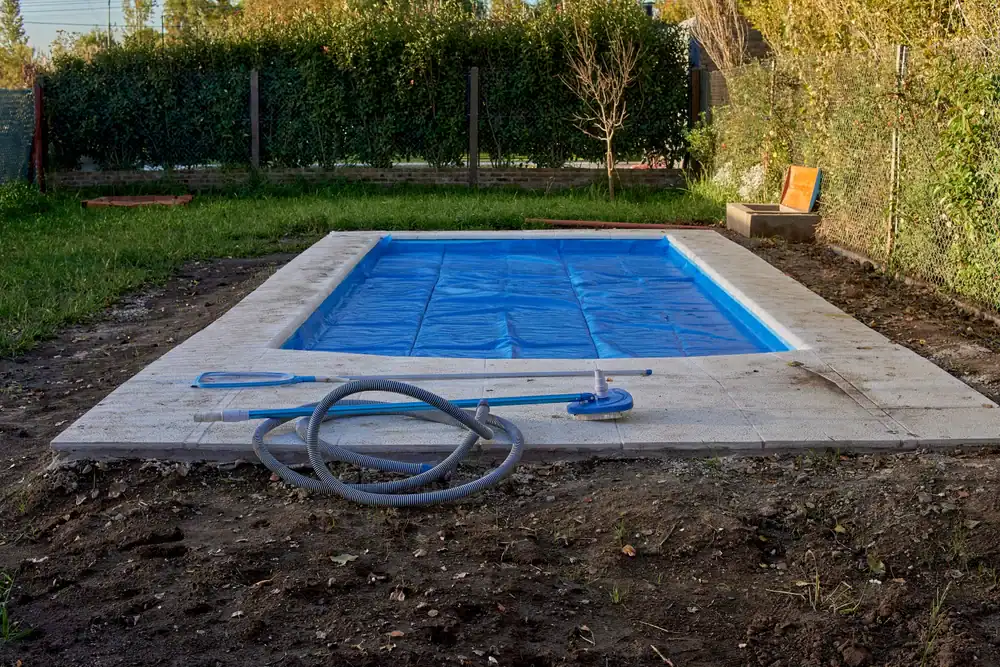
You’re not just buying a hole in the ground. You’re creating a place where your kids learn to swim, where summer weekends happen, and where you stop thinking about the commute home.
Hannah families deal with clay soil that shifts, summer storms that delay projects, and contractors who ghost mid-job. You need someone who’s built pools in this area long enough to know what works and what doesn’t. That means proper excavation for soil conditions, realistic timelines that account for Georgia weather, and a team that shows up when we say we will.
When the job’s done, you get a custom inground cement pool that handles the heat, the soil movement, and the wear of actual family use. Not a cookie-cutter design that cracks in two years. A pool built to last, with safety covers included, permits handled, and no surprises on the invoice.
Deep Waters Pools has been building custom inground cement pools in Georgia since 2014, backed by over 30 years of combined experience in concrete work, plumbing, and pool construction. We’re a licensed pool contractor in Georgia, and we’ve seen enough soil conditions, permit changes, and weather delays to know how to handle them without dragging your project out for months.
Hannah sits in an area where soil can shift from dense clay to sandy loam in the same yard. That’s not a problem if you know how to engineer for it. We do. Every pool we build accounts for local soil conditions, drainage patterns, and Georgia’s temperature swings.
You won’t get a sales pitch full of promises we can’t keep. You’ll get honest timelines, transparent pricing, and a team that’s been doing this long enough to know what actually matters: a pool that lasts and a process that doesn’t make you regret starting.
First, we come out to your property in Hannah and assess your yard. We’re looking at soil type, drainage, access for equipment, and any potential issues that could cause delays or cost overruns. You’ll know upfront if there are challenges and how we plan to handle them.
Next, we handle the permit process. That includes submitting applications, site plans, and ensuring everything meets Georgia code requirements for safety barriers and setbacks. You don’t have to chase down county offices or figure out what documentation they need—we’ve done it enough times to know the process.
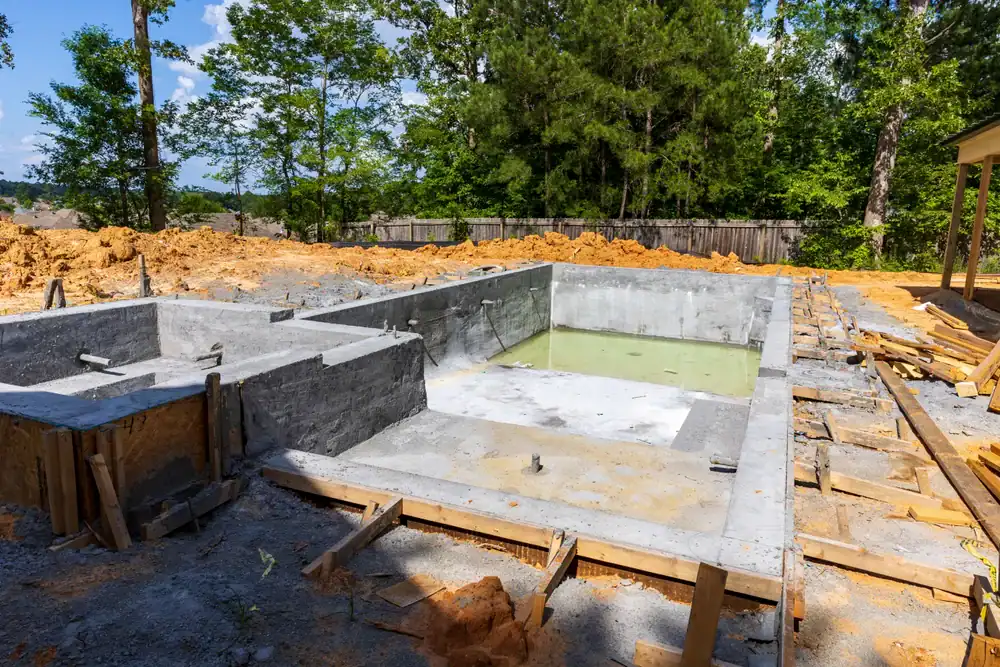
Once permits are approved, we start excavation. Georgia soil requires specific techniques depending on whether you’re dealing with clay or sand. We excavate to the right depth, grade for proper drainage, and prep the site for plumbing and electrical rough-ins. Then comes the concrete work—shotcrete or gunite application, steel reinforcement, and forming the shell of your pool.
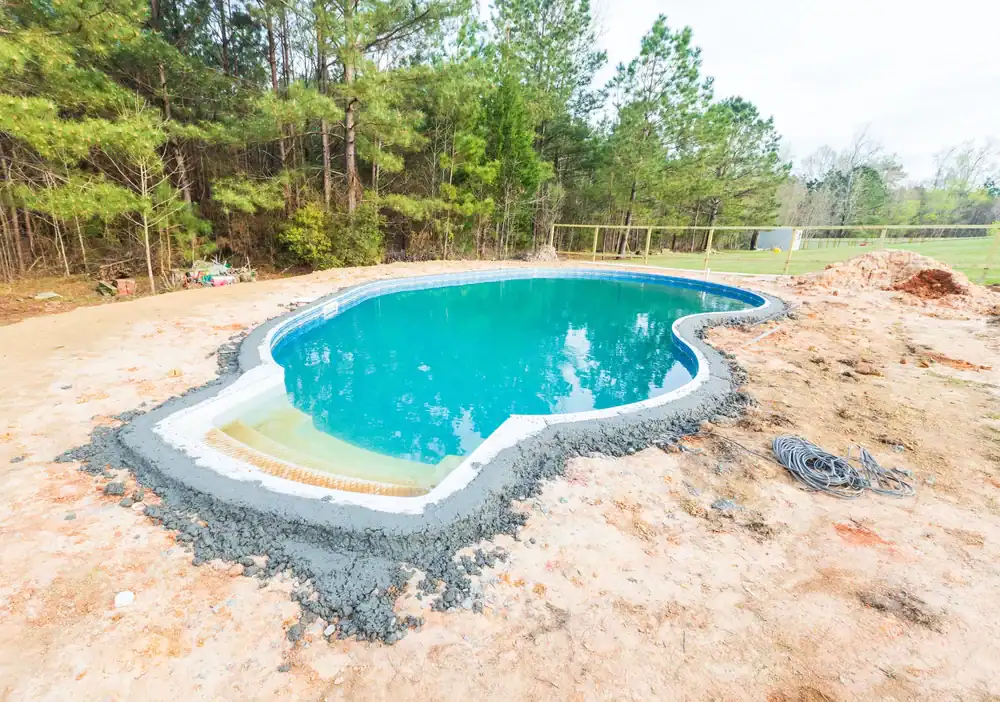
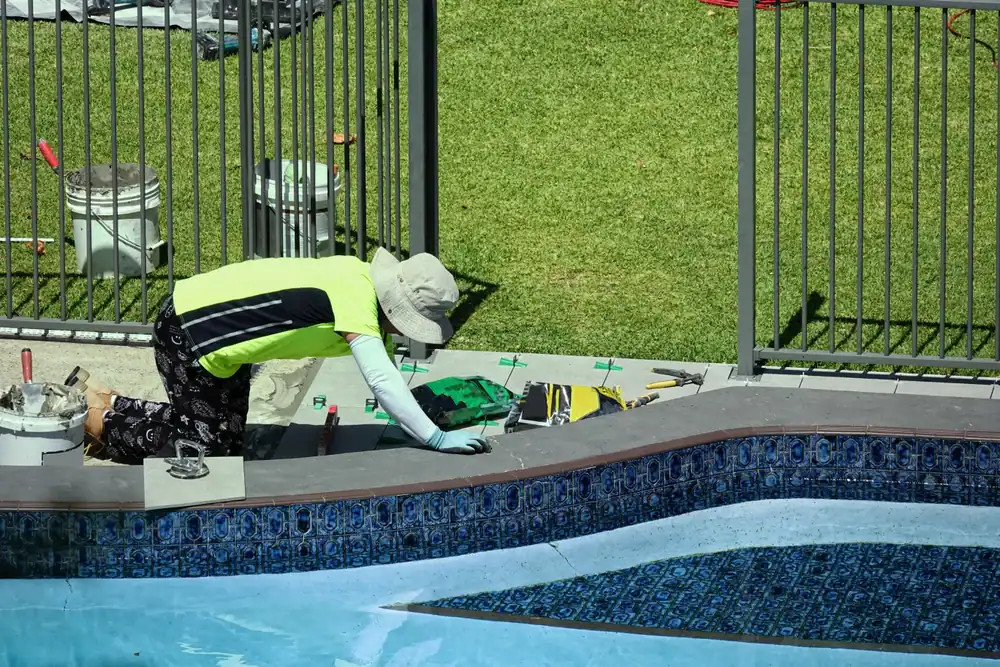
After the shell cures, we install plumbing, filtration systems, and any additional features like jets or lighting. Then we finish the interior surface, install coping and decking, and fit your custom safety cover. Finally, we fill the pool, balance the water chemistry, and walk you through maintenance basics so you’re not guessing how to keep it clean.
Ready to get started?
Every pool we build is custom. That means the shape, depth, features, and finish are designed specifically for your yard and how you plan to use it. If you’ve got kids who need a shallow play area, we design for that. If you want a lap pool or a deep end for diving, we build for that. No prefab shapes that don’t fit your space.
You also get a pool built for Georgia’s climate. That means concrete that can handle temperature swings, a filtration system sized correctly for your pool volume, and a finish that won’t degrade under UV exposure. We use materials that last because we’ve seen what happens when contractors cut corners to save a few hundred dollars.
Hannah homeowners are investing in properties where outdoor living matters. Your pool should add value, not become a maintenance nightmare. We include custom-fitted safety covers with every installation because we know families with young kids need that peace of mind. We also handle all the permitting and compliance work so you’re not dealing with county offices or worrying about code violations down the line.
The average inground pool in Georgia costs around $65,000 and can add up to 7% to your home’s value. But that only happens if it’s built right. Poor construction leads to cracks, leaks, and resurfacing costs that eat into any value you thought you were adding. We build pools that hold up because we’ve been doing this long enough to know what fails and what doesn’t.
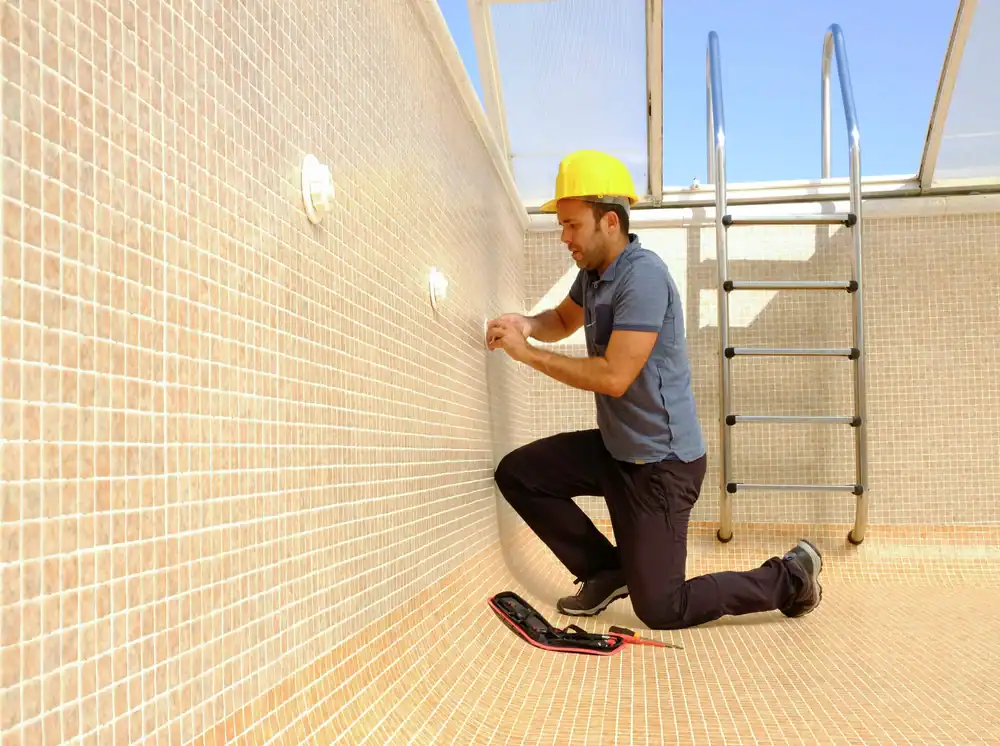
Most custom inground cement pools take 8 to 12 weeks from excavation to completion, but that timeline depends on weather, permit approval speed, and how complex your design is. Georgia’s summer storm season can add delays—if we get a week of heavy rain during excavation or concrete work, we’re not rushing the job just to hit a deadline. Soil needs time to dry out, and concrete needs proper curing conditions.
Permit approval in Georgia typically takes 2 to 4 weeks, depending on the county and how backed up their review process is. We submit everything upfront and follow up to keep things moving, but we can’t control their timeline. Once permits are in hand, we schedule excavation and move through the construction phases: plumbing rough-in, steel and shotcrete, curing, finishing, and final installation.
If you’re adding custom features like waterfalls, built-in spas, or complex lighting systems, expect the timeline to stretch closer to 12 weeks. Simpler designs with standard finishes and equipment move faster. We’ll give you a realistic timeline during the consultation based on your specific project and current weather forecasts.
Cement pools—specifically shotcrete or gunite construction—handle Georgia’s soil movement better than fiberglass or vinyl liner pools because they’re engineered as a single, reinforced structure. Georgia soil shifts. Clay expands when wet and contracts when dry, creating constant micro-movement. Sandy soils can lose structural integrity under weight. A cement pool with proper steel reinforcement and thickness can flex slightly without cracking, while fiberglass shells can pop out of the ground and vinyl liners tear at seams.
We also control the entire structure when we build with cement. That means we can adjust wall thickness, add extra reinforcement in problem areas, and design the shape to fit your yard’s specific soil conditions. Fiberglass pools come in pre-formed shapes that don’t account for your property’s drainage patterns or soil type.
Cement pools also last longer in Georgia’s heat. UV exposure and temperature swings degrade fiberglass gel coats and vinyl liners faster than a properly finished cement surface. You’ll eventually need to resurface a cement pool—usually after 10 to 15 years—but that’s a planned maintenance cost, not an emergency repair because your liner ripped or your fiberglass cracked.
Yes. All residential pools in Georgia require permits, and building without one can result in fines, forced removal, or complications when you try to sell your home. The permit process ensures your pool meets safety codes, setback requirements, and proper barrier regulations to prevent accidents.
In Hannah and the surrounding area, you’ll need to submit a site plan showing where the pool will sit on your property, how far it is from property lines and structures, and what type of safety barrier you’re installing—either a fence or a pool cover that meets Georgia code. The county will also review electrical and plumbing plans to make sure everything is installed safely.
We handle the entire permit process. That includes preparing the site plan, submitting applications, coordinating inspections, and making sure everything passes before we move to the next construction phase. Permit approval usually takes 2 to 4 weeks, depending on how busy the county office is. Once approved, we schedule excavation and start the build. Skipping permits might seem like a shortcut, but it’s not worth the risk. If the county finds out, you could be forced to fill in the pool or pay significant fines to bring it up to code after the fact.
Most custom inground cement pools in Georgia run between $50,000 and $80,000, depending on size, features, and site conditions. A basic rectangular pool with standard finishes and equipment will land closer to $50,000. Add custom shapes, built-in spas, waterfalls, premium finishes, or upgraded lighting and automation systems, and you’re looking at $70,000 to $80,000 or more.
Site conditions also affect cost. If your yard has difficult access for equipment, requires significant grading, or has soil that needs extra excavation work, that adds to the budget. We’ll assess your property during the consultation and give you a detailed estimate that breaks down costs for excavation, permits, materials, labor, and any site-specific challenges.
Financing is available if you don’t want to pay the full amount upfront. Most homeowners finance pool construction through home equity loans or lines of credit because the interest rates are lower than personal loans. A well-built pool can add up to 7% to your home’s value in Georgia, which offsets some of the cost if you plan to sell in the future. But the real value is in how you use it—if you’re getting years of family time, entertainment, and stress relief, the investment pays off in ways that don’t show up on an appraisal.
Cement pools need regular chemical balancing, filter cleaning, and surface brushing to prevent algae buildup and keep the water clear. Georgia’s heat and humidity create ideal conditions for algae growth, so you’ll need to test and adjust chlorine, pH, and alkalinity levels at least twice a week during summer. Most homeowners either handle this themselves or hire a pool service to come out weekly.
You’ll also need to brush the pool walls and floor once a week to prevent algae from taking hold in the porous cement surface. Cement isn’t as smooth as fiberglass, so algae can attach more easily if you’re not staying on top of it. Brushing takes about 10 minutes and makes a big difference in water quality.
Filter maintenance depends on what type of system you have. Sand filters need backwashing every few weeks. Cartridge filters need rinsing or replacement every few months. DE filters need backwashing and fresh DE powder added periodically. We’ll walk you through your specific system during the handoff so you know what to expect. Long-term, you’ll need to resurface the pool every 10 to 15 years as the interior finish wears down. That’s a planned cost, not an emergency, and it’s part of owning a cement pool. But between resurfacing jobs, a properly maintained cement pool will outlast fiberglass and vinyl options by decades.
Most likely, yes. We’ve built pools on small lots, sloped yards, and properties with limited equipment access. The key is designing the pool to fit your specific site conditions rather than trying to force a standard design into a space that doesn’t work.
Sloped yards actually offer some advantages. We can use the natural grade to create a raised spa, a vanishing edge, or tiered decking that makes the pool feel like part of the landscape. Slopes also help with drainage, which is critical in Georgia where heavy rain can cause water to pool around your deck if the grading isn’t right.
Small lots require more planning around setbacks and access, but we’ve built pools in tight spaces by adjusting the shape, using compact equipment for excavation, and staging materials efficiently. If your yard has limited access—like a narrow side gate or no direct access from the street—we can sometimes hand-dig or use smaller machinery to get the job done. During the consultation, we’ll assess your property and let you know if there are any deal-breakers or additional costs related to site conditions. Most of the time, there’s a solution that works. It just takes experience to know what that solution is.