
Hear from Our Customers
When a pool project goes wrong, it rarely falls apart all at once. It’s the plumber who shows up a week late, the electrician who wasn’t briefed correctly, and the contractor who stops returning calls once the check clears. By the time you figure out what happened, you’re three months behind schedule and arguing over who’s responsible for what. We were specifically built to prevent that version of this process.
Lake Park sits at the southernmost edge of Georgia about 7 miles from the Florida line which means your pool season starts earlier and runs later than almost anywhere else in the state. A well-built inground pool here isn’t a summer novelty. It’s something your family uses from late March through November, and potentially beyond that in a mild year. That kind of sustained use demands a pool built to handle it proper shell thickness, quality plumbing, correct equipment sizing, and a structure that doesn’t start showing problems in year four.
The lake-adjacent soils around Lake Park also matter more than most contractors will tell you upfront. Properties near the natural lake system can carry higher water table conditions depending on where you sit on the lot. That affects where your pool gets placed, how drainage gets designed, and what your excavation plan looks like. Getting that assessment done before design begins not after the excavator shows up is the difference between a smooth build and a costly surprise.
Deep Waters Pools was founded in 2014, but the experience behind it goes back more than 30 years. Our owner spent three decades building pools across South Georgia before starting this company and the reason he started it was specific. He watched too many families in Lake Park and throughout Lowndes County get burned by contractors who overpromised, subcontracted everything out, and disappeared when problems came up. We exist because someone who knew the difference decided to do it differently.
We handle everything in-house design, excavation, gunite shell construction, plumbing, electrical, and deck installation. That’s not a talking point. It means there’s one team accountable for the entire build, and one number to call if anything needs to be addressed. No finger-pointing between trades. No gaps in communication between the crew that dug the hole and the crew that finished the deck.
For homeowners in the Twin Lakes area, along the lake corridors south of Valdosta, or anywhere in Lowndes County this is what a pool build looks like when the contractor actually intends to be around after the job is done.
It starts with a site evaluation. Before any design work happens, we walk your property assessing soil conditions, drainage patterns, utility locations, equipment access, and any site-specific factors that could affect the build. In Lake Park, that includes checking proximity to the natural lake system and evaluating whether your specific lot has any water table considerations that need to be factored into the pool placement and depth. You know what you’re working with before anything is committed to paper.
From there, the design gets built around your yard not a catalog shape dropped into it. Gunite construction means your pool can be any shape, depth, or configuration that fits your space and your vision. Once the design is finalized, we handle the permit process entirely. As of 2023, pool construction permits for Lake Park run through the City of Valdosta’s Inspections Department, which means navigating their permitting portal, pulling both the building and electrical permits, and scheduling all required inspections under the 2024 International Swimming Pool and Spa Code and NEC Article 680. You don’t make a single call to a permit office.
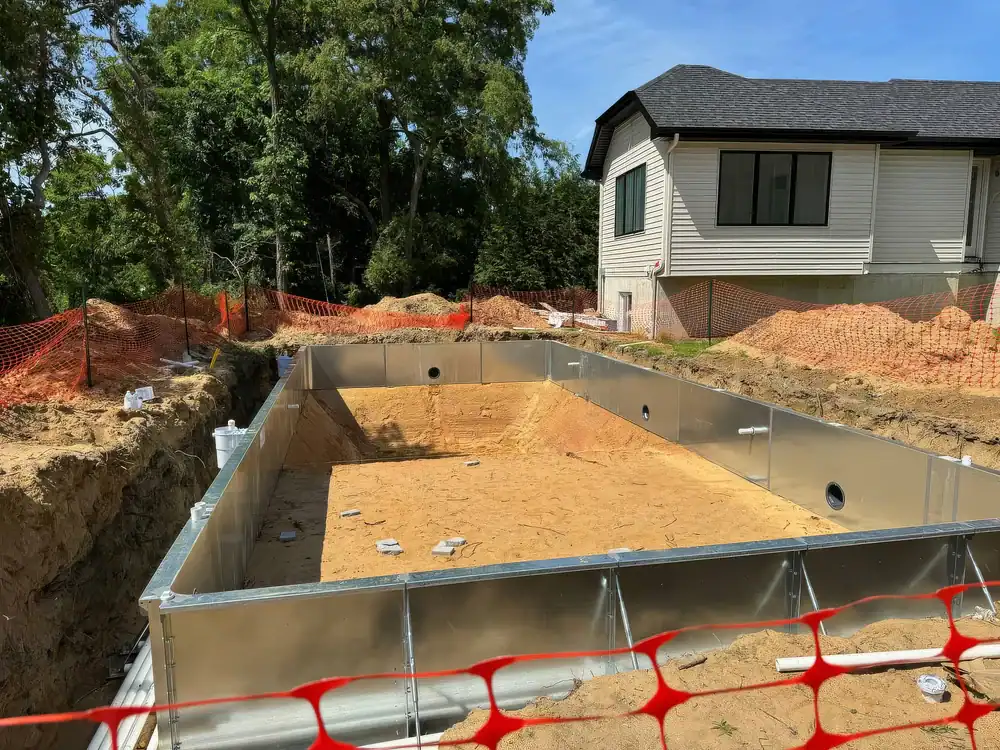
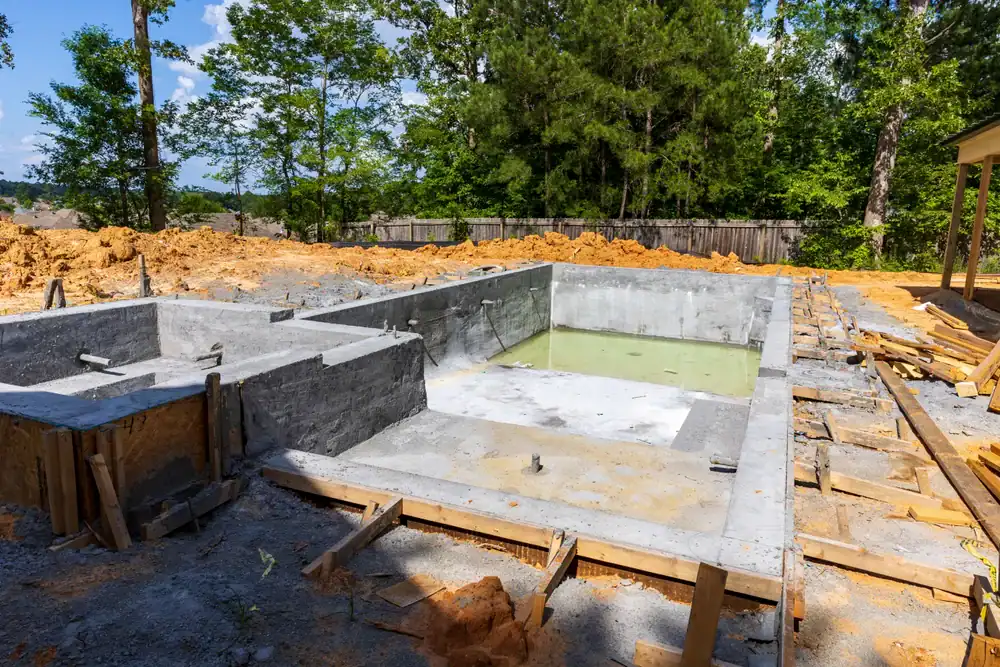
Construction typically runs six to eight weeks from excavation to completion. The excavation team moves first, followed by steel reinforcement, gunite application, plumbing and electrical rough-in, inspections, interior finish, and finally deck installation. The same team that started the job finishes it and when it’s done, you have a fully permitted, code-compliant pool that’s documented correctly for the life of your home.
Ready to get started?
A complete pool build from Deep Waters covers the full scope: site evaluation, custom design, permit acquisition, excavation, gunite shell construction, swimming pool plumbing, electrical installation, interior finish, and pool deck installation. Every one of those phases is managed and executed by our team. There are no subcontractors brought in to handle the parts we don’t want to deal with which is exactly where most pool project problems originate.
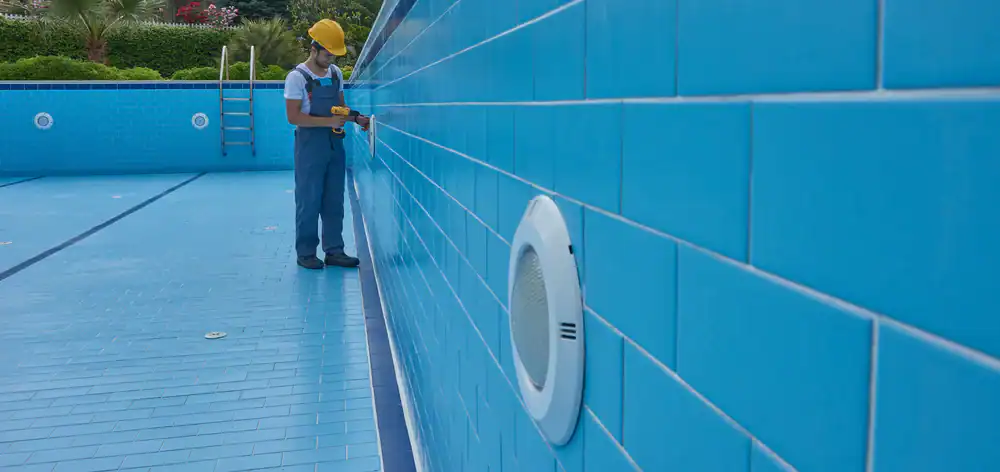
The plumbing and electrical work is built to last, not built to pass inspection and nothing more. Schedule-rated PVC, properly sized filtration and circulation equipment, and full NEC Article 680 compliance for bonding and grounding these aren’t optional details, they’re the foundation of a pool that runs correctly for 25 to 30 years without becoming a maintenance problem. For Lake Park homeowners investing $60,000 to $100,000 or more in a permanent backyard structure, the quality of what’s behind the walls matters as much as what you see on the surface.
Deck installation is part of the full build, not an afterthought. In a community surrounded by natural lakes and oriented toward outdoor living, the deck design matters both functionally and visually. Proper drainage, material selection suited to South Georgia’s climate, and a layout that complements the pool shape are all part of how we approach the finish. When the project is complete, the pool and the deck work together as one finished space, not two separate jobs that happened to end up next to each other.
For most residential inground pool builds in the Lake Park area, the active construction timeline runs between six and eight weeks from excavation to completion. That covers the full sequence excavation, steel reinforcement, gunite application, plumbing rough-in, electrical, inspections, interior finish, and deck installation. What affects that timeline most isn’t the construction itself, it’s what happens before it starts.
Permit processing through the City of Valdosta’s Inspections Department which now handles permits for Lake Park as of 2023 adds time before the first shovel goes in the ground. Scheduling that process correctly, and having all design and site documentation ready when the permit application is submitted, is what keeps a six-to-eight-week build from turning into a five-month ordeal. We manage the permit process in-house, so that piece doesn’t fall on you to figure out.
If you’re planning around Lake Park’s pool season which realistically runs from late March through November the ideal time to start the conversation is January or February. That gives enough runway for design, permitting, and construction to finish before the warmest months arrive.
The short version: gunite is the only one of the three that’s built specifically for your yard, your shape, and your long-term use. Fiberglass pools come in pre-manufactured shells you pick from whatever sizes and shapes the manufacturer offers, and the installer drops it in. Vinyl liner pools are framed structures with a liner stretched inside, and that liner needs to be replaced every 8 to 12 years at a cost of $3,000 to $5,000 or more each time.
A gunite pool is constructed on-site using pneumatically applied concrete over a steel reinforcement framework. It can be any shape, any depth, any configuration that fits your property. Built correctly, a gunite pool lasts 25 to 30 years or more with routine maintenance no liner replacements, no shell swaps, no major structural overhauls. For a Lake Park homeowner making a $70,000 to $100,000 investment in a permanent backyard structure, that lifespan difference is significant.
The other factor worth knowing: gunite handles South Georgia’s climate and soil conditions well. The Coastal Plain soils in Lowndes County, combined with an extended pool season that pushes nearly nine months a year, put more cumulative stress on a pool structure than shorter-season markets. Gunite is built for that kind of sustained use in a way that fiberglass and vinyl simply aren’t.
Yes a building permit is required for any inground pool construction in Lake Park, and as of July 1, 2023, those permits are processed through the City of Valdosta’s Inspections Department, not a separate Lake Park municipal office. That’s a detail most homeowners don’t know going in, and it matters because the permitting process involves more than one application.
You’ll need a building permit for the pool structure itself and a separate electrical permit for the wiring and bonding work. The applicable codes include the 2024 International Swimming Pool and Spa Code, the 2023 National Electrical Code (specifically Article 680 for bonding and grounding requirements around water), the 2024 International Residential Code, and applicable Georgia amendments. Georgia state law also requires barrier fencing around all residential pools, and federal law mandates specific anti-entrapment drain covers on all new construction.
We handle the entire permit process in-house application submission, inspection scheduling, and code compliance documentation. If your property falls in unincorporated Lowndes County rather than within Lake Park’s city limits, the permit authority shifts to the county, and the process differs slightly. Either way, that’s something we navigate for you. You don’t need to know which office to call.
For a custom gunite inground pool in the Lake Park area, a realistic budget range is $60,000 to $100,000 for a standard residential build. Larger pools, more complex shapes, elevated finishes, water features, or extensive deck work can push that number higher some custom builds exceed $150,000 depending on scope. Fiberglass pools typically run lower upfront, but the total cost of ownership over 20 years often tells a different story once liner replacements and structural repairs are factored in.
What drives the cost of a gunite pool is the scope of the work pool size and depth, the plumbing and filtration system, electrical requirements, interior finish material, and deck design and square footage. Site-specific factors in Lake Park can also affect cost: if your lot has proximity to the natural lake system and requires additional drainage engineering, or if equipment access to your backyard is limited, those conditions get addressed in the site evaluation and reflected in the quote before anything is committed.
The most important thing to understand about pool pricing is that the lowest bid rarely represents the best value. A pool built with undersized plumbing, skipped inspections, or inadequate reinforcement will cost you in repairs and headaches long after the contractor has moved on. The quote should reflect the actual scope of a complete, permitted, inspected build not a number designed to win the job.
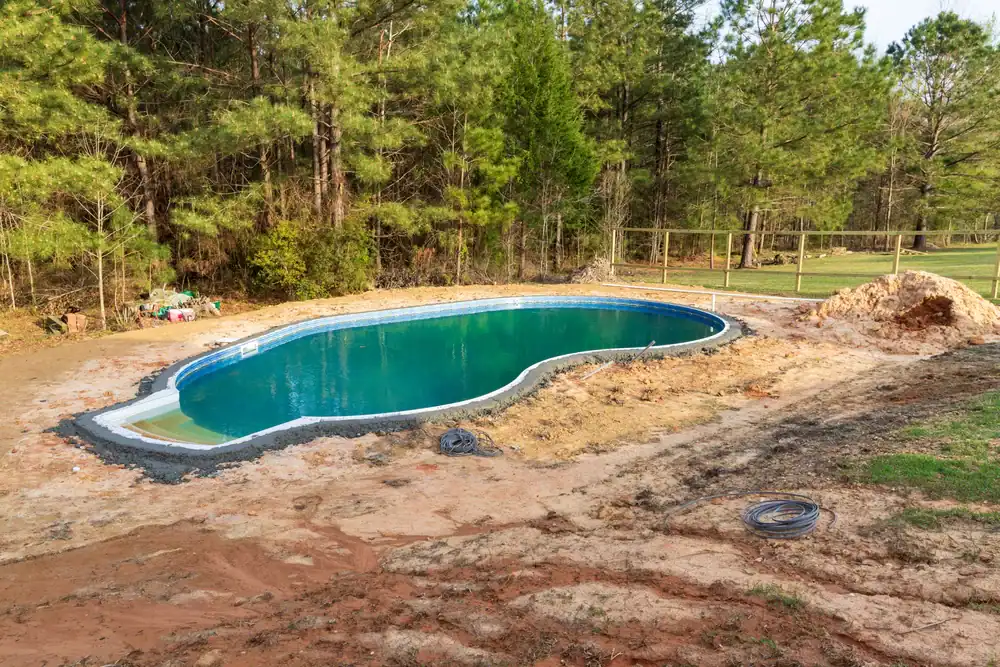
Lake Park’s geography creates a few site considerations that don’t come up as often in other parts of Georgia. The town sits in the Coastal Plain region of Lowndes County, which means sandy loam soils that are generally favorable for excavation easier to work with than the dense red clay or rocky conditions you’d find further north in the state. That’s a genuine advantage for pool construction timelines and excavation costs.
The factor that’s more specific to Lake Park is the natural lake system. The town was literally named for the more than 20 lakes surrounding it, and properties in the Twin Lakes community or anywhere near the lake corridors can have higher water table conditions depending on their exact position on the lot. That affects pool placement, how deep the shell can go, and how drainage gets designed around the finished pool. It’s not a dealbreaker it’s just something that needs to be assessed before design is finalized, not discovered during excavation.
That’s why we conduct a full site evaluation before any design work begins. Soil conditions, drainage patterns, utility locations, equipment access, and proximity to water features are all looked at upfront. You get a clear picture of your specific property before any money changes hands or any decisions get locked in.
It’s actually one of the smarter times to start. Lake Park’s pool season runs from roughly late March through November one of the longest in Georgia given its position near the Florida line. That extended season means peak demand for pool construction hits hard in late winter and early spring, when everyone who wants to swim by Memorial Day is calling contractors at the same time. Lead times get longer, scheduling gets tighter, and the best builders fill up fast.
Starting the design and permitting process in September, October, or November puts you ahead of that rush. Gunite construction can proceed in most South Georgia weather conditions the mild winters in Lowndes County rarely create the kind of sustained cold that would halt a build. A pool that breaks ground in October or November can realistically be finished and ready before Lake Park’s earliest warm days arrive in late March.
There’s also a practical scheduling advantage: contractors who aren’t managing a full spring queue have more flexibility to give your project focused attention. If you’ve been thinking about a pool for a while and you’re serious about swimming next season, the fall window is worth using not waiting through it.