
Hear from Our Customers
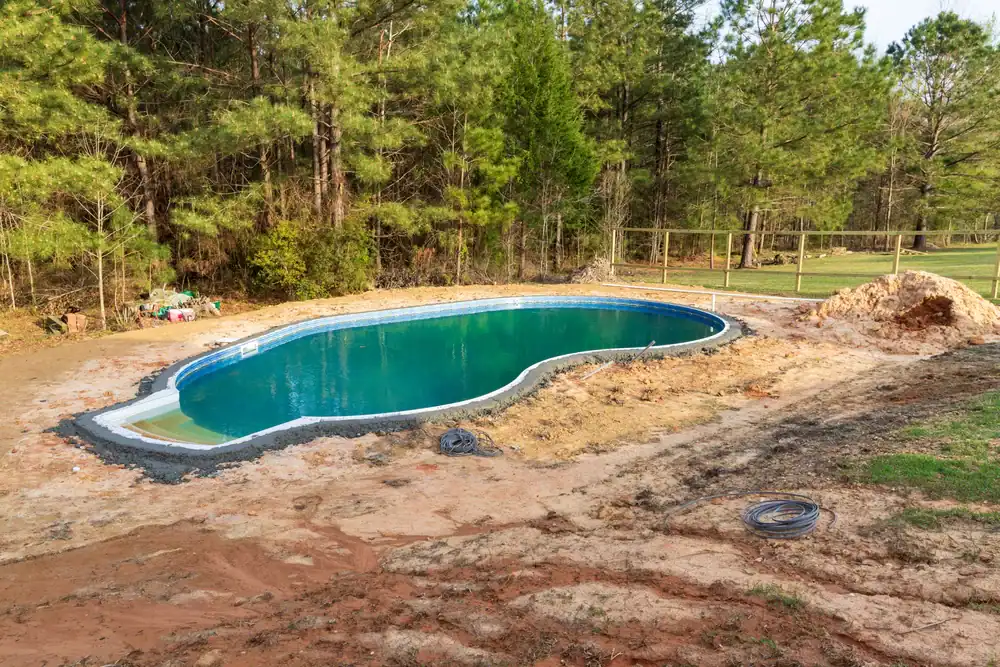
A pool built in Lumber City isn’t the same as a pool built anywhere else. You’re sitting at the confluence of the Ocmulgee and Oconee rivers where the Altamaha begins and the ground here reflects that. River-bottom soils, a water table that runs closer to the surface than most of South Georgia, and a flood history that USGS actively monitors right here in town. A builder who doesn’t account for those conditions before excavation starts is guessing. That’s not something you want on a $60,000 to $100,000 project.
When the build is done correctly, what you end up with is a permanent structure not a liner that needs replacing every eight to ten years, not a fiberglass shell with a 20-year clock on it. A properly built gunite pool in this climate lasts 25 to 30 years, and in South Georgia, where you’re looking at eight or nine months of real swim weather, that lifespan matters more than it would almost anywhere else in the country.
Beyond the pool itself, you get a property asset. A permitted, professionally built inground pool adds an estimated five to eight percent to residential home value in warm-climate markets like Telfair County. More importantly, it’s documented, insured, and legally clean which matters when you eventually sell, refinance, or file a claim.
We’re based in Douglas, Georgia about 40 miles from Lumber City on a straight shot up US 23/341 through Hazlehurst. This isn’t a metro company sending a crew into unfamiliar territory. South Georgia’s soils, climate, and county permit offices are the environment we work in every day.
We founded Deep Waters Pools in 2014, but our owner has been building pools for more than 30 years. He started Deep Waters specifically because he watched too many local families across this region get taken advantage of contractors who collected deposits, went quiet, and left homeowners with half-finished projects and no real recourse. That’s the reason we exist, and it shapes how every single build is handled.
When you hire us for a project in Lumber City, you’re working with a team that knows Telfair County including what it takes to pull permits through the county building office in McRae-Helena, 17 miles up the road. We understand the specific challenges of building in this river-corridor community. That’s not a detail most contractors think about until it slows the job down.
It starts with a site evaluation and in Lumber City, that step carries more weight than it does in most places. The river corridor here means soil conditions vary depending on where your property sits relative to the Ocmulgee. Some lots have excellent drainage and stable ground. Others, especially closer to the river, have softer soil profiles and water tables that need to be factored into the excavation plan before a single machine touches your yard. That evaluation happens before you sign anything.
Once the site is cleared and the design is locked in, we handle the permit pull with Telfair County. That means the building permit, the electrical permit, and coordinating every required inspection through the county office in McRae-Helena. You don’t chase paperwork. You don’t track inspection windows. We handle that.
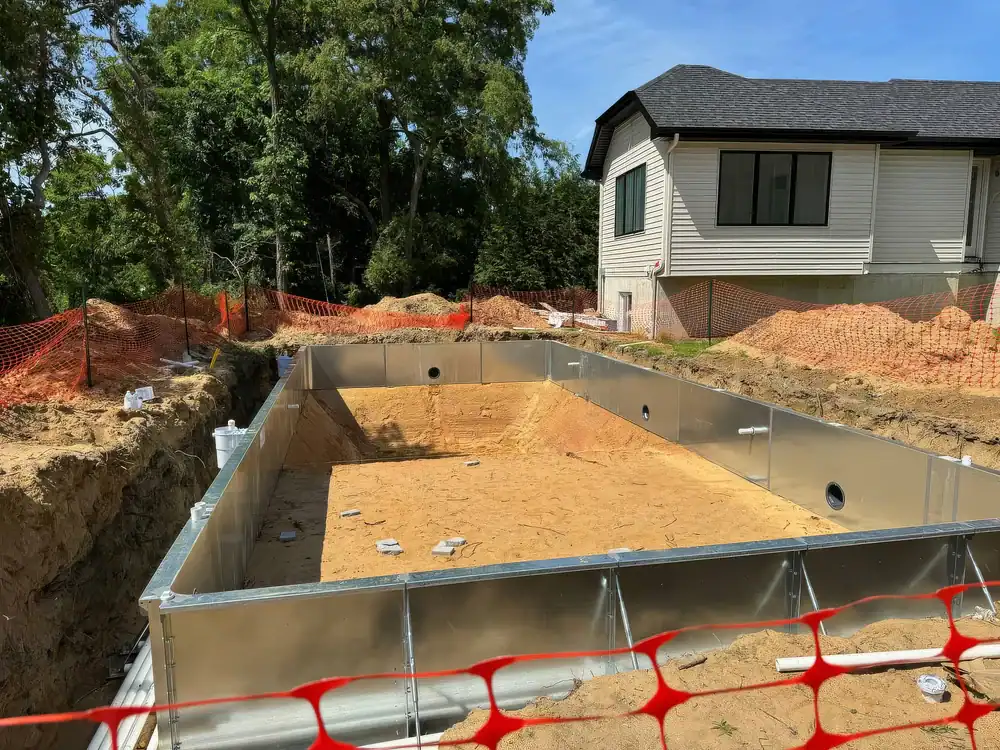
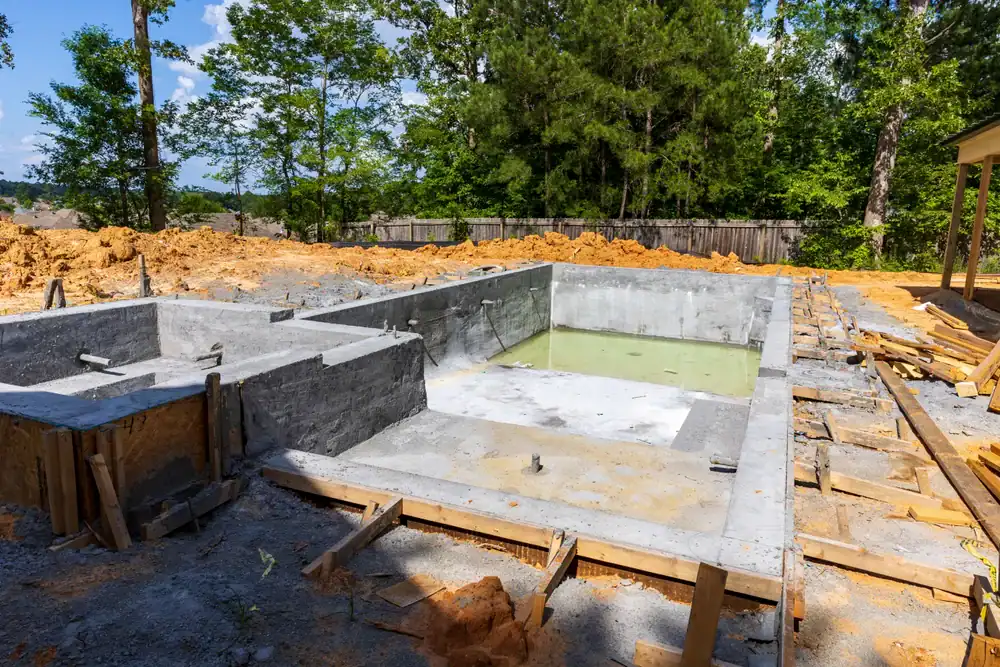
From there, the build sequence moves through excavation, steel placement, gunite shell application, plumbing and filtration, electrical, and deck installation all with the same crew, managed by our team. There are no subcontractor handoffs where communication breaks down and timelines slip. A standard residential gunite build runs six to eight weeks from excavation to water. That timeline holds because the process is coordinated end to end by one accountable team, not assembled from pieces.
Ready to get started?
Our pool build is a complete project not a shell with a list of things you’ll need to hire someone else to finish. The scope covers site evaluation, custom gunite design, permit acquisition through Telfair County, excavation, structural steel, gunite shell construction, swimming pool plumbing and filtration, electrical, and pool deck installation. Everything from the first shovel to the water going in.
The deck work is worth mentioning specifically for Lumber City properties. Proper slope and drainage engineering on the deck isn’t cosmetic in a river-corridor community where seasonal water movement affects the ground, a deck that drains correctly protects the pool structure and the surrounding yard over the long term. It’s one of those details that looks fine either way on day one and only reveals itself a few years down the road.
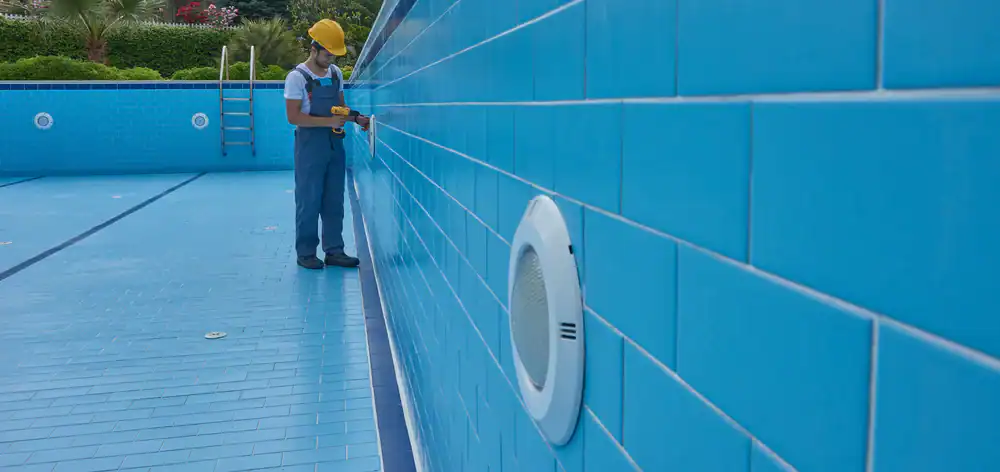
On the plumbing side, every build uses Schedule 40 and Schedule 80 PVC not undersized or cut-rate materials. In a rural area like Lumber City where a plumber may not be a quick drive away if something fails, the quality of what goes in the ground on day one matters. The same applies to the filtration and electrical systems all installed to Georgia’s ISPSC code requirements, permitted, inspected, and documented before the pool is handed off to you.
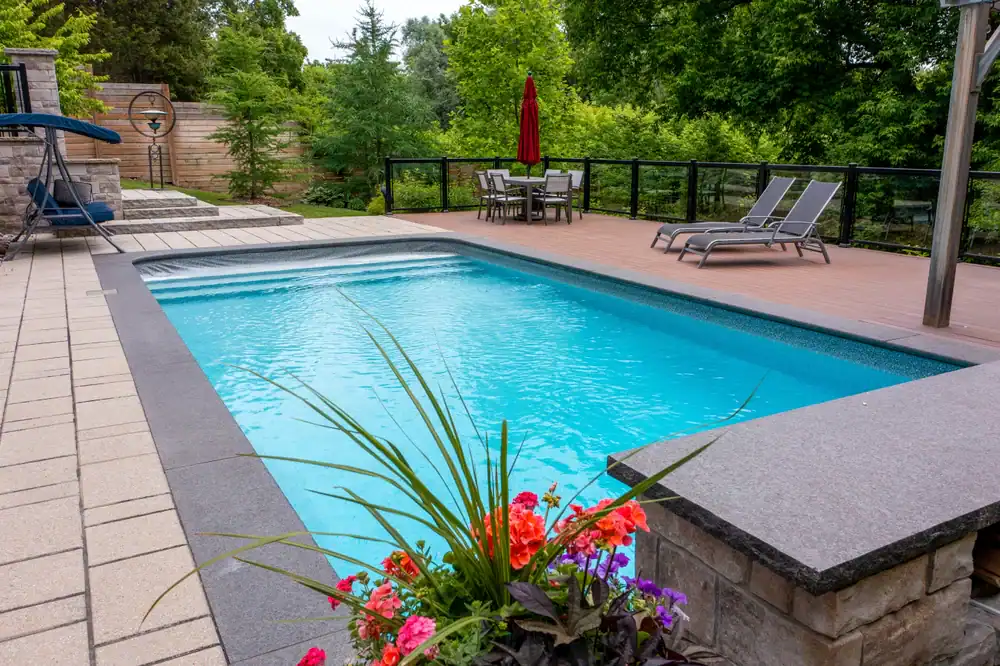
It can, depending on where your property sits. Lumber City is located at the confluence of the Ocmulgee and Oconee rivers, and the soils in this area reflect that river-corridor environment alluvial deposits, varying drainage capacity, and in some areas, a water table that runs closer to the surface than you’d find in upland South Georgia communities. The town was originally called “Artesian City” because of its naturally pressurized underground water sources, which tells you something about the hydrological environment here.
What that means practically is that a site evaluation on a Lumber City property isn’t a formality it’s the step that determines how the excavation is planned, whether dewatering equipment will be needed, and how the pool’s drainage and structural design should account for the specific conditions on your lot. Properties on higher ground away from the river corridor are typically straightforward builds. Properties closer to the river floodplain need a more detailed engineering review before anything gets started. A builder who skips that step is taking a risk on your property.
Pool construction in Lumber City falls under Telfair County’s building permit jurisdiction, which is administered from the county seat in McRae-Helena about 17 miles northwest on US 23/341. Georgia state law requires a building permit for all new residential pool construction, a separate electrical permit, and multiple inspections at different stages of the build. A certificate of completion has to be issued before the pool can be filled and used.
We handle all of that in-house. The permit applications, the coordination with the Telfair County building office, and the scheduling of every required inspection that’s part of the build, not something you manage on your own. This matters more than it might seem. An unpermitted pool creates real problems: it can void your homeowner’s insurance coverage for pool-related incidents, complicate or kill a future home sale, and leave you legally exposed if something goes wrong. The permit process exists to protect you, and a contractor who manages it correctly is doing you a genuine service.
For South Georgia and specifically for a river-corridor community like Lumber City gunite is the most durable long-term option. Gunite is a custom-formed concrete shell, meaning the pool is built to fit your specific yard and soil conditions rather than dropped in as a pre-manufactured shape. That flexibility matters when you’re dealing with the kind of variable soil profiles that come with properties near the Ocmulgee River.
In terms of lifespan, a properly built gunite pool lasts 25 to 30 years or more. Vinyl liner pools need the liner replaced every 8 to 12 years at a cost of $3,000 to $5,000 per replacement. Fiberglass shells have a functional lifespan of 15 to 25 years and are constrained to pre-set shapes that may not work well on lots with irregular terrain or access limitations. In a climate like Lumber City’s where you can realistically use the pool from March through November the long-term math on gunite is straightforward. You’re not replacing anything. You’re maintaining what’s already there.
A standard residential gunite build with us runs six to eight weeks from the start of excavation to water in the pool. That timeline assumes permits are already in hand, which is why the pre-construction phase matters pulling permits through Telfair County before the build starts means the excavator isn’t sitting idle while paperwork catches up.
The six-to-eight-week window covers excavation, steel placement, gunite shell application, plumbing, electrical, and deck installation. Weather can introduce short delays, particularly during South Georgia’s summer thunderstorm season, but gunite work is generally viable year-round in this climate. The bigger risk to timelines isn’t weather it’s the subcontractor coordination model that most pool companies use, where multiple independent crews have to align schedules and communicate across handoffs. We run a single-team build, which means the sequencing stays tight and the schedule doesn’t depend on a sub showing up when they said they would.
A standard residential inground gunite pool in South Georgia typically runs between $55,000 and $100,000, depending on size, shape, depth, and the features you include lighting, water features, automation systems, and so on. Custom builds with premium finishes or more complex designs can exceed $150,000. Those are honest ranges, not teaser numbers designed to get you on the phone before the real price comes out.
For Lumber City specifically, site conditions can affect the cost. If your property requires dewatering during excavation, additional drainage engineering on the deck, or extra structural work due to soil conditions near the river corridor, that gets factored in during the site evaluation before you sign a contract, not after the excavator hits a problem. The goal is a number you can plan around, not a number that grows once the job is underway. We’ll walk you through what’s driving the estimate on your specific property so you understand exactly what you’re paying for.
Yes. Georgia law requires a barrier fence around all residential pools, and it applies to new construction in Lumber City just like anywhere else in the state. The fence must meet specific height and gate requirements designed to prevent unsupervised access, particularly for children. This isn’t optional, and it’s not something that gets addressed after the pool is finished it needs to be part of the project plan from the start.
We factor barrier requirements into the build scope so there are no last-minute surprises at the final inspection. The pool also has to comply with the Virginia Graeme Baker Pool and Spa Safety Act, which mandates anti-entrapment drain covers on all new residential pool construction nationwide. Both of these requirements are covered under the permit process we manage through Telfair County. By the time the county issues the certificate of completion, everything is documented, inspected, and code-compliant which protects you legally, keeps your homeowner’s insurance intact, and means the pool is clean on paper if you ever sell the property.