Hear from Our Customers
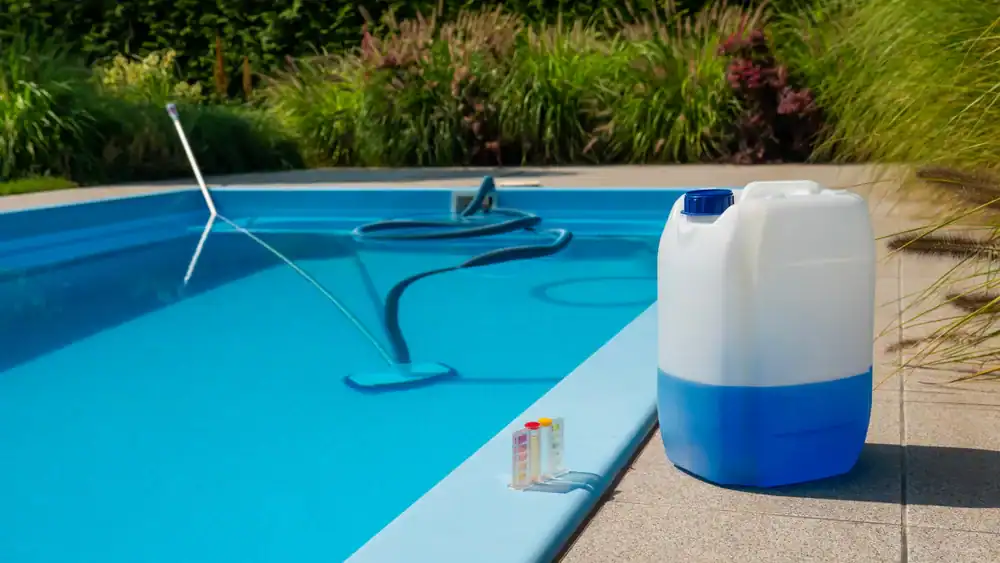
A pool that’s genuinely balanced doesn’t just look better it costs less to maintain, lasts longer, and is actually safe to swim in. When your pH, chlorine, and calcium hardness are all where they need to be, you stop buying bags of shock that don’t work and start actually using your pool.
In Lake Park, that matters more than most places. The summer heat here doesn’t give your chlorine time to do its job before UV exposure burns it off. June alone averages 14 rainy days, and every storm that rolls through off the I-75 corridor dilutes your chemicals and dumps organic material into the water. A pool that was balanced on Monday can be visibly off by Wednesday. That’s not a maintenance failure that’s just South Georgia.
If your home draws from a well rather than the city line, you’re starting with water that already carries elevated iron and calcium from the Floridan Aquifer. Those minerals don’t show up on test strips, but they will show up on your plaster and equipment over time. Getting a real, precise read on what’s actually in your water is the only way to stay ahead of it.
We’ve been building and servicing custom pools across South Georgia for over three decades. Our team didn’t start in a chemical lab we started in concrete, plumbing, and gunite construction. That background changes how we read water chemistry, because we understand what bad chemistry actually does to a pool surface over time, not just what it looks like on a report.
Serving Lake Park and the broader Lowndes County area, we bring that same construction-informed expertise to every water test. We know the difference between a new plaster pool in Pointers Ridge that needs careful startup chemistry and a five-year-old pool in Cypress Lakes that’s been managed with test strips and good intentions. Both situations need a real diagnosis, not a generic chemical recommendation.
Licensed, insured, and genuinely invested in South Georgia communities this isn’t a franchise routing your call to whoever’s available. It’s a team that knows the region, knows the chemistry, and shows up accountable.
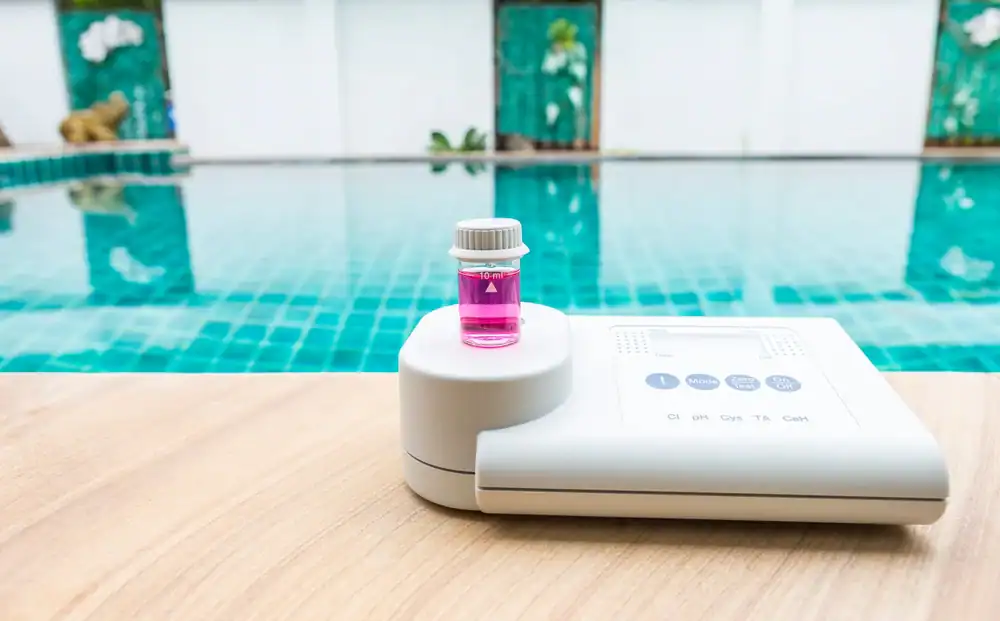
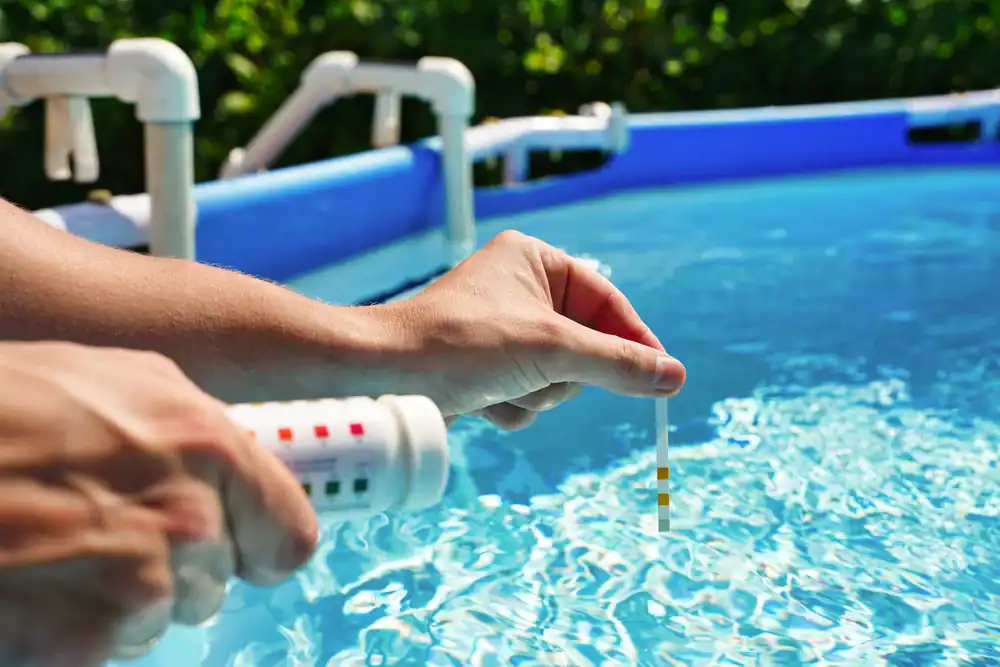
The process starts with a complete water sample collection from your pool. Not a test strip dipped at the surface an actual sample taken from the right depth, handled correctly, and run through digital analysis equipment that measures all nine critical parameters. That includes free chlorine, combined chlorine, pH, total alkalinity, calcium hardness, cyanuric acid, total dissolved solids, and metals like iron and copper. Each reading comes back to two or three decimal points of precision, not a color match you hold up to a chart in the sun.
Once the results are in, you get a clear picture of exactly what’s off and why. If your cyanuric acid is too low, your chlorine is burning off in hours that’s a South Georgia summer problem that strips won’t catch. If your calcium hardness is out of range, your pool surface is either scaling or slowly being etched, depending on which direction it’s drifted. The analysis tells you what’s actually happening, not just what to buy next.
From there, we walk you through a treatment plan that addresses the real issues in the right order. Chemistry corrections aren’t one-size-fits-all the sequence matters, and so does the timing. In Lake Park’s climate, where the next rainstorm is never far off, getting the order right the first time is what keeps you from starting over in 48 hours.
Ready to get started?
Every water test we run covers the full picture not just the two or three readings a pool store checks before pointing you toward a product. Free chlorine and combined chlorine are both measured, because the combined number is what tells you whether your sanitizer is actually working or just sitting in the water as a chloramine that irritates eyes and smells like a public restroom. pH level balancing, total alkalinity, and calcium hardness testing are all included, along with cyanuric acid, total dissolved solids, and metals screening.
For Lake Park pool owners, the metals screening is worth calling out specifically. Properties in the rural stretches of Lowndes County that draw from private wells are pulling water from the Floridan Aquifer a source that commonly carries iron and copper at levels that will stain your pool surface and corrode your equipment over time. That damage is invisible until it isn’t, and by the time it’s visible, it’s expensive. Catching it in the water chemistry stage is the difference between a treatment and a repair bill.
Whether your pool is a new installation in Pointers Ridge or an established backyard pool that’s been running for years near Hidden Oaks, the testing process is the same thorough, precise, and followed by a real conversation about what the results mean and what to do next.
In most parts of the country, weekly testing is the standard recommendation. In Lake Park, that’s the minimum. South Georgia’s summer heat index regularly pushes past 110°F, and UV exposure at that intensity can destroy unprotected chlorine within a couple of hours. Add in the rainfall patterns June averages 14 rainy days, and summer storms are frequent through August and September and your pool chemistry can shift significantly between Monday and Wednesday without anyone touching it.
The practical answer is this: test after every major rain event, test weekly during peak swimming season, and get a full professional analysis at least once at the start of the season and once mid-summer. If you’re noticing cloudiness, an off smell, or eye irritation, don’t wait for your scheduled test those are signs something has already shifted. A professional test at that point will tell you exactly what happened and what it takes to fix it, rather than having you add chemicals blind and hope for the best.
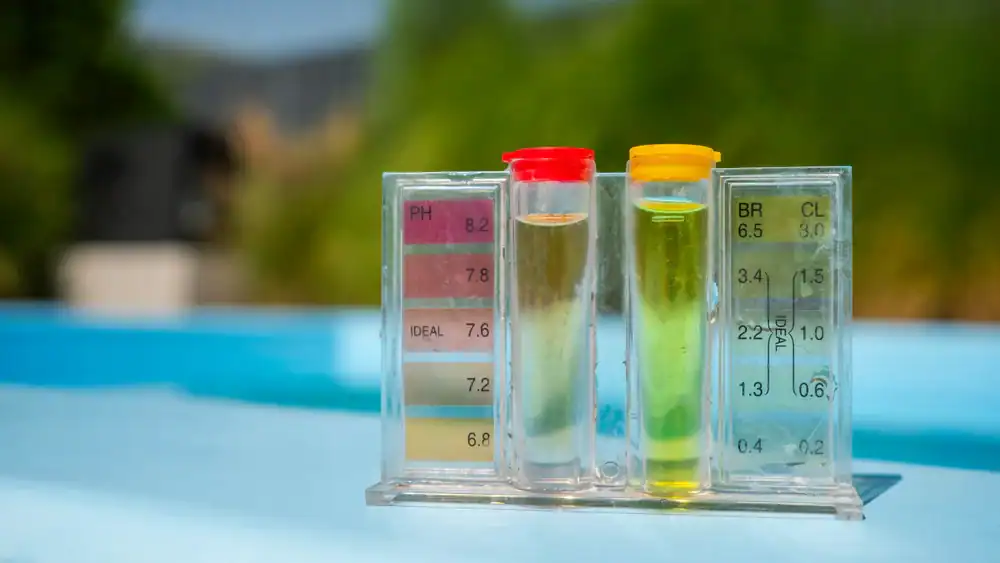
This is one of the most common frustrations pool owners in Lake Park bring to us, and the answer almost always comes down to one of two things: pH is too high, or cyanuric acid is too low. When pH climbs above 7.8 which happens fast in warm water chlorine loses more than half of its sanitizing power. You can have a perfectly normal chlorine reading on a test strip and still have essentially no active sanitizer in the water. That’s how a pool turns green despite a full chemical treatment.
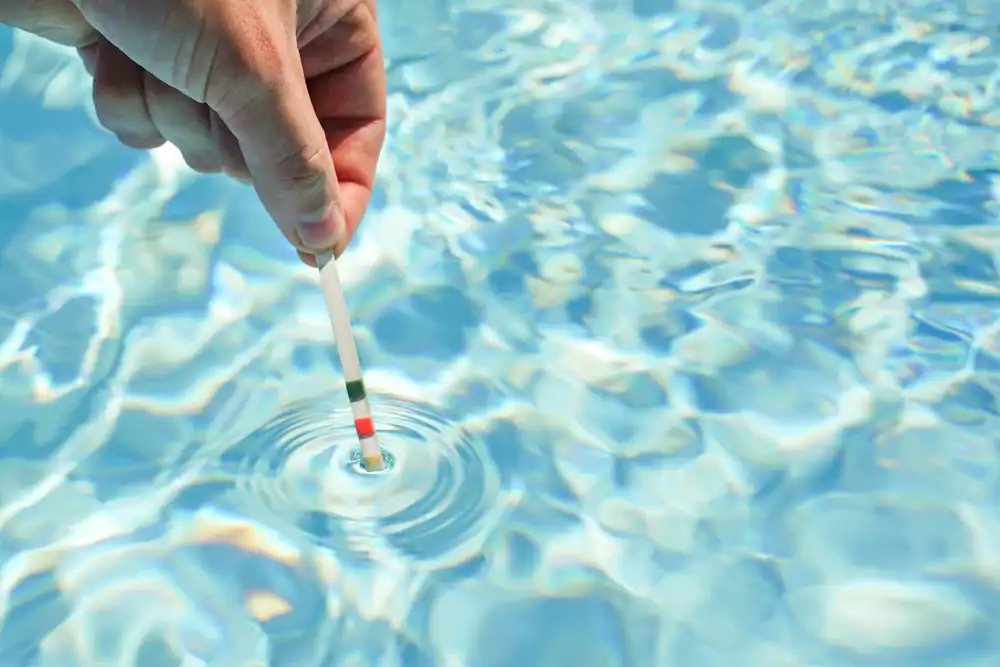
Cyanuric acid is the other piece. It stabilizes chlorine against UV breakdown, and in direct South Georgia sun, a pool without adequate CYA is losing chlorine continuously throughout the day. By the time you add your evening dose, the afternoon sun has already done most of the damage. A professional water test measures both of these accurately test strips are notoriously unreliable for CYA at higher concentrations, and they can’t tell you how much of your chlorine is actually free and available versus locked up as a chloramine doing nothing useful.
Calcium hardness is one of the most overlooked parameters in pool chemistry, and it causes two completely opposite problems depending on which direction it drifts. If your calcium hardness is too low, the water becomes aggressive it will pull calcium out of whatever surface it’s in contact with, which means your plaster, grout, and concrete fittings start to erode. That’s a slow process, but it’s permanent damage that eventually requires resurfacing.
If calcium hardness is too high, you get the opposite problem: scaling. Calcium deposits build up on your tile, your waterline, your equipment, and inside your plumbing. In Lake Park, well-water properties drawing from the Floridan Aquifer often start with elevated calcium right out of the tap, which means the scaling risk is built into the water source before the pool is even filled. A full water test measures your calcium hardness precisely and tells you where you stand and what to do about it before the damage shows up somewhere you can see it.
You can, and it’s better than nothing. But there are a few things worth understanding about how in-store testing works. Most pool store tests check three to five parameters using reagent-based methods that are reasonably accurate but not highly precise. More importantly, the results come with a chemical recommendation attached and that recommendation is tied to products the store sells. That’s not a criticism of any specific store, it’s just the business model. The test is free because the chemicals aren’t.
A professional water test from us measures all nine parameters using digital analysis equipment, with no product sale attached to the result. The goal is an accurate diagnosis, not a shopping list. For Lake Park pool owners dealing with recurring problems water that keeps going green, surfaces that keep scaling, chlorine that keeps disappearing the difference between a store test and a professional analysis is often the difference between treating symptoms and solving the actual problem.
New pools actually need professional testing more urgently than established ones, not less. When a new plaster or pebble surface first fills with water, it goes through a curing process that is highly sensitive to water chemistry. If calcium hardness is too low during that initial period, the water will leach calcium directly out of the fresh plaster surface causing etching, rough texture, and permanent discoloration that no amount of chemical treatment will reverse. If pH swings during curing, the surface can develop staining or uneven finish that shows up weeks later.
Getting a full professional water analysis before and immediately after filling a new pool establishes an accurate chemistry baseline from day one. It also identifies any issues with your fill water source whether you’re on the city line or drawing from a well before those issues have a chance to affect the surface. For a new installation in a development like Pointers Ridge, where the pool represents a significant part of the home’s value, starting with a professional chemistry baseline is one of the smartest investments you can make in the first week.
We serve Lake Park and the surrounding Lowndes County area. The distance from Douglas doesn’t change the quality of the service or the thoroughness of the testing it just means scheduling matters, and we plan accordingly so your appointment works with your timeline, not against it.
For Lake Park residents, the more relevant point is that no pool service company is currently headquartered in town. The nearest providers are clustered in Valdosta, about 13 miles away, where they’re managing a much larger service territory. That often means Lake Park pool owners end up lower on the priority list when something urgent comes up. Our approach is straightforward: when you book a service, you get the full attention of a team with 30 years of South Georgia pool experience not a technician dispatched from a crowded route who’s already behind schedule before they reach your driveway.