
Hear from Our Customers
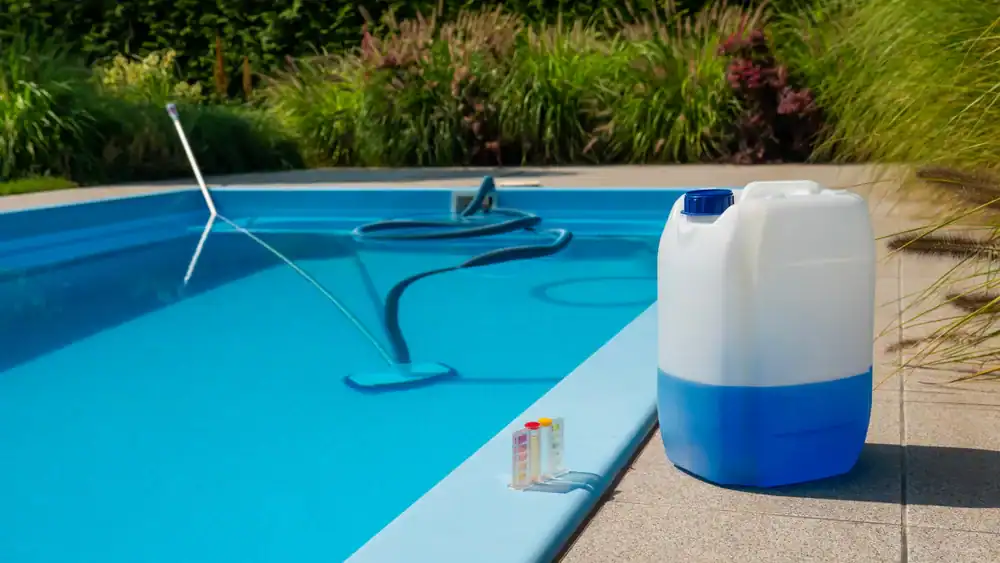
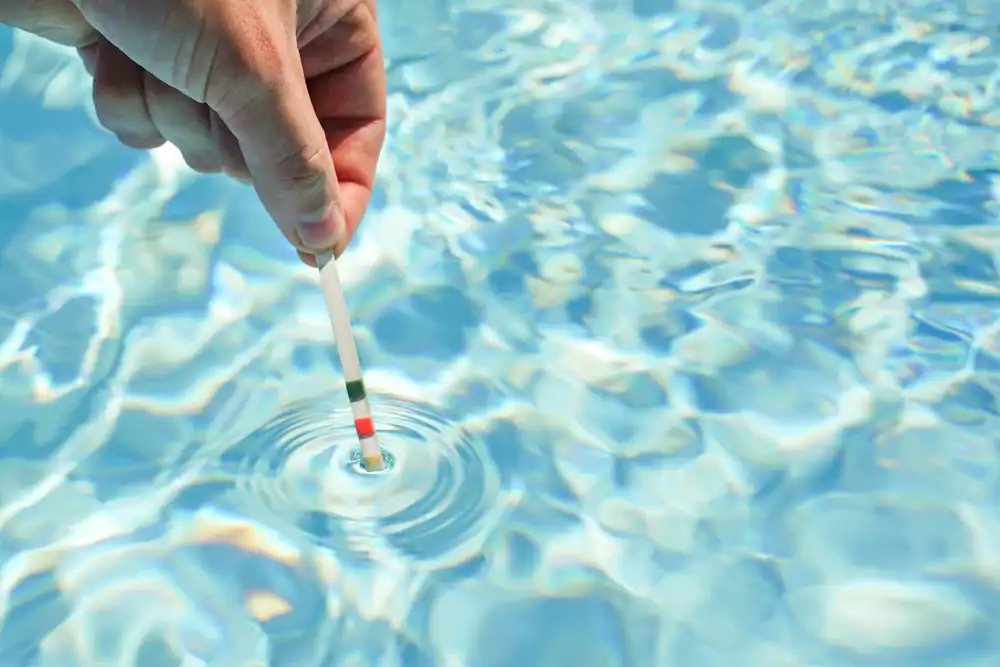
Most pool owners in Pavo aren’t dealing with bad luck they’re dealing with incomplete information. You add chlorine, test with a strip, get a “normal” reading, and the water still looks off. That’s not a product problem. That’s a testing problem. Test strips only tell part of the story, and in South Georgia’s heat, that missing information costs you.
Here’s what actually happens in a Pavo summer: UV intensity at these latitudes can destroy unprotected chlorine in under two hours. If your cyanuric acid levels aren’t dialed in and most strips can’t measure that accurately your pool is running on near-zero effective sanitizer by mid-afternoon, even when the morning reading looked fine. Add the spring pollen load that blankets Brooks and Thomas County every April and May, and your chlorine demand spikes overnight. Pollen introduces phosphates that feed algae and throws pH off faster than most homeowners expect.
If you’re filling from a private well which many properties on the rural acreage around Pavo are there’s another layer entirely. Well water in this area can carry elevated iron and mineral hardness that no generic pool guide accounts for. Iron stains surfaces. High mineral content throws off calcium hardness and causes scaling on plaster and equipment. A professional water test catches all of it. One accurate test is worth more than a season of guessing.
Deep Waters Pools is a licensed and insured pool company based in Douglas, Georgia, with more than 30 years of hands-on experience in pool construction, renovation, and water chemistry. We were formally established in 2014, but our knowledge goes back three decades built on real work, not certifications alone.
Our construction background matters more than it sounds. We’ve built and renovated gunite and shotcrete pools across South Georgia the same concrete pool types most common on established properties from Pavo to Thomasville and throughout Brooks and Thomas County. When you’ve built these pools from the ground up, you understand how surface type interacts with calcium hardness, how South Georgia’s climate stresses pool chemistry differently than anywhere else, and what a real correction looks like versus a temporary fix.
No shortcuts. No surprises. No excuses. That’s not a slogan it’s how we’ve kept the same standard for 30 years.
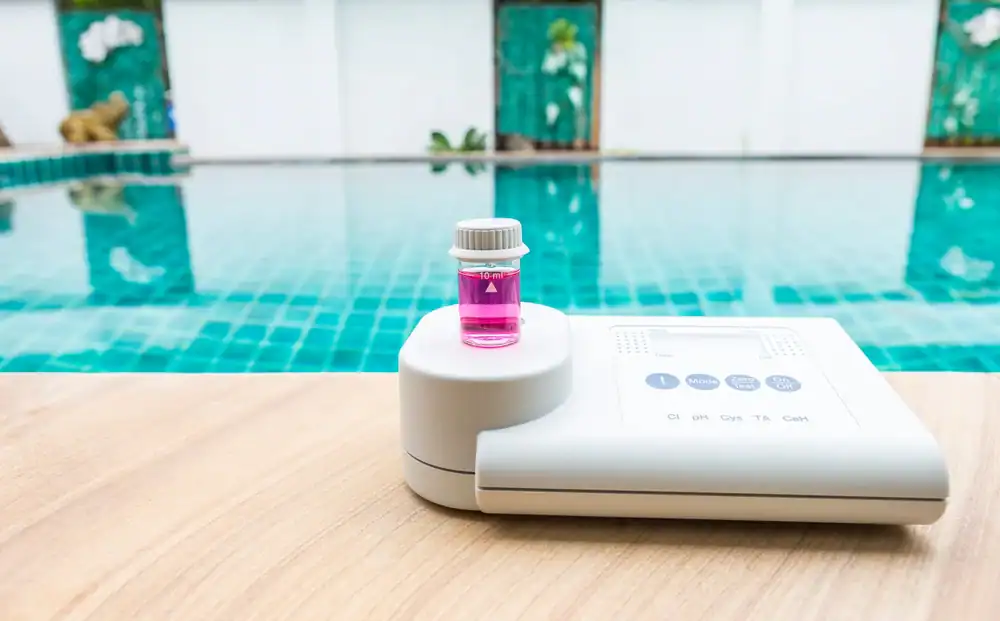
It starts when we come to you. No driving to Thomasville, no hauling a water sample to a store, no waiting in line for a test that comes with a product recommendation attached. We test your pool on-site, with advanced digital water analysis equipment not color-matching strips, not a basic kit.
On-site, we measure every parameter that actually matters: free chlorine, combined chlorine, pH, total alkalinity, calcium hardness, cyanuric acid, and total dissolved solids. Digital testing catches what strips miss. It gives us precise readings at multiple decimal points the kind of accuracy that tells us whether your chlorine is actually working or just showing up on paper. In Pavo’s climate, where a summer thunderstorm can dilute your chemistry overnight and pollen season can spike chlorine demand within 24 hours, that precision is the difference between a clear pool and a problem you’re chasing all season.
After the test, you get a plain-English breakdown of every number what it means, what’s off, and exactly what needs to happen to correct it. No vague recommendations. No pressure to buy anything on the spot. Just a clear picture of where your water stands and a specific plan to get it where it needs to be.
Ready to get started?
A complete water test from Deep Waters covers the full chemistry picture not just the two or three numbers a pool store checks before pointing you toward a product shelf. Free chlorine and combined chlorine tell you whether your sanitizer is actually working or just sitting in the water as ineffective chloramines. pH tells you whether that chlorine can do its job when pH climbs above 7.8, chlorine loses roughly half its sanitizing power, which means every dollar you’ve spent on chemicals is working at half capacity.
Total alkalinity is what keeps pH stable between tests. Calcium hardness protects your pool’s surface too low and the water turns corrosive, eating at plaster and grout; too high and you get the white scaling that clogs equipment and stains finishes. For pools on well water in the Pavo area, calcium hardness and iron levels are often the first thing that needs attention, because local groundwater mineral content varies significantly from municipal supply. Cyanuric acid the stabilizer that protects chlorine from UV degradation rounds out the picture, and it’s one of the most commonly overlooked variables in South Georgia pools where sun exposure is intense from May through September.
If your pool is in Brooks County or the Thomas County side of Pavo, the chemistry demands are the same but the source water may not be. We account for that.
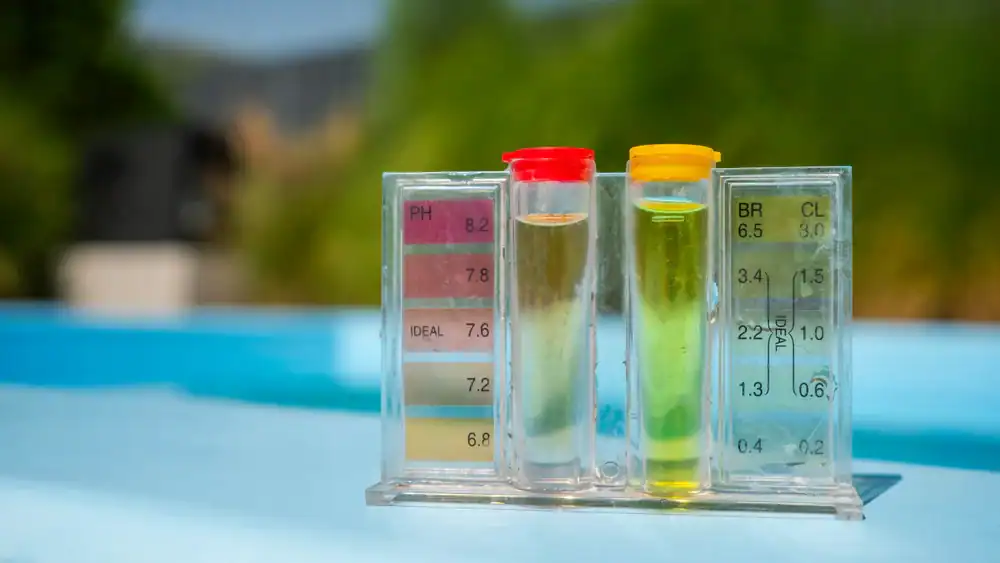
For most residential pools in Pavo, a professional water test at the start of the season is non-negotiable especially after a pool has been sitting through winter. But in South Georgia’s climate, that’s really just the beginning. The combination of intense UV from May through September, frequent summer thunderstorms, and the heavy spring pollen load that rolls through Brooks and Thomas County every April means your pool chemistry can shift significantly within 24 to 48 hours of a major weather event.
A good rule of thumb is to schedule a professional test at opening, again mid-summer when bather load and heat are at their peak, and after any significant rain event or algae outbreak. If you’re on well water which many properties on rural acreage outside Pavo are testing at the start of the season is especially important because your source water mineral content can change and directly affect how your pool holds chemistry. The Georgia Department of Public Health requires certified operators to test public pools twice daily. That standard exists for a reason. Your residential pool deserves more than a once-a-week strip test.
This is the most common frustration we hear, and the answer almost always comes back to incomplete testing. Test strips measure a narrow range of parameters and do it imprecisely they’ll show you chlorine is present, but they won’t tell you whether that chlorine is actually active. If your pH has drifted above 7.8, which happens quickly in South Georgia’s heat, chlorine loses roughly half its sanitizing effectiveness even when the reading looks normal. You’re adding chemicals, the strip says you’re fine, and the water is still hazy because the chemistry isn’t actually working together.
The other common culprit is cyanuric acid buildup. Over time, CYA accumulates in pool water and can reach levels that lock chlorine into an inactive state a condition called chlorine lock. At that point, no amount of additional chlorine will clear the water until the CYA level is addressed. This is something digital water analysis catches clearly, and something test strips routinely miss. A professional test takes the guesswork out of it and tells you exactly which variable is causing the problem, so you’re correcting the right thing instead of adding more product and hoping for the best.
Yes and it’s one of the most overlooked issues for pool owners on rural properties in Pavo. Many homes outside of town draw from private wells, and well water in Brooks and Thomas County can carry elevated iron, manganese, and mineral hardness that immediately affects pool chemistry in ways that municipal water doesn’t. Iron is the most visible problem it causes brown or rust-colored staining on pool surfaces, steps, and equipment that’s difficult to remove once it sets in. Elevated mineral hardness throws off calcium hardness balance and can lead to white scaling on plaster, tile, and filter equipment over time.
The UGA Extension office in Brooks County actually offers basic water testing for well water specifically because local groundwater quality is a real and variable concern in this region. For pool owners in Pavo, the stakes are even higher because source water mineral content directly affects how your pool holds chemistry, how aggressive the water is toward your pool’s surface, and how your equipment performs over time. If you’re filling from a well, a professional pool water test that accounts for your specific source water is not optional it’s the only way to know what you’re actually working with before you start adding chemicals.
The main difference is the purpose behind the test. Pool store water tests are a retail tool they’re designed to identify what products a customer should purchase. That’s not a criticism of every pool store employee, but it is the structural reality of how those tests work. The recommendation that follows a free in-store test is shaped by what’s on the shelf, not necessarily by what your pool actually needs. For a Pavo homeowner who’s already driving to the nearest pool supply retailer, coming home with $150 in products that may or may not solve the problem is a frustrating and expensive outcome.
Deep Waters uses advanced digital water analysis equipment that measures pool chemistry parameters with precision that basic test kits and color-matching strips can’t match. More importantly, the goal of the test is accurate diagnosis not product sales. You get a complete readout of every parameter, a plain-English explanation of what each number means, and a specific correction plan. If the issue is something simple, we’ll tell you that. If it’s something that requires professional attention, we’ll be direct about why. There’s no retail agenda attached to the result.
South Georgia summers are genuinely demanding on pool chemistry in ways that generic pool care guides don’t fully account for. The UV intensity at these latitudes is significant direct sun can destroy up to 90% of unprotected chlorine in under two hours on a clear summer day. Without adequate cyanuric acid stabilization, your pool may be running on near-zero effective chlorine by mid-afternoon even when your morning test looked fine. This is why stabilizer levels matter so much in Pavo, and why they need to be tested precisely rather than estimated.
Heat also accelerates the growth of algae and bacteria. When water temperatures climb into the mid-to-upper 80s which is routine in a Pavo summer algae can establish itself within 24 hours if free chlorine drops or pH drifts. The summer thunderstorm pattern that runs through Brooks and Thomas County from June through September adds another variable: every significant rain event dilutes your chemistry, lowers pH, and introduces organic material from the surrounding landscape. A pool that was balanced on Monday can be struggling by Wednesday after a heavy storm. Knowing your baseline chemistry precisely through a professional test is what lets you correct quickly instead of chasing the problem.
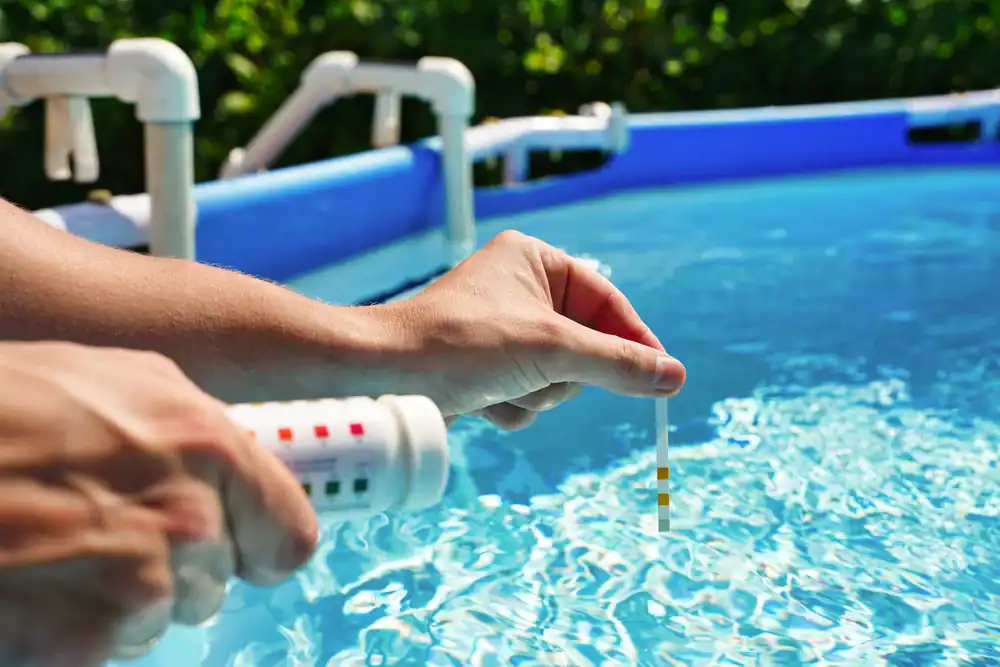
Test strips are better than nothing, but they have real limitations that matter more in some environments than others and South Georgia is one of those environments. Strips give you a general range, not a precise measurement. They’re particularly unreliable for cyanuric acid at higher concentrations, and they can’t detect combined chlorine separately from free chlorine, which means they won’t tell you if your sanitizer has converted to ineffective chloramines. In Pavo’s climate, where heat, pollen, and summer storms put consistent pressure on pool chemistry, those blind spots add up fast.
The practical case for professional testing is straightforward: one accurate test costs far less than one algae remediation treatment, one piece of equipment damaged by corrosive or scaled water, or one resurfacing job on a gunite pool that’s been running with imbalanced calcium hardness for a season. For homeowners in Pavo many of whom are managing pools on well water, on larger rural properties, without a pool store nearby professional testing isn’t a luxury service. It’s the most cost-effective maintenance decision you can make. You find out exactly what’s wrong before it becomes expensive, and you fix the right thing the first time.