
Hear from Our Customers
Most pool owners in Thomasville aren’t doing anything wrong they’re just working with incomplete information. Test strips give you a rough direction, not a real answer. When your chlorine reads fine but the water still looks off, there’s usually something deeper happening that a color-matching strip on a sunny afternoon isn’t going to catch.
Here’s what changes when you get a proper water analysis from us: you stop buying chemicals that don’t fix the actual problem. You stop shocking a pool that doesn’t need shock. You stop wondering why the water looks hazy after a heavy spring rain or why the tile line keeps building up that white crust no matter how much you scrub.
That white scaling is calcium and it’s a direct result of Thomasville’s unsoftened tap water. When you fill or top off your pool with city water here, you’re starting from a higher mineral baseline than most markets. Left unchecked, that calcium deposits on your tile, clogs your filter, and slowly damages your pool’s surface. Catching it early with a professional calcium hardness test is the difference between a quick chemistry correction and an expensive resurfacing job down the road.
We’re based in Douglas, GA, and have been serving South Georgia pool owners including homeowners throughout Thomas County and Thomasville for over thirty years. We didn’t start as a retail store that added chemistry services. We started as pool builders gunite and shotcrete construction, concrete work, custom installations and the chemistry knowledge came with it.
When you build pools, you learn fast what water does to a surface. You learn the difference between water that’s slightly aggressive and water that’s quietly eating your plaster from the inside. That’s the kind of working knowledge that shapes how we approach every water test not as a checklist, but as a read on what your specific pool actually needs.
For Thomasville homeowners near neighborhoods like Ivy Hill or properties out toward the Red Hills region, that depth of experience matters. This isn’t a franchise running a template. It’s a South Georgia team that understands South Georgia water and the pools that sit in it.
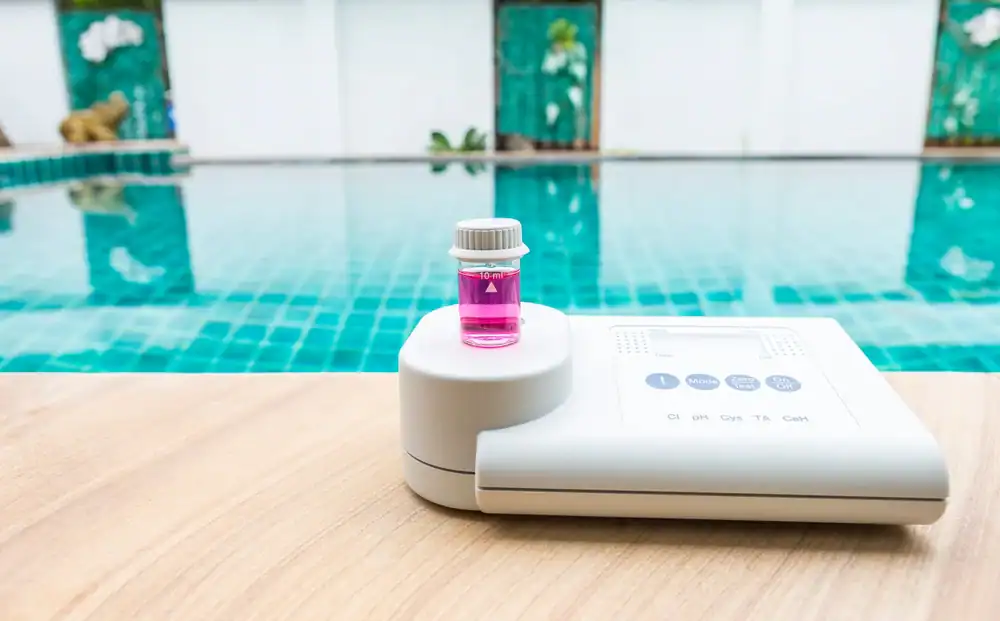
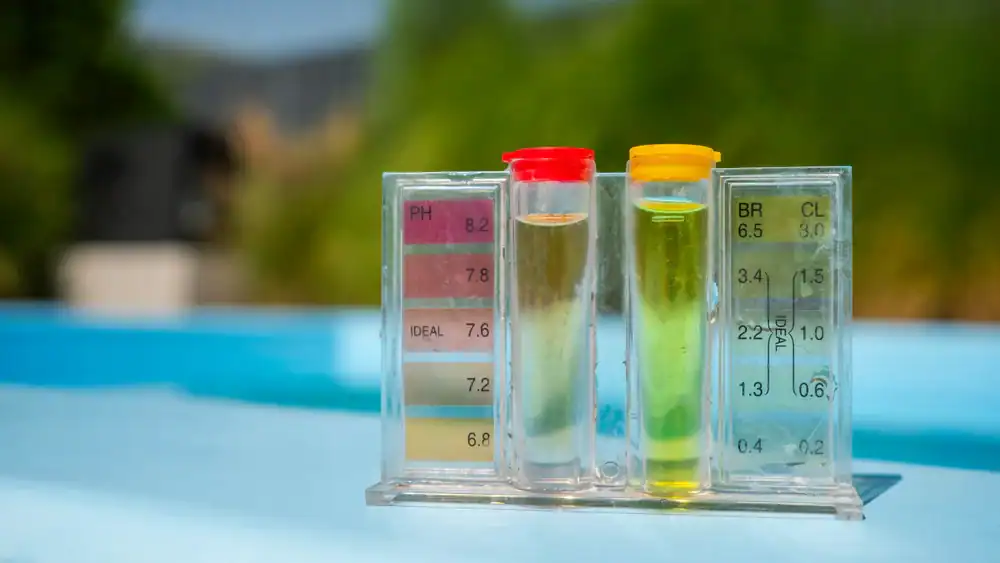
The process starts with a digital water analysis not test strips. Digital testing reads your water across all the parameters that matter: free chlorine, combined chlorine, pH, total alkalinity, calcium hardness, cyanuric acid, and more. Every reading is precise and documented, which means you can actually see what’s happening in your water instead of squinting at a color chart in the afternoon sun.
From there, we interpret the results in context. That’s the part most pool owners never get at a retail store. Knowing your pH is 7.9 is one thing understanding that at 7.9, your chlorine is operating at roughly half its effectiveness in the middle of a Thomasville summer is another. The analysis connects the numbers to what they mean for your pool’s health, your surface, and your equipment.
Then comes the correction plan. Not a bag of chemicals to throw at the problem an actual sequence, with the right products in the right order, because adding the wrong thing first can lock a problem in rather than fix it. If you’re opening your pool around the Rose Festival in late April, that plan also accounts for the pollen load that hits Thomasville’s outdoor spaces hard every spring. It spikes chlorine demand faster than most homeowners expect, and it’s one of the first things a professional analysis will flag at the start of pool season.
Ready to get started?
A complete water analysis from us covers the full picture. pH level balancing is always part of it, because pH is the foundation when it drifts above 7.8, your chlorine loses most of its sanitizing power even when the reading looks normal. Total alkalinity gets checked because it’s what keeps your pH from swinging wildly after a rain. And in Thomasville, with 53 inches of annual rainfall, that stability matters more than it does in drier markets.
Calcium hardness testing is a non-negotiable part of every analysis we perform. Given what Thomasville’s unsoftened municipal water brings to the table, calcium levels in local pools tend to run higher than average. That affects everything from your tile and plaster to the longevity of your equipment. For gunite pools especially the type we build and know inside and out calcium management is one of the most important things you can stay on top of.
Cyanuric acid (CYA) gets measured too, because it’s one of the most commonly overlooked numbers. Too little and your chlorine burns off in the South Georgia sun within hours. Too much and your chlorine becomes ineffective no matter how much you add a condition called chlorine lock that no amount of shocking will fix without a partial drain. For homeowners near estate properties or larger lots in the Thomas County area, where pools may sit between uses, CYA drift is a real and common issue. Getting a full analysis before a problem compounds is always the smarter call.
That white buildup is calcium scaling, and it’s one of the most common issues for pool owners using Thomasville city water. The city’s water softening plant was shut down in 1986 per Georgia EPD requirements, which means the municipal water delivered to your home and your pool hasn’t been softened since. It carries a natural mineral load that’s higher than many other markets, and when that water evaporates from your pool, the calcium gets left behind on your tile line and pool surfaces.
The fix isn’t just scrubbing the tile. You need to address the calcium hardness level in the water itself. If the calcium hardness is too high, the water will keep depositing minerals no matter how often you clean the surface. A professional calcium hardness test will tell you exactly where your levels sit and what it takes to bring them into the right range typically between 200 and 400 parts per million for a gunite pool. Getting that number right protects your tile, your plaster, and your filter equipment from long-term damage.
For most pool owners in Thomasville, professional testing at least three to four times per year makes sense at pool opening, mid-summer, after any significant rain event, and before closing. That said, if you’re using your pool regularly through the longer South Georgia swim season, more frequent testing pays off. Thomasville averages around 53 inches of rainfall annually, with peaks in March and again through the summer months. Every significant rain dilutes your chlorine, shifts your pH, and adds organic material that feeds algae growth.
Home test strips are fine for a quick mid-week check, but they can’t accurately measure cyanuric acid at elevated levels, and they’re prone to user error in outdoor light. Professional digital testing gives you precise numbers across every parameter not just a rough range. If you’ve had a green pool, a cloudy pool, or a pool that keeps eating chemicals without improving, that’s a sign the underlying chemistry hasn’t been properly diagnosed. A full professional analysis is usually the fastest way to find out why.
Total alkalinity is the measurement of your water’s ability to resist changes in pH. Think of it as the buffer that keeps your pH stable. When alkalinity is too low, your pH swings up and down unpredictably a little rain, a heavy bather load, or a dose of chlorine can send it in the wrong direction fast. When alkalinity is too high, your pH gets stuck elevated and becomes hard to bring down, which in turn makes your chlorine less effective.
In Thomasville’s climate, where heavy summer rains are routine and the swim season runs long, alkalinity stability is something you feel the effects of regularly. Low alkalinity is one of the most common reasons pool owners find themselves constantly re-dosing chemicals without seeing lasting results. A proper total alkalinity check and the correction that follows gives your entire chemistry program a stable foundation to work from. Once alkalinity is in the right range, typically 80 to 120 parts per million, your pH holds better, your chlorine works more consistently, and your pool requires fewer reactive corrections overall.
This is probably the most common frustration pool owners bring to us, and the answer almost always comes down to one of a few things that test strips can’t accurately detect. The first is pH. If your pH is running above 7.8 which is easy to miss on a strip your chlorine is operating at a fraction of its normal effectiveness even when the reading appears normal. The second is combined chlorine, also called chloramines. These are the byproducts of chlorine that’s already been used up fighting contaminants. They show up in your total chlorine reading but don’t sanitize anything. Strips typically can’t distinguish between free and combined chlorine.
The third possibility is elevated cyanuric acid. CYA is a stabilizer that protects chlorine from UV breakdown, and it’s a necessary part of outdoor pool chemistry. But when it climbs too high above 80 to 100 parts per million it binds to your chlorine and makes it largely inactive. Your test strip might show chlorine present, but the water isn’t actually being sanitized properly. The only way to accurately measure CYA and get a true read on what’s happening is with a digital water analysis. That’s exactly what a professional test from us provides.
You can manage routine monitoring at home with a quality liquid test kit not strips and many experienced pool owners do. But there are specific points in the season where professional testing is worth it, and Thomasville’s conditions create a few of them. Pool opening in late April puts you right in the middle of the Rose Festival season, when pollen counts in the area are at their highest. Pollen settling into pool water spikes chlorine demand quickly and creates organic load that home kits don’t fully account for. Starting the season with a professional analysis means you’re correcting for what’s actually in the water, not just what a basic kit can measure.
Mid-summer is another point where professional testing adds value. The combination of intense UV exposure, heavy bather load, and Thomasville’s summer rainfall pattern creates chemistry conditions that shift faster than most homeowners expect. And if you’re on city water and topping off the pool regularly, the calcium hardness picture changes over time in ways that a home kit won’t catch until scaling is already visible. Periodic professional testing doesn’t replace your home routine it fills in the gaps that home testing leaves open.
Yes, and it’s one of the more important things to understand if you have a gunite or shotcrete pool which is the most common type of inground pool in the Thomasville area. Concrete pool surfaces, including plaster and aggregate finishes, are directly affected by calcium hardness levels in a way that vinyl liner and fiberglass pools are not. Water that’s too low in calcium becomes chemically aggressive. It essentially looks for calcium to balance itself out, and the nearest source is your pool’s plaster surface. Over time, this causes etching, pitting, and surface degradation that leads to costly resurfacing.
On the other end, water that’s too high in calcium which, given Thomasville’s unsoftened municipal water supply, is the more common direction for local pools to drift deposits minerals on your surface, tile, and equipment. Both problems are preventable with regular calcium hardness testing and the right corrective approach. We build gunite pools and have for decades, which means we understand these surface-specific chemistry requirements from the construction side, not just the service side. That’s a meaningful difference when you’re trying to protect a pool that cost tens of thousands of dollars to build.