
Hear from Our Customers
A pool that’s chemically balanced doesn’t just look better it stays that way. You stop buying chemicals that don’t fix anything. You stop second-guessing whether it’s safe to swim. The water is clear, the surfaces stay clean, and the equipment runs the way it’s supposed to.
Here’s what makes Waresboro different from most places: a lot of homes out here are on private well water. Well water in Ware County frequently carries iron, manganese, and organic compounds that basic test strips will never catch. You could have your chlorine reading right where it should be and still end up with brown staining on your pool walls because the strips never told you about the iron. That’s a problem that gets expensive fast if it goes undiagnosed.
Then there’s the Okefenokee factor. The swamp sits right at the edge of Ware County, and its influence on local groundwater is real. That water is naturally acidic heavy with tannins from decades of decaying vegetation. When you top off your pool from a private well drawing from that water table, you may be introducing water that’s already working against your chemistry before a single chemical is added. Faster pH drift, higher chlorine demand, more frequent imbalance. Professional water analysis catches all of it. Test strips don’t.
We’ve been in the pool business for over 30 years not just servicing pools, but actually building them. Gunite, shotcrete, custom construction from the ground up. That matters when it comes to water testing because we’ve seen firsthand what corrosive water does to a plaster finish, what scaling does to a pebble surface, and what iron-laden well water does to a pool that took real money to build.
We’re based in Douglas and serve communities across South Georgia, including Waresboro and the broader Ware County area. We know this region the climate, the water table, the way South Georgia summers accelerate every chemistry problem you’ve got. That’s not something you get from a national chain or a pool supply store handing out free test strips to move product.
We’re licensed, insured, and we use digital water analysis not color-matching strips so every reading we give you is precise, documented, and explained in plain language.
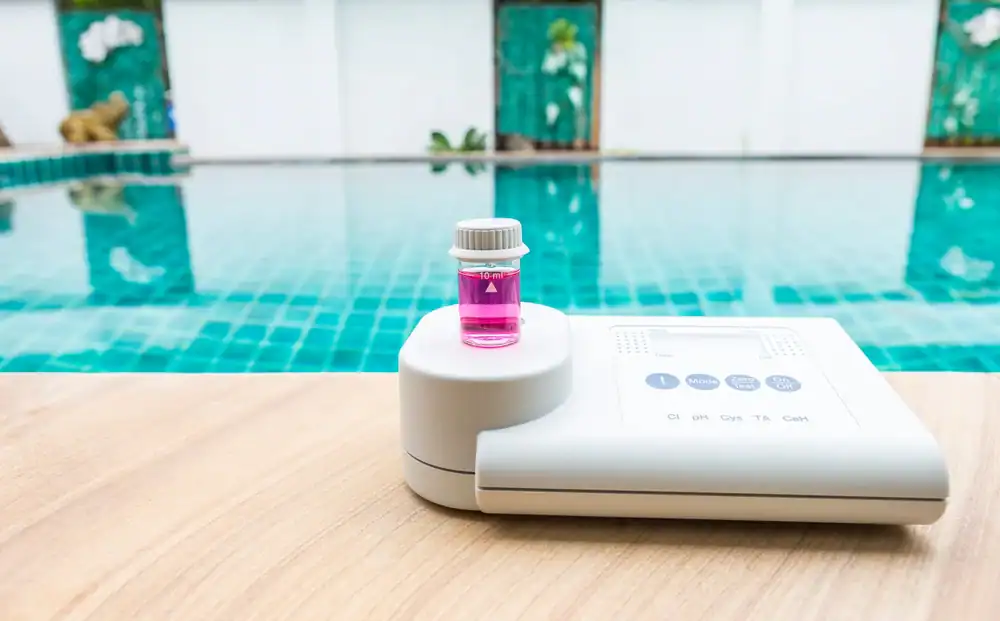
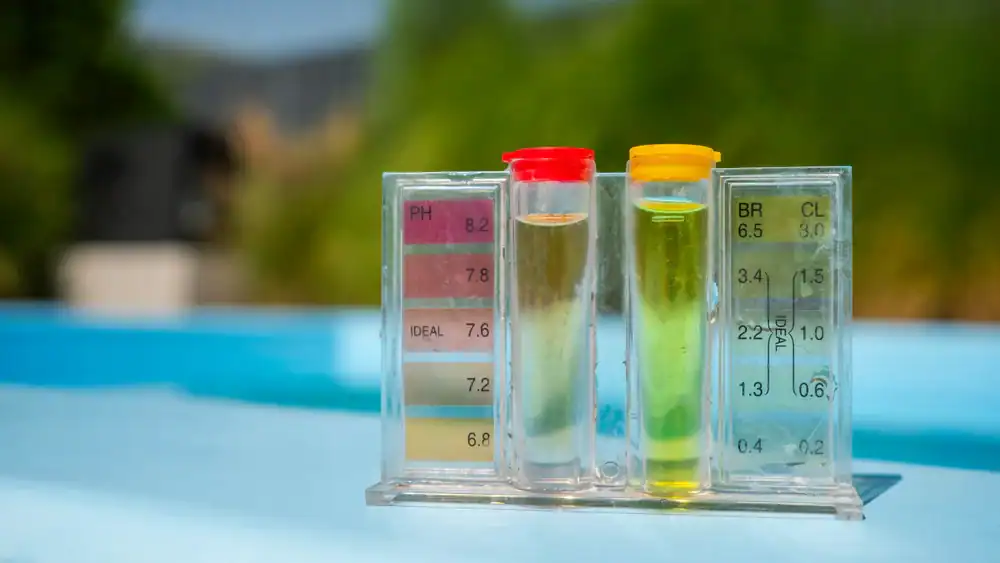
It starts with a full digital water analysis. Not a test strip dipped in your pool and held up to a color chart an actual digital reading of every parameter that matters: free chlorine, total chlorine, combined chlorine, pH, total alkalinity, calcium hardness, cyanuric acid, total dissolved solids, and metals. That last one is especially important if your Waresboro home draws from a private well. Iron and manganese don’t show up on strips, but they show up on your pool walls.
Once the full picture is clear, you get a plain-English breakdown of what’s off, what it means, and what needs to happen to correct it. No mystery chemicals added without explanation. No vague “looks a little low, let’s add some of this.” Every recommendation is tied directly to what the numbers actually showed.
From there, we correct and rebalance the chemistry pH, alkalinity, chlorine, stabilizer, whatever the water called for. In Ware County’s climate, where summer thunderstorms can shift your chemistry overnight and South Georgia’s UV intensity can burn through unprotected chlorine in a couple of hours, getting this right the first time isn’t optional. It’s the difference between a pool that stays clear and one that turns on you by the weekend.
Ready to get started?
The full water analysis we provide covers everything that actually drives pool chemistry: pH level balancing, total alkalinity, free and combined chlorine levels, calcium hardness testing, cyanuric acid, total dissolved solids, and a metals panel. That metals panel is not a standard inclusion at most pool stores but for Waresboro homeowners on private well water, it’s often the most important test on the list. Iron contamination is one of the leading causes of pool surface staining in rural South Georgia, and it’s invisible until the damage is already done.
Calcium hardness testing matters just as much. Water that’s too soft low calcium will slowly pull minerals from your pool’s plaster or finish to satisfy itself. That’s how you end up with rough, pitted surfaces that are expensive to repair. Water that’s too hard scales up your equipment and leaves white deposits on your tile line. Either direction costs you money over time, and neither shows up on a standard strip test.
For Waresboro pools surrounded by heavy tree cover pines, oaks, the kind of canopy that’s common on rural Ware County properties organic load is a real and ongoing chemistry challenge. Pollen, needles, and leaf debris spike chlorine demand and destabilize pH faster than most homeowners expect. The analysis accounts for all of it, not just the numbers that are easy to read.
Rain dilutes your pool’s chemicals chlorine, alkalinity, pH buffers all of it gets watered down at once. In Ware County, where the Okefenokee region averages around 50 inches of rainfall per year and summer thunderstorms roll through almost daily from June through September, this isn’t a rare event. It’s a regular chemistry reset that most pool owners aren’t accounting for.
The bigger issue is speed. In South Georgia’s summer heat, algae doesn’t wait a week to show up it can establish itself within 24 to 48 hours after a significant rain event drops your chlorine and shifts your pH. By the time the water looks green, you’re already behind. The fix is professional testing after major storms, not just eyeballing the water and hoping it clears. A full chemistry analysis after rain tells you exactly what shifted and what needs to be corrected before it becomes a visible problem.
Yes and it happens more often than people realize. Well water in rural areas of Ware County frequently contains elevated iron and manganese. When that water is used to fill or top off a pool, those metals don’t just disappear. They oxidize when they hit chlorine, and that oxidation is what causes the brown, green, or rust-colored staining you’ll sometimes see on pool walls and floors. Once that staining sets into a plaster or pebble finish, it’s not something you can brush away it requires chemical treatment or, in severe cases, resurfacing.
The fix isn’t complicated, but it has to happen before you start adding chemicals. A metals test before your first chemical addition tells you what you’re working with. If iron or manganese is present, there are sequestrant treatments that bind those metals and keep them from staining. Skipping that step and going straight to shock is one of the most common and most costly mistakes well-water pool owners make.
For most pools in South Georgia, a professional water analysis once a month during swim season is a reasonable baseline but Waresboro pools often need it more frequently than that. The combination of intense UV exposure, near-daily summer rain, significant tree cover on many rural properties, and the possibility of well water with elevated mineral content creates conditions where chemistry can shift faster than it does in more controlled environments.
At a minimum, get a professional test at the start of the season, after any major storm event, and any time the water looks off cloudy, discolored, or foamy. If your pool is surrounded by pine or oak trees, plan for more frequent testing during heavy pollen season in the spring. That organic load hits chlorine demand hard and fast, and what looked balanced on Monday can be struggling by Friday. Monthly professional testing through peak season is the most cost-effective way to stay ahead of it.
Pool store water tests are free, which tells you something about what they’re designed to do. The goal is to get you in the door and walk you out with products. But it does mean the recommendations you receive are shaped, at least in part, by what’s on the shelf. The test itself is also typically a basic reagent or strip-based reading, which misses metals, gives imprecise readings on combined chlorine, and often doesn’t test cyanuric acid or total dissolved solids at all.
Our professional digital water analysis gives you decimal-point accuracy on every parameter that matters including the ones that cause the most damage when they’re off. You get a written breakdown of what was found, what the ideal range is, and exactly what we did to correct it. No product agenda, no vague verbal summary. For Waresboro pool owners who have already spent money on chemicals that didn’t solve the problem, that independent, documented analysis is often what finally makes the difference.
This is one of the most common frustrations pool owners run into, and the answer is almost always pH. When your pool’s pH climbs above 7.8 which happens fast in South Georgia’s summer heat chlorine loses roughly half of its sanitizing effectiveness, even when the chlorine reading looks completely normal. You can have the right amount of chlorine in the water and still have a pool that isn’t being properly sanitized, because the pH is making it inactive.
The other frequent culprit is cyanuric acid buildup. CYA is the stabilizer that protects chlorine from UV degradation necessary in South Georgia’s intense sun but when it accumulates too high over time, it starts binding chlorine and preventing it from working. This is called chlorine lock, and it’s invisible on a basic test strip. A full digital water analysis checks CYA levels alongside everything else, so if that’s the root cause, it gets identified and addressed directly instead of you adding more chlorine to a pool that can’t use it.
The cost of a professional water test is a fraction of what it costs to recover from the problems that bad chemistry causes. A single algae treatment shock, algaecide, filter cleaning, multiple follow-up visits runs well over a few hundred dollars by the time it’s done. Surface staining from undetected iron in well water can require professional remediation that costs significantly more. Equipment damage from corrosive or scaling water adds up quietly over time until something fails.
In Waresboro, where a lot of pool owners are on private well water and dealing with the specific chemistry challenges that come with it tannin-influenced groundwater, heavy organic load from tree cover, intense UV exposure, and frequent rain the risk of chemistry going sideways is genuinely higher than in more controlled suburban environments. A professional test that catches a problem early doesn’t feel like an expense when you compare it to what fixing that problem costs after the fact. It’s straightforward math, and it tends to land differently once you’ve had to write the check for the alternative.