
Hear from Our Customers
When a gunite pool is built correctly, it doesn’t just hold water it holds up. You get a shell that’s engineered for the specific soil conditions under your Dasher property, not a generic template applied the same way it would be in a subdivision three counties away. The Coastal Plain soils in southeastern Lowndes County shift between sandy loam at the surface and clay-heavy layers at excavation depth. A builder who doesn’t account for that is the reason gunite pools develop cracks not the material itself.
You also get a pool that actually fits South Georgia’s calendar. From April through October, you have roughly seven months of real swimming weather. That’s not a small window. Over the life of a properly built gunite pool which can run 30 to 50 years with appropriate maintenance the return on that investment is significant, both in family use and in property value.
For Dasher specifically, where over 80% of residents own their homes and the median property value has more than doubled since 2000, a custom inground pool isn’t a luxury add-on. It’s a long-term improvement to a home most people plan to stay in. That changes what “worth it” means and it changes what kind of builder you should be looking for.
We were founded in Douglas, GA, but our experience goes back more than 30 years concrete work, plumbing, and pool construction across South Georgia’s Coastal Plain. We exist because we watched too many families in Dasher and across this region hire contractors who overpromised, cut corners, or disappeared after cashing a deposit. That’s not a marketing story. That’s why we started.
Every pool we build is handled entirely in-house. Excavation, steel, gunite application, plumbing, electrical, surface finishing, decking the same crew, start to finish. In a close-knit community like Dasher, where people talk and word travels fast, that kind of accountability matters. You know who built your pool. You can call us five years later when the pump needs attention.
We serve the Lowndes County area, including Dasher and the surrounding communities along the US-41 corridor between Valdosta and Lake Park. We know this part of Georgia the soil, the climate, and the permitting system that comes with it.
It starts with a 3D design. Before anything touches your yard, you’ll see your pool rendered in full detail shape, depth, features, deck layout so you can make changes on a screen instead of in concrete. For Dasher properties, where homes tend to be established with mature landscaping and specific drainage patterns, this step also helps identify how the pool integrates with what’s already there.
Once the design is locked in, we handle every permit. That includes navigating Valdosta’s consolidated permitting system, which as of July 2023 covers all building code compliance and inspections for the City of Dasher. Most homeowners don’t know that until they’re already frustrated trying to figure out who to call. You won’t have to. Building permit, electrical permit, every required inspection we handle it.
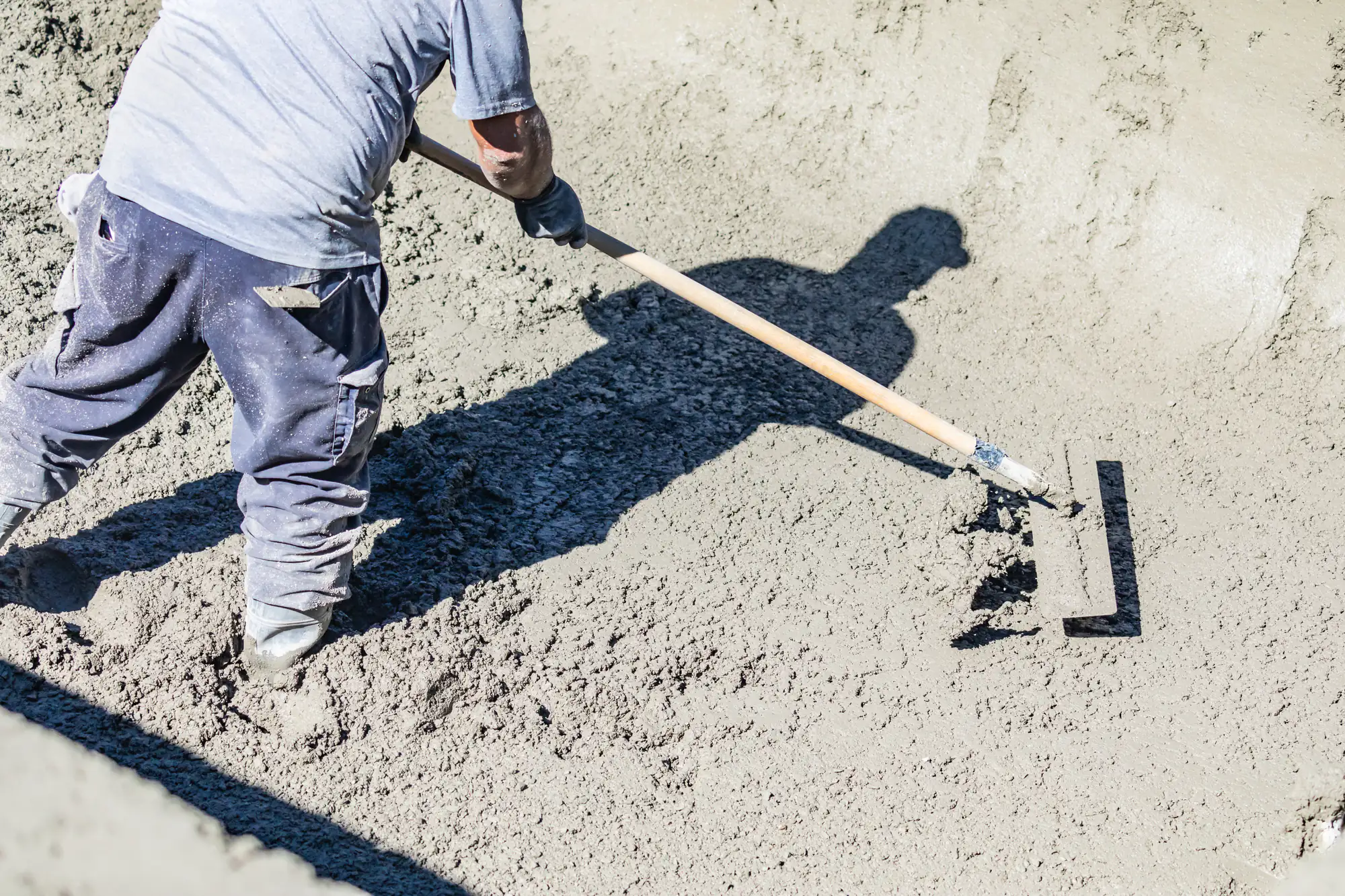
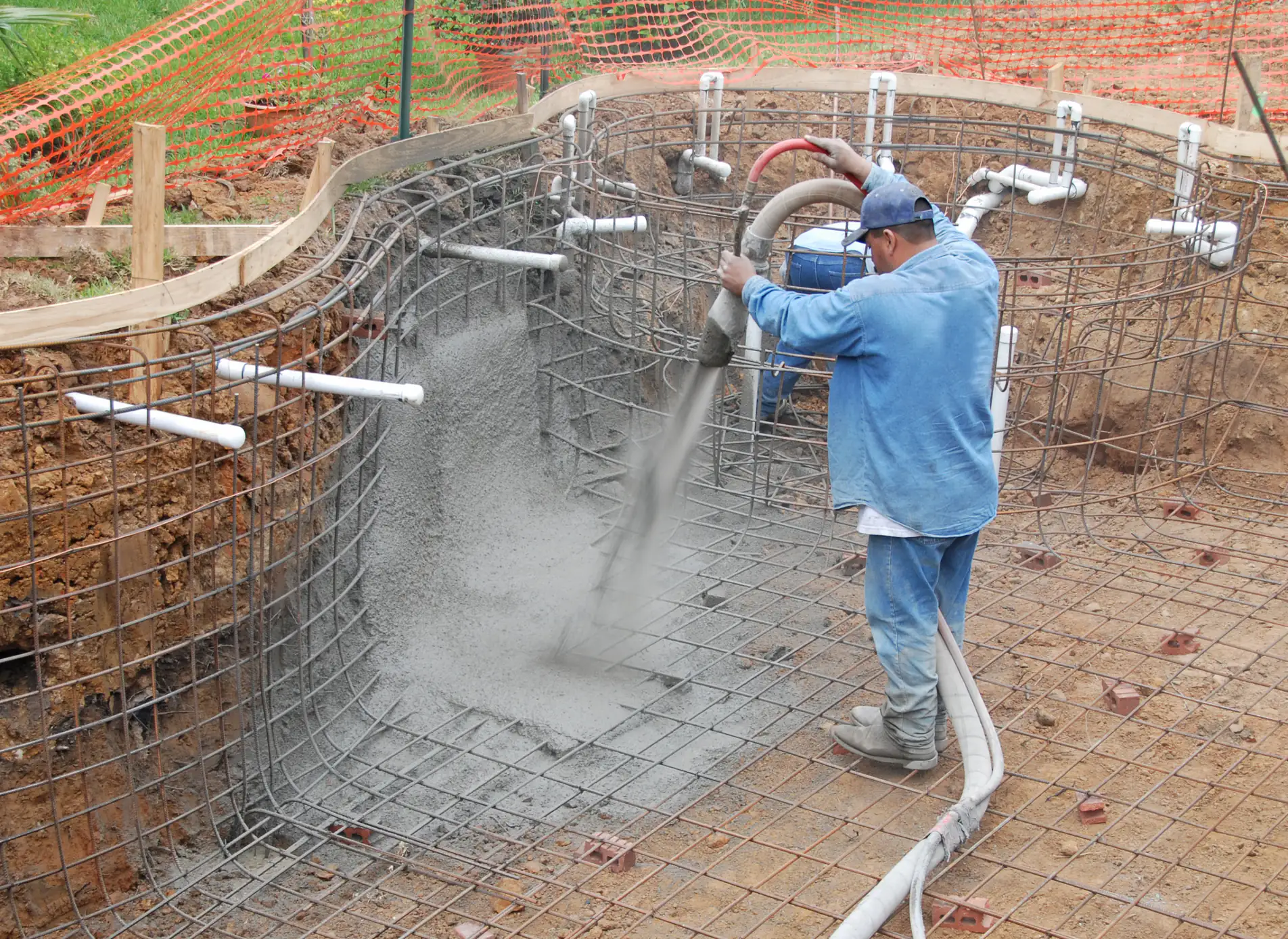
Then the build begins. Excavation, steel and rebar installation, gunite application, plumbing and electrical rough-in, surface finishing, and decking all happen in sequence with the same crew. No handoffs to subcontractors, no strangers cycling through your backyard. The timeline for most residential gunite pools runs three to six months. If you start in the fall which is smart, because permit queues are shorter and crews are more available you can be swimming by April when South Georgia’s season opens back up.
Ready to get started?
Gunite is the most customizable pool construction method available. Unlike fiberglass shells that arrive in a fixed shape and size, a gunite pool is built in place which means the shape, depth, and features are entirely up to you. Freeform designs, geometric layouts, tanning ledges, attached spas, water features, custom decking all of it is on the table and designed around your specific yard.
What sets our builds apart in the Lowndes County market is the engineering behind the shell. The subsurface conditions in southeastern Lowndes County require real attention sandy loam at the surface, clay-heavy layers below, and moisture variation that increases near the water features and drainage channels common in the Dasher area. Every shell we build includes adequate rebar density, correct wall thickness, and a gunite mix and curing process designed for these conditions. That’s why the resurfacing cycle on our pools runs 10 to 15 years not the 3 to 7 years you’ll hear from competitors pushing fiberglass as the alternative.
We also handle ongoing maintenance and equipment service after the build. Hayward, Pentair, Jandy, Sta-Rite, Zodiac all the major brands. The team that built your pool is the same team that keeps it running. For Dasher homeowners who plan to stay in their homes long-term, that continuity is worth more than most people realize until something breaks at 7 PM on a Saturday in July.
It’s a real concern dressed up as a dealbreaker by builders who don’t want to compete with gunite. The honest answer is that cracking is almost always a builder failure, not a material failure. The soils in southeastern Lowndes County where Dasher sits do shift. You’ve got sandy loam near the surface and clay-heavy layers at excavation depth, and moisture variation increases near the drainage features and water areas common in this part of the county. A gunite shell that isn’t engineered for those specific conditions can develop cracks over time.
But a properly built shell one with adequate rebar density, correct wall thickness, and a gunite mix that’s cured fully and not rushed handles normal ground movement without issue. We’ve been building pools in South Georgia’s Coastal Plain for over 30 years. The cracking problem is what happens when a builder applies gunite too thin or cuts the curing time to hit a lower price point. It’s not an inherent flaw in the material.
Most residential gunite pool projects in the Lowndes County area fall between $75,000 and $150,000, depending on size, shape, features, and site conditions. A straightforward rectangular pool with standard depth and basic decking will sit toward the lower end. A freeform design with an attached spa, tanning ledge, water feature, and custom deck will move toward the higher end.
Site conditions in Dasher can also affect cost. If your property has drainage challenges, mature tree roots near the excavation zone, or soil conditions that require additional structural engineering, that gets factored into the build. The best way to get an accurate number is with a site evaluation and a design conversation not a ballpark over the phone. What you want to avoid is a low bid that gets padded with change orders once the crew is already in your yard.
This is something most Dasher homeowners don’t find out until they’re already in the middle of it. As of July 1, 2023, the City of Valdosta’s Inspections Department handles all building code compliance and permitting for the City of Dasher not a separate Dasher city office. That means your pool permit goes through Valdosta’s system, including Valdosta’s contractor registration requirements. A builder who isn’t registered with Valdosta cannot legally pull permits for work in Dasher.
We handle every step of this in-house building permit, electrical permit, and every required inspection at each phase of the build. You don’t track paperwork, you don’t schedule inspectors, and you don’t find out mid-project that your contractor wasn’t set up to pull permits in your town. If a builder ever suggests you pull your own permit to “speed things up” or “save money,” that’s a flag worth paying attention to.
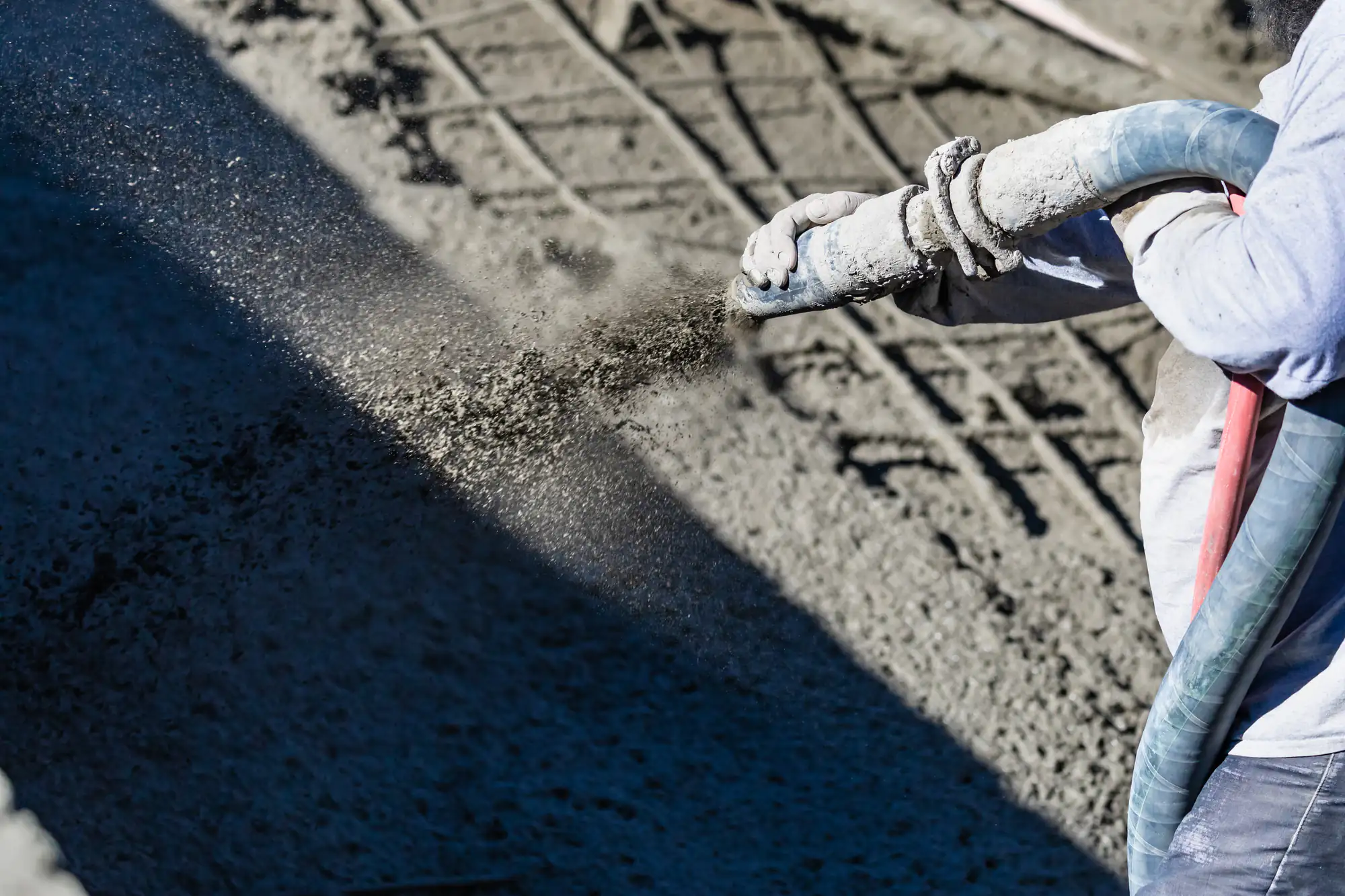
The terminology gets used inconsistently in the pool industry, which is why this question comes up so often. Gunite uses a dry concrete mix that combines with water at the nozzle during application. Shotcrete uses a pre-mixed wet concrete that’s pumped through a hose. Both methods produce the same end result a pneumatically applied, reinforced concrete shell. The final product is structurally the same.
What matters far more than the application method is the operator applying it and the engineering behind the shell. The skill of the nozzleman, the rebar layout, the mix design, the wall thickness, and the curing process are the variables that determine whether a concrete pool lasts 15 years or 50. We use the shotcrete application method and refer to it using standard industry gunite terminology. Either way, the shell is built to handle South Georgia’s soil conditions and climate that’s the part that actually determines long-term performance.
For most residential gunite pool projects in the Dasher area, you’re looking at three to six months from signed contract to swim-ready. That timeline includes the permitting process through Valdosta’s system, excavation, the full construction sequence, and all required inspections. Simpler builds on straightforward sites tend to land closer to three months. Larger or more complex projects or those that hit delays in the permit queue can stretch toward the six-month end.
One of the most practical things a Dasher homeowner can do is start the process in the fall. Permit queues are shorter, crews are more available, and a pool that breaks ground in October or November can realistically be complete by April right when South Georgia’s swimming season opens back up. Waiting until March or April to start means you’re competing with every other homeowner who had the same idea, and your pool may not be ready until midsummer at best.
A well-built gunite pool needs resurfacing every 10 to 15 years. You’ll hear competitors in the Valdosta market claim it’s every 3 to 7 years and for a poorly built pool, that’s accurate. Thin gunite application, rushed curing, and inferior materials all shorten the surface life significantly. A properly engineered shell with the right mix and full cure time holds up much longer, which is why the builder you choose matters as much as the material.
On the maintenance side, annual costs for a gunite pool in South Georgia typically run between $2,700 and $4,000 per year. That covers routine chemical balancing, equipment checks, and seasonal service. South Georgia’s long swimming season April through October in Lowndes County means your pool is in active use for roughly seven months of the year, which does factor into chemical consumption and equipment wear. We handle ongoing maintenance and equipment service for the pools we build, so you’re not starting from scratch looking for a service company after the project is done.