
Hear from Our Customers
Most homeowners in Dasher aren’t looking for the cheapest pool they can find. They’re looking for the right pool one that fits their lot, their family, and the way they actually live. That’s a different conversation than what most contractors are prepared to have.
Dasher’s residential properties tend to have real space rural lots with room to work with, yards that haven’t been carved up by dense subdivision planning. That kind of footprint gives you genuine creative latitude. You’re not trying to squeeze a rectangle into a tight corner. You’re designing something that fits the land you’ve owned and cared for, and that’s exactly where concrete construction earns its place. No factory mold decides your shape, your depth, or your layout. You do.
South Georgia summers are long, humid, and genuinely hot from May through September with a pool-use season that runs closer to seven months a year than the two or three months you’d get in northern states. That extended season changes the math on this investment. A pool in Dasher isn’t a warm-weather novelty. It becomes the center of your backyard from spring through fall, and the families who build them consistently say it’s one of the best decisions they’ve ever made for their home.
We’re a locally owned, Southeast Georgia pool contractor not a national chain, not a company that rotates crews in from out of state. The work we do in Lowndes County stays in Lowndes County. The reputation we build here is the one we live with.
We’ve built pools throughout the Valdosta area and the communities surrounding it including the rural residential properties along the US 41 corridor that connects Dasher to Lake Park and Valdosta. We know what rural Lowndes County lots look like. We know the soil, the permit process through the Lowndes County Building Permits and Inspections Department, and the seasonal rhythms that affect how and when a project gets done well.
When a Dasher homeowner calls us, they’re not getting a call center or a sales rep reading from a script. They’re getting a straight conversation about what their property can support, what the process actually looks like, and what it realistically costs. That’s the only way we know how to do this.
It starts with a conversation, not a sales pitch. We come out to your property, look at your lot, talk through what you’re envisioning, and give you an honest read on what’s realistic including timeline, cost range, and any site-specific factors that need to be addressed upfront. For rural properties in the Dasher area, that sometimes means identifying septic system locations before we ever break ground, or accounting for mature trees and established root systems that affect where the pool can go. We’d rather surface those things in the first conversation than after the excavator is on-site.
Once the design is finalized, we handle the permit through the Lowndes County Building Permits and Inspections Department. Under Georgia law, your contractor is required to pull that permit it cannot legally be purchased by the homeowner on someone else’s behalf. We manage that process completely, schedule all required inspections, and keep the project moving through each phase. Your payment schedule is tied to construction milestones you can actually see not a large deposit up front with updates that stop coming.
The build itself moves through excavation, shell construction, plumbing, electrical, interior finishing, and startup. One team, one point of contact, and a clear line of communication from start to the day you swim. The best time to start this process is fall or winter homeowners who plan ahead are the ones swimming by Memorial Day.
Ready to get started?
We build exclusively in concrete gunite and shotcrete construction and that distinction matters more than most buyers realize before they start comparing contractors. Fiberglass pools are manufactured in a factory and shipped to your property in a predetermined shape and size. If your Lowndes County lot, your design vision, or your family’s needs don’t match what that factory produces, you adapt. With concrete, the pool is built on your property from scratch, which means the shape, the depth, the entry style, the attached spa, the vanishing edge all of it is designed around you, not the other way around.
Every project includes full design consultation, permitting through Lowndes County, excavation, structural shell construction, licensed plumbing and electrical, interior finish selection, equipment installation, and pool startup. We specify variable-speed pumps on every build not as an upsell, but because they reduce energy consumption by 50 to 75 percent compared to older single-speed equipment. For a pool running seven-plus months a year in South Georgia’s climate, that difference shows up in your electric bill every single month.
We also build to the Virginia Graeme Baker Pool and Spa Safety Act requirements, which mandate anti-entrapment drain covers on all residential pools and spas. Every pool we build is permitted, inspected, and code-compliant which protects your home’s insurance standing and your family’s safety in ways that cut-corner construction simply does not.
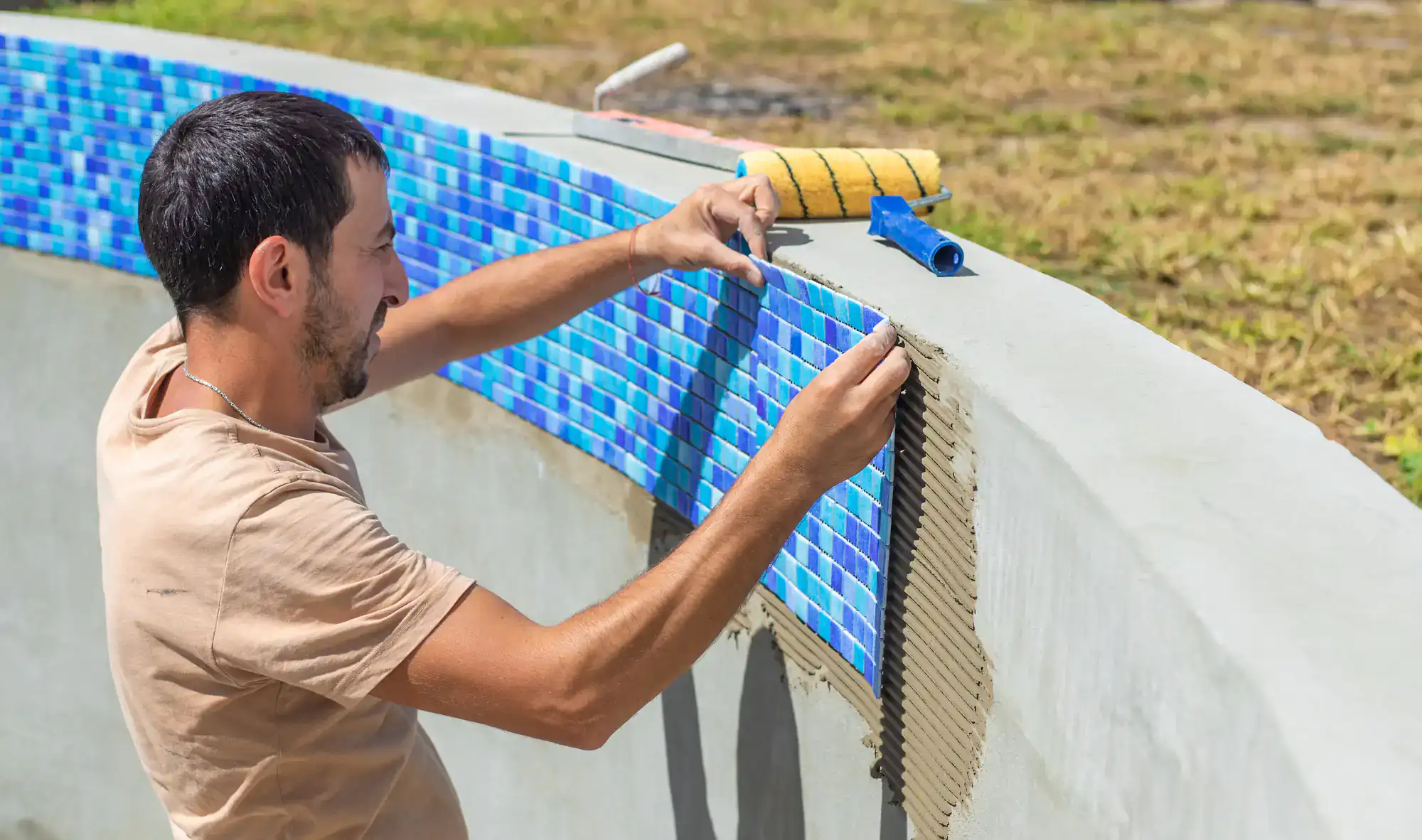
A quality custom concrete inground pool in the Dasher and Lowndes County area typically starts in the $75,000 to $100,000 range, with full backyard projects pools with attached spas, water features, or significant hardscape frequently running $125,000 to $150,000 or more. The range is wide because concrete pools are genuinely custom: the size, shape, depth, finish, and equipment package all affect the final number.
What drives cost up most often is scope creep that wasn’t planned for upfront features added mid-build, site conditions that weren’t identified before excavation, or equipment upgrades that weren’t included in the original quote. The best way to protect your budget is to work with a contractor who scopes the project completely before construction begins and gives you a detailed breakdown of what’s included. We’d rather have a thorough first conversation than a difficult one three months into the build.
Yes a building permit is required for inground pool construction in Lowndes County, and it’s not optional. The Lowndes County Building Permits and Inspections Department at (229) 671-3240 processes residential pool permits, and all required inspections must be scheduled and passed before the pool can be placed into service.
There’s also a legal detail worth knowing: under Georgia Law 43-41-17(h), it is illegal for a homeowner to purchase a permit for someone else to perform the work. That means your contractor must pull the permit in the proper manner not hand you a form and ask you to file it yourself. If a contractor suggests skipping the permit or asks you to handle the permitting, that’s a serious red flag. We pull every permit, schedule every inspection, and handle the entire compliance process. That’s not a favor it’s how legitimate pool construction works in Georgia.
Fall and early winter are the best planning windows for a Dasher or Lowndes County pool project. Homeowners who start the design and permitting process between October and February are the ones who realistically have a pool ready for the following summer. Contractors who are worth hiring tend to fill their spring build schedules months in advance, and a homeowner who reaches out in March hoping for a pool by June is almost always going to be disappointed.
The good news is that South Georgia’s climate allows for year-round concrete construction we don’t face the hard freezes that shut down pool builds in northern states. But permit processing, crew scheduling, and material lead times all take time regardless of season. Starting early also gives you more time to make thoughtful design decisions rather than rushing choices on finishes and equipment that you’ll live with for 30 or 40 years.
For a custom concrete pool in the Lowndes County area, the construction phase typically runs 10 to 16 weeks from permit approval to startup, depending on the complexity of the project, site conditions, and scheduling. More involved projects those with attached spas, water features, or significant deck and hardscape work can run longer.
The full timeline from your first consultation to your first swim is usually closer to four to six months when you account for the design process, permitting, and construction. That’s why the fall planning window matters so much. A homeowner who signs a contract in November and permits in December is swimming in May. A homeowner who calls in April is swimming in October or waiting until the following year. Rural properties in the Dasher area can occasionally add a small amount of time upfront if there are site-specific factors to evaluate, like septic system location or drainage planning, but those are conversations we have before the contract is signed.
The core difference comes down to customization and longevity. Fiberglass pools are manufactured in a factory and delivered to your property in a fixed shape, size, and depth. You choose from whatever the manufacturer produces. For a homeowner with a standard rectangular lot and a straightforward design preference, fiberglass can be a reasonable option. But for a Dasher homeowner with a larger rural lot, a specific design vision, or a desire for features like a beach entry, a vanishing edge, or a freeform shape that follows the natural contour of the property fiberglass simply cannot deliver that.
Concrete pools are built on-site, from scratch, to whatever specifications the homeowner and designer agree on. They also last significantly longer when properly built a well-constructed concrete pool has a structural lifespan of 30 to 50 years. The interior finish will need to be resurfaced periodically, typically every 10 to 15 years, but the shell itself is a permanent structure. Fiberglass pools can also be difficult to repair if the shell is damaged, and their resale value in the Lowndes County market is generally lower than a custom concrete pool of comparable size.
This is the right question to ask, and the fact that you’re asking it means you’ve probably already heard a story or two about homeowners who didn’t. The pool construction category has a well-documented history of contractors who take large deposits, miss timelines, blame subcontractors, and become unreachable after the money changes hands. In a smaller community like Dasher, the damage it causes is very personal.
A legitimate pool contractor in Georgia holds a valid state contractor’s license which is verifiable through the Georgia Secretary of State’s licensing board. They carry general liability insurance and workers’ compensation coverage, and they’ll provide proof of both without hesitation. They pull permits through the Lowndes County Building Permits and Inspections Department and schedule inspections at each required phase. Their payment schedule is tied to construction milestones, not a large upfront deposit. And they can give you references from completed projects in Lowndes County homeowners you could actually call and ask about their experience. Any contractor who checks all of those boxes is worth a serious conversation. Any contractor who hedges on any of them is worth walking away from.