
Hear from Our Customers
Most pool owners in Dasher don’t realize how fast things can go sideways in a South Georgia summer. One heavy thunderstorm dilutes your chlorine. Two or three days of 95-degree heat with a triple-digit heat index burns through what’s left. By the time you notice the water starting to cloud over, you’re already behind and getting back to clear isn’t cheap or quick.
That’s the real value of consistent, scheduled pool cleaning service. You’re not just paying for someone to skim leaves. You’re keeping your water in the narrow range where algae can’t get a foothold, where your equipment isn’t straining against a clogged basket or a filter running at the wrong pressure, and where your pool is actually usable when you want it not when it’s finally recovered.
Dasher’s extended swim season makes this even more important. With pools in use from early spring through late fall, and mild enough winters that algae can still grow in the cooler months, this isn’t a five-month concern. The homes along the US-41 corridor tend to be established properties with pools that have been running for years. Keeping that investment protected means staying ahead of the chemistry, not reacting to it.
We’ve been operating since 2014, but the experience behind our business goes back more than 30 years starting with hands-on pool construction, not just cleaning. That matters because a technician who has built pools from the ground up sees things differently than someone who learned the job from a checklist. When your pump starts sounding off, or your filter pressure is trending the wrong direction, that background is what catches it before it becomes a real problem.
We’re family-owned and based in South Georgia the same region, the same climate, the same summer storm patterns that Dasher residents deal with every year. This isn’t a franchise territory or a call center operation. There’s a real team behind every visit, and real accountability when something needs attention.
From Dasher down toward Twin Lakes and across Lowndes County, we service all major equipment brands Hayward, Pentair, Jandy, Sta-Rite, Zodiac so whatever’s already running in your backyard is covered.
Every service visit starts with a full read of your water not a glance, an actual test covering pH, chlorine, alkalinity, calcium hardness, and cyanuric acid. That data drives every chemical decision we make that day. And because we adjust chemical treatments based on current weather conditions rather than a fixed formula, what gets added to your pool after a week of 95-degree heat looks different than what gets added after a stretch of afternoon thunderstorms have rolled through the Lowndes County area. That adjustment is the difference between a pool that stays clear and one that doesn’t.
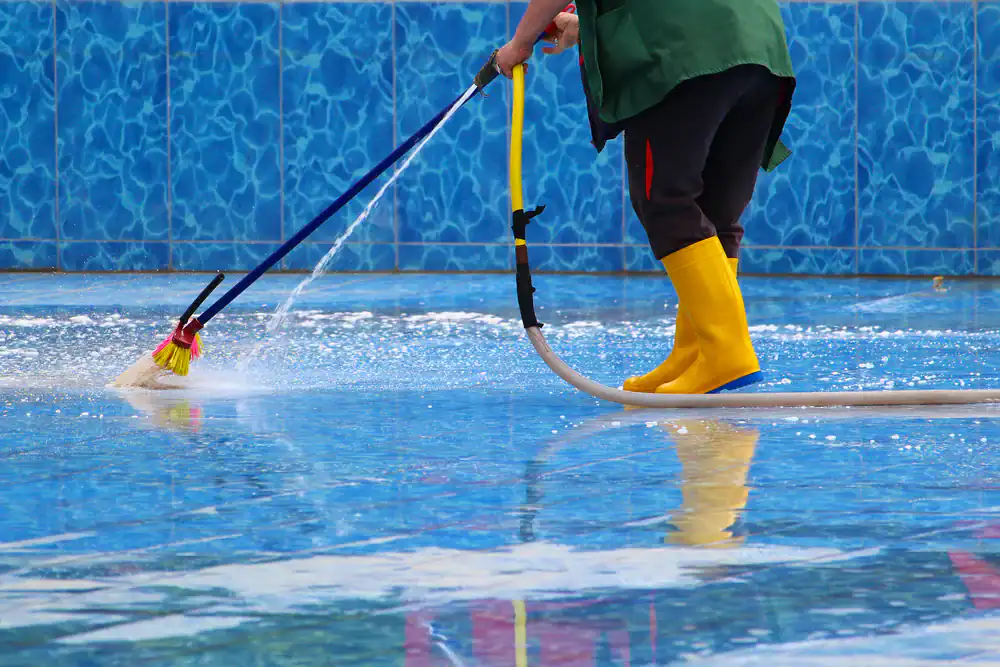
From there, the visit covers everything the water and equipment need: surface skimming, wall and step brushing to break up any algae before it establishes, floor vacuuming, and skimmer and pump basket cleaning to keep water flowing the way it should. Filter maintenance is checked and addressed as needed.
The equipment inspection piece is worth calling out specifically. Dasher’s established homes often have pools running on systems that are 10, 15, or even 20 years old. A technician who understands pool construction not just maintenance knows what wear looks like on older Hayward and Pentair equipment and can flag a developing issue while it’s still a minor repair, not a full replacement.
Ready to get started?
Our routine maintenance covers the full scope water chemistry testing and balancing, surface skimming, brushing, vacuuming, skimmer basket cleaning, pump basket cleaning, and equipment inspection every visit. Chemical balancing isn’t a one-size formula here. South Georgia’s combination of intense UV exposure, high humidity, heavy pollen seasons, and frequent summer storms means the organic load in your pool water shifts constantly. We adjust treatments to match actual conditions, not a preset schedule.
For Dasher homeowners dealing with a pool that’s already gone green whether from a missed service, a bad storm season, or a previous company that stopped showing up green pool recovery is part of what we handle. It’s not a special add-on that takes weeks to schedule. It’s part of the technical capability we bring to every market we serve in Lowndes County.
Seasonal pool care is also available for homeowners who want professional attention at key points in the year spring opening, mid-season chemical audits, and fall transition service to make sure the pool heads into the cooler months in good shape. Because Dasher’s winters are mild enough that algae doesn’t fully stop growing, skipping fall and winter maintenance is one of the most common reasons pools need expensive remediation come March.
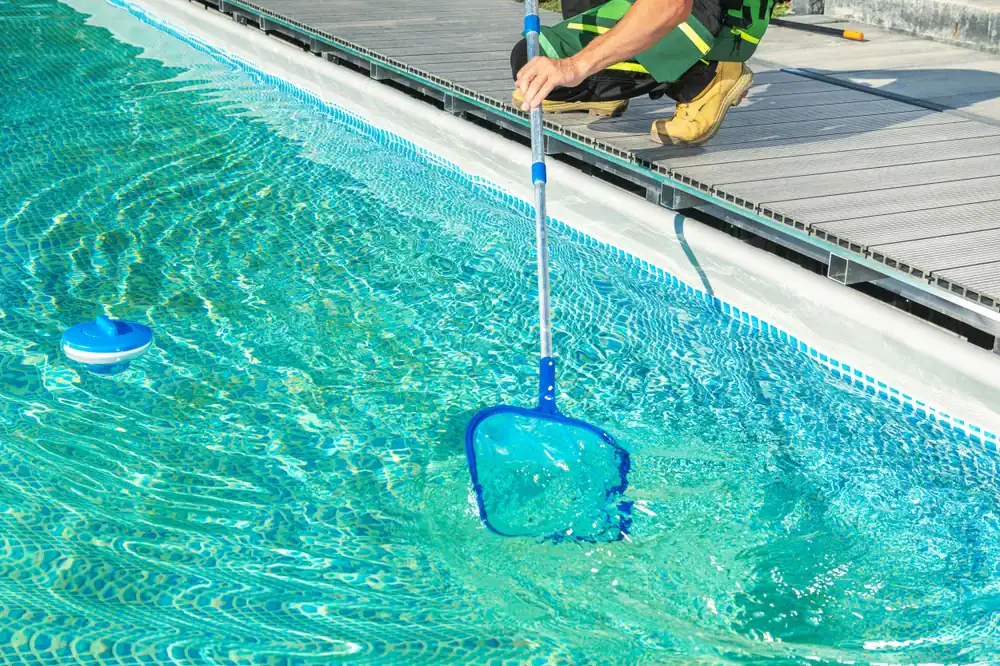
For most pools in Dasher, weekly service is the right call during the summer months and that’s not a sales pitch, it’s just what the climate demands. From May through September, you’re dealing with sustained heat that burns through chlorine faster than most people expect, afternoon thunderstorms that dilute chemical levels, and high humidity that keeps organic material cycling into the water constantly. South Georgia’s pollen seasons alone which run from roughly February through May can significantly increase the phosphate load in your pool, and phosphates feed algae.
Bi-weekly service can work in the shoulder months, typically October through November and again in March and April, when temperatures are lower and the pool is seeing less use. But dropping to monthly service in summer, or skipping visits entirely in winter, is where most Dasher pool owners end up with a green pool problem in spring that costs more to fix than the missed service visits would have.
A complete service visit covers water chemistry testing and chemical balancing, surface skimming, wall and step brushing, floor vacuuming, skimmer basket cleaning, pump basket cleaning, and an equipment inspection. Every one of those steps matters independently. Brushing the walls, for example, isn’t just cosmetic it breaks up early algae colonies before they have a chance to establish. Cleaning the skimmer and pump baskets keeps water moving through the system correctly, which protects the pump motor from working harder than it needs to.
Chemical balancing is tested and adjusted every visit, not assumed to be the same as last week. In a climate like Lowndes County’s, where a single afternoon storm can measurably shift your pool’s chemistry, treating each visit as a fresh assessment is the only way to stay consistently ahead of water quality issues.
In most cases, yes. Whether a full drain is necessary depends on how far gone the water is specifically, the total dissolved solids level and whether the algae bloom has progressed to a point where chemical treatment alone won’t bring the water back to safe, clear condition. Most green pools in the Dasher area that result from storm-related chemical dilution or a gap in service can be treated with a targeted shock and algaecide protocol, followed by filtration and chemical rebalancing over several days.
The faster you address it, the less intervention it takes. A pool that’s been green for a week is a different situation than one that’s been neglected for a full season. If you’re seeing cloudy or green water after one of Lowndes County’s summer storm stretches, getting a professional assessment quickly is the right move waiting typically makes the recovery longer and more expensive.
This is one of the most common misconceptions among pool owners in Dasher and across Lowndes County. Because South Georgia winters are mild and because pools here don’t typically require full winterization the way pools in northern Georgia or the Carolinas do many homeowners assume their pool can go without service from December through February. It can’t.
Algae begins growing in water at temperatures as low as 50°F. Even in a mild South Georgia winter, your pool water stays well above that threshold. Without regular chemical balancing and equipment checks, you can arrive at March with a significant algae problem, a filter that’s been running compromised for months, or early equipment wear that went unnoticed. The cost of two or three winter service visits is almost always less than the cost of a spring green pool recovery plus whatever equipment attention got deferred.
Pool chemistry is a balancing act between several interdependent factors pH, chlorine, alkalinity, calcium hardness, and cyanuric acid (which is a stabilizer that helps chlorine last longer in direct sunlight). When any one of those is off, it affects the others, and the water’s ability to stay clear and safe drops quickly.
In Dasher specifically, the challenge is that your pool’s chemistry is constantly being pushed around by external forces. Heavy UV exposure in summer accelerates chlorine loss. Rain events dilute chemical concentrations across the board. High temperatures push water toward conditions that favor algae growth. A fixed chemical formula applied on a set schedule doesn’t account for any of that which is why we test and adjust based on actual current conditions rather than assuming last week’s balance held. It’s a more precise approach, and in South Georgia’s summer climate, that precision is what keeps the water consistently clear.
There are a few things to watch for between service visits. Unusual pump noise a grinding or high-pitched sound it wasn’t making before often signals a bearing issue or cavitation problem that needs attention soon. Rising filter pressure that doesn’t drop after a backwash can mean the filter media is due for replacement or the system has a flow restriction somewhere. Reduced return flow from your jets, water that won’t clear despite proper chemical levels, or a pump that’s running but not moving water well are all signs that something beyond routine maintenance is happening.
For Dasher homeowners with older pools and many properties along the US-41 corridor have equipment that’s been running for a decade or more these signs tend to show up gradually. The advantage of having a maintenance provider with real construction and equipment background is that we recognize what early-stage wear looks like on a 15-year-old Hayward or Pentair system. Catching it at that stage is almost always a repair. Missing it until it fails is usually a replacement.