
Hear from Our Customers
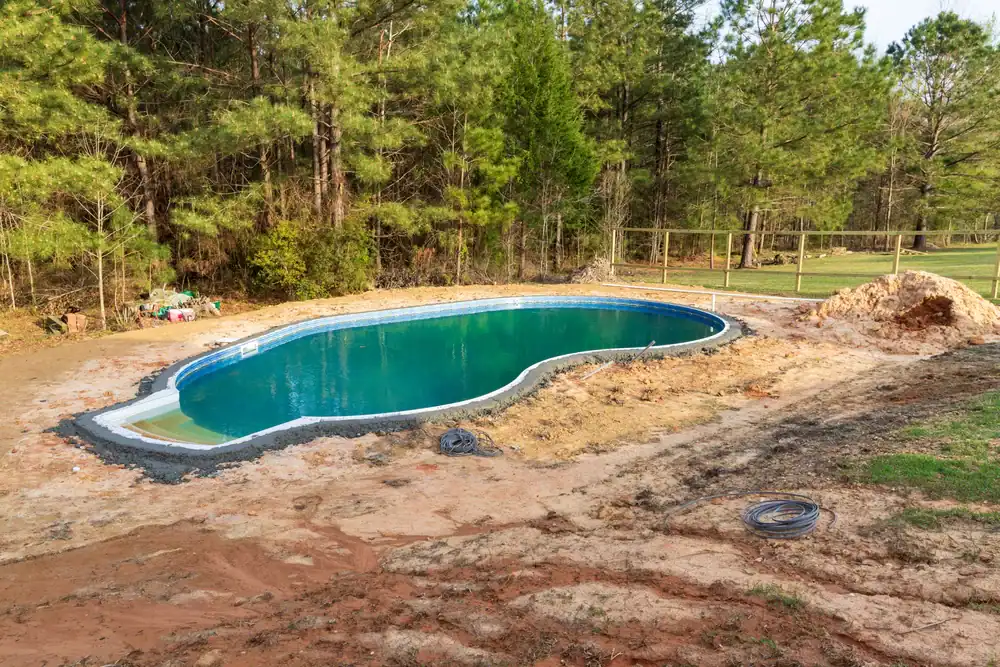
When the heat index climbs past 100°F in July and stays there through August, a backyard pool stops being a nice idea and starts being the most practical thing on your property. In Ellenton, summer doesn’t ease in it arrives hard and stays for months. A pool that’s built correctly and ready by April means you’re using it from the first warm weekend all the way through October, not waiting on a contractor who’s still finishing your neighbor’s project.
The sandy loam soils of Colquitt County’s Lower Coastal Plain behave differently than the red clay you’ll find up in the Piedmont. Builders who’ve only worked north of Macon won’t necessarily know how to sequence an excavation in this soil, or what happens when they hit the sandy clay loam layer at depth. That affects the structural integrity of everything that goes on top of it. Getting it right from the ground up means your pool performs the way it should for decades, not just the first few years.
Beyond the build itself, a properly constructed inground pool adds real, measurable value to your home. In a market where detached homes in the Ellenton area average around $92,000, that kind of equity bump is meaningful and in a climate where a pool is a genuine selling feature, it matters to future buyers too.
We’re based in Douglas, Georgia a South Georgia company that’s been building custom inground pools since 2014, backed by more than 30 years of hands-on experience in concrete, plumbing, and pool construction before that. This isn’t a franchise covering five states from an office somewhere else. We work in this part of Georgia because this is home territory, and we’ve built pools across Colquitt County and the surrounding Coastal Plain for homeowners who know the difference between a local builder and someone passing through.
When you hire us for a pool build in Ellenton, the same crew that digs your yard installs your plumbing, applies your gunite shell, handles the electrical bonding, and finishes your deck. No subcontractors. No unfamiliar faces showing up unannounced. In a community like Ellenton where your neighbors are your neighbors that kind of accountability is the only way to operate.
Every permit required by Colquitt County’s compliance office in Moultrie is pulled in our name. You don’t track down inspection schedules or figure out what the county needs. We handle it.
It starts with a design conversation and a 3D rendering of your pool built around your actual lot, not a template. Properties in and around Ellenton tend to have more room to work with than suburban developments, which means you have real options when it comes to shape, depth profile, and deck layout. Once the design is locked in, we handle the permit application with Colquitt County’s compliance office on East Central Avenue in Moultrie. That step alone trips up a lot of homeowners who try to manage it themselves the county has specific documentation requirements, and the inspection sequence matters.
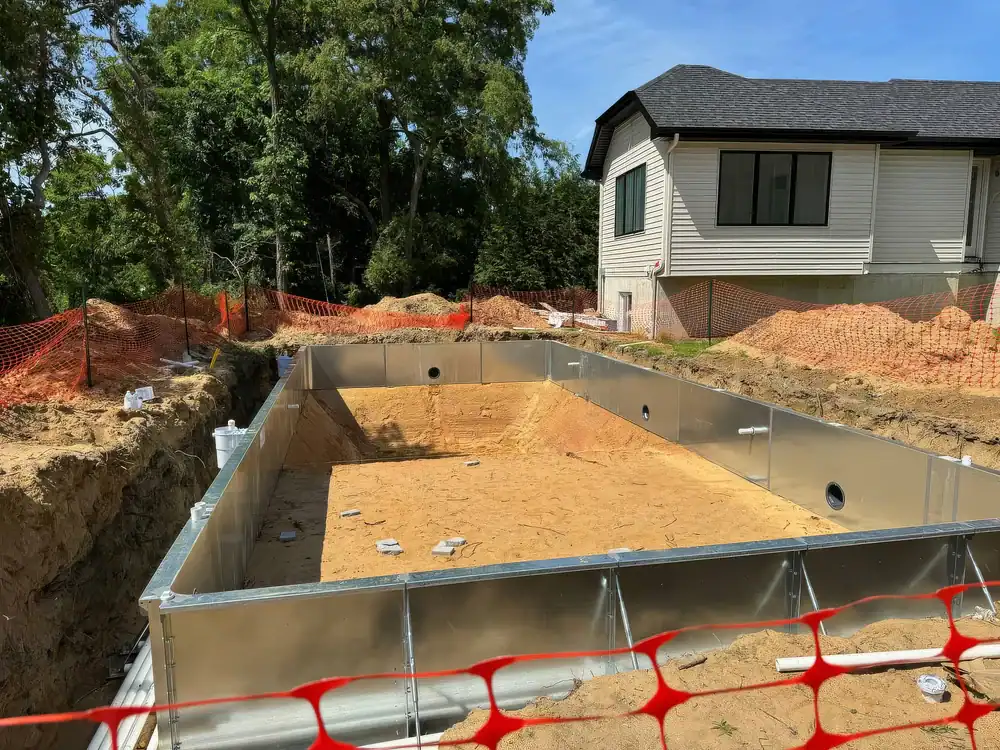
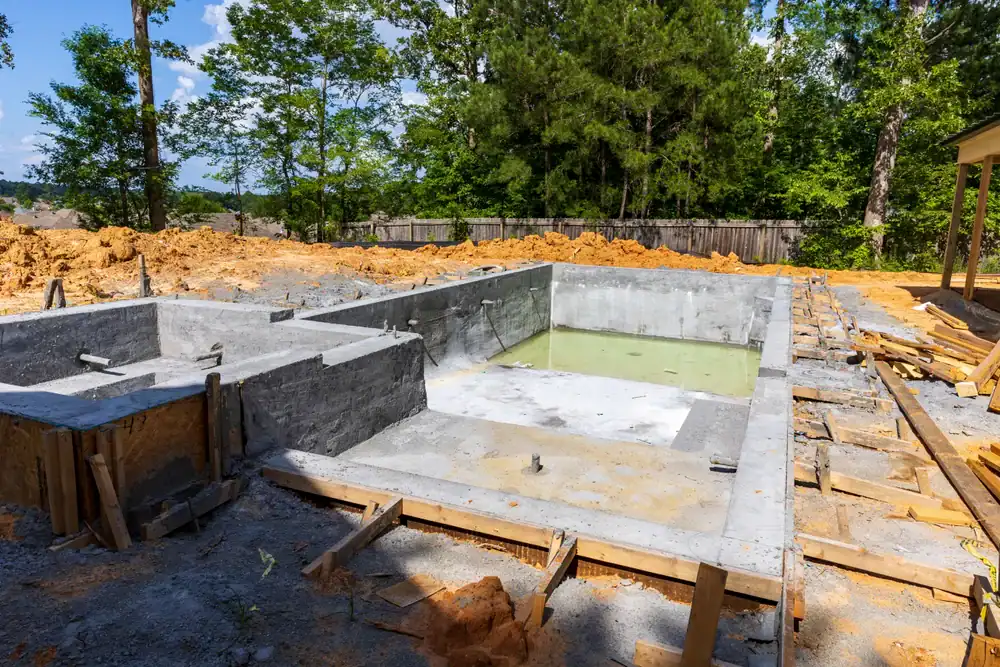
Excavation comes next. In Colquitt County’s Coastal Plain soils, this phase requires careful attention to how the sandy loam layers behave as you go deeper. We manage that sequencing directly no handoff to a sub who’s never seen your property. Once the shell is excavated and formed, a mandatory rebar cage inspection is required before gunite can be applied. Georgia building code doesn’t allow you to skip it, and we schedule it as a standard step, not an afterthought.
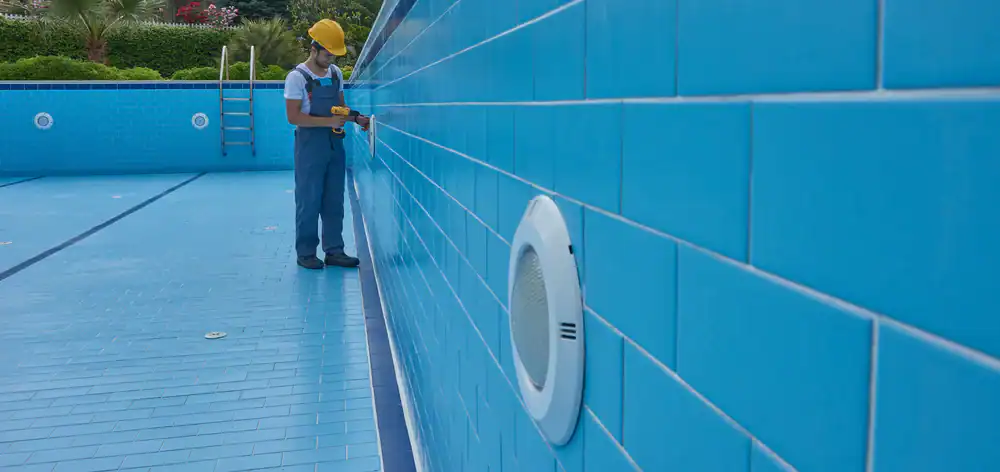
After gunite is applied and cured, plumbing and equipment installation follow, then electrical bonding and grounding to NEC Article 680 standards, and finally your deck and finish work. South Georgia’s mild winters mean construction can move year-round so if you start in the fall, you can realistically be swimming by the time April arrives.
Ready to get started?
Every pool build we complete covers the full scope custom gunite shell, pool plumbing installation, equipment setup, electrical bonding and grounding, pool deck installation, and in-house permit management through Colquitt County. A custom safety cover is included in every contract as standard. Not an upsell. Not an optional add-on. It’s part of the build because it should be, especially for families with kids in a community like Ellenton where the median age skews young and backyards are actually used.
Our gunite-only focus matters here. Fiberglass pools ship in fixed shapes and fixed sizes if your lot on the northeast side of Colquitt County doesn’t match the catalog, you’re stuck compromising. Gunite is built on your property, in your footprint, engineered to your soil conditions. That flexibility is the entire point of going custom, and it’s the reason homeowners with larger rural lots near Ellenton choose this approach over a pre-formed shell.
Spa and hot tub construction, patio work, pool renovation, and ongoing maintenance and chemical service are also available through us. If you’re starting from scratch or updating an existing pool, the same crew and the same accountability apply. One point of contact, one company responsible for the outcome from the first design call to the final inspection sign-off.
Yes and in Colquitt County, that permit process runs through the county compliance office located at 101 East Central Avenue in Moultrie, not through a city-level building department. Ellenton doesn’t have its own standalone permitting infrastructure, so all residential construction permits, including pools, are handled at the county level. The permit application requires documentation of the pool design, setback compliance, and planned electrical and plumbing work.
Beyond the building permit, pool construction in Georgia also requires an electrical permit covering bonding and grounding to NEC Article 680 standards, and a mandatory rebar cage inspection that must be passed before gunite can be applied. Georgia law requires that the contractor not the homeowner pull the permit in the company’s name for projects above $2,500. When we build your pool, every permit is pulled in our name, every inspection is scheduled by us, and you never have to deal with the county compliance office directly. That’s part of the job, not an extra service.
For a custom gunite pool in the Colquitt County area, the typical timeline from permit approval to a finished, swim-ready pool runs roughly 8 to 14 weeks, depending on the complexity of the design, weather windows, and inspection scheduling. South Georgia’s climate is actually an advantage here unlike markets further north, construction doesn’t shut down in winter. If you start your project in October or November, you can realistically be swimming by late March or early April when the heat starts building in Ellenton.
The phases that tend to add time are permitting and inspection holds. The mandatory rebar inspection before gunite application is a required stop in the process you cannot skip it or work around it. Experienced builders who have worked in South Georgia counties before know how to schedule around inspection availability and keep the project moving. Rain events during late summer and early fall can also create short delays in excavation and gunite application, but those are manageable with proper scheduling. The goal is always to have your pool ready before the heat peaks, not after.
It does, and it’s worth understanding before you hire anyone. Colquitt County sits in Georgia’s Lower Coastal Plain, where the soil profile is primarily Tifton series a loamy sand topsoil that transitions to fine sandy loam and eventually sandy clay loam as you go deeper. That’s meaningfully different from the dense red clay found in Georgia’s Piedmont region, and it creates distinct engineering considerations during excavation and shell construction.
Sandy soils can shift and collapse more easily during excavation, particularly when the ground is wet. The transition to sandy clay loam at depth also requires awareness of how different layers behave under load. A builder who has only worked in Piedmont clay or North Georgia rock won’t necessarily anticipate these conditions and a miscalculated excavation in Coastal Plain soil can create structural problems that don’t show up immediately but compound over time. We’ve built across Southeast Georgia’s Coastal Plain and understand how to sequence excavation and engineer the shell for the specific soil behavior in this part of the state. It’s not a detail that shows up in a brochure, but it’s one of the more important factors in how long your pool holds up.
The core difference is customization versus convenience. Fiberglass pools are manufactured off-site as a pre-formed shell, delivered by truck, and dropped into an excavated hole. They install faster, but you’re limited to whatever shapes and sizes the manufacturer offers. If your property near Ellenton has an irregular footprint, a slope, or a specific layout you want to work with, fiberglass can’t accommodate that you get what fits the catalog.
Gunite is built from scratch, directly on your property. The rebar cage is formed to your exact design, and the concrete is pneumatically applied over it in place which means any shape, any depth profile, any footprint is achievable. Gunite pools are also significantly more durable over the long term. They don’t flex or degrade the way a fiberglass shell can over decades of use and ground movement. For homeowners in Colquitt County who are making a long-term investment in their property not just looking for the fastest installation gunite is the more durable, fully custom option. It costs more upfront in some cases, but it’s built to last 30 or 40 years with proper maintenance, not 15 to 20.
A custom gunite pool in the Colquitt County area typically starts in the range of $60,000 to $80,000 for a standard residential build, with larger or more complex projects those with spas, custom water features, or extensive deck work running higher. That range reflects the full scope: design, permitting, excavation, gunite shell, plumbing, electrical, and deck installation. The custom safety cover we include in every build is part of that price, not added on top.
It’s worth framing that number against what it does for your property. In a market where detached homes in the Ellenton area average around $92,000, a well-built pool can add meaningful equity and make your home a more competitive listing if you ever sell. More practically, in a part of South Georgia where summers run hot from April through October, a private pool replaces years of water park trips, cooling costs, and weekends spent somewhere else. The more important number isn’t the sticker price it’s what you get for it and how long it holds up. A pool built correctly in Colquitt County’s Coastal Plain soils, by a crew that knows what they’re doing, should perform for decades without major structural issues.
Because pool construction isn’t the same everywhere, and the gaps show up after the project is done. Colquitt County has its own permitting process, its own soil conditions, and its own inspection requirements and a contractor who hasn’t worked in this county before is going to be figuring some of that out on your project. The county compliance office in Moultrie has specific documentation requirements, and the inspection sequence for pool construction in Georgia has mandatory hold points that can’t be skipped. A builder who knows this process moves through it efficiently. One who doesn’t can stall your timeline at critical stages.
Beyond permitting, the Tifton series soils of the Coastal Plain behave differently than what builders encounter in other parts of Georgia. Excavation in sandy loam requires a different approach than digging in Piedmont clay, and the structural engineering of the shell needs to account for how those soil layers interact with the pool over time. Hiring someone who has worked in this part of South Georgia not just someone who’s willing to drive here means those variables are already accounted for in how your pool is designed and built. That local experience is the difference between a pool that performs for 30 years and one that shows problems in year five.