When your pool turns green overnight, you need more than chemicals—you need expertise. Here's how our professional service team restores water balance quickly in Georgia's challenging climate.
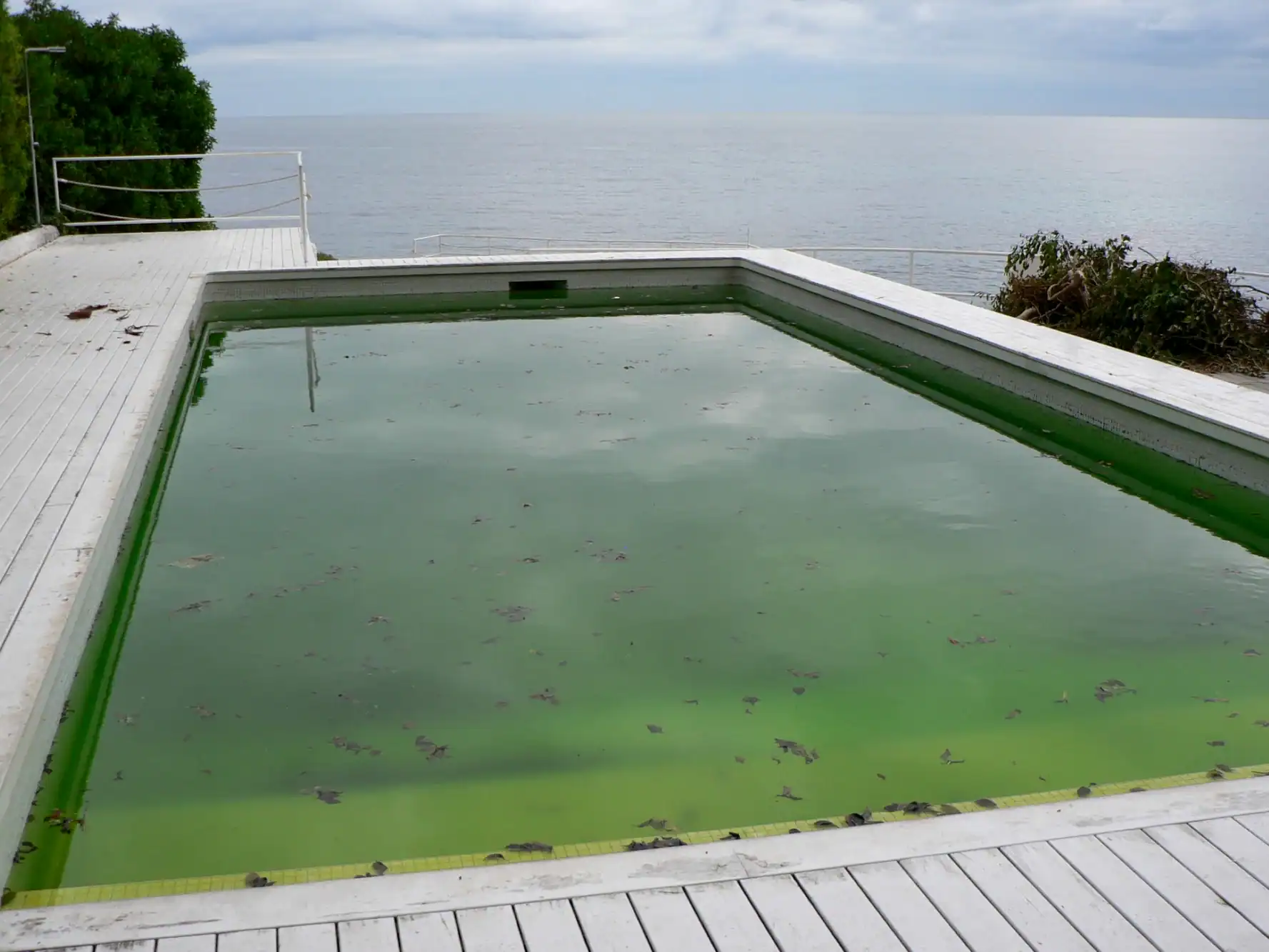
Georgia’s climate is perfect for pool owners and terrible for pool water. When temperatures consistently hit 85 degrees or higher—which happens most of the summer—algae reproduction goes into overdrive. Combine that with humidity levels that keep everything damp, frequent afternoon storms that dump organic debris into your water, and intense UV rays that burn through chlorine faster than you can add it, and you’ve got a recipe for green water.
The algae spores are always there. They’re in the air, on leaves, in rainwater. They’re waiting for the right conditions. When chlorine dips below 1 ppm, even for a day, those spores get their chance. In warm water, they multiply every few hours. What starts as a faint tint on Monday becomes an opaque green mess by Wednesday.
Most people don’t realize how quickly the balance tips. You can have perfect water on Friday and a green pool on Sunday. That’s not neglect. That’s just Georgia in July.
Water chemistry isn’t complicated, but it is precise. Your pool needs chlorine between 1 and 4 ppm to kill algae and bacteria. It needs pH between 7.2 and 7.6 so that chlorine can actually work. It needs alkalinity between 80 and 120 ppm to buffer those pH swings. When any of these numbers drift out of range, your sanitizer stops doing its job.
Here’s what most people miss: you can have high chlorine and still get algae if your pH is too high. Above 7.8, chlorine becomes ineffective even when test strips show plenty in the water. You’re adding chemicals that aren’t working. That’s why DIY attempts often fail. You’re treating symptoms without understanding the cause.
Georgia’s weather makes this worse. Rain lowers pH and dilutes chlorine. Heat accelerates chemical breakdown. Storms wash in phosphates that feed algae. Your pool isn’t fighting one problem—it’s fighting five at once. When you don’t know which battle to fight first, you lose ground fast.
We test for everything. Not just chlorine and pH, but alkalinity, calcium hardness, phosphates, and combined chlorine. We look at water temperature, filtration runtime, and equipment function. We know that a green pool in Douglas County after a thunderstorm needs a different approach than a green pool in week three of a heat wave. The diagnosis matters as much as the treatment.
Most homeowners grab shock and algaecide and hope for the best. Sometimes that works for light green water caught early. But when you’re dealing with dark green water where you can’t see the bottom, hope isn’t a strategy. You need someone who’s restored hundreds of pools and knows exactly how much shock a 20,000-gallon pool needs, how long to run the filter, when to brush, and when to vacuum. Guessing costs you time and money.
Water temperature controls everything. Below 70 degrees, algae grows slowly. Between 70 and 80 degrees, it grows steadily. Above 85 degrees—which is standard for Georgia pools in summer—it explodes. The warmer the water, the faster algae cells divide. In optimal conditions, populations double every few hours. That’s why your pool can look fine Monday morning and be completely green by Tuesday afternoon.
Georgia’s humidity adds another layer. Humid air reduces evaporation, which sounds good until you realize that means chemicals and contaminants stay concentrated in your water longer. There’s less natural turnover. Warm, stagnant water in shaded corners becomes an algae breeding ground. Those spots spread fast once algae establishes a foothold.
The sun compounds the problem. UV rays destroy chlorine. Without stabilizer, you can lose half your chlorine in a few hours of direct sunlight. Most pools use cyanuric acid to protect chlorine from UV breakdown, but even stabilized chlorine struggles when water temperatures climb. Your sanitizer is fighting a losing battle against heat, sun, and biology.
Then there are the storms. Georgia gets frequent thunderstorms, especially in summer. Each storm dumps rainwater that dilutes your chemicals, lowers pH, and washes in leaves, pollen, and organic debris. That debris feeds algae. Within 24 hours of a heavy storm, you can see water starting to cloud. Within 48 hours, it’s green. The pool went from balanced to overrun faster than most people can get to the pool store.
This is why professional maintenance matters. Regular service keeps chlorine levels steady, pH balanced, and filtration running properly. It catches small problems before they become big ones. When you’re testing once a week or once every two weeks, you’re always reacting to problems that already happened. Professional service prevents them from happening in the first place.
Equipment also plays a role. Your filter needs to run 8 to 12 hours a day in summer, sometimes more during heat waves. If your pump isn’t circulating water properly, chemicals don’t distribute evenly. Dead spots form where algae can grow unchecked. If your filter is clogged, it can’t remove the particles and spores that seed new blooms. We check all of this—not just the water, but the systems that keep the water clean.
Want live answers?
Connect with a Deep Waters Pools expert for fast, friendly support.
Restoring a green pool isn’t about dumping chemicals until something works. It’s a process. First comes assessment. How green is the water? Light tint, murky, or can’t-see-the-bottom dark? Each level requires different treatment. Next is testing. Not just chlorine and pH, but a full panel. What’s the alkalinity? Calcium hardness? Are there metals in the water? Is the filter working?
Once you know what you’re dealing with, you can build a treatment plan. For light green water caught early, you might need a double or triple shock dose, proper pH adjustment, and 24 hours of filtration. For dark green water, you’re looking at multiple shock treatments, algaecide, constant brushing to break up colonies, and days of continuous filtration. The pool might need four times the normal shock dose. You might need to manually vacuum to waste to remove dead algae without sending it back through the filter.
Timing matters too. You shock at dusk or night so chlorine has time to work before the sun burns it off. You brush before shocking to expose algae clinging to walls and floors. You run the filter continuously until water clears, which might be 48 hours or more. You test every few hours to track progress and adjust treatment. It’s methodical, not random.
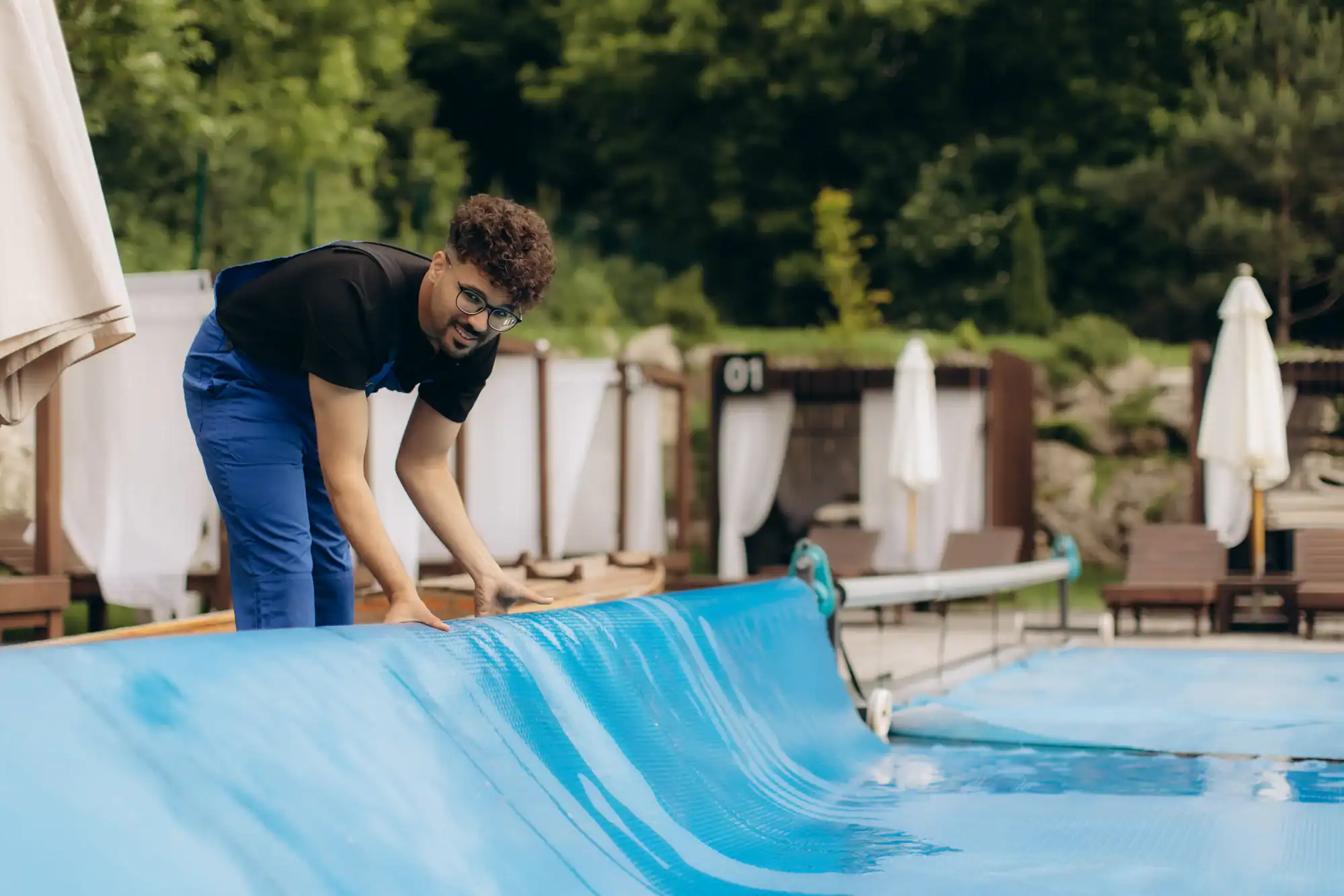
Most people underestimate how much shock they need. They follow the label instructions for routine maintenance—one pound per 10,000 gallons—and wonder why nothing happens. But routine maintenance dosing doesn’t kill established algae. You need three to four times that amount for a green pool. For a 20,000-gallon pool with dark green water, you might need six bags of shock. Most homeowners use two and give up when it doesn’t work.
Then there’s the pH problem. If your pH is above 7.8, shock won’t work effectively no matter how much you add. The chlorine is chemically locked. You have to lower pH first, then shock. But if you don’t test pH—or don’t understand what the number means—you’re wasting chemicals and time.
Filtration is another common failure point. People shock the pool and then run the filter for a few hours. That’s not enough. The filter needs to run continuously, sometimes for days, to remove dead algae and clear the water. If you shut it off overnight, algae can reestablish. If your filter is dirty or clogged, it can’t do its job. You’re circulating green water without actually cleaning it.
Brushing gets skipped. Algae clings to surfaces. If you don’t brush walls, steps, and corners, you’re leaving colonies intact. They’ll survive the shock treatment and spread again as soon as chlorine levels drop. You have to physically break up the algae, then let the shock kill it, then filter it out. Miss any step and you’re starting over.
Finally, there’s the equipment issue. If your pump isn’t working right, chemicals don’t circulate. If your filter media needs replacing, it can’t trap particles. If your skimmers are clogged, debris stays in the water feeding algae. We check all of this. A homeowner usually doesn’t even know what to check. You’re treating the water without addressing the systems that maintain the water.
That’s why professional restoration works. It’s not magic. It’s experience, proper diagnosis, correct dosing, and attention to every part of the system. When you’ve restored hundreds of pools, you know what works. You don’t guess. You don’t experiment. You execute a proven process and get results.
Light green water caught early can clear in 24 to 48 hours with proper treatment. You shock, adjust pH, run the filter, and by the next day or day after, you’ve got swimmable water. That’s the best-case scenario. It requires catching the problem fast and treating it correctly the first time.
Medium green water—murky, can barely see the bottom—takes longer. You’re looking at two to four days of intensive treatment. Multiple shock doses, continuous filtration, regular brushing, and careful monitoring. The water might look worse before it looks better as dead algae clouds everything. But if you stay consistent with treatment and keep that filter running, you’ll see progress. Day three usually brings noticeable clearing. Day four, you’re back in business.
Dark green water is the worst. When you can’t see the bottom at all, when the water looks like a pond, you’re in for a week or more. This level requires aggressive shocking—sometimes four times the normal dose—repeated treatments, and constant filtration. Some pools at this stage need to be partially drained if algae is too established or if water chemistry is too far gone to recover. That adds time and cost.
The timeline also depends on your equipment. If your filter is working properly and running continuously, you’ll clear faster. If your pump is undersized or your filter needs cleaning, everything takes longer. If you have to stop treatment to clean the filter multiple times, that extends the timeline. A well-maintained pool with good equipment responds to treatment faster than a neglected pool with failing systems.
Weather affects timing too. If you’re treating during a heat wave, algae fights back harder. If another storm hits mid-treatment, you might lose ground. If temperatures cool off, you might gain ground. Georgia’s variable summer weather means you can’t always predict exactly how long restoration will take. But our experienced service team knows how to adjust treatment based on conditions.
This is why people call professionals. You want your pool back fast. You don’t want to spend a week experimenting with chemicals, running to the pool store three times, and still not having clear water. We show up, assess the situation, and tell you exactly what it’ll take and how long it’ll take. No guessing. No false hope. Just honest answers and proven results.
Green water emergencies are stressful. You feel like you’ve failed at something simple. You worry about the cost. You wonder if you’ll lose the whole summer. But here’s the truth: this happens to everyone in Georgia at some point. The heat, the humidity, the storms—it’s not a question of if your pool will turn green, it’s when. What matters is how you respond.
Professional service teams exist because pool chemistry is precise and Georgia’s climate is unforgiving. You can learn to maintain your pool yourself, and many people do successfully. But when things go wrong fast, experience matters. Knowing exactly what to test, what to add, how much to add, and how long to wait—that knowledge saves you time, money, and frustration.
If you’re staring at green water right now, don’t panic. And don’t waste days on trial and error. We’ve restored pools in every condition across South Georgia. We know what works, we know how long it takes, and we’ll get your water back to crystal clear so you can stop worrying and start swimming.
Summary:
Article details:
Share: