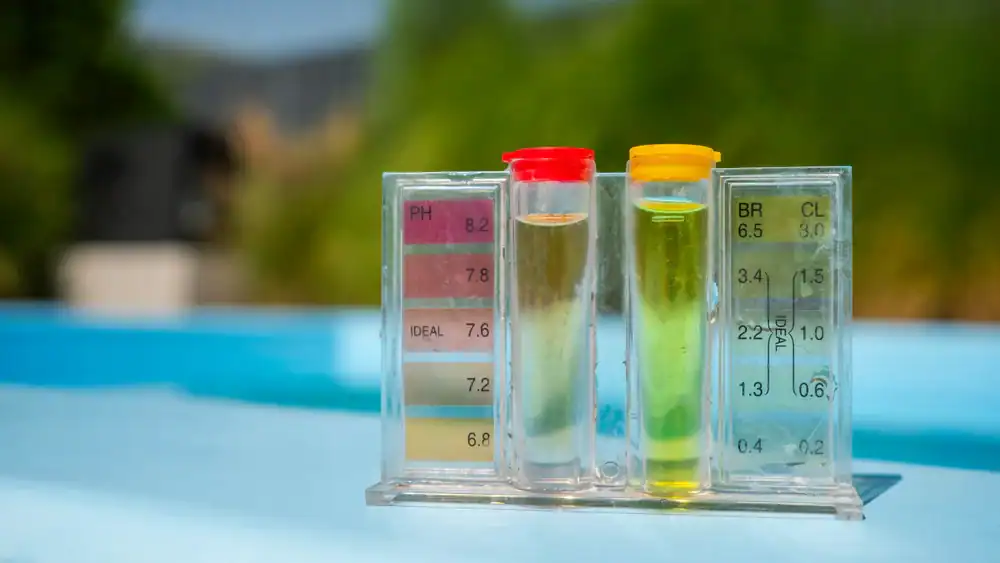
Your pool's sending signals something's wrong. These five warning signs tell you exactly when to call in professional pool services before small problems turn into major expenses.

Every pool loses some water. Evaporation happens, especially in Georgia summers. Splashing happens when kids cannonball off the edge.
But if you’re topping off your pool more than once a week, or if you’re adding more than two inches of water regularly, that’s not normal. That’s a leak. And leaks don’t fix themselves.
One inch of lost water equals about 500 gallons. A small leak you can’t see might be wasting close to 1,000 gallons every single day. That’s not just water you’re losing—it’s money, and potentially the ground under your pool deck.
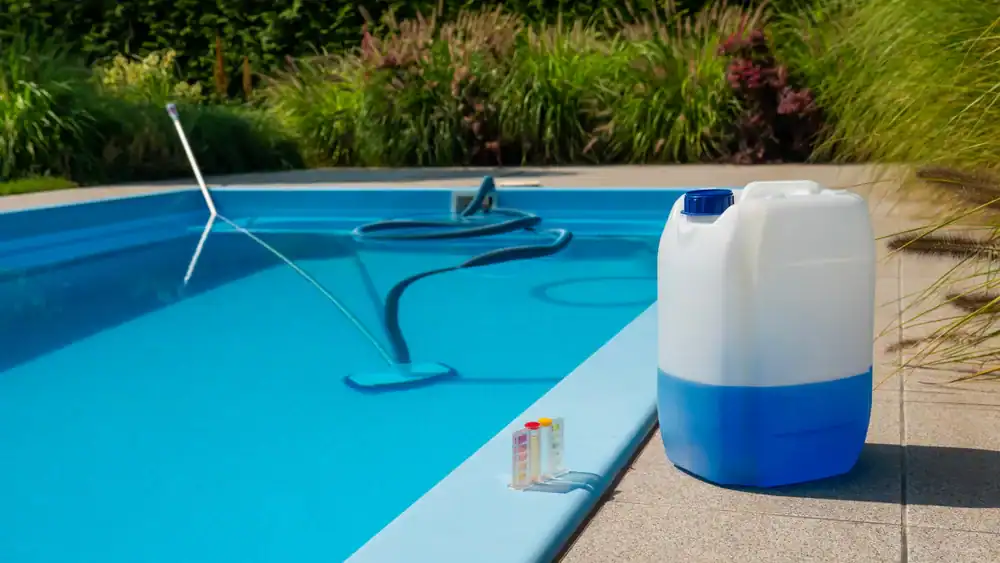
Most people assume a leak means cracked plaster they can see. Sometimes it does. More often, it’s hiding in your plumbing, around fittings, or in places you’d never think to check.
Professional leak detection starts with ruling out evaporation. The bucket test is simple but effective—fill a bucket with pool water, mark the levels inside and outside the bucket, and wait 24 hours. If your pool drops more than the bucket, you’ve got a leak.
From there, it gets technical. Dye tests show where water’s being pulled into cracks. Pressure testing isolates which plumbing lines are compromised. Listening devices pick up the sound of water escaping underground. These aren’t things you can DIY with a YouTube video and good intentions.
Leaks also mess with your pool’s structure over time. Water seeping into the soil can erode the ground supporting your deck, your pool walls, even your home’s foundation if it’s close enough. Wet spots in your yard, cracks in the concrete, or shifting pavers are all signs that a leak’s been doing damage you haven’t seen yet.
Catching it early means a repair instead of a rebuild. Waiting means you’re funding a much bigger project than you bargained for. We know where to look, how to test, and what it takes to stop the problem for good.
Georgia’s soil doesn’t do pools any favors. Clay expands when it’s wet and contracts when it’s dry. That constant movement puts stress on your pool’s shell and plumbing. Add in temperature swings, freeze-thaw cycles in winter, and the occasional heavy storm, and you’ve got a recipe for cracks.
Older pools are especially vulnerable. If your pool’s been in the ground for 10 or 15 years, the sealant around fittings and skimmers has likely deteriorated. Plaster develops hairline cracks. Vinyl liners get brittle. These aren’t design flaws—they’re just what happens over time.
New pools aren’t immune either. Poor installation, settling soil, or even just bad luck can cause leaks within the first few years. If your pool was built without accounting for Douglas County’s specific soil conditions, you might be dealing with issues the original builder never anticipated.
The skimmer is one of the most common leak points. It’s where plastic meets concrete, and that seam doesn’t always hold up. Lights are another weak spot—the conduit running from the light to the junction box can crack or separate. Main drains, return lines, and even the bond beam can develop leaks that go unnoticed until your water bill makes you look twice.
You can patch some leaks yourself with putty or underwater sealant. Those are band-aids. If the leak’s in your plumbing or if it’s structural, you need someone who knows how to fix it right the first time. Otherwise, you’re just buying yourself a few weeks before it starts again.
Want live answers?
Connect with a Deep Waters Pools expert for fast, friendly support.
You shocked the pool. You brushed the walls. You ran the filter for two days straight. The water’s still green, or it’s cloudy and murky no matter what you throw at it.
That’s not a chemical problem you can solve with more chlorine. It’s a sign that something in your pool’s system isn’t working the way it should. And swimming in it? Not a good idea.
Green water means algae. Cloudy water usually means your filter or circulation system isn’t doing its job. Both point to the same thing—your pool needs more than a quick fix.
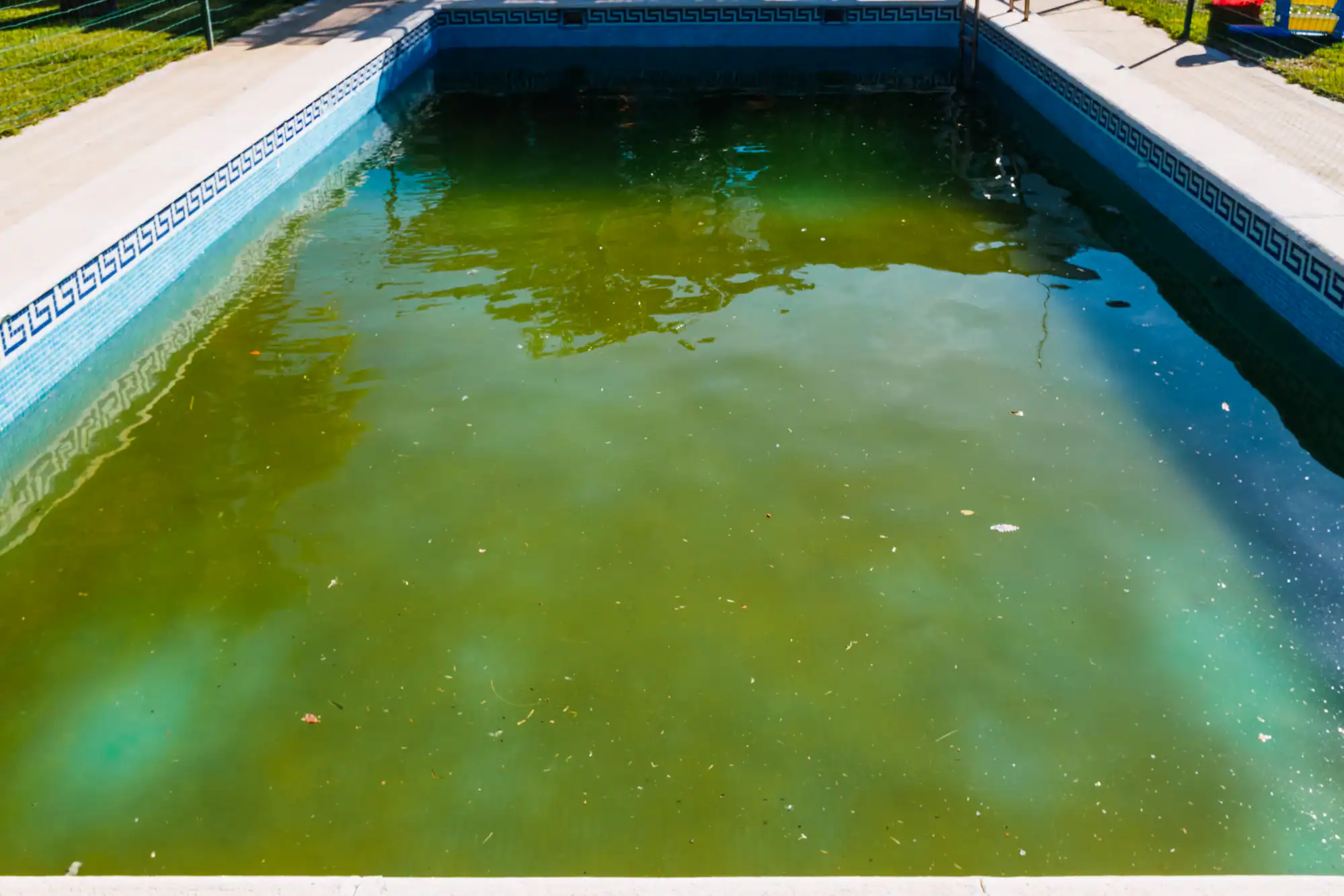
Algae loves warm water, sunlight, and low chlorine levels. Georgia gives it all three for most of the year. If your pH is off, your filter isn’t running long enough, or your chlorine’s too low, algae moves in fast. Sometimes overnight.
Green algae is the most common type. It starts as a light haze or cloudiness, then spreads across walls, steps, and floors in a slimy layer. Left alone, it can turn your pool into a swamp in just a few days. Black algae is worse—it roots deep into plaster and takes serious effort to kill. Mustard algae shows up in patches and keeps coming back even after you think you’ve beaten it.
Shocking the pool kills the algae, but it doesn’t fix what let the algae grow in the first place. If your filtration system isn’t running properly, or if your water chemistry’s been off for weeks, you’re going to see green water again. And again.
Cloudy water that stays cloudy even after shocking usually means your filter’s clogged, your pump isn’t circulating water effectively, or your pool’s chemistry is so far out of balance that chlorine can’t do its job. High pH makes chlorine weak. Too much calcium or metals in the water causes cloudiness that won’t clear no matter how much you filter.
Professional green water treatment isn’t just about dumping in chemicals. It’s about diagnosing why your pool turned green, fixing that root cause, and restoring the water to a state where it stays clear. That might mean cleaning or replacing your filter, adjusting your pump’s run time, rebalancing your chemistry from scratch, or even draining and refilling if the water’s too far gone.
Most pools can be brought back to crystal clear within 24 to 48 hours when we handle it. DIY attempts can drag on for weeks, waste money on products that don’t work, and leave you with a pool you still can’t swim in. Knowing when to call for help saves you time, money, and frustration.
If your water’s cloudy but not green, your filter or pump is probably the issue. Filters get clogged with debris, dead algae, and fine particles that build up over time. When that happens, water flows through without actually getting cleaned. You’re running your system for nothing.
Pumps wear out. Seals crack. Motors start making noise. If your pump isn’t moving water at the right pressure, your filter can’t do its job. Weak circulation creates dead spots in your pool where debris settles and algae grows. You’ll see it in corners, behind ladders, or along the stairs—places where water just isn’t moving.
Cartridge filters need to be cleaned or replaced regularly. Sand filters need backwashing. DE filters need fresh diatomaceous earth. If you’re not maintaining your filter according to its type and usage, you’re asking for cloudy water.
Old equipment doesn’t just stop working all at once. It gets less effective over time. Your pump might still run, but it’s not pulling water through the system the way it used to. Your filter might still look fine, but the media inside is spent. These are things you can’t always see, but we can test for and fix.
Upgrading to a variable speed pump doesn’t just save energy—it improves filtration. Running your pump longer at a lower speed means better circulation, cleaner water, and less strain on your equipment. It’s quieter, more efficient, and it extends the life of your entire system. If your current pump is 10 years old or older, an upgrade pays for itself in energy savings within a couple of years.
Cloudy water isn’t just annoying. It hides hazards, makes your pool uninviting, and signals that your system isn’t protecting your investment. Getting it diagnosed and fixed properly means you can actually use your pool instead of just staring at it and wondering what’s wrong.
Your pool’s not supposed to be a source of stress. It’s supposed to be where your family cools off, where you unwind after work, where summer memories happen. But when something’s off—water disappearing, surfaces cracking, equipment struggling—ignoring it only makes it worse.
The five signs we’ve covered aren’t the only ones, but they’re the most common. If you’re seeing any of them, it’s time to get a professional opinion. Not a sales pitch. Just an honest assessment of what’s going on and what it’ll take to fix it.
We’ve been working with Douglas County families for years, handling everything from leak detection to full resurfacing. If your pool’s trying to tell you something, we’ll help you figure out what it is—and what to do about it.
Summary:
Share: