
Hear from Our Customers
A gunite pool done right isn’t something you worry about after the fact. No cracks showing up two summers in. No replastering bills before the pool is even paid off. Just a backyard that works for your family from late April through early October which in Laurens County is nearly six months of real use every single year.
That matters more in Cadwell than people realize. This area sits in a transition zone between Georgia’s Piedmont and the Upper Coastal Plain, which means the ground underneath your pool isn’t uniform sandy loam it’s a mix of clay subsoils that expand and contract with every wet season and dry spell. A pool that isn’t engineered for that movement will show it eventually. Proper rebar density, adequate wall thickness, and a correctly built bond beam aren’t extras. They’re what separates a pool that lasts 50 years from one that starts showing stress fractures before your kids are out of middle school.
Beyond the structural side, a well-built gunite pool adds real value to a rural residential property in this part of Georgia. The median home in the Dublin area sits around $216,000 and a quality inground pool can add roughly 7% to that number while giving your family something no square footage inside the house can match.
We’re based in Douglas, GA and were founded in 2014 by a team that had already spent more than 30 years doing this work concrete, plumbing, custom pool construction before the company ever had a name. We didn’t start from scratch. We started fed up with watching families across South and Middle Georgia, including right here in Cadwell, get burned by builders who handed their job off to six different subcontracted crews and called it done.
That’s not how we operate. Every phase of your build excavation, rebar, gunite application, plumbing, electrical, finishing, decking is done by our own crew. Not a subcontractor we called last week. Our people. That matters when you’re making a $75,000 to $150,000 investment on a property along SR 117 in southwestern Laurens County and you need to know exactly who’s accountable if something doesn’t go right.
We’ve built pools across rural Georgia counties just like this one. We know the soil. We know the permit offices. And we’re still around after the build is done.
It starts with a real conversation about your property lot size, soil conditions, how you plan to use the pool, and what your budget actually looks like. From there, we build out a 3D design so you can see the full picture before a single shovel hits the ground. Rural lots off SR 117 and SR 338 tend to have more room to work with than suburban parcels, which means more design flexibility but also more variables to account for in the site assessment.
Once design is finalized, we pull every permit required for your build in Laurens County the building permit, the electrical permit, and every inspection that follows. You don’t chase down the county building department. You don’t figure out NEC Article 680 compliance on your own. That’s handled. In a rural county where the permitting process isn’t always straightforward, this alone saves homeowners a significant amount of time and frustration.
Construction itself runs 3 to 6 months from permit approval. That’s the honest timeline for a quality gunite build in Georgia not the 8-week number some builders throw out to win the bid. If you start in the fall, your pool is ready before summer. We also service Hayward, Pentair, Jandy, Sta-Rite, and Zodiac equipment, so the relationship doesn’t end at the ribbon cutting.
Ready to get started?
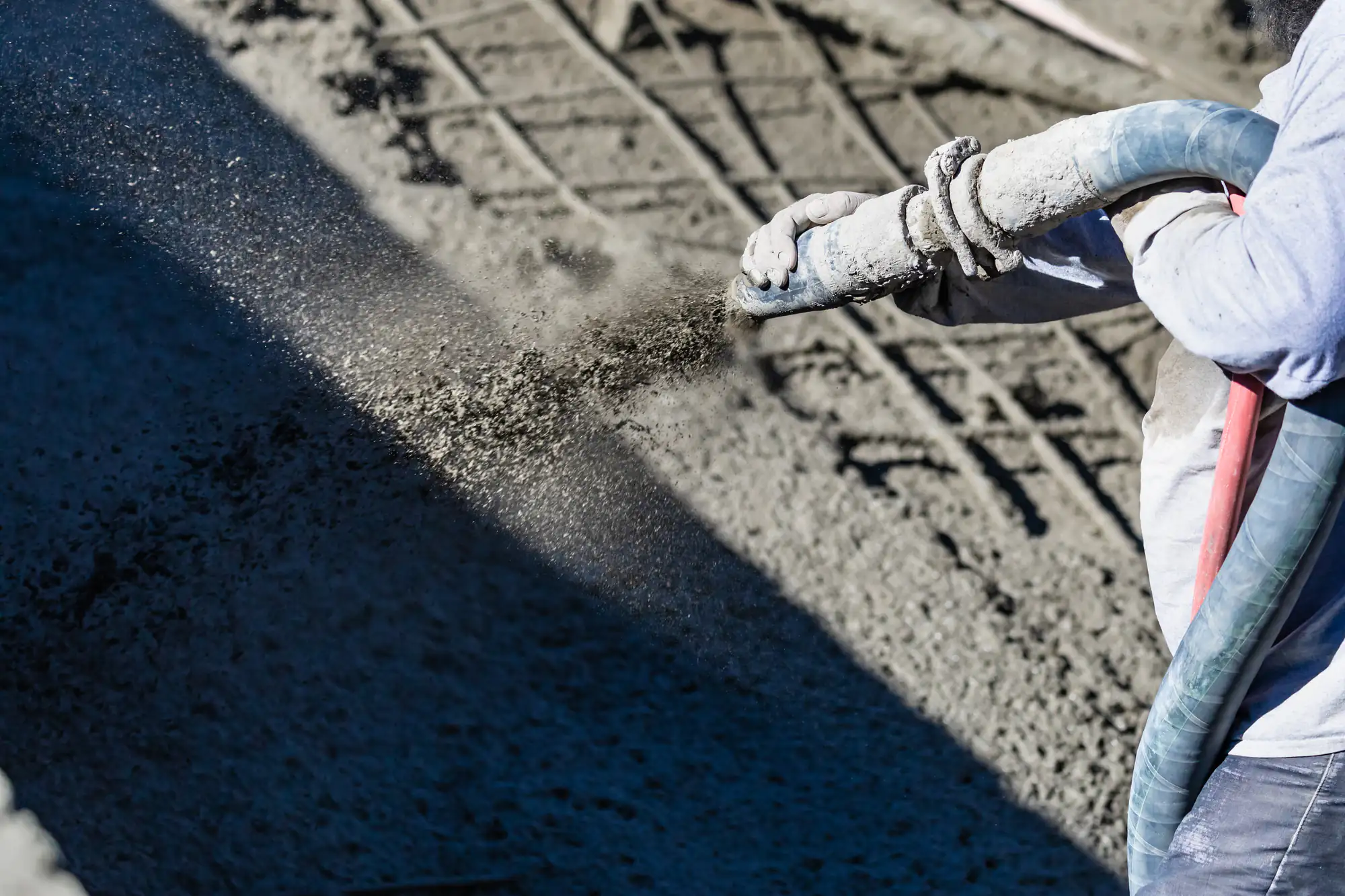
Custom gunite pool construction with us covers the full build design, excavation, rebar installation, gunite application, plumbing, electrical, interior finish, and decking. There’s no phase where a separate company shows up and takes over. The same crew that breaks ground finishes the job, and the same company that built your pool can maintain it for years afterward.
For Cadwell-area homeowners specifically, the engineering side of this matters more than people expect. The clay-bearing subsoils common in southwestern Laurens County require a pool shell that’s built to handle ground movement not just the weight of the water inside it. We account for this in every build: correct wall thickness, proper rebar spacing, and a bond beam construction that holds its integrity through seasonal soil shifts. The cracking problems you’ve probably read about online almost always trace back to a builder who skipped these steps, not to gunite as a material.
On the cost side, a custom gunite pool in this part of Georgia typically runs between $75,000 and $150,000 depending on size, features, and site conditions. Resurfacing on a properly built pool isn’t needed for 10 to 15 years not the 3 to 7 year cycle that fiberglass-only competitors like to cite, which applies to pools built with shortcuts, not to pools built to last.
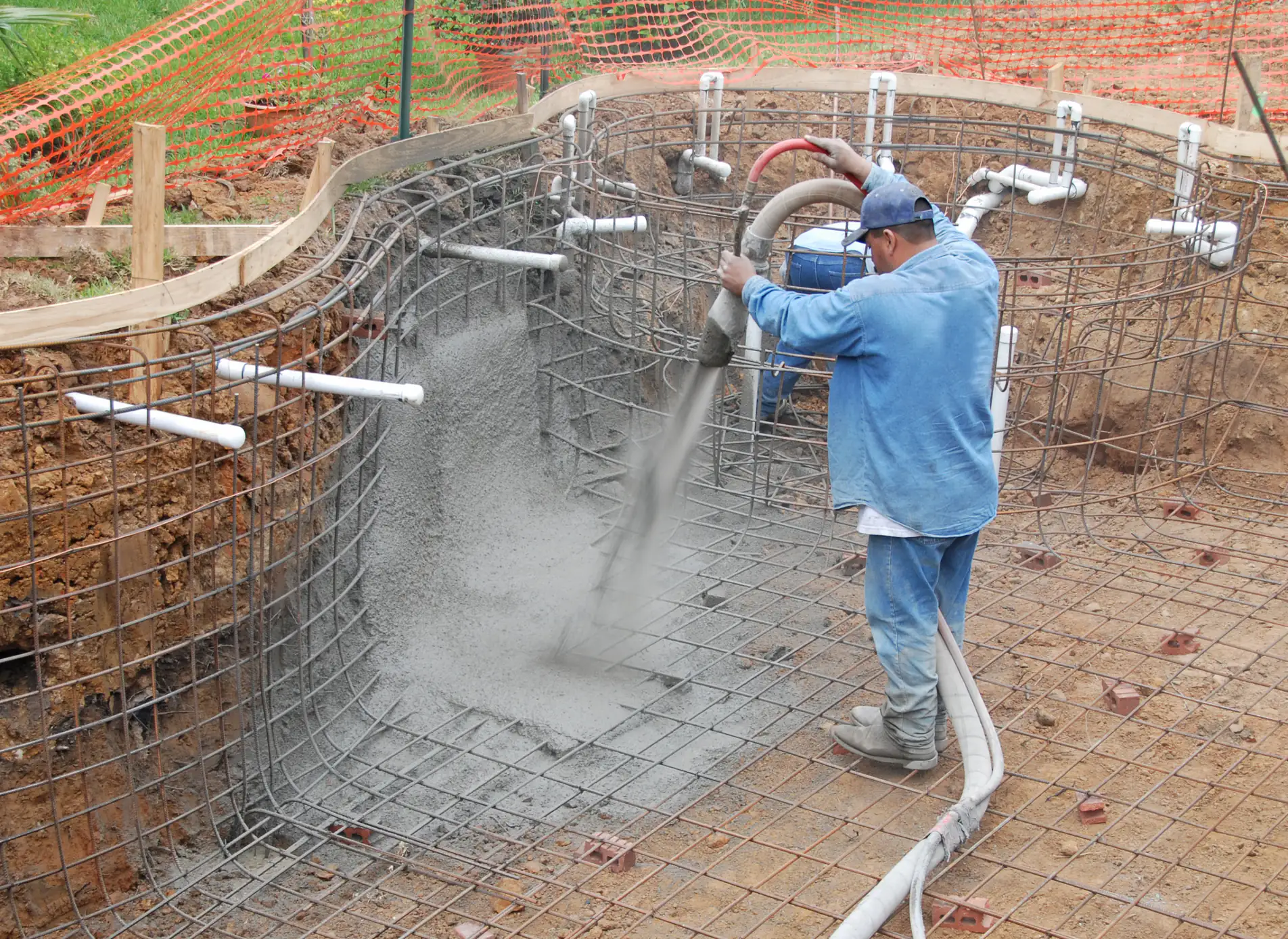
This is probably the most common concern we hear from homeowners in Cadwell and the surrounding area, and it’s worth answering honestly. Gunite pools can crack but cracking is almost always a construction failure, not a material failure. The clay-bearing subsoils in southwestern Laurens County do shift with moisture changes, and a pool that wasn’t engineered for that movement will eventually show it.
The fix isn’t to avoid gunite. The fix is to build it correctly. That means adequate rebar density, walls that are thick enough to handle lateral pressure, and a bond beam that’s properly constructed from the start. When those steps aren’t skipped, a gunite shell handles normal soil movement without cracking. We engineer every pool for the specific soil conditions of the region not a generic spec that works fine in sandy coastal soil but struggles in Middle Georgia’s mixed ground.
For a custom inground gunite pool in Middle Georgia, you’re generally looking at a range of $75,000 to $150,000 all-in. Where you land in that range depends on the size of the pool, the depth, the surface finish you choose, whether you’re adding a spa or water features, and what your specific site requires in terms of excavation and drainage.
In Cadwell and the surrounding Laurens County area, site conditions can affect cost more than people expect. Low-lying properties near creek bottoms or areas with higher water tables may require additional drainage planning before excavation begins. A builder who does a proper site assessment upfront and tells you what they find before you’ve signed anything is worth more than one who quotes low and adjusts later. We give you a clear picture of what your specific property requires before the project starts.
The honest answer is 3 to 6 months from permit approval to pool startup. That’s the realistic timeline for a quality gunite build in Georgia, and it accounts for the permit review process in a rural county like Laurens, the construction phases themselves, and the cure time that concrete needs to reach full structural strength.
You’ll hear some builders quote 8 to 12 weeks. That number assumes everything goes perfectly, permits clear immediately, and the crew is never pulled to another job. In practice, it rarely holds. If you want your pool ready for summer, the smartest move is to start the process in the fall permit applications in, design finalized, so construction can begin early in the year. We handle the Laurens County permit process in-house, which removes one of the biggest sources of delay from the equation.
We handle all of it the building permit, the electrical permit, and every required inspection. You don’t need to figure out the Laurens County building department process on your own or track down the right forms for electrical compliance under NEC Article 680, which is the federal code governing swimming pool bonding and grounding.
This matters more in a rural county than people realize. Smaller county permit offices often have fewer staff and longer review timelines than metro counties, and a builder who’s never navigated that process before can create delays just by submitting incomplete paperwork. We’ve done this across rural Georgia counties. We know what’s required, we know how to submit it correctly the first time, and we keep the project moving while you focus on everything else in your life.
For a property in southwestern Laurens County, the case for a gunite pool is straightforward if you plan to stay in the home. A well-built inground pool adds roughly 7% to residential property value, and in a market where Dublin-area homes are sitting around $216,000, that’s a real number. More practically, you’re looking at nearly six months of usable pool season every year late April through early October in one of the hotter, more humid stretches of Georgia.
Gunite is the right material choice for a long-term investment. A properly built shell lasts 50 or more years. The surface finish holds for 10 to 15 years before resurfacing is needed. That’s a fundamentally different math than a vinyl liner pool, which needs a new liner every 5 to 9 years at $4,000 to $4,500 per replacement. If you’re building something for your family and your property not just for the next few years a quality gunite build is the one that still makes sense decades from now.
The core difference comes down to customization, longevity, and how each material behaves in Georgia’s climate and soil. Fiberglass pools come in pre-molded shapes what you see in the catalog is what you get. Gunite is built on-site, which means the shape, depth, and every feature of your pool can be designed specifically for your backyard. On a rural lot in Cadwell where you likely have more space to work with than a suburban quarter-acre, that flexibility is a real advantage.
From a durability standpoint, gunite shells are concrete they don’t fade, blister, or oxidize the way fiberglass can over time in Georgia’s heat and UV exposure. Some fiberglass-only builders in this region actively market against gunite, citing cracking and high maintenance costs. Those claims apply to poorly built pools, not to properly engineered ones. The maintenance differences between a well-built gunite pool and a well-built fiberglass pool are much smaller than the sales pitch suggests and the design limitations of fiberglass are permanent.