
Hear from Our Customers
Southwest Georgia gives you roughly April through October in the water about seven months of real, usable pool weather every year. That’s not a short window. It’s long enough that a well-built pool pays for itself in family time, in the way your yard gets used, and in what your property is worth when you eventually sell. The families in Holly Ridge and Callaway Lakes who built five years ago aren’t the ones who have regrets.
The ones who cut corners are. Southwest Georgia’s clay-heavy soils expand when it rains and pull back when it dries. That cycle is relentless, and it will expose a pool that wasn’t engineered for it usually around year three or four, when the surface starts showing what the builder hid. A gunite pool built with the right rebar density, adequate shell thickness, and proper cure time handles that movement without incident. That’s not a sales pitch. That’s just how the material works when it’s installed correctly.
Lee County is one of the fastest-growing counties in Georgia, and the lot sizes out here most running three-quarters of an acre or more were made for this. You’ve got the space. You’ve got the season. The only variable is who builds it.
We were founded in 2014, but the experience behind Deep Waters Pools goes back more than thirty years concrete work, plumbing, pool construction, all of it hands-on before the company ever had a name. That background matters here, because Leesburg and southwest Georgia’s soil and climate aren’t forgiving of builders who learned on the job somewhere else.
Lee County homeowners commute into Albany, invest in larger lots, and choose this area because they want something worth coming home to. That’s exactly the kind of build we take seriously. Every permit building, electrical, every inspection through Lee County Building Inspection is handled in-house. You don’t touch a form or schedule an inspector. That’s just how a professional build works.
No subcontractors. Ever. The crew that digs your pool is the same crew that lays the rebar, applies the gunite, runs the plumbing, and finishes the deck. When something needs to be done right, the same people who started it finish it.
It starts with a real conversation what you want, what your lot allows, and what the ground underneath it is going to do. Lee County’s clay soils require an honest engineering conversation before anything gets designed. We look at your site, factor in the soil conditions, and build the shell specifications around what’s actually there not a generic blueprint pulled from a file.
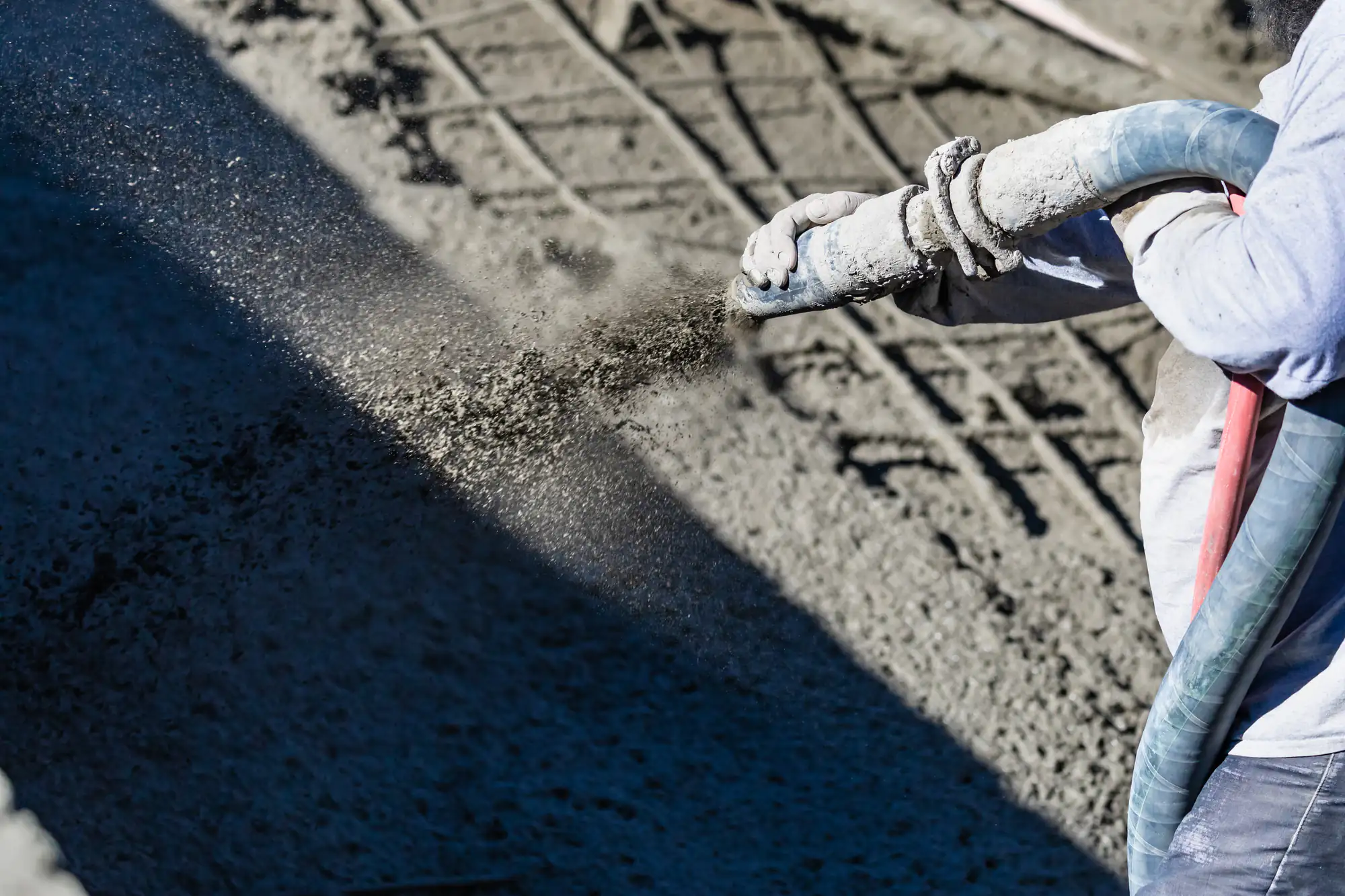
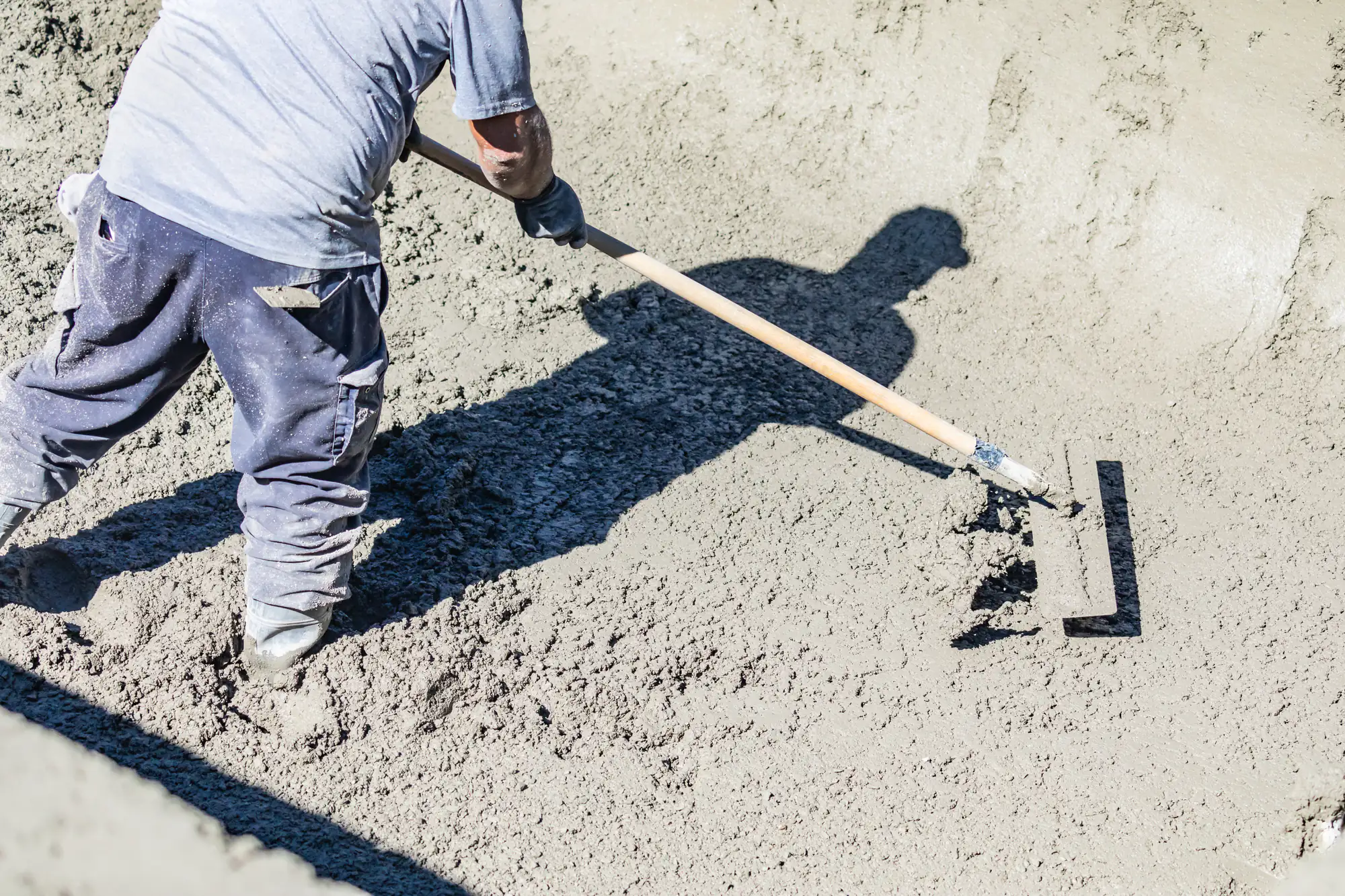
Once design is locked and permits are pulled through Lee County Building Inspection, excavation begins. From there, the rebar goes in sized and spaced for the soil movement this region sees and then the gunite is applied in layers and allowed to cure properly. Rushing that cure is where a lot of builders cut time and create problems you won’t see for a few years. We don’t rush it.
Plumbing, electrical bonded and grounded to NEC Article 680, equipment installation, and decking all follow in sequence all handled by the same crew. Most quality gunite builds in this area run three to six months from permit to water. Anyone quoting you six weeks is either not being straight with you or planning to hand your job to people you’ve never met.
Ready to get started?
Custom gunite pool construction with us covers the full scope excavation, structural steel, gunite shell application, plumbing, electrical, equipment installation, interior finish, and decking. Nothing is handed off. That matters more than most people realize until they’ve been through a build where it wasn’t.
For Leesburg homeowners, that means one point of contact from the first site visit to the final inspection. The lots out here in subdivisions like Holly Ridge and Live Oak were designed with space in mind, and we build to use it whether that’s a larger pool footprint, a spa addition, a custom deck layout, or a combination. The design is built around your yard, not a catalog.
On the equipment side, we install and service all major brands Hayward, Pentair, Jandy, Sta-Rite, and Zodiac. That’s not just a build detail. It means the company that built your pool is the same one answering the phone when the pump needs attention in year eight. In a market where most builders hand you off the day after final inspection, that ongoing relationship is something Leesburg homeowners have told us they genuinely value. One company, one call, for the life of the pool.
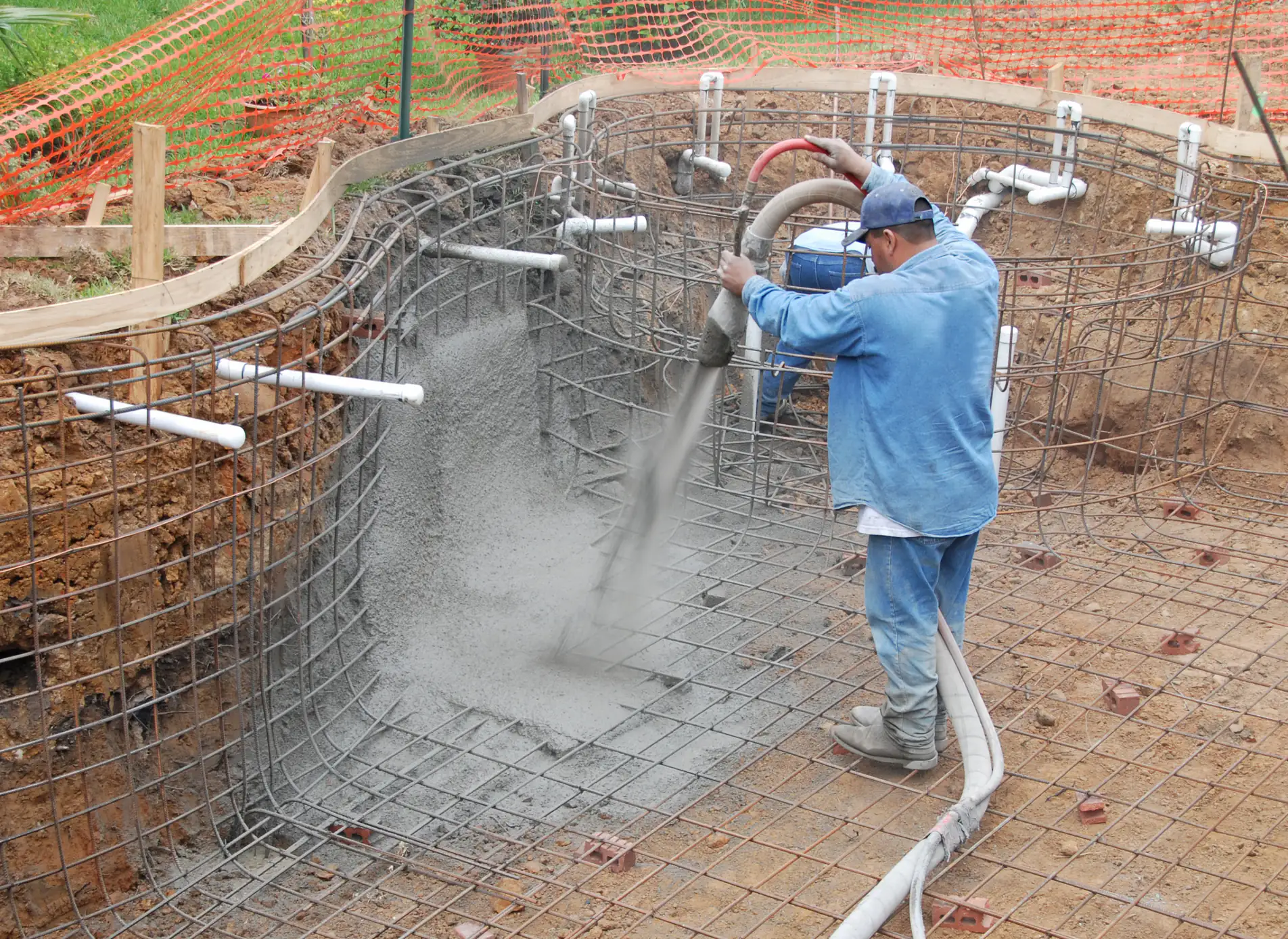
This comes up a lot in Leesburg and the Albany area, and it’s worth answering directly. Gunite pools crack when they’re built by contractors who don’t account for the soil they’re building in not because gunite is a flawed material. Southwest Georgia’s clay soils expand when saturated and contract in dry stretches. That cycle creates real movement, and a pool shell that was built with insufficient rebar, thin application, or a rushed cure will eventually show it.
A properly engineered gunite shell with rebar sized and spaced for soil movement, adequate shell thickness, and full cure time handles that cycle without issue. The pools that crack are the ones where someone cut time or material somewhere in that process. The claim that gunite is a poor choice for Southern soil is a builder-quality argument dressed up as a material argument. The fix isn’t a different construction method. It’s a builder who actually knows what they’re doing.
Most custom gunite pool projects in the Leesburg and Lee County area fall somewhere between $75,000 and $150,000, with a lot of homeowners landing around $100,000 for a well-built pool with a solid deck and standard equipment package. Where you land in that range depends on pool size, depth, shape, finish material, decking scope, and whether you’re adding a spa or water features.
Lee County’s lot sizes work in your favor here. The three-quarter-acre to one-acre lots common in subdivisions like Callaway Lakes and Holly Ridge give you room to build something substantial without being squeezed by setbacks. That said, the cost conversation should start with what you want the space to do not what the cheapest version of it looks like. A pool built to the bottom of the budget is usually the one that needs expensive attention within the first five years.
In Lee County, pool construction requires a building permit and an electrical permit, both administered through the Lee County Building Inspection Department. This applies whether you’re building in Leesburg proper or in an unincorporated subdivision Lee County Building Inspection handles permitting for both. The department also verifies that contractors are state-licensed and carry current certifications before permits are issued.
Georgia’s current state minimum codes for pool construction include the 2024 International Swimming Pool and Spa Code and the 2023 National Electrical Code, which governs bonding and grounding requirements under Article 680. These aren’t optional they’re the legal baseline. We handle every permit and every required inspection in-house, which means you don’t navigate any of that process yourself. If a contractor ever suggests you pull your own permit to save money, that’s a red flag worth taking seriously it shifts legal liability for code compliance from them to you.
Gunite and shotcrete are both pneumatically applied concrete the core difference is in how the mix is prepared before it’s shot. Gunite uses a dry mix that combines with water at the nozzle; shotcrete uses a wet mix that’s already combined before application. Both methods produce a structurally sound pool shell when applied correctly, and both are widely used for residential pool construction across Georgia.
What matters more than which method a builder uses is how they use it the rebar layout, the application thickness, the cure time, and whether the shell was engineered for your specific soil conditions. In Lee County, where the clay soil creates real seasonal movement, those engineering decisions are what determine whether your pool holds up for thirty years or starts showing problems in year four. The method is secondary to the execution. Any builder who makes the gunite-versus-shotcrete conversation the centerpiece of their pitch is probably drawing your attention away from something more important.
The honest answer is fall or early winter. Most people start thinking about pools in March or April when the weather turns, which means permit queues get longer and construction crews are in higher demand from spring through summer. If you start the process in October or November, you’re ahead of that rush permits move faster, scheduling is easier, and a pool started in late fall can realistically be finished and ready for water by the time April arrives.
Leesburg’s winters are mild enough that construction can proceed year-round without significant weather interruption. Temperatures rarely drop low enough to affect concrete work for extended periods, which is an advantage this region has over markets further north. The families who end up swimming in April are almost always the ones who made the call in the fall. The ones who wait until spring to start are usually looking at a late-summer finish at best.
Georgia requires pool contractors to hold a state-issued license, and Lee County Building Inspection verifies that licensing before issuing a permit. That verification step is your first layer of protection but it only works if a permit is actually being pulled. If a contractor is working without a permit, that verification never happens, and you’re left with no legal protection if something goes wrong.
You can check a contractor’s license status directly through the Georgia Secretary of State’s license lookup tool. What you’re looking for is an active residential or commercial contractor license not an expired one, not a license under a different company name. Beyond licensing, ask specifically whether the contractor uses subcontractors for any phase of the build. In Georgia, a licensed general contractor can legally sub out every phase of your pool to unlicensed crews as long as the GC holds the license. That’s a common setup in this industry, and it’s one of the primary reasons quality control breaks down. Knowing exactly who is doing the work and whether they’re accountable to the same company matters as much as the license itself.