
Hear from Our Customers
You’re not testing your pool water twice a week because you enjoy it. You’re doing it because you need to know your family isn’t swimming in water that’ll burn their eyes or turn their hair green.
Here’s the problem: those test strips you bought don’t catch everything. They miss calcium hardness, which means you won’t know your water is eating away at your pool’s finish until the damage is done. They can’t tell you if your stabilizer levels are too high, which makes your chlorine useless no matter how much you add.
We test for all of it. Chlorine, pH, alkalinity, calcium hardness, stabilizer—the full picture. And we do it for free because we’d rather you spend money on the right chemicals than waste it fixing problems that could’ve been prevented. You’ll know exactly what your water needs, in plain terms, so you can fix it once and move on with your day.
We’ve been serving families across South Georgia since 2014. We’re not a franchise or a big-box store—we’re a local, family-owned business that builds custom inground pools and actually understands how they work.
We’ve been doing this for over 30 years. That means we’ve seen what happens when water chemistry goes wrong, and we know how to fix it before it costs you. When you bring your water sample to us in Bickley, GA, you’re getting advice from people who’ve built pools, maintained them, and fixed the mistakes other companies made.
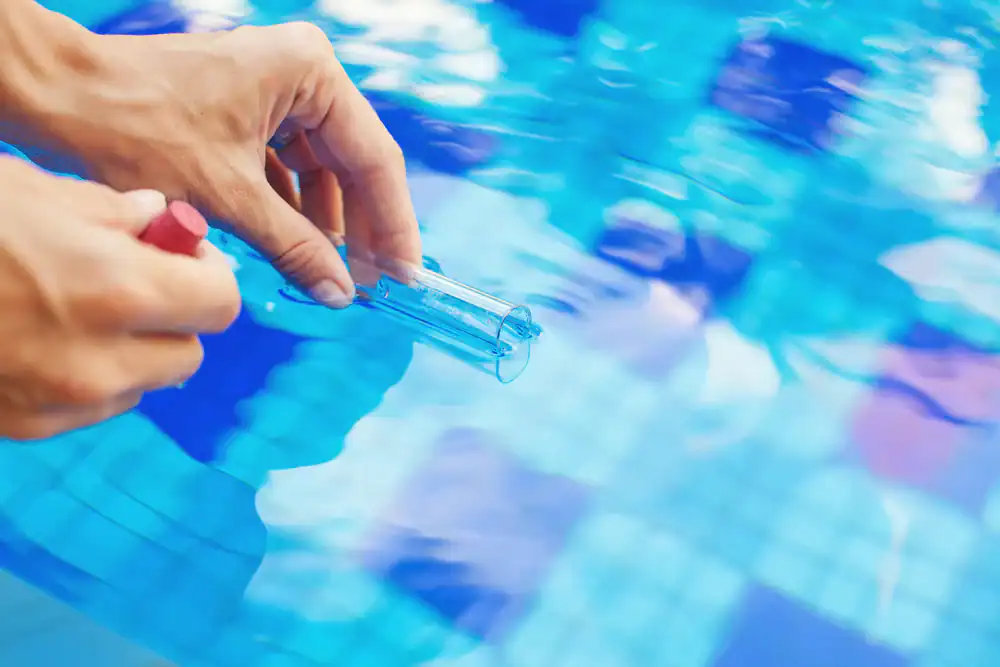
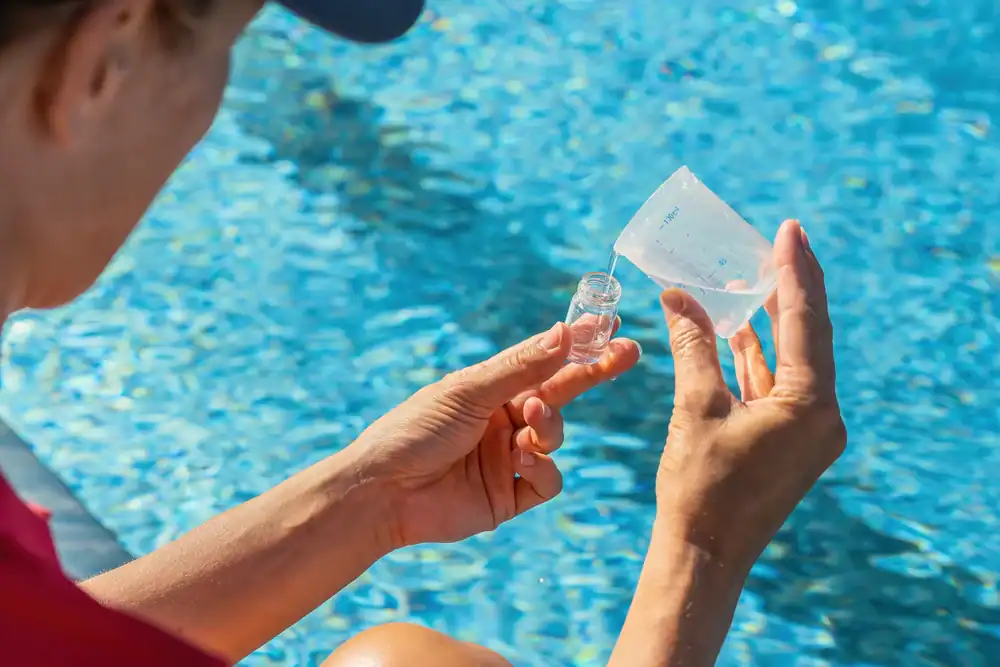
Grab a clean plastic bottle—doesn’t need to be fancy. Fill it with water from about elbow-deep in your pool, away from the return jets. That gives us a sample that represents what’s actually in your pool, not just what’s near the surface.
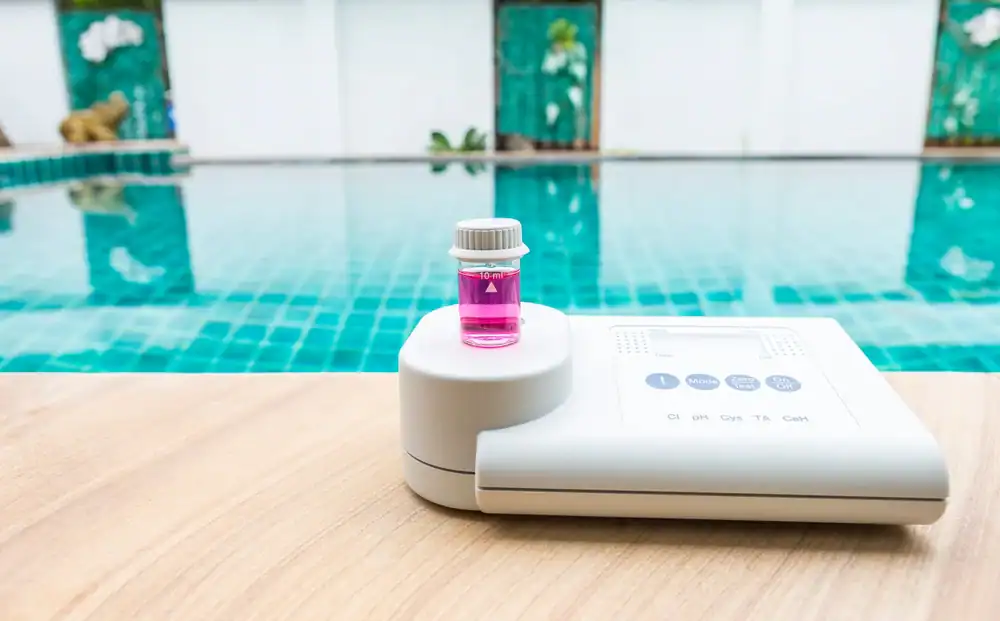
Bring it to us in Bickley. We’ll run it through our testing system, which reads chlorine, pH, total alkalinity, calcium hardness, and cyanuric acid. Takes a few minutes. While we’re testing, you can ask questions—about algae, cloudy water, whatever’s been bugging you.
When the results come back, we’ll walk you through what they mean. Not in technical jargon, just straight talk. If your pH is low, we’ll tell you how much pH increaser to add. If your calcium is off, we’ll explain why that matters and what to do about it. You’ll leave with a printout and a clear plan. No guessing, no upselling, just the information you need to keep your pool balanced.
Ready to get started?
We test chlorine levels because that’s what keeps bacteria and algae out of your pool. In South Georgia, you need 1-3 ppm to stay safe, but heavy rain can drop that fast. We’ll tell you where you stand and how much to add.
pH testing tells us if your water is acidic or basic. You want 7.4 to 7.6. Too low and your water becomes corrosive—it’ll eat at your pool finish and sting your eyes. Too high and your chlorine stops working. We measure it precisely so you can adjust it right the first time.
Alkalinity acts as a pH buffer. If it’s out of range (100-150 ppm is ideal), your pH will swing all over the place no matter what you do. We test total alkalinity so you can stabilize your water before you waste money chasing pH problems.
Calcium hardness prevents your water from becoming corrosive. Low calcium means your water will pull minerals from your pool’s surface, causing etching and equipment damage. We test it because most home kits don’t, and it’s one of the most expensive things to ignore.
Cyanuric acid protects your chlorine from the sun. Too little and your chlorine burns off in hours. Too much and your chlorine can’t sanitize effectively. We measure it so you’re not throwing money into a pool that can’t hold chlorine. This is especially important in Bickley, GA, where summer sun is relentless and storms dump acidic rainwater that throws everything off balance.
Twice a week during summer, once a week the rest of the year. That’s the honest answer.
When it’s hot and your pool is getting used daily, chemistry shifts fast. Sunscreen, sweat, leaves, rain—they all throw things off. Testing twice a week in peak season means you catch problems before they become algae blooms or equipment damage.
In the off-season, once a week is usually enough. Your pool isn’t getting the same bather load, and cooler temps slow down chemical reactions. But you still need to check it regularly because South Georgia gets heavy rain year-round, and that rainwater has a pH around 5.5—it’ll tank your pool’s pH and alkalinity overnight.
Bring us a sample whenever you’re in town. It’s free, it’s fast, and it’ll save you from buying chemicals you don’t need or missing problems until they’re expensive to fix.
Test strips give you a rough idea. Our system gives you exact numbers on things strips can’t measure.
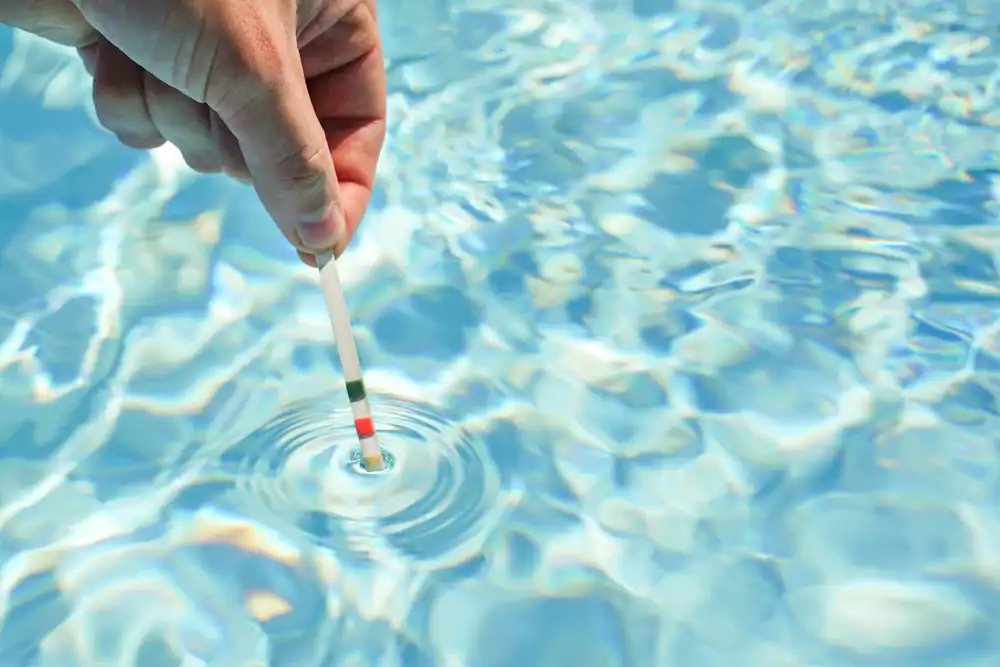
Strips can check chlorine and pH—that’s useful for a quick check between professional tests. But they don’t measure calcium hardness, which is critical for preventing corrosion and scaling. They can’t accurately read cyanuric acid, which determines whether your chlorine is actually working. And they’re not precise enough to catch small imbalances before they become big problems.
Our testing equipment reads all five major chemical levels with lab-grade accuracy. You’ll get a printout with exact ppm readings, not a color you’re trying to match to a chart in bad lighting. That precision matters because the difference between 7.2 and 7.6 pH might look the same on a strip, but it’s the difference between balanced water and water that’s slowly damaging your pool.
Use strips at home if you want. But get professional water testing done regularly so you’re making decisions based on real data, not guesswork.
Because rainwater in Georgia is acidic and brings contaminants with it. It doesn’t just dilute your pool—it actively disrupts the balance.
Rainwater has a pH around 5.5 to 6.0, well below your pool’s target of 7.4 to 7.6. When a storm dumps several inches into your pool, it drops your pH and alkalinity fast. That makes your water corrosive, which can damage your pool finish and equipment if you don’t correct it quickly.
Rain also brings organic debris—pollen, leaves, dirt, algae spores. All of that consumes chlorine as your pool tries to break it down. After a heavy storm, your chlorine levels can crash even if they were fine the day before. That’s why you’ll sometimes see algae start to form within 24-48 hours of a big rain if you don’t test and adjust.
Bring us a water sample after any significant rainfall. We’ll tell you exactly what dropped and what you need to add to get back to balanced. It’s a lot cheaper than dealing with algae or resurfacing a pool that’s been etched by acidic water.
You can, but you’ll waste money and probably damage your pool. Chlorine doesn’t work in a vacuum—it needs the right environment to do its job.
If your pH is too high, your chlorine becomes ineffective. You could have 5 ppm of chlorine in your pool, but if your pH is 8.0, that chlorine isn’t sanitizing. You’ll keep adding more, wondering why your water is cloudy or developing algae, and you’ll never fix the problem until you correct the pH.
If your stabilizer (cyanuric acid) is too high, same issue. Your chlorine gets locked up and can’t kill bacteria or algae. If it’s too low, the sun burns off your chlorine in a few hours and you’re constantly adding more. Either way, you’re throwing money into the pool without solving anything.
Calcium hardness affects your pool’s longevity. Ignore it and your water becomes corrosive, pulling minerals from your plaster, tile, and equipment. That leads to staining, etching, and expensive repairs that could’ve been avoided with a $0 water test.
Test everything. It takes five minutes and it’ll save you hundreds, maybe thousands, in chemicals and repairs you didn’t need to buy.
Chlorine between 1-3 ppm, pH between 7.4-7.6, alkalinity between 100-150 ppm, calcium hardness between 200-400 ppm, and cyanuric acid between 30-50 ppm. Those are the targets that keep your pool safe and your equipment intact.
Chlorine at 1-3 ppm kills bacteria and algae without over-chlorinating. In South Georgia’s heat and sun, you’ll burn through chlorine faster than pools up north, so check it often and keep it in that range.
pH at 7.4-7.6 keeps your water balanced. Lower than that and it’s acidic—corrosive to your pool and irritating to swimmers. Higher and your chlorine stops working, your water gets cloudy, and you risk scaling on your tile and equipment.
Alkalinity at 100-150 ppm stabilizes your pH. Without proper alkalinity, your pH will bounce around constantly and you’ll never get it dialed in. This is especially important after heavy rain, which tanks alkalinity fast.
Calcium hardness at 200-400 ppm protects your pool’s surface. Too low and your water becomes aggressive, etching plaster and corroding metal. Too high and you get scaling. It’s a balance, and it’s one of the most ignored readings—until the damage shows up.
Cyanuric acid at 30-50 ppm protects your chlorine from UV rays. South Georgia sun is intense. Without enough stabilizer, you’ll lose half your chlorine by mid-afternoon. But too much and your chlorine can’t sanitize. We test it so you’re not wasting chlorine or leaving your pool vulnerable.
Yes, because clear water doesn’t mean safe or balanced water. You can have a crystal-clear pool that’s slowly damaging itself—or one that’s harboring bacteria you can’t see.
Chlorine can be dangerously low and your water will still look fine for a day or two. But bacteria and algae are growing, and by the time you see the problem, you’re dealing with a swampy mess that takes days and a lot of chemicals to fix.
Calcium hardness can be way off and you won’t notice until your plaster starts etching or your heater corrodes. That damage is permanent and expensive. A free water test would’ve caught it months earlier.
pH can drift out of range without any visible signs until someone gets in and their eyes start burning. Or you notice your pool finish is rougher than it used to be. Or your chlorine tablets aren’t lasting as long because the pH is too high for them to work.
Clear water is a good sign, but it’s not the full picture. Bring us a sample every week or two. We’ll tell you if everything’s actually balanced or if you’re headed toward a problem you just can’t see yet. It’s free, and it’s a lot easier than fixing damage after the fact.