
Hear from Our Customers
Cloudy water doesn’t fix itself. Neither does that weird green tint or the burning eyes your kids complain about after swimming.
Most pool owners dump chemicals in and hope for the best. That works until it doesn’t—and by then, you’ve wasted money on the wrong products or damaged your liner because the pH was off for weeks.
Water quality testing gives you the actual numbers. pH, chlorine levels, alkalinity, calcium hardness—the stuff that matters. When those numbers are right, your water stays clear, your equipment lasts longer, and you’re not troubleshooting problems every weekend. When they’re wrong, you’re dealing with algae blooms, corroded parts, or water that looks clean but isn’t safe.
We test your pool water for free because we’d rather you know what’s going on than guess. You get a printout with your levels and what to adjust. If you want to handle it yourself, great. If you’d rather we take care of it, we can do that too.
We started Deep Waters Pools because our founder spent 30 years building pools and got tired of seeing homeowners struggle with maintenance nobody explained to them. We’re based in Denton and work throughout Douglas County and the surrounding area.
South Georgia water is different. It’s harder than most places, which means calcium buildup happens faster. The heat doesn’t help either—your chlorine burns off quicker in July than it does in April. We account for that when we test your water and make recommendations.
We’re not a franchise. We’re local, and we’ve been doing this long enough to know what works here and what doesn’t. When you come in for a residential water test, you’re talking to someone who’s seen thousands of pools in this area and knows how the water behaves.
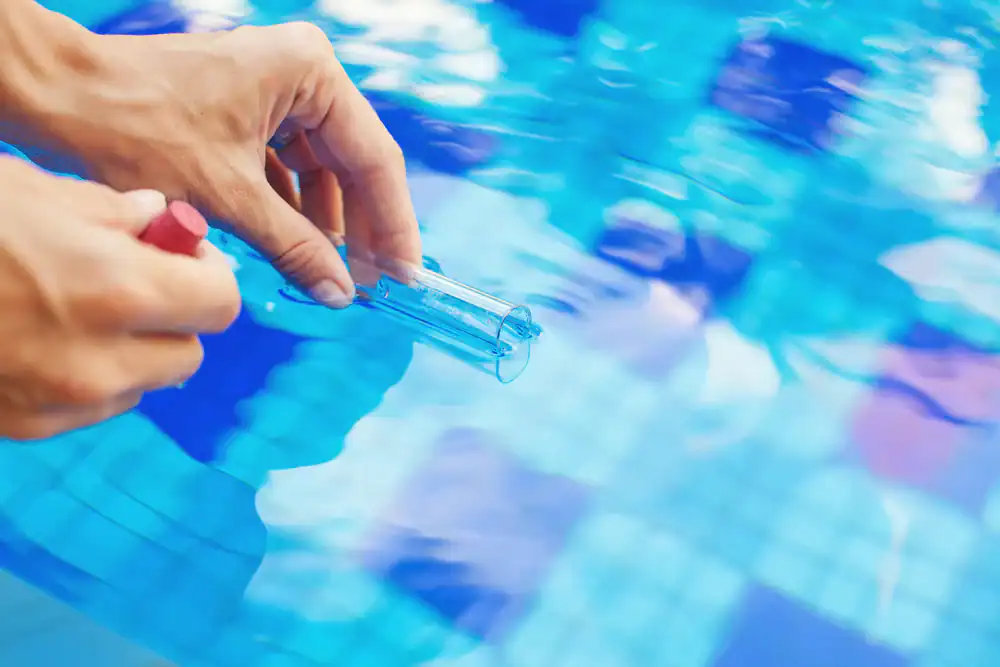
Grab a clean plastic bottle—something that held water or soda, not chemicals or milk. Rinse it a few times with pool water, then fill it about halfway. That’s your sample.
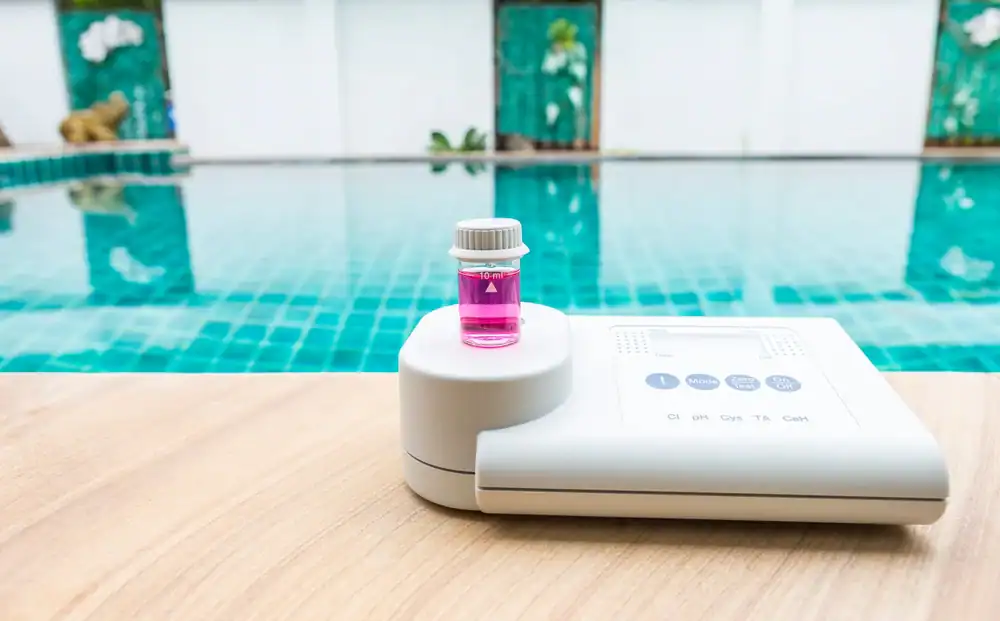
Bring it by our location in Denton. We run it through our testing equipment, which checks pH, free chlorine, total chlorine, alkalinity, calcium hardness, and cyanuric acid. Takes a few minutes.
You get a printout showing where each level sits and where it should be. We’ll walk you through what’s off and why it matters. If your pH is low, we’ll tell you how much pH increaser to add based on your pool size. If your chlorine is high, we’ll explain why that’s happening and how to bring it down without shocking again.
You’re not obligated to buy anything from us. Plenty of people take the results and handle it themselves. Some prefer we balance it for them. Either way, you leave knowing what your pool needs instead of guessing at the store.
Ready to get started?
pH tells you if your water is acidic or basic. When it’s too low, it eats away at metal parts and vinyl liners. Too high, and your chlorine stops working right. You want it between 7.2 and 7.8.
Free chlorine is what’s actively sanitizing your water. Total chlorine includes the used-up chlorine that’s still floating around but not doing anything. The gap between those two numbers tells you if you need to shock.
Alkalinity acts as a pH buffer. If it’s off, your pH will swing all over the place no matter what you add. Calcium hardness matters because South Georgia water tends to run hard—you’ll see scale on your tile line if it gets too high. Cyanuric acid protects chlorine from the sun but too much makes chlorine lazy.
That’s what we test. That’s what affects how your pool looks, how it feels, and whether it’s safe to swim in. In Denton and throughout Douglas County, we see the same patterns—high calcium, fluctuating pH in the summer, and chlorine that burns off faster than pool owners expect. Knowing your numbers helps you stay ahead of it.
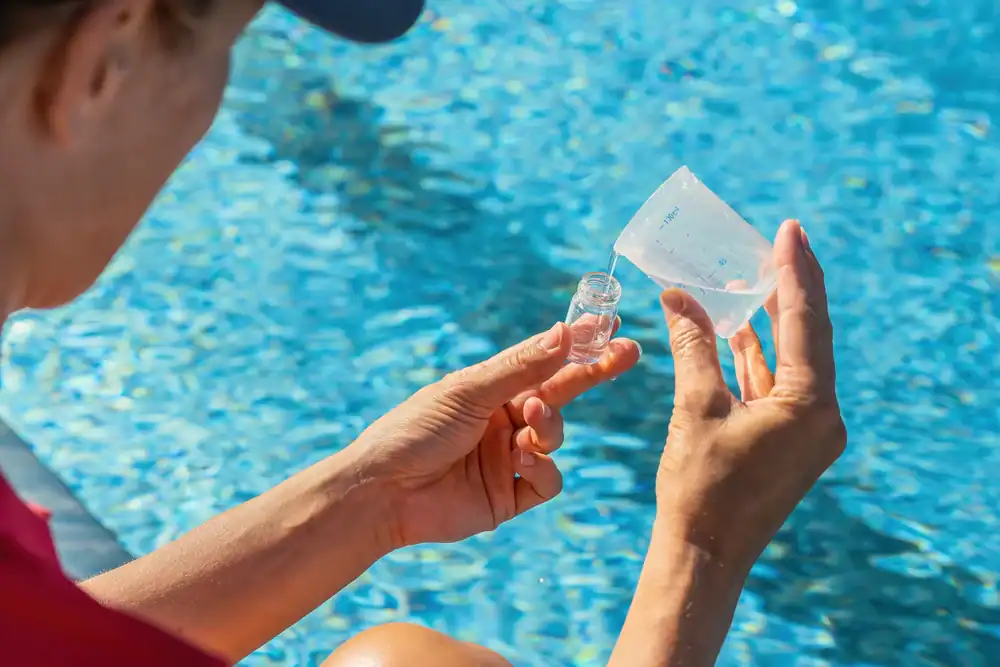
Once a week during swim season is the standard. That’s May through September in South Georgia when you’re using the pool regularly and the heat is working against you.
If you’re not swimming much or it’s cooler out, every two weeks works. But after a heavy rain, a pool party, or if you’ve shocked the pool, test it before you swim again. Rain dilutes your chemicals, heavy use burns through chlorine faster, and shocking temporarily throws everything off.
The goal isn’t to test obsessively. It’s to catch problems before they turn into algae blooms or equipment damage. A quick test once a week keeps you from dumping money into chemicals you don’t need or dealing with cloudy water that takes days to fix.
Most pool stores test for free because they want to sell you chemicals. That’s not necessarily bad, but the recommendations tend to lean toward buying more products.
We test for free because we’re a full-service pool company. Some customers want us to handle their maintenance, some just want accurate numbers. Either way, we’d rather you have good information than bad water.
The testing process is similar—we’re checking the same levels any decent pool store checks. The difference is we’re not pushing product. If your water is fine, we’ll tell you it’s fine. If it needs adjusting, we’ll explain what and why, and you decide how to handle it. We’re also familiar with Denton water specifically, which helps when we’re making recommendations.
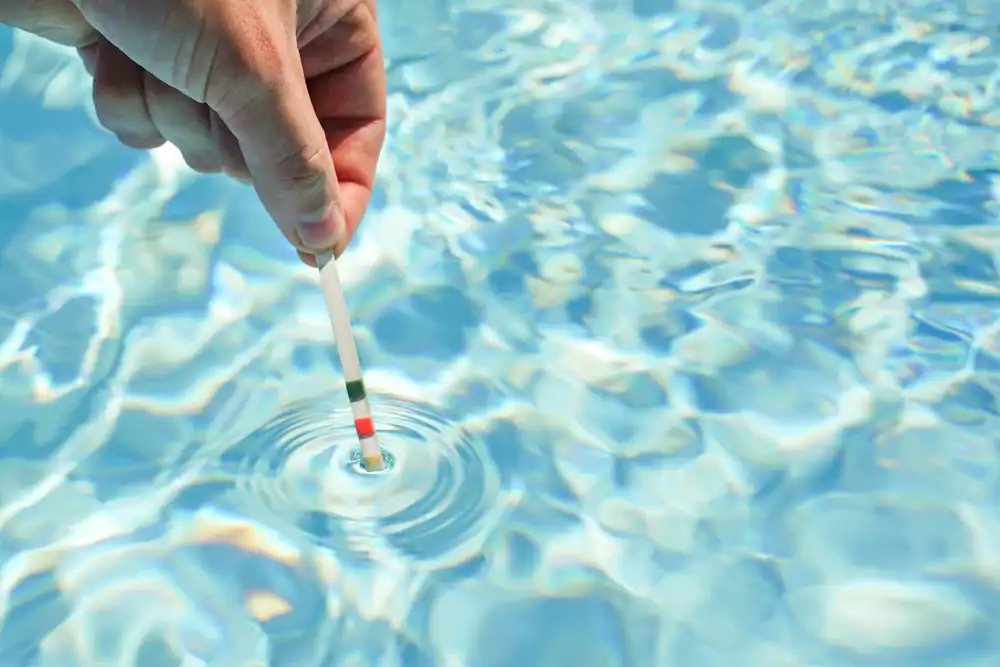
You can do both. Test strips are cheap and give you a rough idea of where things stand. They’re fine for a quick check between professional tests.
The issue with strips is accuracy. They’re not great at picking up small changes, and if you’re colorblind or testing in bad lighting, it’s easy to misread them. Liquid test kits are better but still not as precise as the equipment we use.
Bringing a sample in gives you exact numbers, which matters when you’re trying to fix a specific problem. If your water looks off and you’ve been adding chemicals but nothing’s improving, a professional water analysis usually shows what’s actually wrong. You’re not guessing based on a color chart—you’re seeing the real levels and adjusting from there.
Clear doesn’t mean clean. Your water can look perfect and still have low chlorine, high pH, or other issues that make it unsafe or hard on your equipment.
Chlorine is invisible. So is improper pH. You won’t see a problem until algae starts growing or your eyes burn when you swim. By then, you’re fixing a bigger issue than if you’d caught it early with a simple test.
This happens a lot in South Georgia because our water is naturally hard and the heat accelerates chemical reactions. Your pool might look fine on Monday and turn green by Friday if the chlorine dropped and you didn’t notice. Regular testing catches those drops before they become visible problems. That’s why we offer free water testing—it’s easier to prevent issues than fix them after the fact.
pH should sit between 7.2 and 7.8. Lower than that, you’re risking equipment corrosion and liner damage. Higher, and your chlorine stops sanitizing effectively.
Free chlorine needs to stay between 1 and 3 ppm for residential pools. Total alkalinity should be 80 to 120 ppm—that keeps your pH stable. Calcium hardness should be 200 to 400 ppm, though in Denton it often runs higher because of our water supply. Cyanuric acid should be 30 to 50 ppm if you use stabilized chlorine.
Those ranges work for South Georgia conditions. If you’re outside them, your water will eventually cause problems—either with clarity, safety, or equipment wear. When you bring a sample in for pool water analysis, we’ll show you where your levels are and what to adjust to get them into range.
We focus on pool water testing because that’s what we know and what our equipment is calibrated for. If you need well water or drinking water tested, you’ll want a lab that specializes in that—different contaminants, different testing methods.
For pools, we test everything that affects water balance and safety. That includes the chemicals you’re managing and the levels that impact how your pool performs. If you’ve got a spa or hot tub, we can test that too since it’s the same principles, just smaller volume and higher temperatures.
If you’re in Denton or anywhere in Douglas County and you’ve got a pool that needs testing, bring a sample by. We’ll get you the numbers and walk you through what they mean. No charge, no pressure, just accurate information so you can keep your water where it needs to be.
Other Services we provide in Denton