
Hear from Our Customers
Pools in Denton and across Jeff Davis County take a beating that most service companies aren’t prepared for. The swimming season runs close to seven months, pine pollen from the timber country surrounding the area loads up your water every spring, and the occasional hard freeze catches equipment off guard when it’s not properly maintained. When those things stack up without consistent professional care, you’re not just dealing with a green pool you’re looking at chemical imbalances, clogged filters, and equipment that wears out years ahead of schedule.
The difference between a pool that’s ready every time you walk out the back door and one that’s always got something wrong with it usually comes down to one thing: whether someone who actually knows what they’re doing is keeping up with it. Weekly pool maintenance means your water chemistry stays dialed in through the heavy pollen months, your equipment gets caught before it fails, and you’re not scrambling for help in the middle of July when the pool is your only relief from the heat.
Denton properties tend to sit on larger lots with mature tree canopy which means more debris, higher organic load, and faster filter clogging than an open suburban pool would see. That’s not a problem if someone’s staying ahead of it. It becomes a problem when they’re not.
We’re based in Douglas, right across the Coffee County line from Denton and Jeff Davis County. That’s not a long-distance service call it’s a neighboring county run, made by our team that has been working in South Georgia’s specific soil, climate, and terrain for decades. Our founder came to this business with over 30 years of hands-on experience in concrete, plumbing, and pool construction before Deep Waters Pools ever opened its doors in 2014. That kind of background doesn’t come from a training manual.
We’re a family-owned operation, which means the person responsible for the work is the same person whose name is on the business. In a county built around the timber trade where Beasley Forest Products has been doing skilled, durable work for 40 years that standard of accountability isn’t unusual. It’s expected. Deep Waters Pools brings that same expectation to every pool we touch in the Denton area and throughout Jeff Davis County.
It starts with understanding what you’re actually dealing with. Whether you’re calling about weekly maintenance, a piece of equipment that stopped working, or water loss you can’t explain, the first step is a clear assessment not a sales pitch. We look at the full picture: your equipment, your water chemistry, your pool’s construction, and the specific conditions of your property before recommending anything.
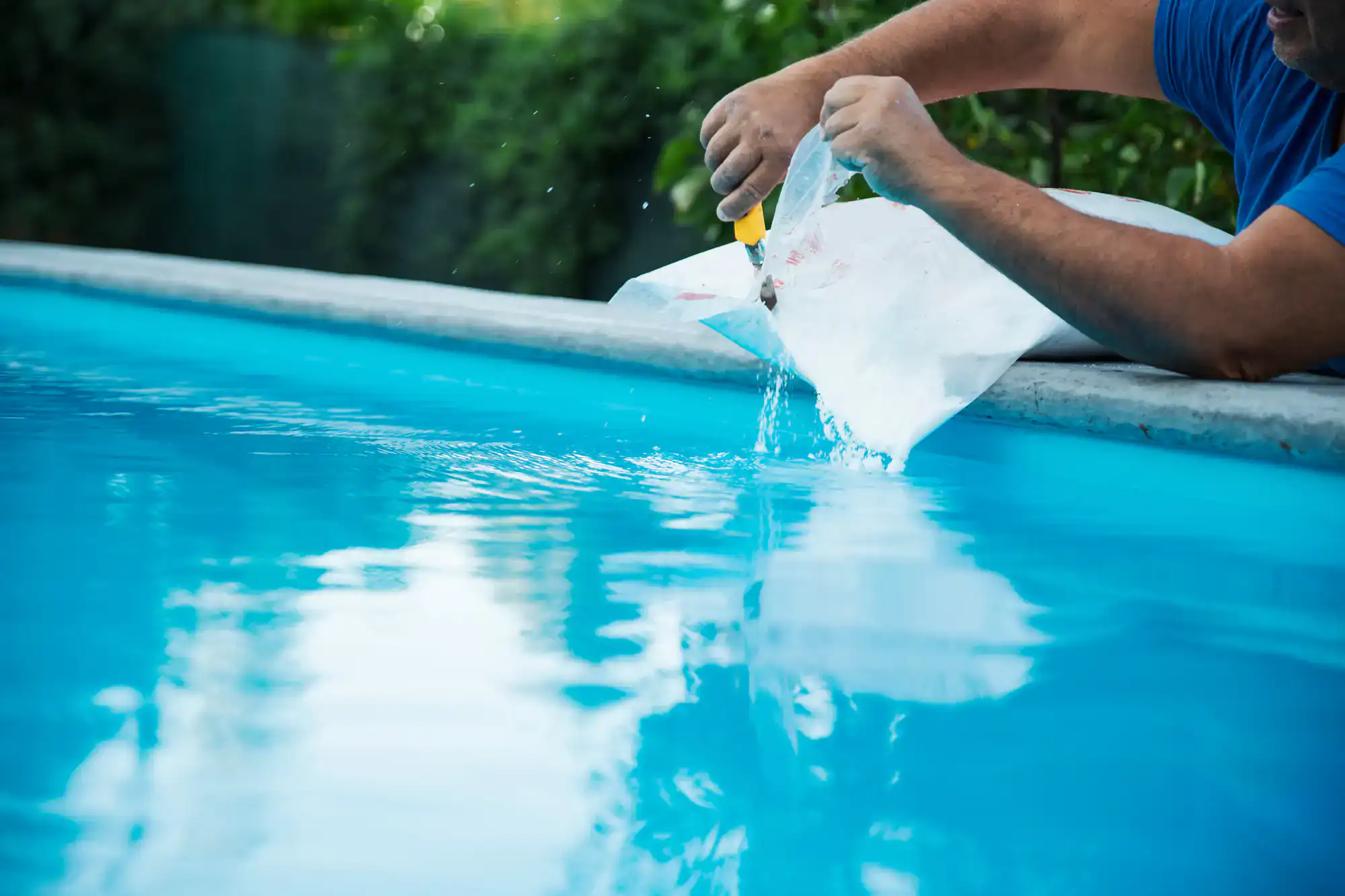
From there, the work gets done in a logical order. If it’s weekly maintenance, you get consistent visits on a set schedule water tested, chemistry adjusted, filter checked, debris cleared, and a quick equipment scan every time. If it’s a repair, you get a clear explanation of what failed, why it failed, and what fixing it actually involves. Pool equipment repair in a rural area like Denton matters more than it does in a dense suburb when the nearest supply house requires a drive, getting the diagnosis right the first time isn’t optional. Jeff Davis County’s position within the Altamaha River basin also means groundwater and drainage conditions here can complicate things like leak detection, and that’s factored into how we approach the work from the start.
When the job is done, you know what was done, what was found, and what to watch for. No vague service tickets, no mystery charges.
Ready to get started?
We handle the full range of pool services for Denton and the surrounding Jeff Davis County area from routine weekly pool maintenance to pool equipment repair, leak detection services, pool liner replacement, and heater installation. You don’t need a different company for each problem. One team, one point of contact, and a consistent history with your specific pool.
Weekly maintenance is built around what South Georgia pools actually deal with not a generic checklist. That means phosphate management during pine pollen season, debris load monitoring for wooded rural lots, and chemical adjustments that account for the long, hot swimming season this area sees from spring through fall. Pool equipment repair covers pumps, filters, motors, and plumbing diagnosed and fixed by people who install this equipment from scratch, which means we understand how the whole system works together, not just the part that broke.
Leak detection in the Denton area requires more than a dye test. The river basin geography here affects groundwater levels and drainage in ways that can make water loss harder to trace, and that complexity is accounted for in how we approach every leak call. Pool liner replacement is measured and installed with construction-level precision because an improperly fitted liner fails early and voids the warranty. And heater installation is done to manufacturer specifications, which is the difference between a unit that lasts 10 years and one that needs replacing in four.

For most pools in the Denton area, weekly professional maintenance is the right call from roughly April through October and that’s a longer active season than most of the country deals with. South Georgia’s heat and humidity accelerate chlorine consumption, which means chemistry that looks fine on Monday can be off by Thursday if no one’s checking it. During the spring pollen season, which hits hard in a county dominated by pine timber production, pools can turn green faster than most homeowners expect.
The other factor specific to Denton and this area is debris load. Properties around Denton tend to sit on larger rural lots with mature tree canopy, which means pine needles, leaves, and seed pods are a constant issue. That organic matter raises phosphate levels and clogs filters faster than an open suburban pool would see. A weekly service schedule keeps all of that in front of the problem instead of behind it, and it protects your equipment from the kind of compounding neglect that turns a $200 maintenance issue into a $1,500 repair.
Pool equipment repair covers the mechanical and electrical components that keep your pool functioning pumps, motors, filters, heaters, valves, and the plumbing that connects them. The signs that something needs attention are usually pretty clear: the pump is making noise it didn’t used to make, the water isn’t circulating properly, the filter pressure is consistently high or low, or the heater isn’t reaching temperature. Sometimes it’s obvious. Sometimes it shows up as a water chemistry problem that keeps coming back no matter how many chemicals you add which is often a circulation or filtration issue in disguise.
In a rural area like Denton, getting the diagnosis right the first time matters more than it does in a place with three pool supply stores within ten minutes. We approach equipment repair from a full-system perspective not just replacing the part that failed, but understanding why it failed and whether anything else in the system contributed to it. That’s the difference between a repair that holds and one that buys you six more months before the same problem comes back.
Leak detection starts with confirming that water loss is actually a leak and not evaporation or splash-out which in South Georgia’s summer heat is more than you’d think. A simple bucket test can establish a baseline. From there, professional detection involves pressure testing the plumbing lines, inspecting fittings and equipment pads, checking the shell and liner for cracks, and in some cases using dye testing to isolate the source.
What makes leak detection more nuanced in the Denton area and throughout Jeff Davis County is the groundwater environment. Denton sits within the Lower Ocmulgee River sub-basin of the Altamaha watershed, and in parts of this county the groundwater table runs higher than in more upland South Georgia locations. That means water loss isn’t always moving in the direction you’d expect, and hydrostatic pressure on the pool shell can complicate both the diagnosis and the repair. A technician who doesn’t account for the local terrain is likely to miss the actual source. We factor in these conditions from the start, which is why our leak calls don’t typically require multiple return visits to find the problem.
A vinyl pool liner typically lasts 10 to 15 years under normal conditions, though that range shortens quickly if the water chemistry hasn’t been maintained consistently or if the liner was improperly installed to begin with. Signs that replacement is due include visible fading or staining that doesn’t respond to cleaning, wrinkles that have settled into the floor or walls, and water loss that traces back to small tears or separations at the seams or fittings.
The replacement process itself involves draining the pool, removing the old liner, inspecting the pool floor and walls for any damage or settling that needs to be addressed before the new liner goes in, and then fitting and setting the new liner correctly. Correct measurement and installation matter more than most people realize a liner that’s cut or set improperly will wrinkle, pull away from the walls, and fail years ahead of schedule. We approach liner replacement with the same precision we bring to new pool construction, because the structural integrity of the installation is what determines how long it lasts, not just the quality of the liner itself.
If you want to get more than five or six months of use out of your pool, a heater makes a real difference. South Georgia’s shoulder seasons March, April, October, and into November are comfortable enough to swim in if the water temperature cooperates. Without a heater, you’re often waiting until late May for the water to warm up naturally and watching it drop off again by late September. A properly installed heater extends that window significantly on both ends.
The cost of heater installation typically runs between $1,600 and $5,200 depending on the unit type, size, and what the existing plumbing and electrical setup requires. The more important number is the lifespan: a heater installed correctly to manufacturer specifications lasts 8 to 12 years. One that’s improperly sized, incorrectly connected, or started up without proper commissioning is likely to fail in three to five. That’s not a small difference it’s potentially thousands of dollars in early replacement costs. We install heaters the right way from day one, which means you get the full value of what you paid for.
We operate out of Douglas in Coffee County, which shares a direct border with Jeff Davis County and Denton. The drive to Denton is a short, straightforward run not a stretched service call from a distant metro. This matters practically, because when something goes wrong with your pool in the middle of a South Georgia summer, you need someone who can actually get there without a week’s wait.
It also matters in terms of local knowledge. Coffee County and Jeff Davis County share the same South Georgia terrain, the same river basin geography, and the same seasonal conditions. Our team hasn’t been learning your area on your dime we’ve been working in this landscape for decades. For context, there’s currently no pool service company marketing directly to Denton, GA in local search results, which means most residents here have been relying on whoever they could find rather than someone who specifically knows the area. We’re close, experienced, and set up to serve Denton and Jeff Davis County residents the same way we serve our home county consistently and without the runaround.