
Hear from Our Customers
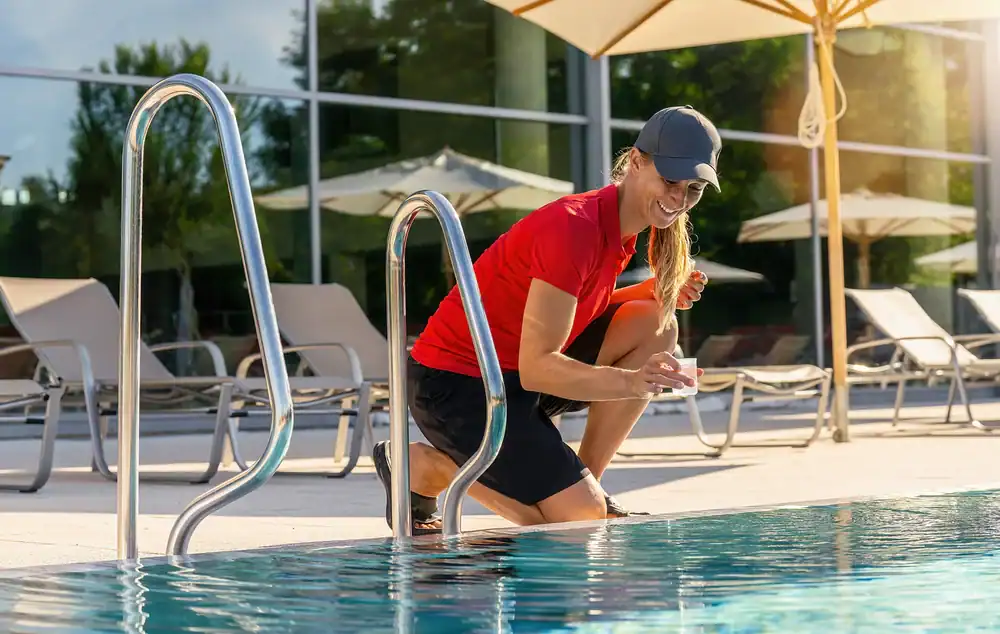
You’re not supposed to know what balanced pool water looks like just by staring at it. That’s why test strips fail you—they can’t catch the full picture, and they definitely can’t tell you why adding more chlorine isn’t fixing the problem.
Professional pool water testing gives you accurate readings on pH, chlorine, alkalinity, calcium hardness, and everything else that affects whether your water is safe or slowly damaging your pool. You get a full printout in about three minutes. No guessing. No conflicting advice from three different websites.
When your water chemistry is dialed in, you’re not dealing with cloudy water, skin irritation, or algae blooms. You’re swimming in water that’s actually safe for your family. And you’re avoiding the expensive repairs that come from letting imbalanced water sit too long.
We’ve been building and maintaining custom in-ground pools across South Georgia since 2014, but the experience behind Deep Waters Pools goes back over 30 years. We’ve seen what happens when water chemistry gets ignored, and we’ve helped hundreds of pool owners in Lax, GA and surrounding areas keep their water balanced year-round.
We offer free water testing because we know it’s the foundation of everything else. If your water isn’t right, nothing else matters. You can dump chemicals in all day and still have problems if you don’t know what you’re treating.
This isn’t a sales pitch disguised as a service. It’s a two-minute test that gives you real data and honest recommendations—whether you buy from us or not.
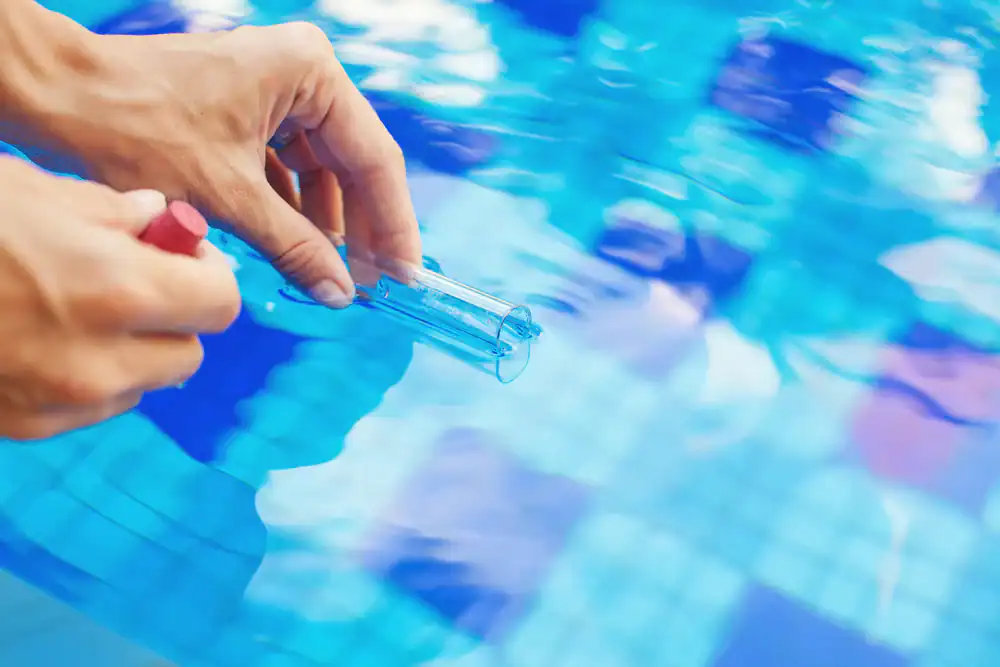
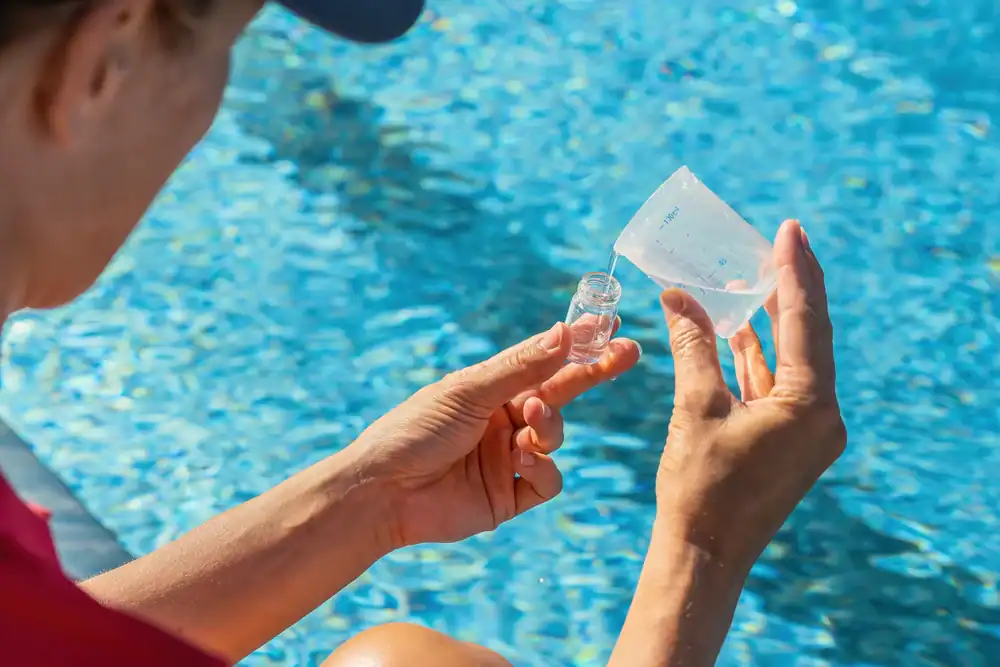
Bring us a water sample from your pool—about a pint in a clean container. Collect it from elbow-deep, away from return jets and skimmers, so we’re testing actual pool water and not just what’s floating on top.
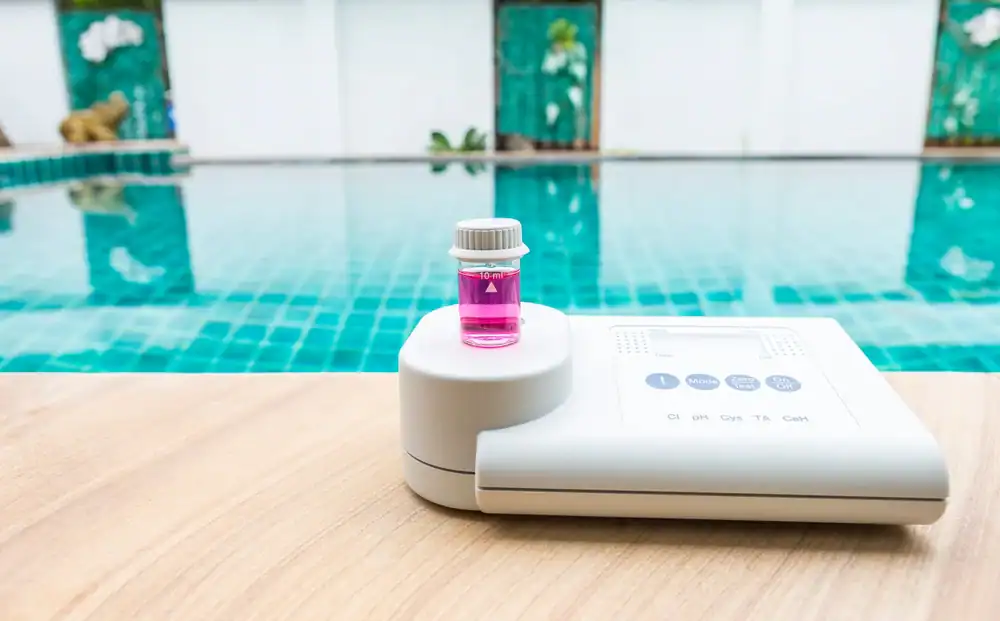
We run it through professional-grade testing equipment that measures pH, free and total chlorine, alkalinity, calcium hardness, cyanuric acid, and other factors that home kits miss or misread. The whole test takes two to three minutes.
You get a printed report showing where each level sits and where it should be. We’ll walk through what’s out of range, why it matters, and what you need to bring it back into balance. If you want to grab what you need from us, great. If not, you’ve still got the information you came for.
This is what Georgia Department of Public Health guidelines recommend—regular testing to keep chlorine and pH where they need to be. Most pool owners in Lax should be testing at least twice a week during swim season to stay ahead of problems.
Ready to get started?
A complete water quality testing covers the factors that determine whether your pool is safe to swim in and whether your water is slowly eating away at your equipment.
pH level tells you if your water is acidic or basic. It should sit between 7.2 and 7.8. Outside that range, chlorine stops working right, and your water starts corroding metal or scaling up your surfaces.
Chlorine keeps bacteria and algae from turning your pool into a swamp. You need between 1 and 3 parts per million to actually kill what’s growing in there. Too little and you’ve got a health risk. Too much and you’re irritating skin and eyes for no reason.
Total alkalinity and calcium hardness affect how stable your pH stays and whether your water is aggressive or balanced. Get these wrong and you’re constantly chasing other problems. Here in South Georgia, where heat and humidity push pool chemistry harder than in cooler climates, these readings matter even more. Water evaporates faster, chemicals burn off quicker, and small imbalances turn into big headaches if you’re not testing regularly.
At least twice a week during swimming season. That’s what Georgia health guidelines recommend, and it’s what actually keeps your water balanced.
Pool chemistry shifts constantly. Rain dilutes your chemicals. Sunlight breaks down chlorine. Swimmers introduce oils, sweat, and sunscreen. If you’re only testing once a month, you’re reacting to problems that have been building for weeks.
Twice-weekly testing lets you catch small shifts before they become algae blooms or cloudy water. It’s a lot easier to adjust pH by half a point than to shock a green pool back to life. Most pool owners in Lax bring us a sample every few days during summer and cut back to weekly once things cool down.
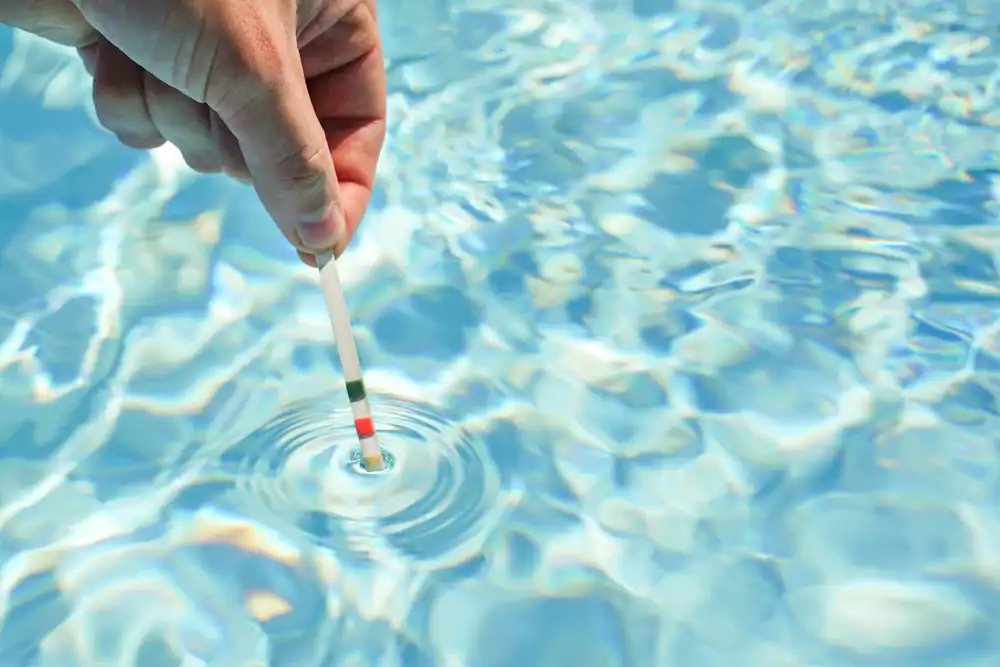
Test strips give you a rough idea, but they’re not accurate enough to manage pool chemistry correctly. They miss minerals, they’re hard to read in certain light, and they don’t tell you why your water is off.
Professional water testing uses calibrated equipment that measures exact levels of pH, chlorine, alkalinity, calcium hardness, and stabilizer. You’re getting numbers, not color comparisons. That precision matters when you’re trying to figure out why your chlorine isn’t working or why your water keeps turning cloudy.
Strips also can’t catch combined chlorine or tell you if your stabilizer level is too high—both of which cause real problems that look like other issues. If you’re serious about keeping your pool water safe and clear, you need testing that actually shows you what’s happening.
Start with pH and alkalinity first. Everything else depends on those being in range, so there’s no point adjusting chlorine or calcium until your pH is between 7.2 and 7.8.
If your alkalinity is low, bring it up with sodium bicarbonate. If it’s high, you’ll need to lower it with muriatic acid. Once alkalinity is stable, adjust pH. Then move to chlorine, calcium hardness, and stabilizer as needed.
Don’t try to fix everything at once. Make one adjustment, wait a few hours, retest, then move to the next issue. If your water is severely out of balance, bring us another sample after your first round of corrections so we can see what still needs work. We’ll walk you through the order and the amounts—no charge for the advice.
It’s actually free. No purchase required, no obligation, no fine print.
We test water for free because it’s the right way to help pool owners keep their water safe. If you need chemicals or supplies and want to buy them from us, that’s great. If you’d rather take your test results somewhere else, that’s fine too.
The test itself takes a couple minutes and costs us almost nothing to run. What it does is give you accurate information so you’re not guessing or wasting money on chemicals you don’t need. We’ve been doing this for years, and most people who come in for testing end up coming back—not because we pressured them, but because they got straight answers and good service.
Mid-morning or early afternoon, at least eight hours after your last chemical addition and before anyone swims. You want a sample that represents your pool’s baseline chemistry, not what it looks like right after you shocked it or while ten kids are splashing around.
Collect the sample from about elbow-deep in the water, away from return jets and skimmers. Use a clean container—an old water bottle works fine as long as it’s been rinsed out. Don’t let the sample sit in a hot car for hours before you bring it in, because heat will throw off the chlorine reading.
If you run your pump on a timer, try to grab your sample while it’s running so the water is circulated. Stagnant water in a corner of your pool doesn’t tell you what’s actually going on. Bring it to us as soon as you can, and we’ll have your results in a few minutes.
Absolutely. Low pH turns your water acidic, which eats away at metal fixtures, erodes plaster, and pits concrete. High pH makes your water scale up, clogging filters and coating heaters with calcium deposits that wreck efficiency.
Low calcium hardness makes your water aggressive—it’ll pull calcium from your pool surfaces to balance itself, which means etching and surface damage. High calcium does the opposite, leaving crusty buildup on tile and equipment.
Ignoring water balance doesn’t just make your pool look bad. It leads to expensive repairs—replastering, equipment replacement, and filter overhauls that could’ve been avoided with regular testing and minor adjustments. In South Georgia’s heat, these problems accelerate. Water chemistry that’s slightly off in April becomes a serious issue by July if you’re not staying on top of it.
Other Services we provide in Lax