
Hear from Our Customers
When you build a gunite pool on your Lax property, you’re not just adding a place to swim. You’re adding something permanent to land you’ve invested in something that holds its value, gets used hard through South Georgia’s long summers, and doesn’t need a liner replacement every ten years or a fiberglass patch job before the decade is out. A properly built gunite pool lasts 25 to 30 years or more. That’s the difference between a real investment and a recurring expense.
The Lax area sits in the Tifton loamy sand belt of Georgia’s Lower Coastal Plain. That soil is well-drained and easier to excavate than the red clay you’d find farther north in Georgia, but it requires specific engineering for the pool shell and plumbing to perform long-term. A builder who knows this soil who has excavated and built in it repeatedly will engineer your pool differently than someone who learned their trade in a different part of the state.
South Georgia’s swim season runs nearly nine months out of the year. A pool here isn’t a seasonal luxury that sits covered for half the calendar. It’s a functional part of your property that your family uses from spring through fall. When you invest in pool construction near Lax, you want that investment built to handle real use, real weather, and the specific ground conditions under your backyard not a one-size-fits-all build that ignores what’s actually under the surface.
We’re based in Douglas about 25 miles from Lax via GA-32 and have been building custom inground pools across Coffee County and the surrounding South Georgia region since 2014. But the experience behind this company goes back more than 30 years. Our founder built pools across South Georgia long before starting Deep Waters Pools, and that history shows up in how every project is managed.
We didn’t expand into the Lax area because the market looked good on a spreadsheet. We’ve worked in the same Coastal Plain soil, the same South Georgia climate, and under the same county permit processes that apply to properties near Lax. We know what building in this region actually involves.
Every project is managed in-house no subcontractor handoffs, no crew showing up without knowing what the last team did. One team, one point of contact, from the first site evaluation to the day you fill the pool. That’s not a tagline. It’s how we work.
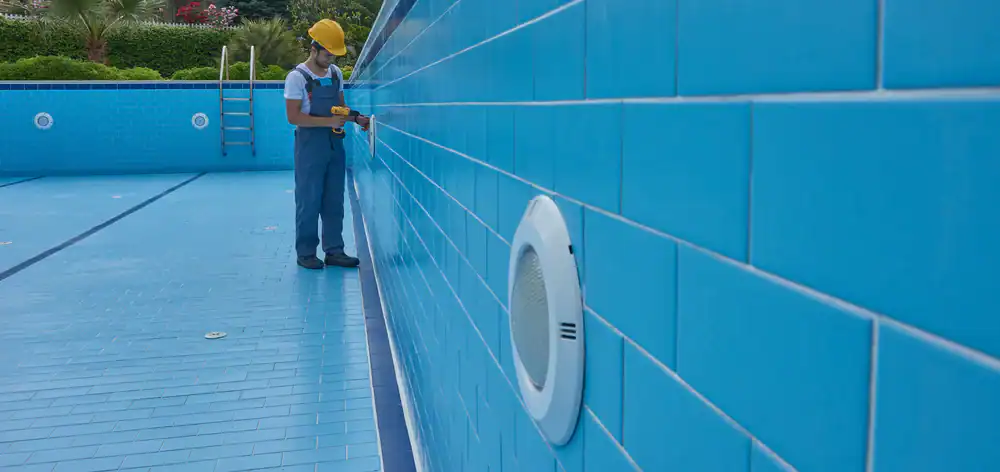
It starts with a site evaluation before anything is designed or signed. Your property near Lax gets assessed for soil conditions, drainage, equipment access, utility locations, and anything else that affects the build. This isn’t a sales visit it’s a professional look at your specific land so there are no surprises once excavation starts.
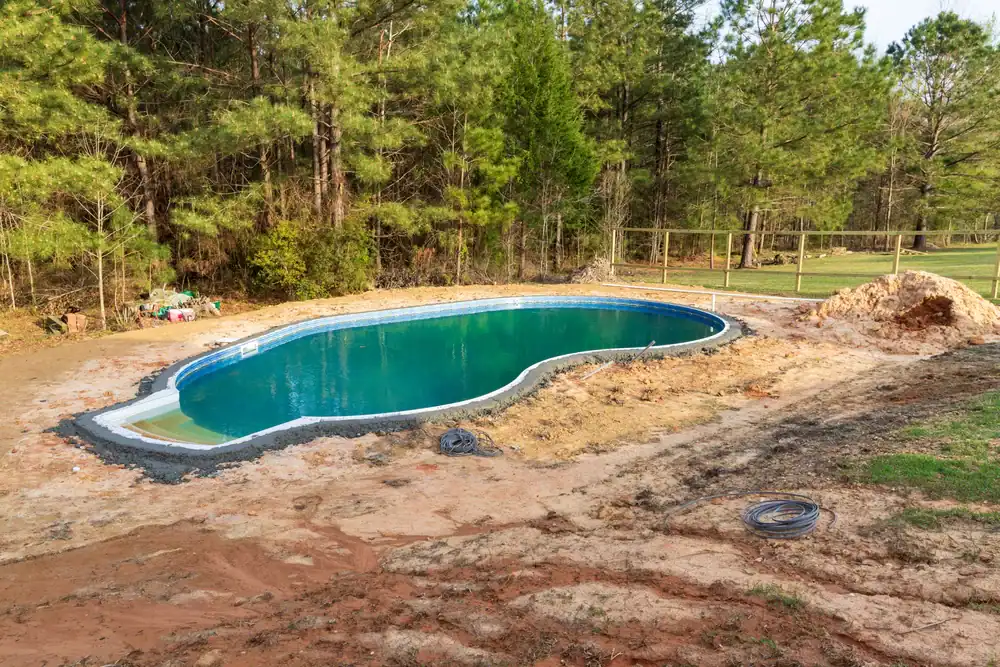
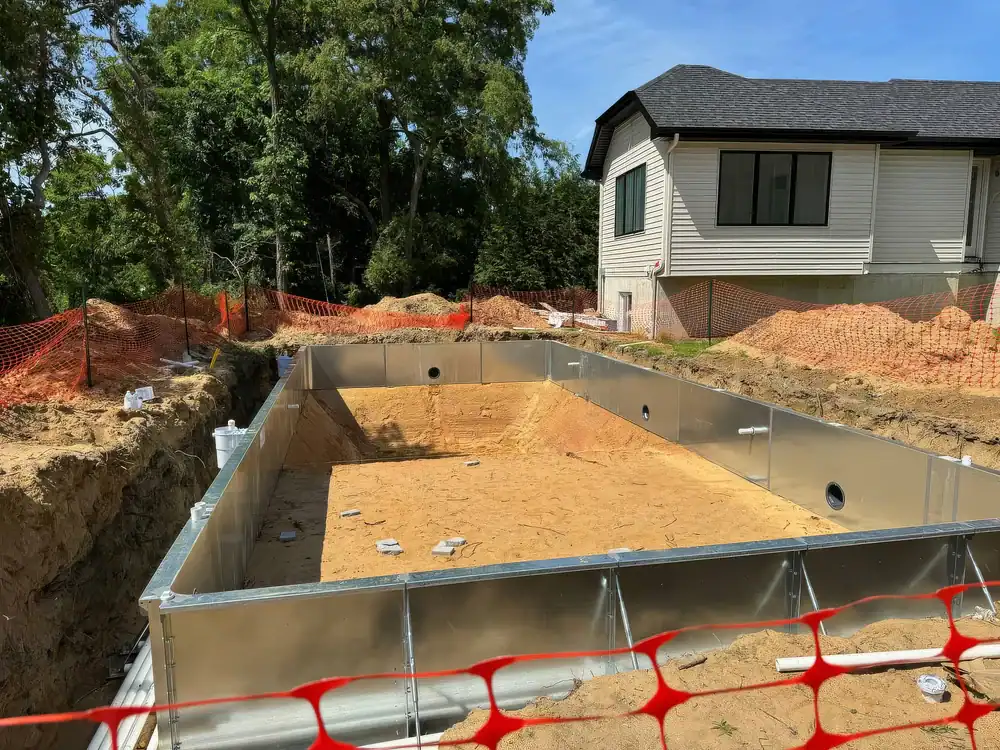
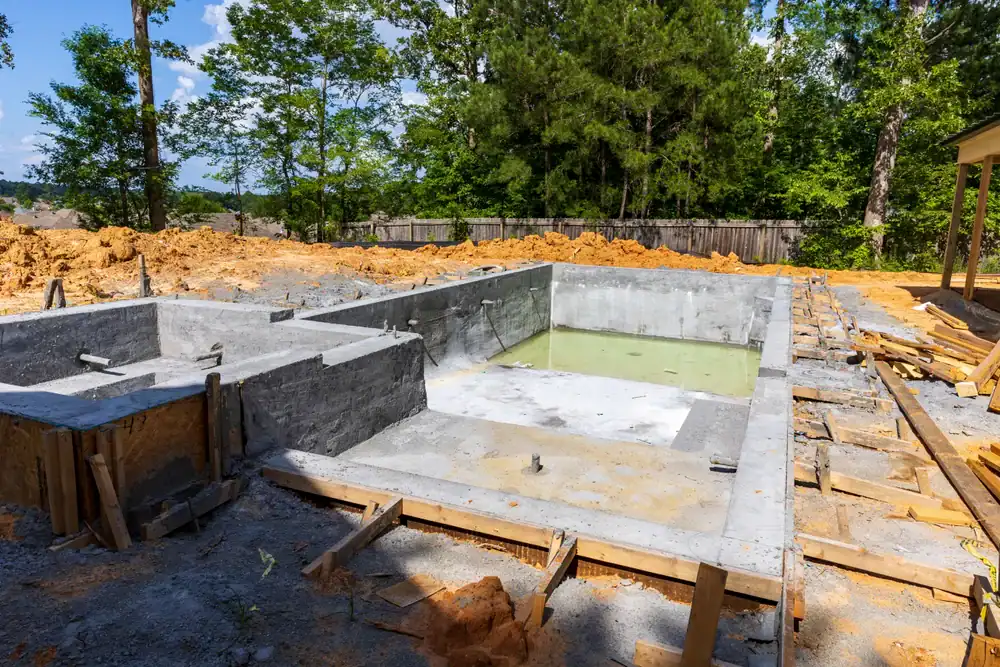
Once the design is finalized and permits are pulled we handle permitting whether your property falls under Coffee County or Irwin County jurisdiction, since Lax sits right on that county line excavation begins. In the sandy loam soils of this part of South Georgia, excavation typically runs one to three days. After that, the steel rebar cage goes in, gunite is applied, and plumbing and electrical work runs concurrently. Because the same crew moves through each phase without waiting on outside subs, the build stays on schedule. Most residential gunite pools we build are complete in six to eight weeks from excavation to water.
Deck installation is the final phase. The flat terrain around Lax is actually favorable for larger deck footprints if you’re thinking about entertaining space or a pool surround that works hard, this is the time to plan it. Once the deck is poured and cured, the pool is inspected, water goes in, and you’re done. No lingering punch lists, no calls to a subcontractor who’s already moved on to the next job.
Ready to get started?
Gunite pool construction means your pool is built to fit your specific property the shape, depth, size, and features that work for your land and your family, not a pre-manufactured shell that gets dropped into a hole. For properties near Lax, that matters. Rural parcels here aren’t cookie-cutter suburban lots. They have drainage patterns, access routes, and site conditions that require a builder who actually evaluates the property before drawing a single line.
Every Deep Waters Pools build includes full in-house permit management. For Lax residents, that means we handle whichever county’s process applies to your address Coffee County through our home office in Douglas, or Irwin County through the Building Inspector in Ocilla. You don’t call county offices, track inspection schedules, or figure out which permit form applies to your side of the line. We handle that.
Swimming pool plumbing is done with quality Schedule 40 PVC not corrugated flex pipe that degrades and leaks. Electrical bonding and grounding meets NEC Article 680 requirements on every build. Anti-entrapment drain covers are installed per the Virginia Graeme Baker Act. Georgia’s pool barrier fencing requirements are addressed before the project closes. These aren’t extras they’re the standard on every project, because a pool that isn’t fully permitted and code-compliant is a liability when it comes time to sell your property, and we’re not in the business of leaving you with one.
Yes all new inground pool construction in Georgia requires a building permit, and Lax adds a specific wrinkle that most communities don’t have. Because Lax sits on the Irwin County and Coffee County line, your permit requirement depends on which county your specific property falls within. If you’re on the Irwin County side, permits go through the Irwin County Building Inspector in Ocilla. If you’re on the Coffee County side, the process runs through Coffee County, which is our home county and a process we navigate regularly.
Either way, we handle all of it. We pull the permit, coordinate the inspections, and make sure the finished pool is fully documented and code-compliant under Georgia’s statewide minimum construction standards. You don’t need to figure out which county office to call or which form to file. That’s part of what you’re hiring us to manage.
For a standard residential gunite pool, most of our builds run six to eight weeks from the start of excavation to water in the pool. In the sandy loam soils around Lax, excavation itself typically takes one to three days the Coastal Plain terrain here is generally favorable compared to the heavier clay soils farther north in Georgia. After excavation, the rebar cage, gunite shell, plumbing, electrical, and deck installation follow in sequence.
The reason that timeline holds is that we don’t depend on outside subcontractors to move from one phase to the next. The same team handles each stage, so there’s no waiting on a plumbing sub who’s finishing another job across the county. If you’re planning to have a pool ready for South Georgia’s summer season which starts in earnest by late April the best time to begin the process is late fall or early winter.
The most straightforward difference is longevity and customization. A gunite pool built to proper specifications will last 25 to 30 years or more. A fiberglass pool typically needs significant repairs or replacement within 15 to 25 years, and it comes in fixed manufacturer shapes you’re choosing from a catalog, not designing something specific to your property.
For properties near Lax, there’s another factor worth knowing. The sandy loam soils of the Lower Coastal Plain can shift over time, and the engineering of a gunite shell the rebar cage thickness, the gunite application, the structural design can be tailored specifically to your site’s soil conditions. A fiberglass shell is manufactured off-site and dropped in. It can’t be engineered around what’s actually under your backyard. If you’re investing in a pool on land you plan to keep for decades, the construction method that’s built to match that permanence is gunite.
The Lax area sits in the Tifton loamy sand belt Georgia’s state soil, covering more than two million acres across the Lower Coastal Plain. It’s a sandy loam topsoil over a fine sandy clay loam subsoil. The good news is that this soil is generally well-drained and easier to excavate than the red clay you’d encounter in North Georgia. Equipment moves through it efficiently, and the flat terrain of the Coastal Plain means grading and drainage work is usually straightforward.
The consideration is that sandy soils can shift, particularly near drainage channels or in lower-lying areas of a property. That’s why we conduct a site evaluation before any design is finalized to assess the specific drainage characteristics and soil profile of your property, not just assume it matches the general regional pattern. The rebar cage and gunite thickness are then engineered to account for what’s actually there, not what’s typical. That site-specific approach is what separates a pool that performs for 30 years from one that develops structural issues within the first decade.
A standard residential inground gunite pool in this part of South Georgia typically runs between $55,000 and $100,000, depending on size, shape, depth, and features. Larger custom builds with premium decking, water features, or expanded footprints can exceed that range. That’s a significant investment relative to the local housing market and it’s worth understanding what drives the cost before you start comparing quotes.
The biggest cost variable in gunite construction is scope. A basic rectangular pool with a standard concrete deck is at the lower end. A custom shape with a larger deck footprint, upgraded plumbing, lighting, and water features moves the number up. What doesn’t change regardless of scope is the quality of materials and the permit compliance those are non-negotiable on every build. One thing to keep in mind: an unpermitted pool or one built with substandard plumbing is a problem you’ll discover when you try to sell your property. The upfront investment in a properly built, fully permitted pool is almost always cheaper than the cost of fixing a bad one later.
Yes and rural properties are actually well-suited for the kind of custom gunite construction we do. Larger parcels give you more flexibility in pool placement, deck size, and overall layout than a typical suburban lot would. The flat terrain common to the Coastal Plain around Lax also makes equipment access and grading easier than sloped or heavily wooded properties in other parts of Georgia.
The site evaluation we conduct before any contract is signed is specifically designed to assess what your property can support including equipment access routes across agricultural land, proximity to any existing structures or utilities, and drainage patterns that might affect pool placement. Rural properties near Lax often have more going on below the surface than a standard suburban build, and that evaluation is how we make sure the design fits the actual land before a single shovel hits the ground. If you’ve got the property, the build can be designed around it.