
Hear from Our Customers
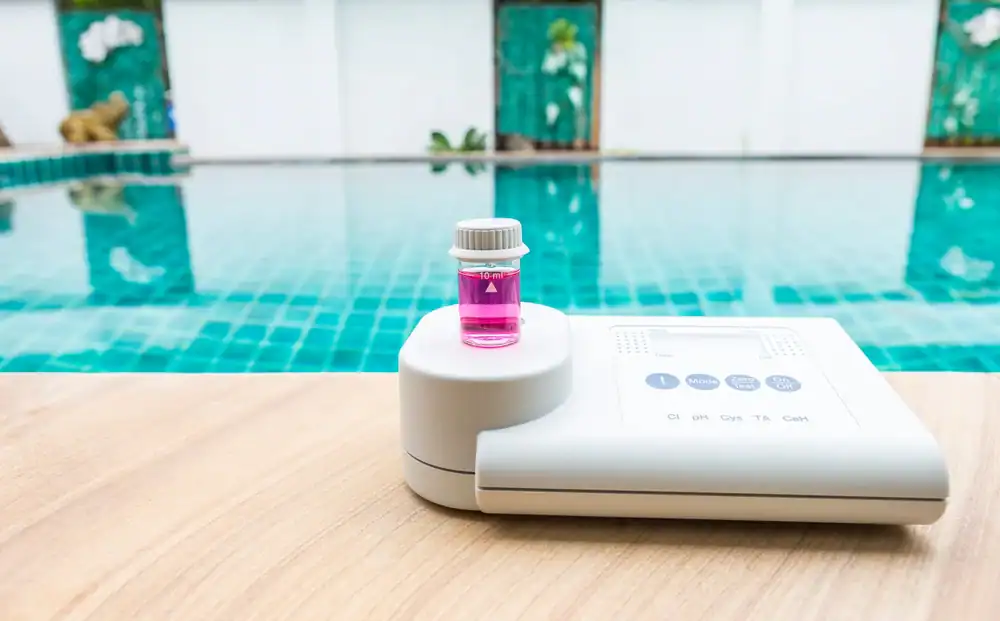
You’re not guessing with test strips that fade or give you half the picture. You’re getting a full water analysis that shows pH, chlorine levels, alkalinity, calcium hardness, and everything else that affects how your pool looks and feels.
When your water’s balanced, you’re not dealing with cloudy water, eye irritation, or algae blooms. Your equipment lasts longer because corrosive water isn’t eating away at pumps and heaters. Your family swims without skin irritation or that chemical smell that means something’s off.
Georgia’s heat and afternoon storms throw your chemistry off faster than you think. Heavy rain dilutes your chemicals. Hot days burn through chlorine. What looked fine last week might be completely out of balance today, and you won’t know until there’s a problem you can see.
Deep Waters Pools was built on over 30 years of hands-on pool experience right here in South Georgia. We’re not a franchise or a big-box store. We’re local, licensed, insured, and we’ve seen every type of water problem this area throws at pool owners.
We started building custom inground pools for families in Douglas County and the surrounding areas, and we quickly realized that most people don’t want to become chemists just to enjoy their backyard. That’s why we offer free water testing. You bring in a sample, we run it through our testing system, and you walk out knowing exactly what your pool needs.
Lehigh pool owners deal with red clay runoff, pollen, humidity, and summer storms that can flip your chemistry overnight. We understand how local conditions affect your water because we live here and work here every day.
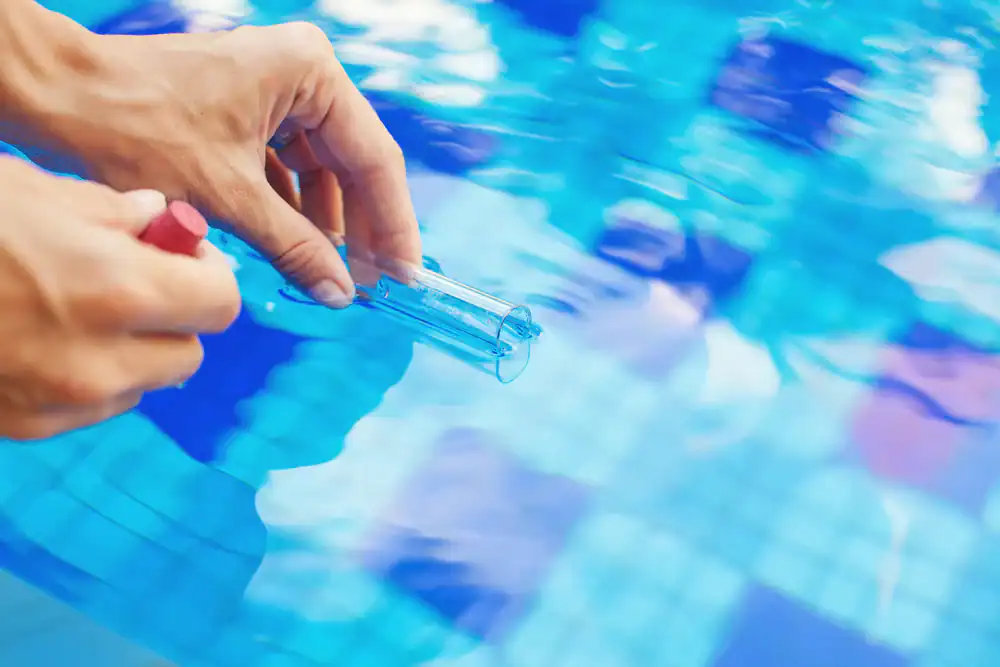
Grab a clean plastic bottle and collect water from about elbow-deep in your pool, away from the return jets. That gives us a sample that represents what’s actually in your water, not just what’s near the surface or right by the skimmer.
Bring it to us and we’ll run it through our testing system. The process takes about two to three minutes. We’re testing for pH, free and total chlorine, alkalinity, calcium hardness, cyanuric acid, and other factors that home test strips either miss or measure poorly.
You’ll get a printed report showing your current levels and exactly where they should be. We’ll walk you through what’s out of balance and why it matters. Then we’ll tell you what chemicals you need, how much to add, and when to retest. No sales pitch, no upselling, just straightforward advice based on what your water actually needs right now.
Ready to get started?
Every test covers the critical factors that keep your pool safe and clear. We’re checking pH levels to prevent equipment corrosion and skin irritation. We’re measuring chlorine to make sure you have enough sanitizer to kill bacteria without overdoing it. We’re looking at total alkalinity because it stabilizes your pH and keeps it from bouncing around every time it rains.
Calcium hardness matters more than most people realize, especially in South Georgia where our water can be soft or hard depending on your source. Too little calcium and your water pulls it from your pool surfaces and equipment. Too much and you get scaling and cloudy water that won’t clear up no matter how much you shock it.
We also test cyanuric acid, which protects your chlorine from burning off in the sun. Georgia summers are brutal on chlorine levels, and if your stabilizer is too low, you’re burning through chemicals faster than you should. If it’s too high, your chlorine stops working effectively even though your test shows it’s there.
You’ll leave with a full printout and a clear plan. Most people test weekly during swim season, and after heavy rain or when the pool gets a lot of use. That keeps you ahead of problems instead of reacting to green water or equipment issues that could’ve been prevented.
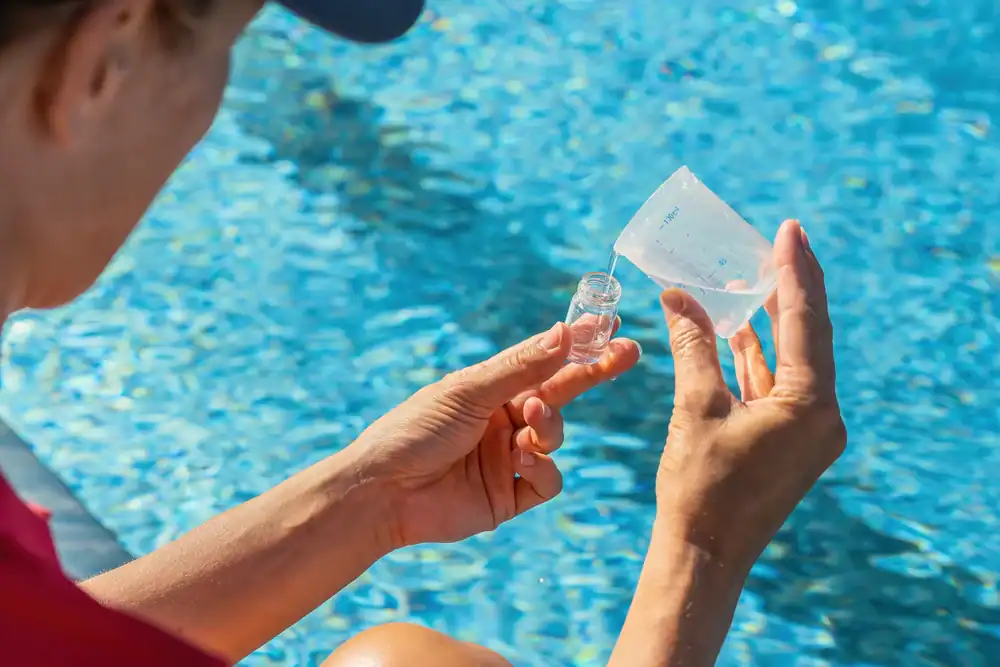
Test weekly during the summer when you’re swimming regularly and the heat is burning through chlorine. That’s your baseline. But you also need to test after heavy storms, because rain dilutes your chemicals and throws off your pH balance faster than anything else.
If you’re having a pool party or the pool gets heavy use over a weekend, test a day or two after. More swimmers means more organic material in the water, which eats up chlorine and can cause your levels to drop below safe ranges.
In the off-season, you can stretch it to every two weeks or monthly, depending on whether you’re keeping the pool open or winterizing. But if you see cloudy water, algae starting to form, or you smell that strong chlorine odor, don’t wait for your regular schedule. Bring in a sample right away because something’s already out of balance.
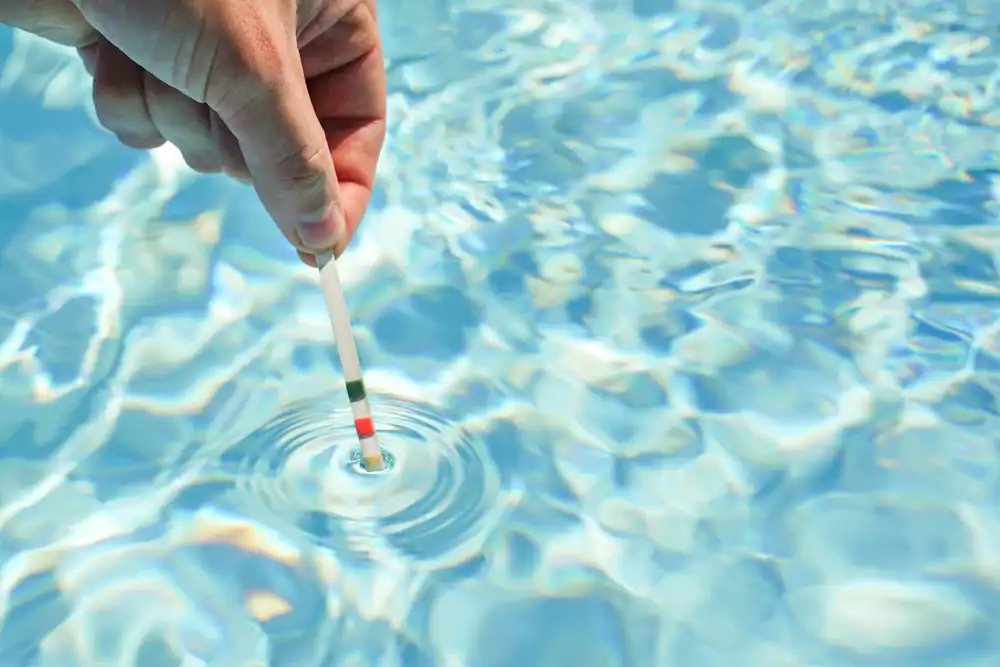
Test strips give you a quick snapshot of pH and chlorine, but they’re not precise and they don’t test for everything that matters. The color matching is subjective, the strips degrade if they’re exposed to humidity, and you’re missing critical readings like calcium hardness and cyanuric acid.
Professional testing uses liquid reagents and digital analysis that measure exact levels, not color approximations. You’re getting readings on seven to ten different parameters, and the results are consistent every time. That matters when you’re trying to figure out why your water won’t clear up or why you’re going through chemicals faster than normal.
The other difference is interpretation. You can have a test strip that shows your chlorine is fine, but if your cyanuric acid is too high, that chlorine isn’t actually sanitizing your water effectively. We catch those relationships between chemicals that a strip can’t show you, and we explain what’s actually happening so you can fix the root cause instead of just treating symptoms.
Rain dilutes your chlorine and drops your sanitizer levels below what’s needed to keep the water clear. It also lowers your pH and alkalinity, which makes your water more acidic and can cause metals or minerals to come out of solution and cloud things up.
If you’re getting runoff from your yard, you’re also introducing dirt, pollen, and organic debris that your filter has to process. That overwhelms your system temporarily and gives you that milky or hazy look. The chlorine you do have left gets used up dealing with all that contamination instead of keeping the water sanitized.
The fix is testing right after a storm and adjusting your chemicals based on what the water actually needs. Usually that means adding chlorine to get your sanitizer back up, and possibly raising your pH and alkalinity if they’ve dropped. Run your pump longer than normal to help your filter catch up, and brush the pool to keep debris from settling on the bottom where it’s harder to remove.
Low pH is acidic and it corrodes metal components in your pump, heater, and filter system. It also etches plaster, damages vinyl liners, and can cause wrinkles or premature aging. You’re looking at expensive repairs or replacements that could’ve been avoided with regular testing and balancing.
High pH causes scaling, where calcium and minerals build up on your tile, in your pipes, and inside your equipment. That reduces water flow, makes your heater work harder, and eventually clogs things up to the point where equipment fails. It also makes your water cloudy and your chlorine less effective, so you’re dealing with multiple problems at once.
Calcium hardness that’s too low turns your water aggressive, meaning it pulls calcium from wherever it can find it—your plaster, your grout, your equipment. Too high and you get the scaling issues we just mentioned. Both extremes cost you money in damage that happens gradually until something breaks or looks terrible and needs to be resurfaced or replaced.
Bring about 16 ounces of pool water in a clean plastic bottle. Don’t use a container that had soap, juice, or anything else in it, because residue will throw off the test results. A clean water bottle or a container you’ve rinsed thoroughly works fine.
Collect the sample from elbow-deep in your pool, away from the return jets and skimmer. You want water that represents the whole pool, not just what’s circulating right at the surface or what’s been sitting in one spot. Mid-pool, mid-depth is your best bet.
Test the water within a few hours of collecting it if possible. The longer it sits, especially in heat or sunlight, the more your chemical levels can shift. If you can’t get to us right away, keep the sample in a cool, dark place and bring it in as soon as you can. And if you’ve added chemicals recently, wait at least four to six hours before collecting your sample so we’re testing your actual water balance, not just the chemicals you just dumped in.
It’s free. You bring in water, we test it, you get your results and recommendations. You’re not required to buy anything from us to get your water tested.
We offer the service because we want pool owners in Lehigh and the surrounding areas to have access to accurate information about their water. Most people end up purchasing the chemicals they need from us because it’s convenient and we’re telling them exactly what to buy based on their specific test results, but that’s your choice.
Some places only offer free testing if you’re buying chemicals that day, or they use it as a way to push products you don’t actually need. We’re not doing that. We’ve been in this business long enough to know that helping people maintain their pools correctly builds trust, and that matters more than a hard sell on every visit.
Other Services we provide in Lehigh