

Hear from Our Customers
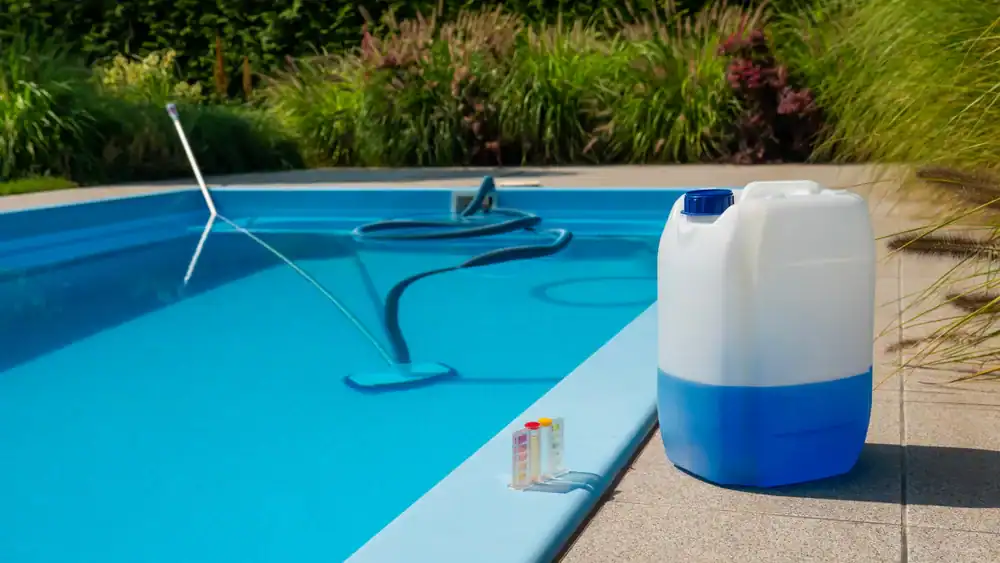
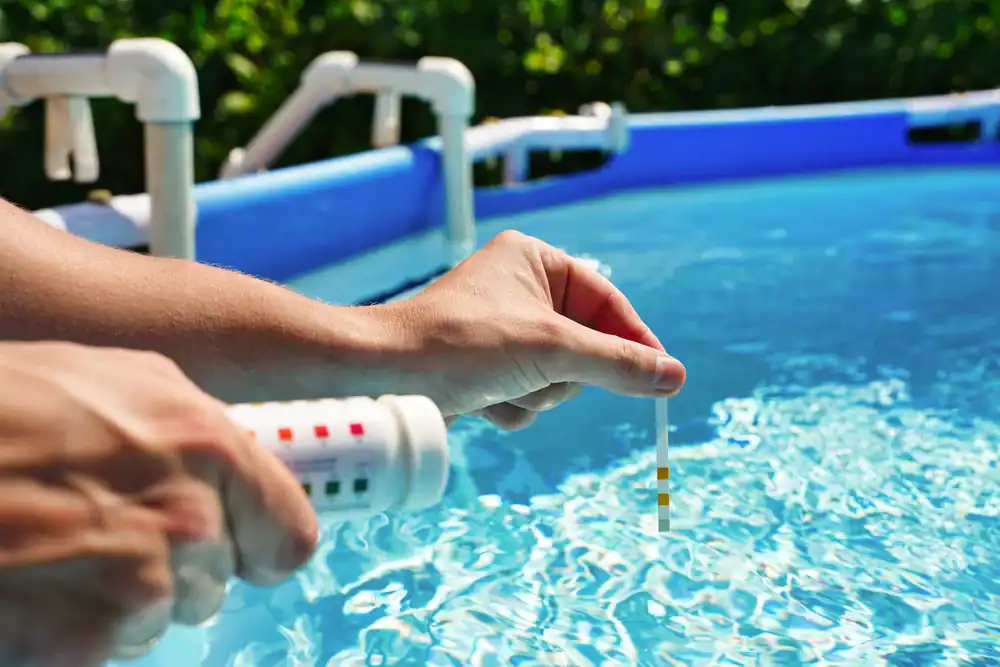
Most pool owners in Mystic have already tried the fix-it-yourself approach. You’ve added chlorine, tested with strips, gotten readings that looked fine, and still watched your pool go cloudy or green within a few days. That’s not a chemical problem that’s a diagnosis problem. When you don’t have an accurate picture of what’s actually in your water, you’re not solving anything. You’re just spending money on chemicals and time on frustration.
Here’s what changes with a proper water test: you stop guessing. You know your exact pH, your free chlorine versus combined chlorine, your cyanuric acid level, your calcium hardness, your total alkalinity all of it measured with digital equipment that reads to multiple decimal points, not a color card you hold up in the sun. That precision matters everywhere, but it matters especially here. Irwin County ranks third in Georgia for percentage of land in farms, and that agricultural environment dumps pollen, dust, and phosphate-laden particulate into your pool water at a rate that suburban pool owners never deal with. The correction plan for your pool has to account for where you actually live.
If your pool is filled from a private well which is common on the larger rural properties around Mystic your baseline water chemistry is already different from what a generic test assumes. UGA Cooperative Extension has specifically flagged Irwin County for elevated mineral content in private well water, including iron and other compounds that affect how your pool holds chemistry. A real test accounts for your starting point, not a national average.
We’re based in Douglas, Georgia, connected to Mystic directly by State Route 32 the same road that runs through your community. Our team has been building and servicing concrete pools in South Georgia for over 30 years. That history didn’t start with a franchise or a training manual. It started with hands in the ground, building gunite and shotcrete pools across Coffee, Irwin, and the surrounding counties, learning exactly how this climate and this soil behave.
That construction background is what separates our chemistry expertise from what you get at a pool store. When someone who has built these pools from scratch tests your water, they understand what your specific surface type needs to stay protected not just what the label on a chemical bottle says. We’re licensed, insured, and built on the kind of accountability that only comes from doing this work in the same communities, year after year, where your reputation follows you home.
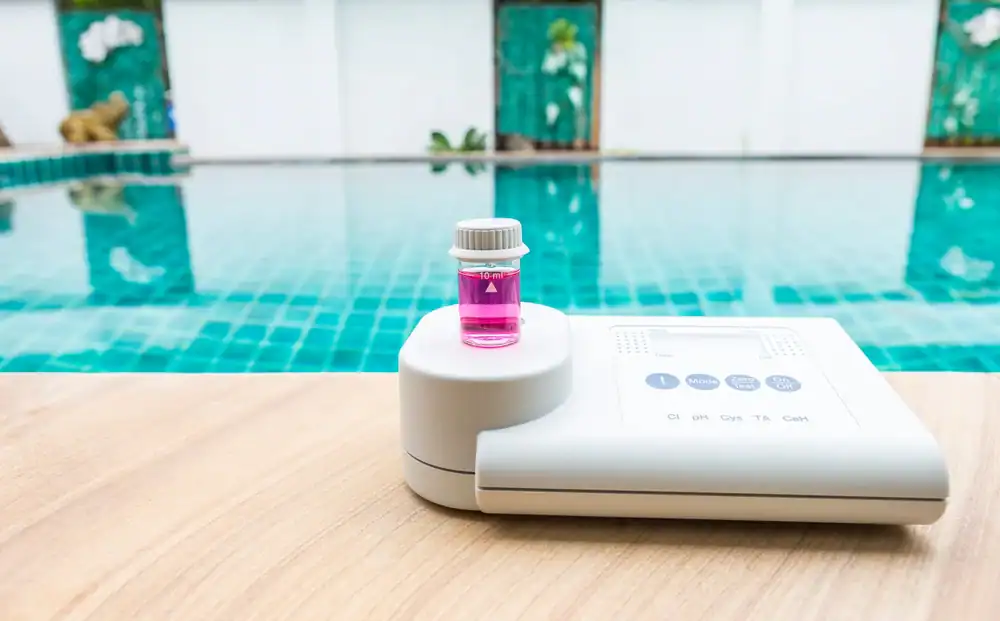
It starts with a water sample pulled directly from your pool not a strip dipped in and read by eye, but a sample run through digital analysis equipment that measures every relevant parameter with precision. pH, free chlorine, combined chlorine, total alkalinity, calcium hardness, cyanuric acid, and total dissolved solids all get measured and recorded. You see the actual numbers, not a color match.
From there, we interpret the results in context. In Mystic’s environment, that context matters. If it’s spring, your pool has likely been absorbing agricultural pollen from surrounding Irwin County farmland for weeks, which drives chlorine demand up and destabilizes pH faster than most people realize. If you’ve had heavy summer thunderstorms roll through and South Georgia gets plenty your chemistry has been diluted and your pH has dropped. If your water source is a private well, the mineral baseline is factored in before any correction plan is built. The test doesn’t happen in a vacuum.
Once the full picture is clear, you get a specific correction plan not a bag of products pushed across a counter, but an actual roadmap: what to adjust, in what order, and why. pH has to be corrected before chlorine can do its job effectively. Total alkalinity has to be stable before pH will hold. The sequence matters, and getting it right the first time is the difference between a pool that clears up and one that keeps cycling through the same problems every few weeks.
Ready to get started?
A complete water test from us covers the full chemistry picture. pH level balancing is always the starting point if your pH is above 7.8, your chlorine loses more than half its sanitizing effectiveness, which explains a lot of “normal” readings that still result in a green pool. From there, chlorine levels get measured in full: free chlorine, combined chlorine, and the difference between the two, because combined chlorine (chloramines) is what causes eye irritation, odor, and the feeling that your pool is never quite clean even when you’ve added product.
Cyanuric acid the stabilizer that protects chlorine from South Georgia’s UV intensity gets measured precisely, because too little means your chlorine burns off in hours on a July afternoon, and too much means it can’t sanitize effectively regardless of the reading. Calcium hardness testing tells you whether your water is corrosive to your pool’s surface or heading toward scale buildup. Total alkalinity acts as the buffer that keeps everything else stable. All of it gets measured, all of it gets interpreted together, and all of it feeds into a correction plan that’s specific to your pool not a generic checklist.
For Mystic homeowners on larger rural properties with private wells, the mineral content of your fill water is part of that picture from the start. The Mystic Water utility serves parts of the community, but well water in Irwin County carries its own chemistry profile that affects every parameter downstream. That local reality is built into how we approach every test here.
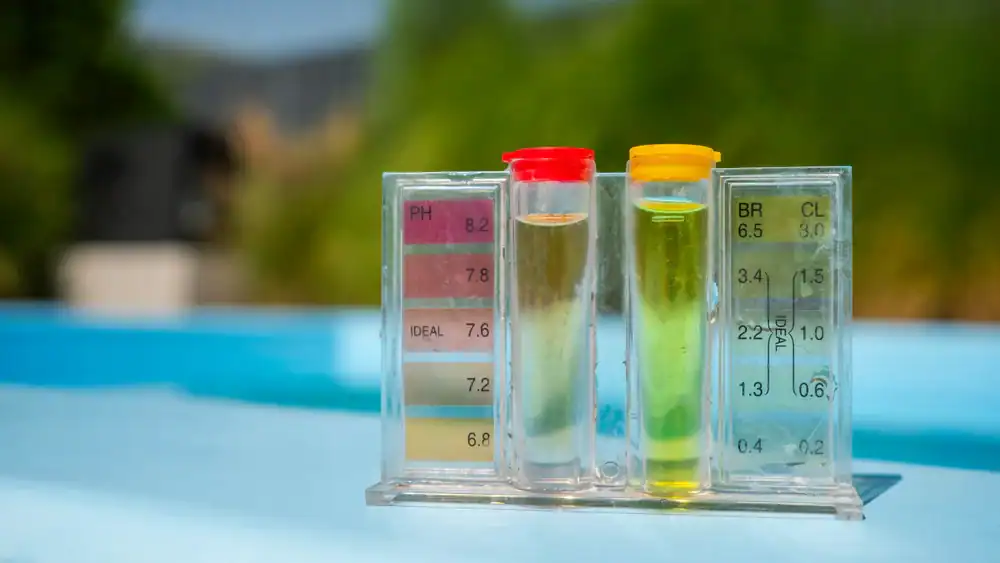
This is the most common frustration pool owners around Mystic bring to us, and the answer almost always comes down to one of three things: pH is too high and your chlorine can’t actually work, cyanuric acid is either too low (so UV is destroying your chlorine before it can sanitize) or too high (which locks the chlorine and makes it ineffective), or your phosphate levels are elevated from agricultural runoff which feeds algae growth even when chlorine is present.
Irwin County’s agricultural environment is a real factor here. The farmland surrounding Mystic produces nine of Georgia’s top ten agricultural commodities, and during planting and growing season, phosphate-laden dust and pollen settle into your pool water continuously. That feeds algae at a rate that chlorine alone can’t keep up with if the underlying chemistry isn’t dialed in. A proper digital water test identifies exactly which variable is the actual problem, so you’re not throwing chemicals at a symptom while the real issue goes unaddressed.
For most pool owners in this part of South Georgia, professional testing at least three times a year covers the critical windows: once in spring before peak use begins, once mid-summer when heat and UV intensity are at their highest, and once heading into fall when you’re transitioning the pool to lower use. That said, there are specific events that should trigger a test regardless of the calendar a heavy thunderstorm, a visible algae bloom, or any time you’ve added a significant volume of water to refill after evaporation.
In Mystic’s environment, spring is the highest-risk period. Agricultural pollen season in Irwin County is intense, and organic load in your pool water can spike dramatically over just a few days during peak bloom. That pollen drives chlorine demand up fast, and if you’re relying on weekly strip tests at home, you’ll likely miss the shift until you’re already looking at a green pool. Getting ahead of it with a professional test in March or early April sets your chemistry up to handle what’s coming.
Pool store testing is a retail tool. The test is free because the goal is to sell you product and the recommendation will almost always involve buying something off the shelf. That’s not an accusation, it’s just the business model. The problem is that a sales-driven recommendation and an accurate diagnosis aren’t always the same thing, and when you’re dealing with complex chemistry variables like the mineral content of well water common on rural Irwin County properties, or phosphate levels from agricultural runoff a simplified in-store test won’t catch what’s actually driving the problem.
We use digital water analysis equipment that measures every relevant parameter with precision. The results aren’t tied to product inventory. The correction plan is built around what your specific pool actually needs, in the correct sequence, accounting for your water source and your local environment. You get a written picture of your water chemistry and a clear explanation of what each number means and why it matters not a bag of product and a “come back in a week.”
Yes and that chlorine smell is actually a sign that something is off, not that everything is fine. The strong chemical odor most people associate with chlorine isn’t free chlorine doing its job. It’s chloramines, also called combined chlorine, which form when chlorine reacts with organic matter like sweat, sunscreen, pollen, and body oils. Chloramines cause eye irritation, skin irritation, and that heavy chemical smell, and they indicate that your free chlorine is being consumed faster than it can sanitize.
In a pool that’s been dealing with heavy pollen load which is a consistent reality in Mystic during spring and summer given the surrounding farmland chloramine buildup can happen quickly even when you’re adding chlorine regularly. A digital water test measures free chlorine and combined chlorine separately, so you can see exactly how much of your chlorine is actually working versus how much has already been neutralized. The fix usually involves a targeted shock treatment and a pH correction, but you need the accurate numbers first to know what you’re actually dealing with.
It matters more than most people realize, and it’s one of the things that makes pool chemistry management in this area genuinely different from what you’d deal with in a suburban Atlanta neighborhood. Mystic has its own water utility Mystic Water, administered by Irwin County but a significant number of rural properties in this area draw from private wells. UGA Cooperative Extension and Georgia’s Environmental Protection Division have specifically identified Irwin County as a county where private well water can contain elevated levels of iron, arsenic, and other minerals above EPA thresholds.
High iron content from well water causes staining on pool surfaces and equipment. Elevated mineral content affects your calcium hardness and total alkalinity baseline before you’ve added a single chemical. If your pool chemistry keeps drifting back to the same problem no matter how many times you correct it, your fill water may be the culprit and a professional test that accounts for your source water chemistry will tell you exactly what you’re starting with and how to compensate for it consistently.
The way to think about it is straightforward: one professional water test costs a fraction of what a single algae treatment costs and far less than what it costs to resurface a pool finish that’s been damaged by corrosive or scaling water over time. Calcium hardness that runs too low turns your pool water aggressive toward the plaster surface. pH that stays too high causes scale buildup that clouds the water and clogs equipment. These aren’t slow, theoretical problems in South Georgia’s heat and UV environment, chemistry imbalances cause real damage on a timeline of weeks, not years.
For Irwin County pool owners specifically, the environmental factors that drive chemistry problems are more intense than in most places. The agricultural landscape around Mystic means more organic load, more phosphate exposure, and more chlorine demand than a pool in a quieter suburban setting. The summer heat means faster chemical burnoff. The frequent thunderstorms mean more dilution events. Each of those factors is a reason your chemistry is harder to maintain on your own and a reason that getting an accurate professional baseline a few times a year pays for itself before the season is over.