
Hear from Our Customers
Your pool should be ready when you are. Not cloudy. Not causing red eyes or itchy skin. Not burning through chemicals faster than it should.
Most home test strips miss half the story. They can’t measure calcium hardness accurately. They don’t catch high TDS levels that make your chlorine worthless. And they definitely don’t tell you why your water still looks off even after you’ve added everything the bottle said to add.
Professional pool water testing gives you the full picture. A computerized seven-point analysis that measures pH, chlorine, alkalinity, calcium hardness, stabilizer, and total dissolved solids. You get a printout with your current levels and exactly what to add—no more dumping chemicals in and hoping it works. That’s how you stop wasting money and actually enjoy the pool you paid for.
We’ve been building and maintaining custom inground pools across South Georgia since 2014, backed by over three decades of hands-on experience. We’re not a franchise following a script. We’ve dealt with every water problem this climate throws at pools—from iron staining caused by Georgia’s red clay to algae blooms during brutal summer heat.
Our team stays current with Georgia Department of Public Health regulations and uses the same professional-grade testing equipment that commercial pool operators rely on. We’ve tested thousands of water samples from Nicholls, Douglas County, and surrounding areas. There hasn’t been a single pool we couldn’t get crystal clear, because we understand how South Georgia’s water and weather affect your pool chemistry.
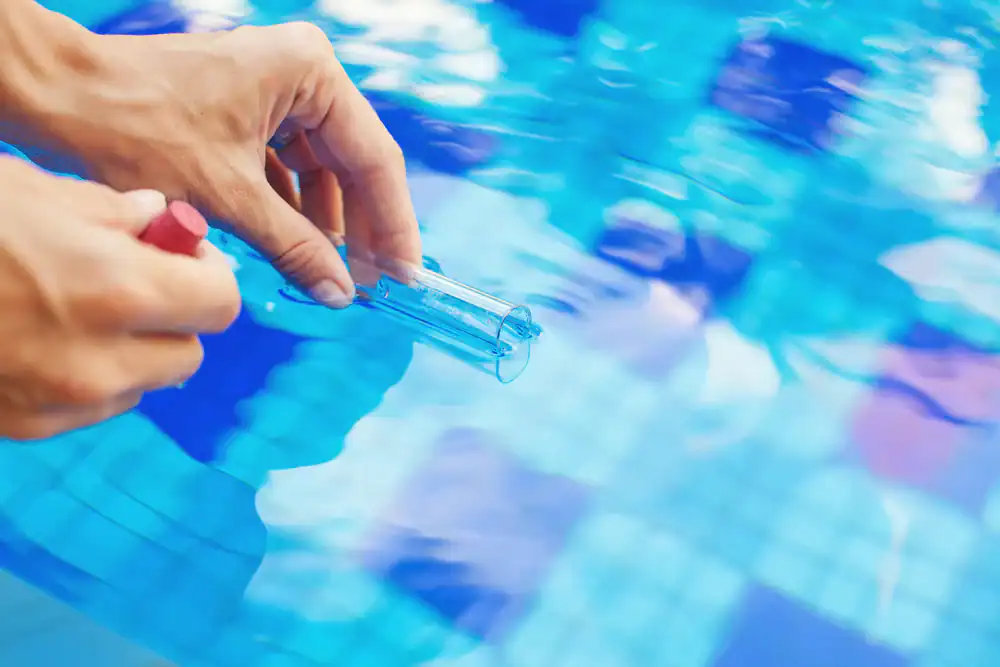
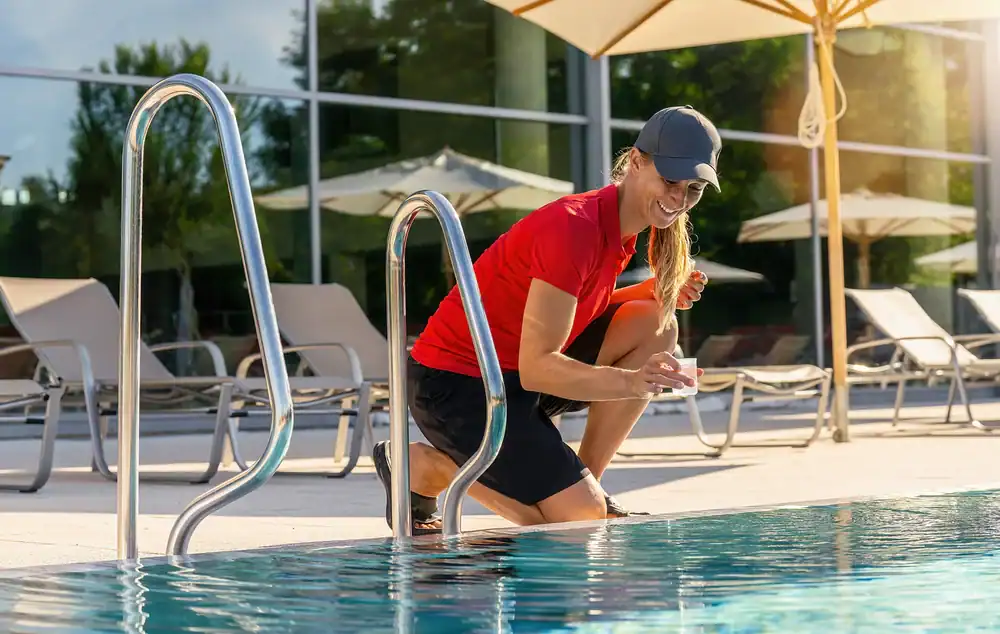
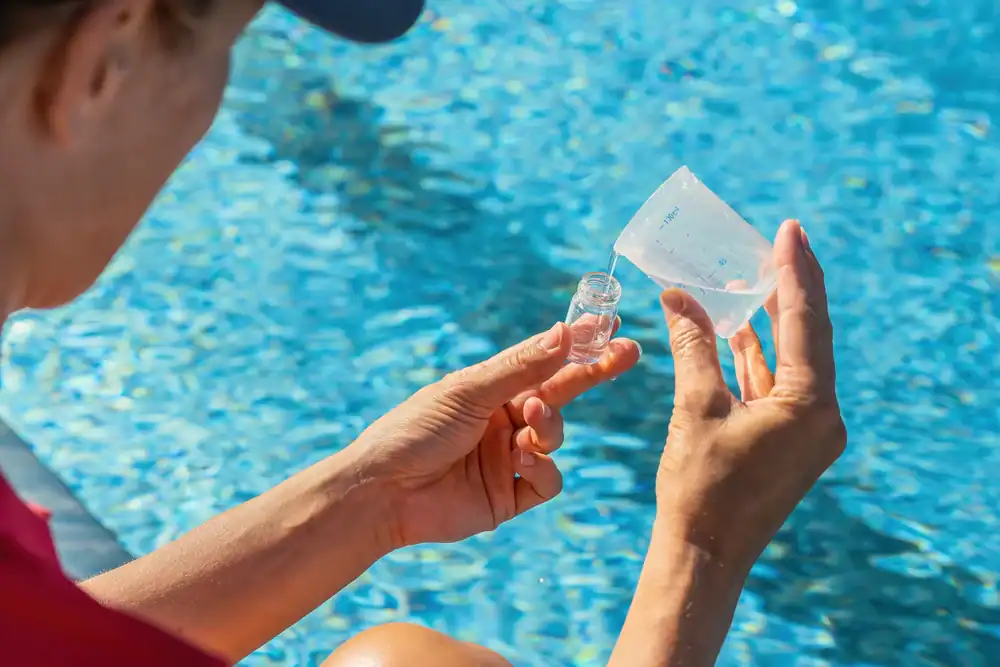
Bring us a water sample in a clean plastic bottle. Fill it about halfway, taken from elbow-deep in your pool—not from the surface where debris floats or the bottom where sediment settles.
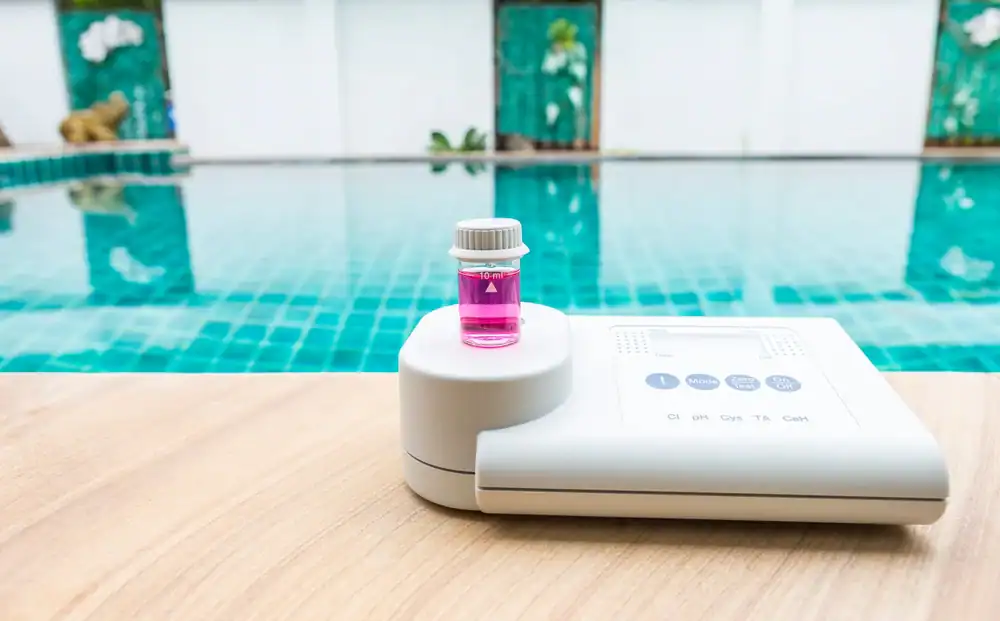
We run your sample through our Lamotte Waterlink Spin Disk system. It’s the same digital testing technology that health departments and commercial facilities use for accuracy. The machine analyzes all seven critical parameters: free chlorine, pH, total alkalinity, calcium hardness, cyanuric acid (stabilizer), total dissolved solids, and salt level if you have a saltwater system.
Two to three minutes later, you get a printed report showing where each chemical level sits and whether it’s in the ideal range. More importantly, you get specific treatment recommendations. Not vague advice—actual amounts of actual products to bring your water into balance. If something’s off, we explain why it matters and what happens if you ignore it. Equipment damage. Algae growth. Wasted chlorine. Skin irritation. We’ve seen it all, so we can tell you what to watch for and how to prevent it from happening again.
Ready to get started?
This service is completely free. No purchase required. No strings attached. You can bring in a sample every week if you want—we test it the same way every time.
Each residential water test covers the seven most important chemical and mineral levels in your pool. Chlorine between 1-3 ppm keeps bacteria and algae from taking over. pH between 7.2-7.8 prevents eye irritation and protects your pool’s finish. Alkalinity acts as a pH buffer—get it right and your pH stays stable. Calcium hardness between 200-400 ppm stops corrosive water from eating away at your equipment and surfaces. Stabilizer protects chlorine from burning off in Georgia’s intense sun. TDS tells us if your water is so saturated with dissolved minerals that chemicals stop working effectively.
Here in Nicholls and across South Georgia, we deal with specific water challenges. Iron and manganese from red clay soil can stain your pool surfaces. High heat and UV exposure burn through chlorine faster than in cooler climates. Our testing accounts for these local conditions, and our recommendations reflect what actually works in this environment—not generic advice from a national chain that’s never seen a Georgia summer.
At minimum, test your water every two weeks during swimming season. That’s often enough to catch problems before they become expensive or time-consuming to fix.
If you’re dealing with an active issue—cloudy water, algae, persistent pH swings—test weekly until it’s resolved. Weather also matters. After heavy rain, a heat wave, or when you’ve had a lot of swimmers in the pool, bring in a sample. All of those things throw off your chemistry faster than normal.
Georgia regulations require commercial pools to test chlorine and pH twice daily, which tells you how quickly water chemistry can shift. Your backyard pool doesn’t change that fast, but it does change. Testing every couple weeks keeps you ahead of problems instead of reacting to them after your pool’s already turned green.
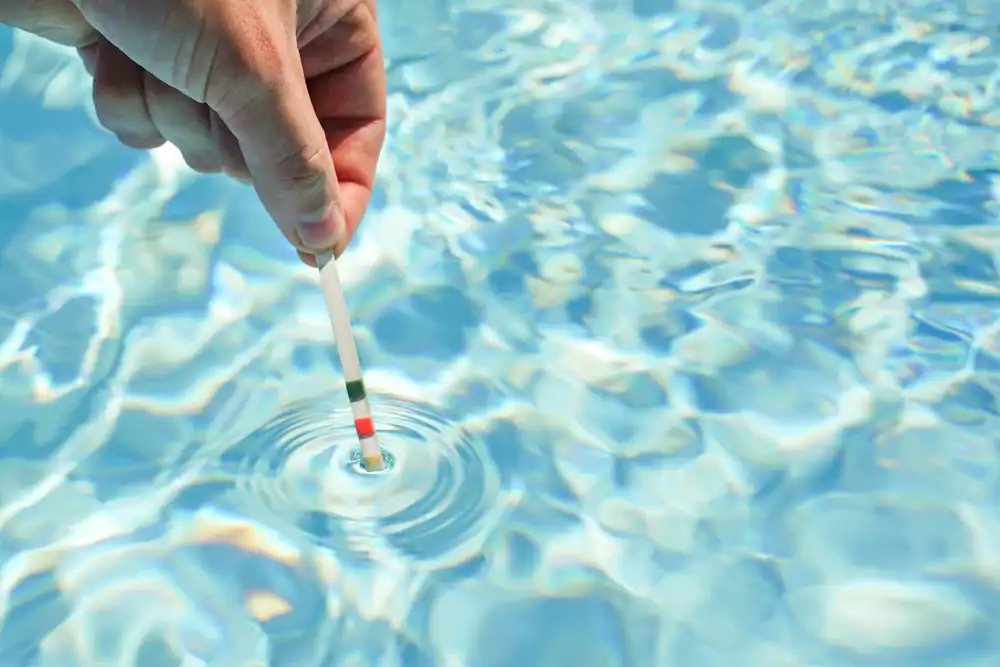
Test strips give you a rough idea of chlorine and pH. That’s it. They’re not accurate enough for calcium hardness, and they don’t test stabilizer or TDS at all. The color matching is subjective—what looks like 7.4 to you might look like 7.6 to someone else.
Professional pool water testing uses digital analysis. There’s no guessing at color squares. The machine measures exact levels and prints them on a report. You see that your pH is 7.82, not “somewhere between 7.6 and 8.0.” That precision matters when you’re trying to add the right amount of chemicals without overshooting.
The bigger difference is what gets tested. Stabilizer levels determine how much chlorine you actually need. High TDS explains why your water won’t clear up no matter what you add. Calcium hardness prevents thousands of dollars in equipment damage. Test strips don’t tell you any of that. Professional testing does, and it’s free here—so there’s no reason to rely on strips that only give you part of the picture.
Usually it’s because one underlying issue keeps throwing everything else off. High stabilizer is a common culprit in Georgia. Stabilizer protects chlorine from UV rays, which sounds great until it builds up too high. Once it’s over 100 ppm, your chlorine stops sanitizing effectively even though test strips say you have plenty. The only fix is diluting your pool by draining some water and refilling.
High TDS causes similar frustration. When your water is saturated with dissolved minerals and chemicals, nothing works right. Chlorine becomes less effective. pH won’t stay stable. You keep adding more and more products with no improvement. At a certain point, the water itself is the problem and partial draining is the only solution.
Sometimes it’s simpler—your alkalinity is too low, so pH bounces all over the place no matter how much pH increaser you add. Or your calcium is too high and causes scale buildup that makes surfaces rough and equipment less efficient. A complete water analysis identifies these root causes instead of just treating surface symptoms. That’s how you actually fix recurring problems instead of managing them every week.
No appointment needed. Bring your sample whenever we’re open. The test takes two to three minutes, so you’re not standing around waiting.
Use a clean plastic bottle—an old water bottle works fine. Don’t use a container that held anything else unless you’ve washed it thoroughly. Residue from other liquids can throw off the results. Fill the bottle about halfway with water from elbow-deep in your pool, away from return jets. Cap it and bring it in the same day if possible, especially in summer heat.
If you’re coming from Nicholls or anywhere in Douglas County, the sample will be fine for the drive. Just don’t let it sit in a hot car for hours before testing. We’ll run it through the system, print your results, and walk you through what they mean and what you need to do. If you need products, we have them. If you just want the information, that’s fine too. The testing is free either way.
Free chlorine should stay between 1-3 ppm. That’s enough to kill bacteria, viruses, and algae without causing skin or eye irritation. Below 1 ppm and you’re not sanitizing effectively. Above 3 ppm and swimmers might notice a strong chlorine smell or irritation.
pH needs to be between 7.2-7.8. Lower than that and the water becomes acidic—it’ll irritate eyes and skin, corrode metal equipment, and etch plaster surfaces. Higher than that and chlorine loses effectiveness, water gets cloudy, and you’ll see scale buildup on tiles and equipment. The ideal target is around 7.4-7.6.
Total alkalinity should be 80-120 ppm. Think of it as a shock absorber for pH—proper alkalinity keeps pH from swinging wildly every time you add chemicals or get some rain. Calcium hardness belongs between 200-400 ppm to prevent corrosive water that damages your pool’s finish and equipment. Stabilizer (cyanuric acid) should be 30-50 ppm in outdoor pools to protect chlorine from UV rays, but not so high that it interferes with sanitation. These ranges keep your pool safe, comfortable, and protected from damage.
Absolutely. Georgia’s red clay contains iron and manganese that can leach into well water and cause rust-colored staining on pool surfaces. If you’re filling or topping off your pool with well water around Nicholls, that’s something to watch for. A metal sequestrant can help, but you need to know the problem exists first.
The heat and sun intensity in South Georgia also burn through chlorine faster than in northern states. UV rays break down chlorine, which is why stabilizer matters so much here. But too much stabilizer—which builds up over time when you use chlorine tablets—locks up your chlorine and makes it ineffective. It’s a balancing act that’s specific to our climate.
Water hardness varies across Georgia too. Some areas have naturally soft water that becomes corrosive without enough calcium. Others have hard water that causes scale. Professional water testing accounts for these local conditions and gives you recommendations that work for South Georgia pools, not generic advice that might apply in Colorado or Maine but doesn’t match what we deal with here.
Other Services we provide in Nicholls