
Hear from Our Customers
Those test strips you bought? They’re fine for a quick check. But they don’t tell you about calcium hardness, total alkalinity, or whether you’re about to corrode your pump because your pH has been sitting at 6.9 for two weeks.
Professional pool water testing catches what home kits miss. We’re talking about the stuff that eats away at your equipment, turns your water cloudy no matter how much chlorine you dump in, or leaves your eyes burning after a swim.
Georgia’s heat and humidity throw your water chemistry off faster than most climates. What balanced out last week might be completely off today after a few thunderstorms and 95-degree afternoons. You need accurate readings to know what’s actually happening in your pool—not what you think is happening.
When your water’s properly balanced, chlorine works the way it’s supposed to. Your filter runs efficiently. Your pool stays clear. And you’re not throwing money at chemicals that aren’t fixing the real problem.
Deep Waters Pools was built on over 30 years of hands-on pool experience—concrete work, plumbing, custom builds, and yes, water chemistry. We’ve seen every possible water issue in South Georgia, from green swamp water to purple staining to pools that won’t hold chlorine no matter what you do.
We’re not a franchise following a script. We’re a local business that understands how Oberry’s water behaves, what happens to pool chemistry during Georgia summers, and how to fix problems fast without overselling you chemicals you don’t need.
When you come in for water testing, you’re getting someone who’s actually solved the problem you’re dealing with—probably a hundred times. We test your water with professional lab equipment, print out the full analysis, and tell you exactly what to add and how much. No sales pitch. Just the fix.
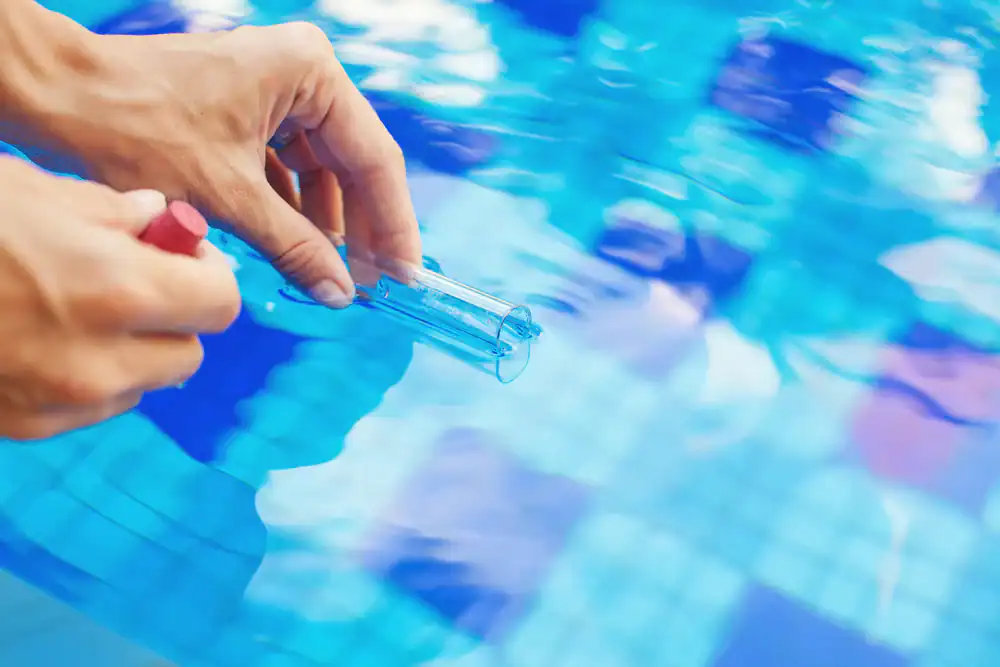
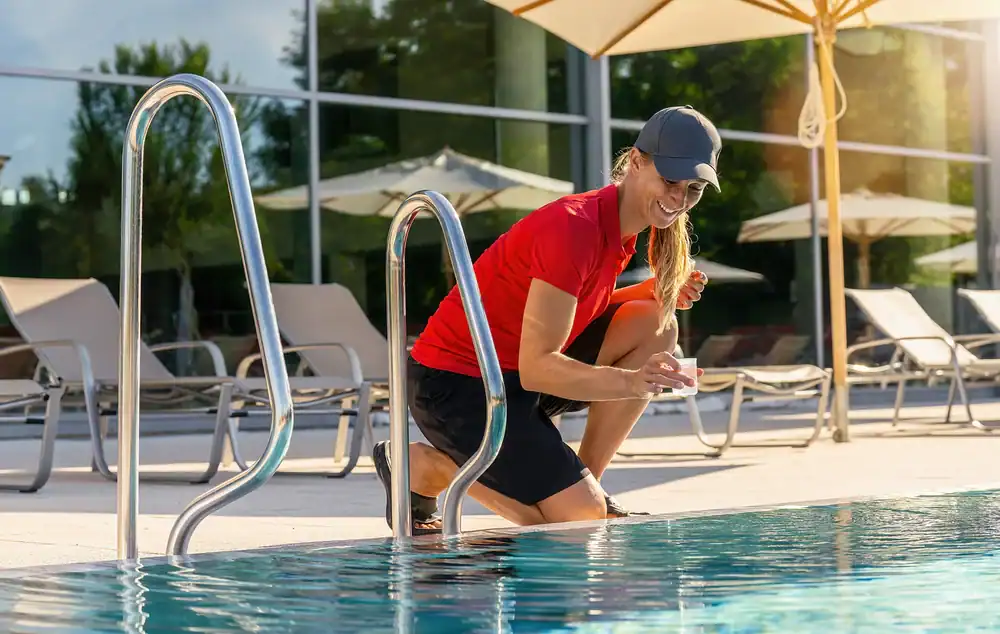
Bring us a water sample from your pool. Use a clean plastic bottle and pull the sample from about elbow-deep—not right at the surface, not off the bottom. That gets us the most accurate read of what’s actually in your water.
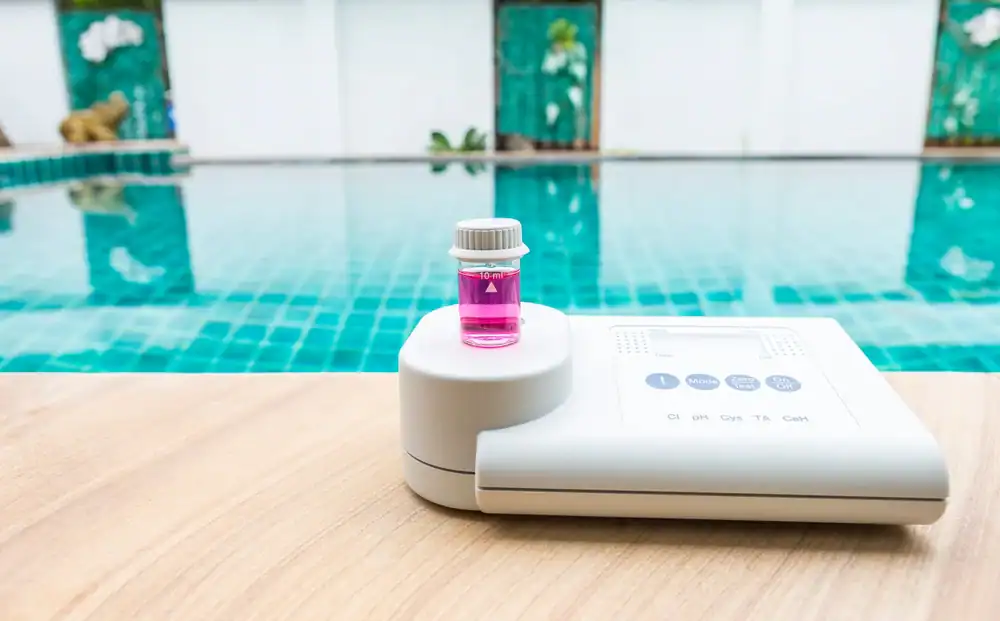
We run it through our LaMotte Waterlink Spin Disk system. This isn’t a visual color-match test. It’s lab-grade analysis that measures free chlorine, combined chlorine, pH, total alkalinity, calcium hardness, cyanuric acid, and more. The machine spits out exact numbers, not rough estimates.
You get a printed report that shows where each level sits and where it should be. We walk through what’s off, why it matters, and what you need to do to fix it. If your pH is low and your alkalinity is high, we’ll tell you the order to treat things so you’re not fighting yourself.
Most people are in and out in under five minutes. You leave knowing exactly what your pool needs—and you didn’t pay a dime for the test.
Ready to get started?
We test the levels that actually affect how your pool performs. Free chlorine tells you if your water’s sanitized. Combined chlorine shows if you’ve got chloramines building up—that’s what causes the “chlorine smell” and burns eyes. If combined chlorine is high, you need to shock the pool, not add more regular chlorine.
pH controls how effective your chlorine is and whether your water is corrosive or scale-forming. Low pH eats at your equipment and plaster. High pH makes chlorine lazy and causes cloudy water. Total alkalinity buffers your pH so it doesn’t swing all over the place.
Calcium hardness matters more than most people realize. Too low and your water pulls calcium from your plaster or grout, causing etching and pitting. Too high and you get scaling on your tile, rough surfaces, and clogged filters. Georgia water can be all over the map depending on your source.
Cyanuric acid protects chlorine from getting burned off by the sun. But if it climbs too high, it locks up your chlorine and nothing sanitizes properly. You’ll dump in shock and still have algae because the CYA is too high for the chlorine to work.
We test all of this. You get the full picture, not just a couple of readings. And because this is Oberry, we know what “normal” looks like here and what tends to go wrong with local water conditions.
At least once a month during swim season, and definitely after heavy rain, a big pool party, or if something looks off. Home test strips are fine for checking chlorine and pH between professional tests, but they don’t catch everything.
If you’re managing the pool yourself and things seem dialed in, monthly testing keeps you ahead of problems. If you’re dealing with persistent algae, cloudy water, or staining, bring a sample in weekly until it’s fixed. Water chemistry can shift fast in Georgia heat, especially if your pool gets a lot of use or you’ve had storms roll through.
The test is free, so there’s no reason not to come in when you’re unsure. It’s a lot cheaper than fixing a pump that corroded because the pH sat too low for months, or draining a pool because the cyanuric acid got so high that chlorine stopped working.
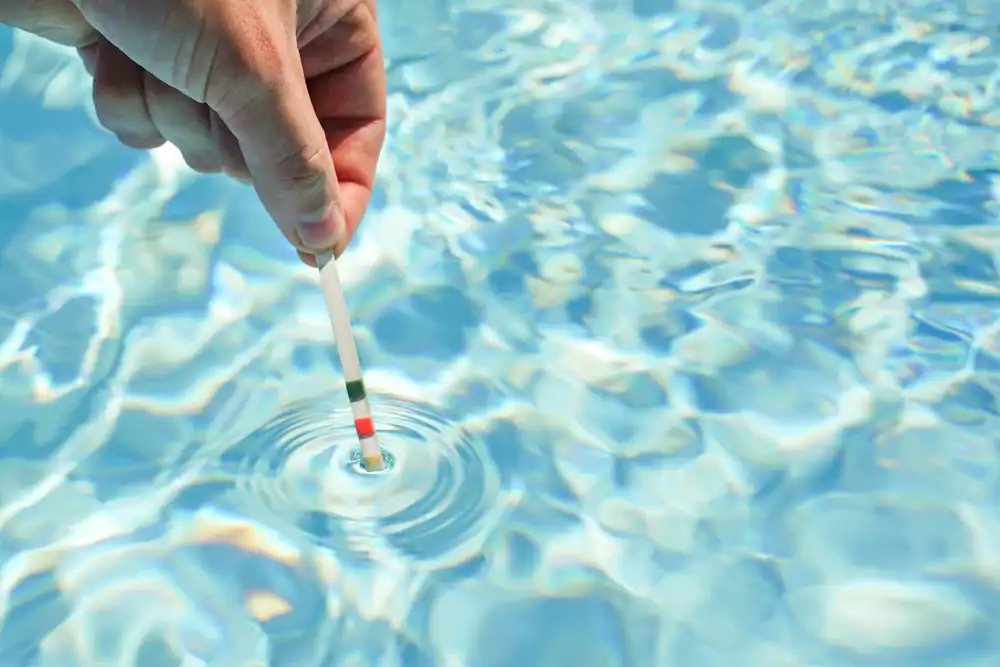
Test strips give you a rough idea of chlorine and pH. That’s useful for day-to-day checks. But they’re not accurate enough to catch slow-building problems, and they don’t test for things like calcium hardness, cyanuric acid, or total alkalinity with any real precision.
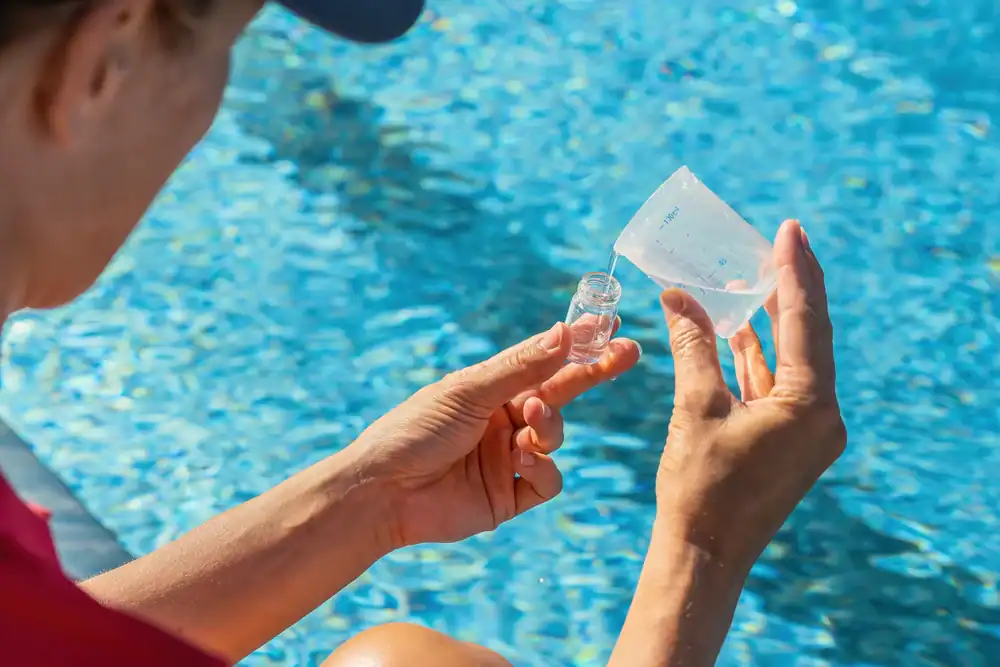
Professional testing uses lab equipment that measures exact levels—not color approximations you’re trying to match in your driveway under the sun. You’ll see the difference when we test the same water you just tested at home. The numbers are often way off from what the strip showed.
We’re also testing for things that don’t show up on basic strips but absolutely affect how your pool runs. If your calcium hardness is low, your water is slowly eating your plaster. If your cyanuric acid is sky-high, your chlorine isn’t doing anything. You won’t catch that with a strip. You’ll just keep adding chlorine and wondering why the pool’s still green.
Usually it’s one of three things: your cyanuric acid is too high and it’s locking up the chlorine, your pH is too high and the chlorine isn’t active, or you’ve got phosphates feeding the algae faster than chlorine can kill it.
High cyanuric acid is the most common culprit. It builds up over time from using chlorine tablets, and once it gets above 80-100 ppm, your chlorine stops sanitizing effectively. You can dump in shock all day and it won’t matter. The only fix is diluting the pool with fresh water or using a CYA reducer.
If pH is sitting above 8.0, your chlorine is mostly inactive. It’s in there, but it’s not killing anything. You’ve got to bring the pH down first, then shock properly. And if you’ve got phosphates in the water—from leaves, pollen, lawn fertilizer runoff—you’re feeding algae a buffet. We can test for that and recommend a phosphate remover if needed.
Bring in a water sample and we’ll tell you which one it is. Then you’ll know what actually needs fixing instead of just throwing more chlorine at it.
Just bring it in during business hours. No appointment needed. The test takes a few minutes and we’ll go over the results with you right then.
If you’re coming from Oberry, it’s a quick trip and you’ll have answers before you leave. Bring the sample in a clean plastic bottle—a water bottle works fine. Pull the sample from about elbow-deep in the pool, away from return jets and skimmers, so you’re getting a true middle-of-the-pool reading.
Don’t let the sample sit in a hot car for hours before you bring it in. Heat can throw off some of the readings. Grab it, bring it in, and we’ll get it tested while you wait. You’ll leave with a printed report and a clear plan for what to add and how much.
pH should sit between 7.2 and 7.8. That range keeps your water from being corrosive or scale-forming, and it’s where chlorine works most efficiently. If pH drops below 7.2, you’ll get eye irritation, etching on plaster, and corrosion on metal parts. Above 7.8 and your water gets cloudy, chlorine stops working well, and you’ll start seeing scale buildup.
Free chlorine should be between 1 and 3 ppm for normal conditions. If you just shocked the pool or you’re dealing with algae, it’ll be higher temporarily—that’s fine. But for everyday swimming, 1-3 ppm keeps the water sanitized without being harsh.
Combined chlorine should be near zero. If it’s above 0.5 ppm, you’ve got chloramines building up and you need to shock the pool to break them down. That’s what causes the strong “pool smell” and stinging eyes—it’s not too much chlorine, it’s the wrong kind of chlorine.
We’ll test all of this and show you exactly where your levels are. If something’s off, we’ll tell you what to use to fix it and how much to add based on your pool size.
Yes. Once we test your water and know what it needs, we can set you up with the right chemicals in the right amounts. You’re not guessing at the pool store about whether you need pH up or pH down or how much shock to buy.
We’ll tell you exactly what your pool needs based on the test results and your pool’s volume. If you need muriatic acid to drop your pH and calcium hardness is low so you need calcium chloride, we’ll measure it out. You leave with what you actually need—not a cart full of stuff that may or may not help.
You’re not required to buy from us just because we tested your water. The test is free either way. But most people appreciate walking out with the solution in hand instead of making another stop. We’ve been doing this long enough to know what works and what doesn’t, so you’re not experimenting with your water chemistry on our advice.