
Hear from Our Customers
You’re not looking for a chemistry lesson. You want to know if your pool is safe to swim in and what you need to fix if it’s not.
That’s what water testing does. It gives you real numbers on pH, chlorine, alkalinity, and hardness so you’re not throwing chemicals in blindly and hoping things balance out. When your water chemistry is off, you’ll see it fast in South Georgia—cloudy water, algae blooms after a rainstorm, or that sharp chlorine smell that stings your eyes.
Testing catches problems early. It tells you when your chlorine dispenser is running low before algae takes over. It shows you when pH is creeping up before it starts damaging your equipment or irritating skin. You get a snapshot of what’s actually happening in your pool, not what you think might be happening.
We test your water for free and walk you through what the numbers mean and what to do about them. No purchase required. Just bring a water sample and you’ll leave with a clear plan.
We’ve been serving families in Alapaha and throughout South Georgia since 2014, built on over 30 years of hands-on pool construction experience. We’ve designed and built custom in-ground pools, installed spas, and helped hundreds of homeowners maintain clean, safe water.
We’re not a big-box store handing you a printout. We know what South Georgia weather does to pool chemistry—the pollen in spring, the afternoon storms in summer, the temperature swings that throw everything off. We’ve seen it all, and we know how to fix it.
You’ll find us listed with the Douglas Coffee County Chamber as pool and spa specialists. We’re local, we’re accessible, and we’re here when you need help figuring out why your water won’t stay clear.
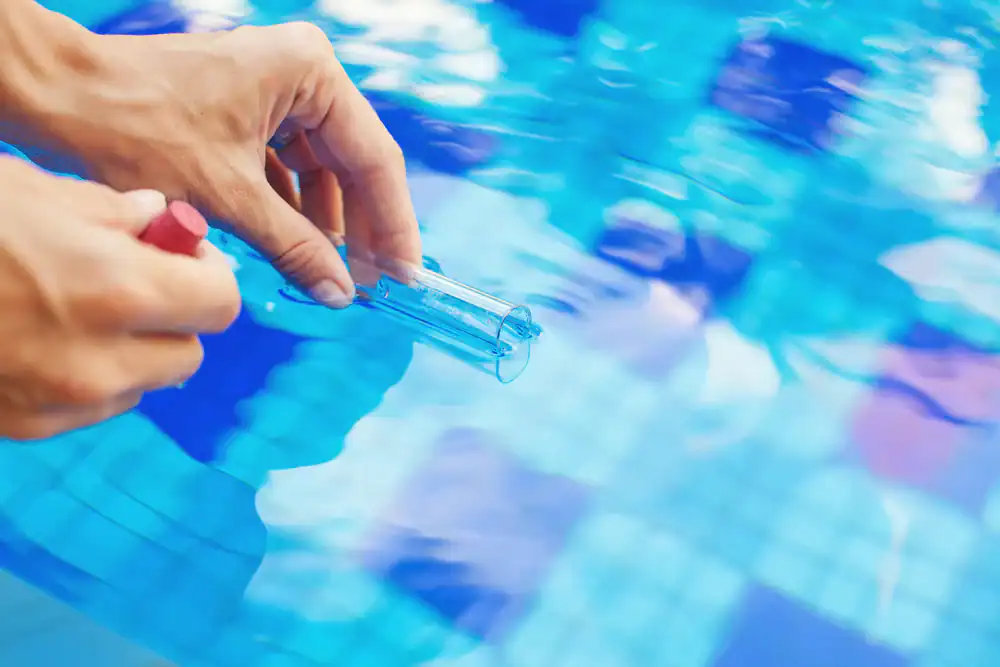
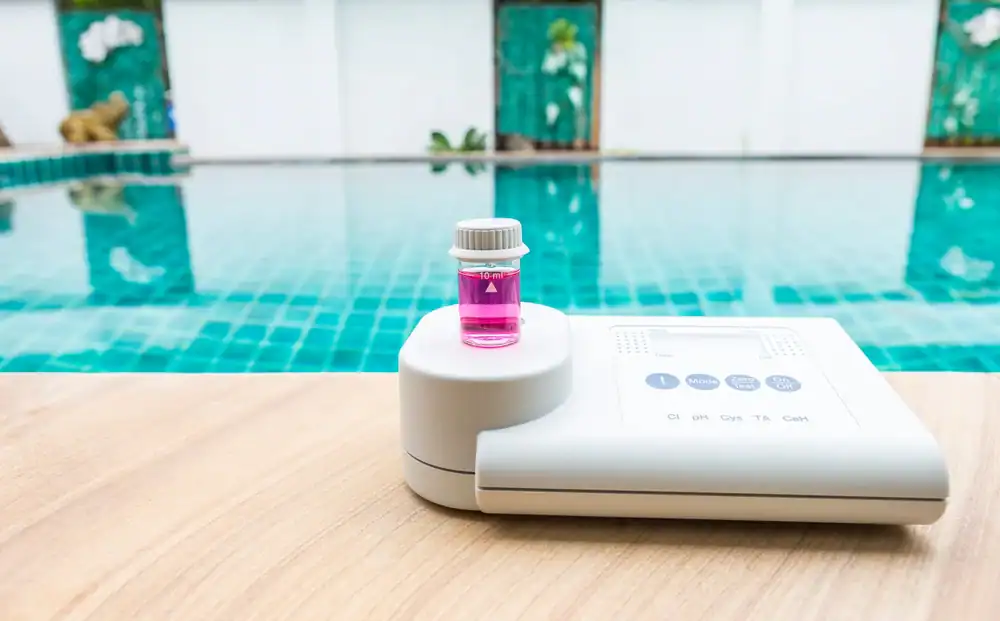
Grab a clean plastic bottle or container and collect a water sample from about elbow-deep in your pool—not right at the surface and not from near a return jet. Bring it to us and we’ll run it through our computerized testing system.
The test measures your pH level, which should sit between 7.2 and 7.8. It checks your chlorine, which needs to stay between 1 and 3 parts per million to kill bacteria without irritating swimmers. It looks at total alkalinity and calcium hardness, both of which affect how stable your water stays and whether you’ll end up with scaling or corrosion.
You’ll get a printout with all your levels and step-by-step instructions on what to add and how much. If something’s way off, we’ll explain why it matters and what happens if you don’t fix it. If your water looks good, we’ll tell you that too.
The whole process takes a few minutes. You walk in with a bottle of water and walk out knowing exactly what your pool needs.
Ready to get started?
This isn’t a sales pitch disguised as a service. We test your water for free because we know that’s what pool owners in Alapaha need—reliable information without the runaround.
You get a complete water chemistry profile covering pH, free chlorine, total alkalinity, calcium hardness, and stabilizer levels. The computerized system we use is the same equipment professionals rely on, so you’re getting accurate readings, not rough estimates from test strips that fade in the sun.
After testing, you receive personalized treatment recommendations based on your pool’s size and current chemistry. We’ll tell you which chemicals to use, how much to add, and in what order. If you’re dealing with cloudy water, algae, or staining—common issues in Georgia with our warm weather and frequent rain—we’ll explain what’s causing it and how to clear it up.
This matters in Alapaha because you’re dealing with conditions that make pool maintenance tricky. Pollen coats everything in spring. Summer storms dilute your chlorine and throw off your pH. You need someone who understands what’s normal here and what’s a red flag.
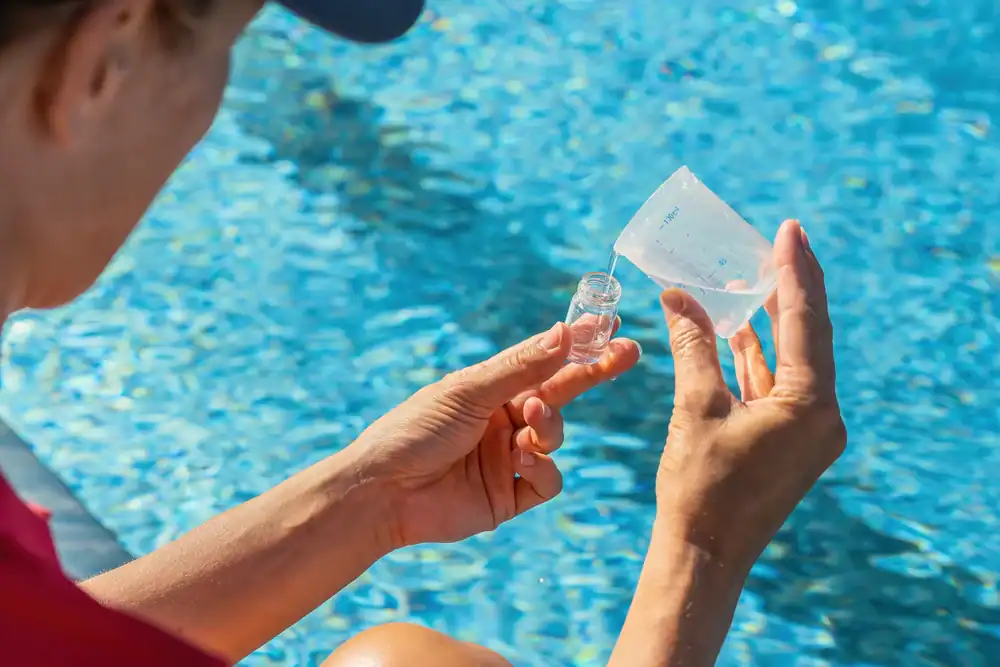
Test your water at least twice a week during swimming season, and once a week in the off-season if you’re keeping your pool open. That’s the baseline for staying ahead of problems.
In South Georgia, you might need to test more often during certain times of year. After heavy rain, test within a day or two because storms dilute your chemicals and can drop your chlorine to unsafe levels. During pollen season in spring, test more frequently because all that organic matter affects your water balance and feeds algae growth.
If you’re using your pool heavily—lots of swimmers, pool parties, kids in and out all day—test before and after. Body oils, sunscreen, and sweat all throw off your chemistry. The more you test, the less you’re guessing, and the fewer expensive problems you’ll run into down the road.
Cloudy water usually means one of three things: your chlorine is too low, your pH is off, or your filter isn’t keeping up. Testing tells you which one it is so you’re not wasting time and money fixing the wrong problem.
Low chlorine is the most common culprit. When chlorine drops below 1 ppm, it can’t sanitize effectively and you get that hazy look. High pH—anything above 7.8—makes chlorine less effective even if your levels look fine on paper. You might have plenty of chlorine in the water, but it’s not doing its job because the pH is too high.
Testing gives you the real numbers. If chlorine is low, you shock the pool. If pH is high, you add acid to bring it down. If both are fine, the issue is probably your filter or alkalinity, and we can walk you through that too. Without testing, you’re just throwing chemicals at the problem and hoping something works.
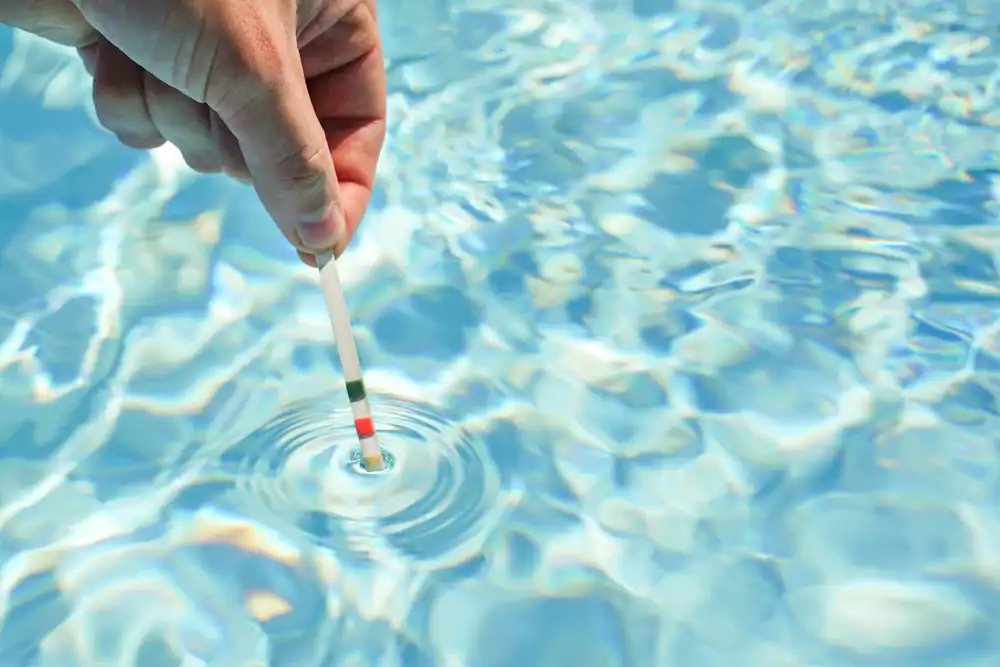
Test strips are better than nothing, but they’re not reliable enough if you’re serious about keeping your water balanced. They fade in sunlight, they’re hard to read accurately, and they don’t test for everything you need to know.
The color-matching process is subjective. What looks like 7.4 to you might look like 7.6 to someone else, and that difference matters when you’re trying to dial in your chemistry. Strips also don’t measure some of the levels that affect long-term water quality, like cyanuric acid (stabilizer), which protects your chlorine from burning off in the sun.
Professional testing uses computerized equipment that measures exact levels, not color approximations. You get a printout with precise numbers and clear instructions. It’s free, it takes a few minutes, and it’s accurate. If you’re going to make decisions about what chemicals to add to your pool, you want information you can trust.
Your chlorine should stay between 1 and 3 parts per million. That’s the range where it kills bacteria, viruses, and algae without irritating your skin or eyes.
Below 1 ppm, you’re not sanitizing effectively. Swimming pools can become breeding grounds for harmful bacteria and pathogens when chlorine is too low, especially in warm Georgia weather where bacteria multiply faster. You’ll notice algae starting to form on the walls, and the water might start to smell stale or look cloudy.
Above 3 ppm, you’ll smell that sharp chlorine odor and swimmers might complain about burning eyes or dry skin. Some people think that strong chlorine smell means the pool is clean, but it actually means there’s too much chlorine or it’s reacting with contaminants in the water.
Testing shows you exactly where you are so you can adjust. If you’re low, you add chlorine. If you’re high, you let it naturally dissipate or dilute the water. You’re not guessing based on smell or how the water looks.
Rain dilutes everything in your pool—chlorine, pH balancers, alkalinity—and it introduces contaminants that throw off your water chemistry. A heavy afternoon storm in South Georgia can drop your chlorine by half and change your pH enough that you’ll notice.
Rainwater is slightly acidic, so it lowers your pH and alkalinity. That might sound good if your levels tend to run high, but sudden drops cause their own problems. Low pH makes water corrosive, which can damage your pool surface and equipment. It also makes chlorine dissipate faster, so you’re losing sanitizer right when you need it most.
Rain also brings in dirt, pollen, leaves, and other organic debris. All of that uses up your chlorine as it breaks down, which is why you might see algae blooming a day or two after a storm even though your pool looked fine before. Testing after rain tells you what got knocked out of balance and what you need to add to get back to normal. It’s one of the most important times to test in Georgia because our summer storms are frequent and heavy.
Free chlorine is the active sanitizer in your pool—the chlorine that’s available to kill bacteria and algae. Total chlorine includes both free chlorine and combined chlorine, which is chlorine that’s already done its job and bonded with contaminants.
You want your free chlorine number to be as close to your total chlorine number as possible. When there’s a big gap between the two, it means you have a lot of combined chlorine (also called chloramines) in your water. That’s what causes the strong chlorine smell and eye irritation people complain about.
If testing shows your total chlorine is much higher than your free chlorine, you need to shock your pool. Shocking breaks down the combined chlorine and converts it back to free chlorine or burns it off completely. This is common after heavy pool use or if you’ve gone a while without shocking.
Professional water testing measures both levels and tells you when you need to shock. Test strips usually only show total chlorine, so you’re missing half the picture. Knowing the difference helps you understand why your pool might smell like chlorine even though it’s not actually clean.