
Hear from Our Customers
You get a backyard that works for how you actually live. Not a cookie-cutter design that looks like every other pool on the block, but something built around your space, your family, and what you want to do back there.
The concrete construction matters more than most people realize. Georgia soil shifts. Clay expands when it rains and contracts when it dries. If your pool isn’t engineered for that, you’ll see cracks within a few years. Concrete pools, when done right, flex with the ground instead of fighting it.
You also get a contractor who handles the permit process without making it your problem. Every residential pool in Georgia requires a building permit, and most counties have their own quirks. We pull the permits, coordinate inspections, and make sure everything meets code before we ever break ground.
Deep Waters Pools started in 2014, but the experience behind it goes back more than 30 years. We’ve been building pools in Douglas County and the surrounding areas long enough to know what works here and what doesn’t.
We’re licensed, insured, and we know the local soil conditions better than most. Cogdell sits in an area where soil composition can vary from one property to the next. That’s why we do a complete site evaluation before we ever talk design—because what works two miles down the road might not work on your lot.
You’re not getting a salesperson who disappears after you sign. You’re working with people who’ve dug thousands of pools, poured concrete in every kind of weather, and cleaned up enough job sites to know what “done right” actually looks like.
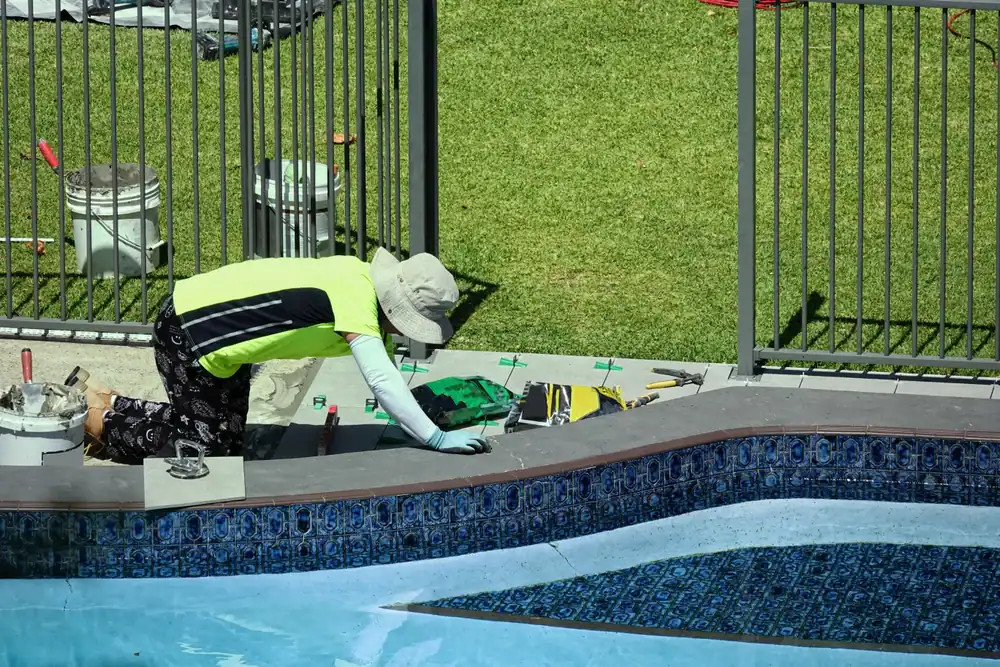
It starts with a site visit. We look at your yard, test the soil, check drainage, and figure out what’s possible given your space and budget. Then we design the pool around what we find—not the other way around.
Once you approve the design, we handle the permits. That usually takes a week or two depending on the county. While that’s processing, we finalize equipment specs, schedule the crew, and order materials.
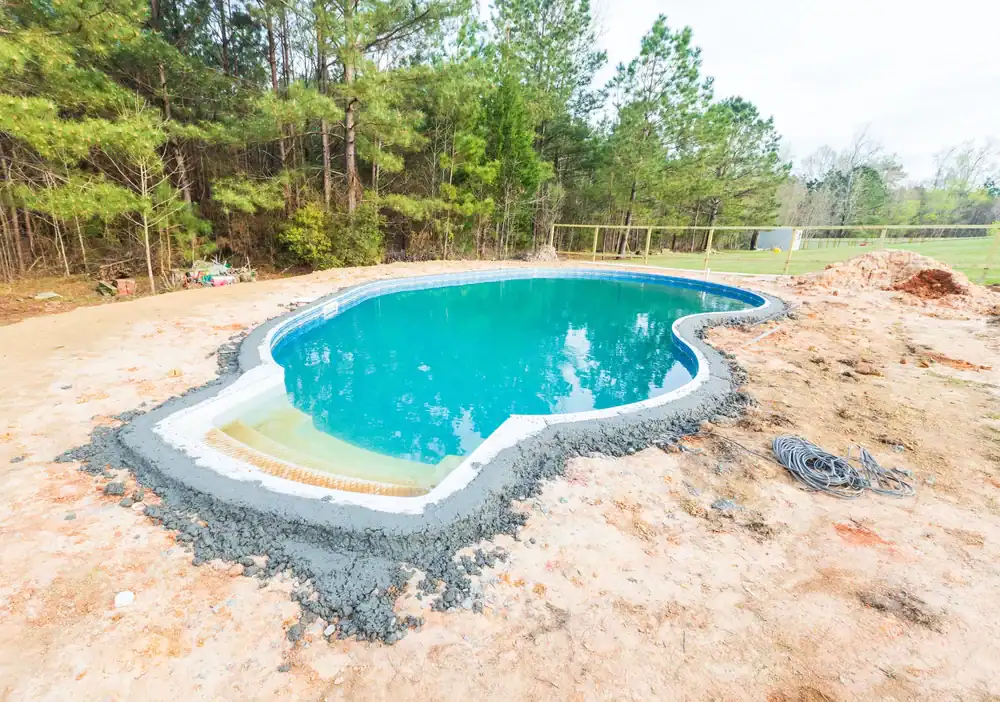
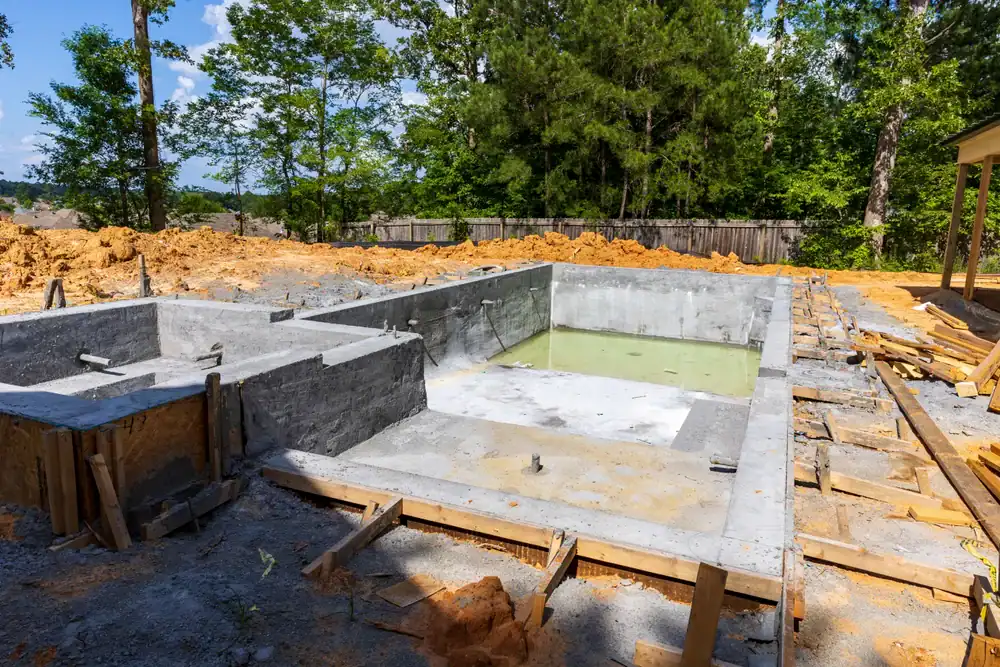
Demo and excavation come next. We dig, set the plumbing and electrical rough-ins, and build the steel framework that reinforces the concrete shell. Then we shoot the concrete—either gunite or shotcrete depending on the design—and let it cure for about a week.
After that, we install your filtration system, finish the interior surface, set any coping or decking, and fill it. The whole process typically runs 8 to 12 weeks depending on weather and inspections. We walk you through the equipment, show you how everything works, and make sure you’re comfortable running it before we call it done.
Ready to get started?
You get custom design work based on your actual property. We’re not pulling a template from a catalog. Every pool we build is drawn specifically for the lot it’s going on, which means we account for slopes, drainage, setbacks, and how your yard is actually shaped.
You also get concrete construction that’s engineered for Georgia. That means rebar reinforcement, proper drainage behind the shell, and a mix design that holds up in our climate. We’re not cutting corners on materials because we know what happens when you do.
The permit process is on us. We pull the building permit, coordinate inspections with the county, and make sure everything is up to code before the inspector ever shows up. In Cogdell and Douglas County, that means meeting setback requirements, safety barrier codes, and electrical standards that vary depending on your property.
Equipment installation is part of the package. You’re getting energy-efficient pumps, modern filtration, and a system that’s sized correctly for your pool. We also include startup chemicals, a walkthrough on how to maintain everything, and a full cleanup once the job is finished.
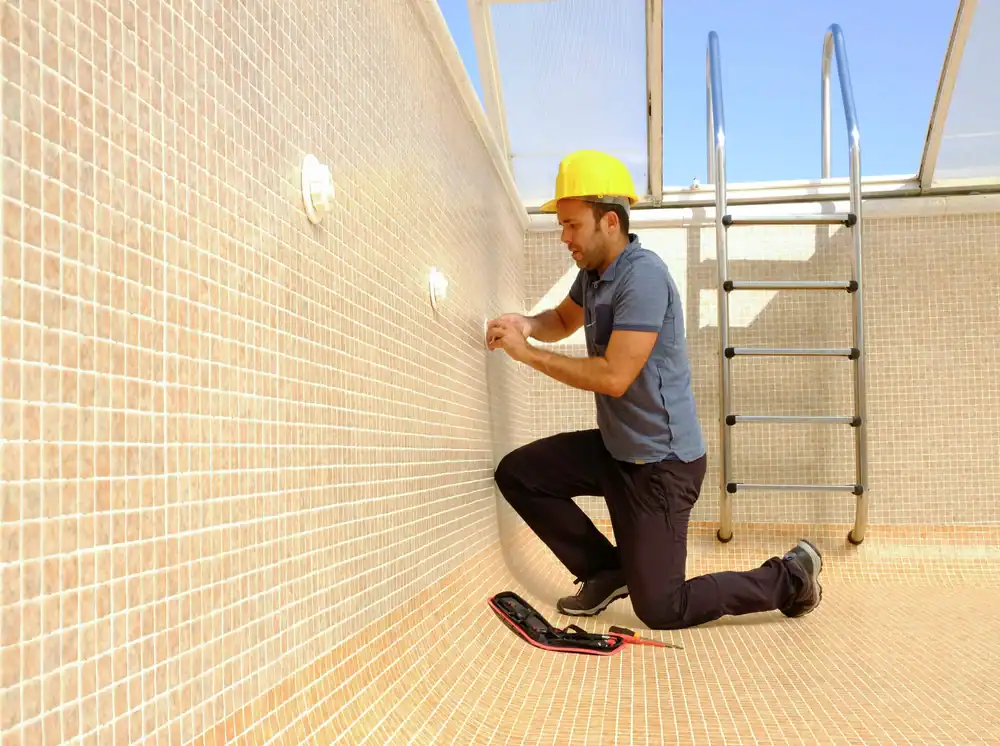
Most projects take between 8 and 12 weeks from the day we break ground to the day you can swim. That timeline assumes normal weather and no major delays with inspections or materials.
The permit process adds another week or two on the front end, but that happens before we start digging. Once we have the permit in hand, we schedule excavation and move pretty quickly through the rough-in and steel work.
Weather is the biggest variable. If we get a week of heavy rain during excavation or right after we shoot the concrete, that can push things back a few days. We build in some buffer time for that, but Georgia summers are unpredictable. We’ll keep you updated if anything changes, but most jobs finish within that 8 to 12 week window.
Concrete costs more upfront because you’re building a custom structure from scratch instead of dropping in a pre-made shell. Every concrete pool is unique—shaped to fit your yard, built to your specs, and reinforced to handle the specific soil conditions on your property.
Fiberglass pools come in set shapes and sizes. You’re limited to what the manufacturer offers, and if your yard has any kind of slope or unusual dimensions, you’re either modifying the yard to fit the pool or settling for something that doesn’t quite work. Concrete gives you total flexibility.
The other thing people don’t always consider is longevity. A concrete pool, when built right, lasts decades. Fiberglass can fade, crack at the gelcoat, or develop issues with the bond between the shell and the ground. Vinyl liners need replacing every 7 to 10 years, and that’s not cheap. Concrete has a higher upfront cost, but you’re not dealing with those kinds of recurring expenses.
It can if the pool isn’t built to handle it. Clay expands when it absorbs water and shrinks when it dries out. That movement puts pressure on pool walls, and if the structure isn’t designed to flex with it, you’ll see cracks or shifting within a few years.
That’s why we do a soil evaluation before we design anything. We need to know what we’re working with so we can engineer the pool accordingly. That might mean additional rebar, a thicker shell in certain areas, or specific drainage solutions behind the pool walls to manage water pressure.
Concrete is the best material for dealing with Georgia soil because it’s poured in place and reinforced with steel. It becomes part of the ground rather than sitting on top of it. Fiberglass shells, by comparison, are rigid and don’t handle ground movement as well. If you’re building in an area with clay soil—which is most of Douglas County—you want concrete.
Yes. Georgia law requires a barrier around any residential swimming pool to prevent unsupervised access by children under six years old. That can be a fence, a pool cover, or a combination of both, but it has to meet specific height and gate requirements.
Most people go with a fence because it’s straightforward and meets code without any gray area. The fence needs to be at least four feet tall, and any gates have to be self-closing and self-latching. The latch has to be out of reach of small children, which usually means mounted at least 54 inches off the ground or on the pool side of the gate.
If your yard is already fenced and the house forms part of the barrier, that can work too, but the doors leading to the pool area need alarms or self-closing mechanisms. We’ll walk you through what’s required during the design phase so you know what to plan for. The county inspector will check this before you get your final approval, so it’s not optional.
Both are types of concrete, and both are sprayed onto the rebar framework to form the pool shell. The main difference is when the water gets added to the mix.
Gunite is a dry mix. The concrete and sand are mixed dry, then water is added at the nozzle as it’s being sprayed. Shotcrete is a wet mix—the water is already blended in before it goes through the hose. Shotcrete tends to have less overspray and a slightly smoother finish, but both methods produce a strong, durable shell when done correctly.
We use both depending on the project. For most residential pools, shotcrete works well because it’s easier to control the consistency and there’s less waste. Gunite is better for certain shapes or when we’re working in tighter spaces where the hose setup matters. Either way, you’re getting a concrete shell that’s steel-reinforced and built to last decades.
Most custom concrete pools in this area run between $35,000 and $65,000 depending on size, shape, and what you want included. A basic rectangular pool with standard finishes and equipment will land on the lower end. Add custom shapes, upgraded tile, a spa, or extensive decking, and you’re moving toward the higher end.
Site conditions affect cost too. If your yard has a steep slope, poor drainage, or difficult access for equipment, that adds to the labor and prep work. We’ll give you a detailed estimate after we evaluate your property so there aren’t any surprises later.
That price includes design, permits, excavation, concrete shell, plumbing, electrical, filtration system, interior finish, and startup. It doesn’t include fencing, landscaping, or any additional features like outdoor kitchens or fire pits—those are separate. We break everything out in the estimate so you know exactly what you’re paying for.