
Hear from Our Customers
Here’s the honest truth about pool ownership in Alma: the heat that makes a backyard pool worth having is the same heat that makes it nearly impossible to maintain on your own. When temperatures push past 90°F for weeks at a stretch which is most of every summer here chlorine breaks down faster than most people expect. A pool that tested fine on a Monday can be unsafe by Thursday. It’s just South Georgia chemistry.
Then there’s the pollen. Alma sits in the longleaf pine wiregrass belt, and if you’ve lived here through a spring season, you already know what that yellow-green layer looks like on every outdoor surface by April. Your skimmer basket takes the worst of it. When that basket clogs, your pump works harder than it should, your filtration drops, and your water quality follows. Left alone long enough, that turns into a repair bill not just a cleaning job.
When you hand the maintenance over to us, you stop chasing chemistry problems and start actually using your pool. You walk out on a Saturday afternoon and the water is ready. That’s the whole point of having it.
We’re based in Douglas, about 30 miles from Alma on the U.S. 1 corridor the same road Bacon County residents travel regularly for work, shopping, and medical care at Bacon County Hospital. This isn’t a company expanding into unfamiliar territory. South Georgia is where we were built, and the region’s water, soil, and climate are things we’ve been working with for over three decades.
We started because Alma families and homeowners throughout South Georgia deserved a pool contractor who showed up when they said they would, charged what they quoted, and communicated clearly throughout. That standard didn’t start with a mission statement it started with frustration at how many contractors in this region did the opposite.
When one of our technicians comes to your property near Alma, they’re not following a national franchise checklist. They’re applying 30-plus years of hands-on experience in concrete, plumbing, and pool systems the kind of depth that shows up when something looks off and we catch it before it becomes a problem.
Every service visit starts with a full assessment of your water. We test chemical levels before anything is adjusted chlorine, pH, alkalinity, and stabilizer because Alma’s water has its own baseline, and what the numbers actually say matters more than what they should say in theory. Adjustments are made based on real readings, not a standard formula written for somewhere else.
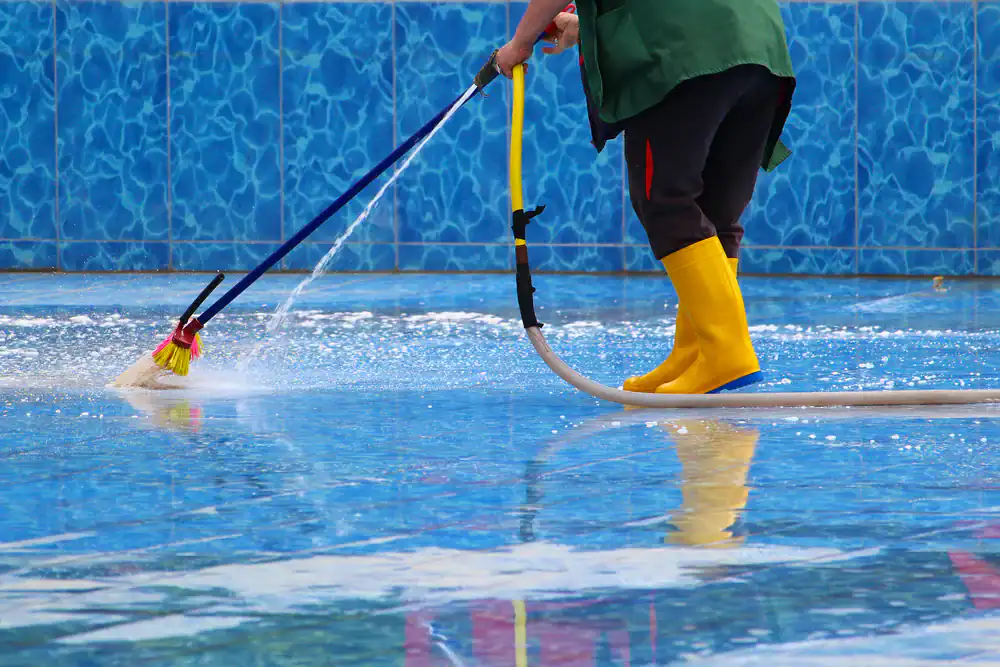
From there, the physical cleaning work happens in a specific order for a reason. Surface skimming comes first, then skimmer and pump basket cleaning, then brushing the walls and floor, then vacuuming. In the wiregrass region, particularly during spring pine pollen season, the debris load in those baskets can be significant we clear it completely on every visit, not just when it looks full. That step alone protects your pump and keeps your filtration working the way it should.
At the end of each visit, you get a service report that documents what was tested, what was found, and what was adjusted. If something with your equipment needs attention a pump making a noise it shouldn’t, a filter reading that’s trending the wrong direction you hear about it then, not after it fails. Transparent service means you always know what’s happening with your pool, not just that someone showed up.
Ready to get started?
Our routine maintenance visits cover the full scope of what keeps a pool in Alma swimmable through a South Georgia summer: water testing and chemical balancing, surface and floor debris removal, skimmer and pump basket cleaning, wall and tile brushing, and a visual equipment inspection every time. Chemical balancing isn’t a one-size-fits-all process here Bacon County’s water has specific hardness and mineral characteristics, and we tailor the treatment approach to account for that.
Beyond the weekly or bi-weekly routine, we also handle seasonal pool care for Alma homeowners. Spring opening involves a full chemical reset, equipment inspection, and debris clearing after winter. That matters more than it sounds Alma has documented subzero temperature events in its history, and equipment that wasn’t properly closed can show damage that’s invisible until the pump runs for the first time in March. Getting ahead of that saves real money.
Fall closing is handled with the same attention. Proper winterization in this part of Georgia isn’t as involved as it is further north, but it still needs to be done right especially for plumbing lines and equipment that would be expensive to replace. Whether you need regular maintenance through the season or a one-time opening or closing service, the scope is always communicated upfront, and the price quoted is the price charged.
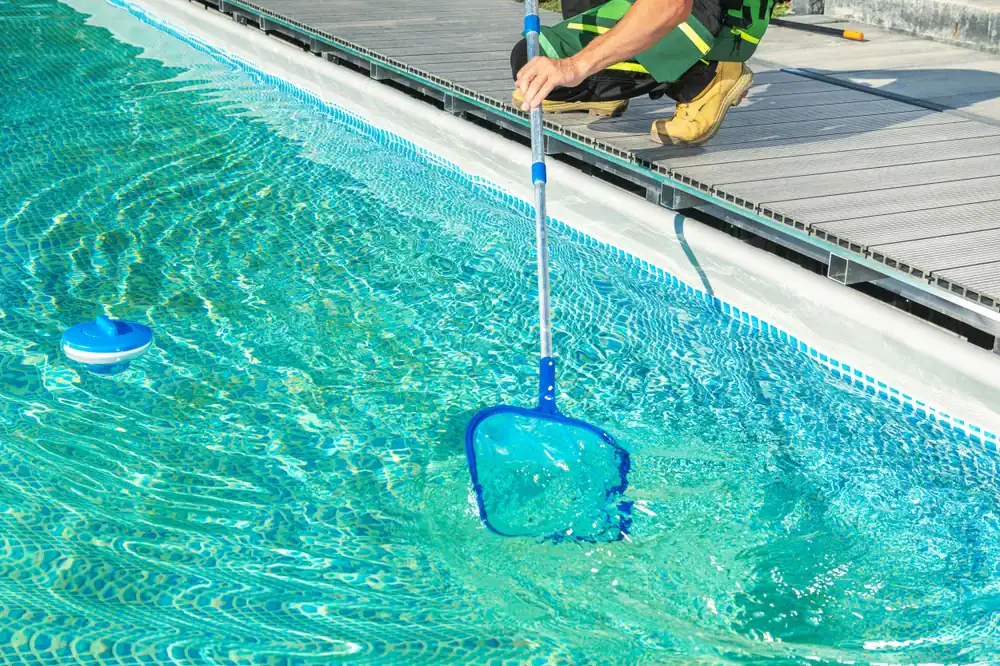
For most Alma homeowners, weekly service is the right call from late spring through early fall. The combination of intense heat, high humidity, and frequent afternoon thunderstorms that are common in South Georgia through the summer months creates conditions where water chemistry can shift quickly. Chlorine degrades faster at higher temperatures, and every rainstorm that blows through dilutes your chemical balance and drops organic debris into the water.
Bi-weekly service can work in the shoulder months late March through May and again in October when temperatures are more moderate and the pool sees lighter use. But from June through September, when Alma’s heat is at its worst and families are in the water regularly, weekly visits are what keep the chemistry stable and the water genuinely safe. Trying to stretch that schedule during peak summer usually means playing catch-up with algae or chemistry problems that cost more to fix than the extra visit would have.
Chemical balancing covers several interdependent measurements chlorine, pH, total alkalinity, calcium hardness, and stabilizer (cyanuric acid). They all affect each other. If your pH is off, your chlorine becomes less effective even if the level looks fine on a test strip. If your stabilizer is too high, the chlorine can’t do its job in direct sunlight. In Alma’s climate, where UV intensity is high and temperatures push chlorine degradation faster than in cooler regions, keeping all of those numbers in range at the same time is what separates a pool that’s actually safe from one that just looks clear.
Water that looks clean can still have chemistry that’s out of range. Properly balanced water protects swimmers especially kids from bacteria and algae exposure that’s invisible to the eye. It also protects the pool itself. Water that’s chronically out of balance causes surface staining, equipment corrosion, and liner damage over time. Getting the chemistry right on every visit is what prevents those costs from showing up later.
The short answer is: it goes green, fast. Alma’s summer heat accelerates algae growth significantly. In the right conditions warm water, depleted chlorine, organic debris from a thunderstorm or a heavy pollen day a pool can turn from clear to visibly green in under a week. Once that happens, you’re not looking at a cleaning visit. You’re looking at a shock treatment, a multi-day chemical reset, and potentially a filter backwash or cleaning depending on how far it’s gone. That process costs considerably more than routine maintenance would have.
Beyond algae, neglected pools in this climate also accumulate organic debris that clogs filtration equipment. Skimmer baskets and pump baskets that go uncleaned put strain on the pump motor, which is one of the more expensive components to replace typically $500 to $1,500 or more depending on the system. Regular maintenance is genuinely cheaper than remediation.
Alma’s winters are generally mild, but that word is doing a lot of work. Alma has documented subzero temperature events in its historical weather record making it one of the southernmost points in Georgia where extreme cold has been recorded. Pool plumbing lines and equipment that aren’t properly winterized can freeze, crack, and fail during those cold snaps. The repair costs from a split pipe or cracked pump housing are significantly higher than the cost of a proper seasonal closing.
A thorough winter closing for an Alma pool involves balancing the water chemistry for the off-season, lowering the water level appropriately, blowing out and plugging the plumbing lines, protecting the equipment, and covering the pool to keep debris out through the winter months. Done correctly, it means your spring opening is straightforward a chemical reset and equipment check rather than a remediation project. Skipping the closing to save a few hundred dollars is a gamble that doesn’t pay off when a cold snap hits in January.
Pine pollen season in the wiregrass region is one of the most underestimated pool maintenance challenges for Alma homeowners. Every spring, longleaf pines deposit a heavy yellow-green layer across every outdoor surface in Bacon County and pool skimmer baskets catch a significant portion of it. When those baskets fill up, water flow to the pump is restricted, filtration efficiency drops, and the pump motor works harder than it’s designed to. Over time, that stress shortens the life of the equipment.
Pollen also affects water chemistry. The organic load it introduces can consume chlorine faster than normal, pushing the pool toward algae-friendly conditions even if you just balanced it. During peak pollen weeks typically mid-March through April pools in this area may need more frequent attention than the rest of the season. If your maintenance schedule doesn’t account for that seasonal spike, you’ll see it in your water quality. A service provider who knows this region understands that spring in Bacon County isn’t the same as spring anywhere else.
DIY pool maintenance in Alma costs $30 to $50 per month in chemicals alone, plus the cost of testing kits, brushes, vacuums, and any equipment you need to replace when something goes wrong. Add the time realistic weekly maintenance takes one to two hours when done properly and for a family where weekends are already limited, that’s a real trade-off.
The bigger issue isn’t the time or the cost of supplies. It’s the expertise gap. Keeping a pool chemically balanced through a South Georgia summer requires consistent, accurate testing and the knowledge to interpret what the numbers mean together not just individually. Most DIY pool owners catch problems after they’re visible, which usually means they’ve already gotten worse. We catch chemistry shifts and equipment issues before they become expensive. For Alma homeowners who’ve invested in a pool for their family, protecting that investment with regular professional maintenance is typically the more cost-effective decision over a full season not just the more convenient one.