
Hear from Our Customers
When your pool is running right, you stop thinking about it. No green water the week before a cookout. No mysterious equipment noise you’ve been ignoring for two months. No scrambling to find someone who actually shows up. That’s the version of pool ownership most people in Thomas County haven’t experienced yet but it’s exactly what consistent, knowledgeable service makes possible.
Here’s what makes Boston different from most places: the Red Hills clay soil that gives this area its character also moves with the seasons. It expands when it rains, contracts when it dries out, and that cycle puts real stress on pool shells, plumbing joints, and surrounding decking year after year. A technician running a generic checklist won’t catch that. Someone who understands this specific landscape will and that’s the difference between fixing a problem and preventing the next one.
Add in the longleaf pine pollen that blankets Thomas County every spring, the subtropical humidity that turns a slightly off-balanced pool green within 72 hours, and a swim season that runs from April well into October and you start to understand why pool maintenance here isn’t something you can afford to leave to chance or to someone who learned your pool for the first time last Tuesday.
We founded Deep Waters Pools in 2014, but the experience behind it goes back more than three decades. Before the business had a name, we were already deep in the work concrete, plumbing, structural pool systems building the kind of hands-on knowledge that doesn’t come from a training manual. When we opened Deep Waters Pools, it wasn’t a startup figuring things out on customer pools. It was experienced tradespeople going independent after mastering our craft.
That background matters for Boston-area homeowners in particular. Thomas County’s soil conditions, the Red Hills terrain, the clay-heavy ground around properties near US 84 and out along the county roads these aren’t abstract concepts to us. They’re the specific environment we work in every day. We’re licensed and insured, we handle permits and inspections from start to finish, and we offer the full range of services under one roof: construction, weekly maintenance, equipment repair, leak detection, liner replacement, and heater installation. You don’t need three different companies to keep your pool running. One accountable source covers it.
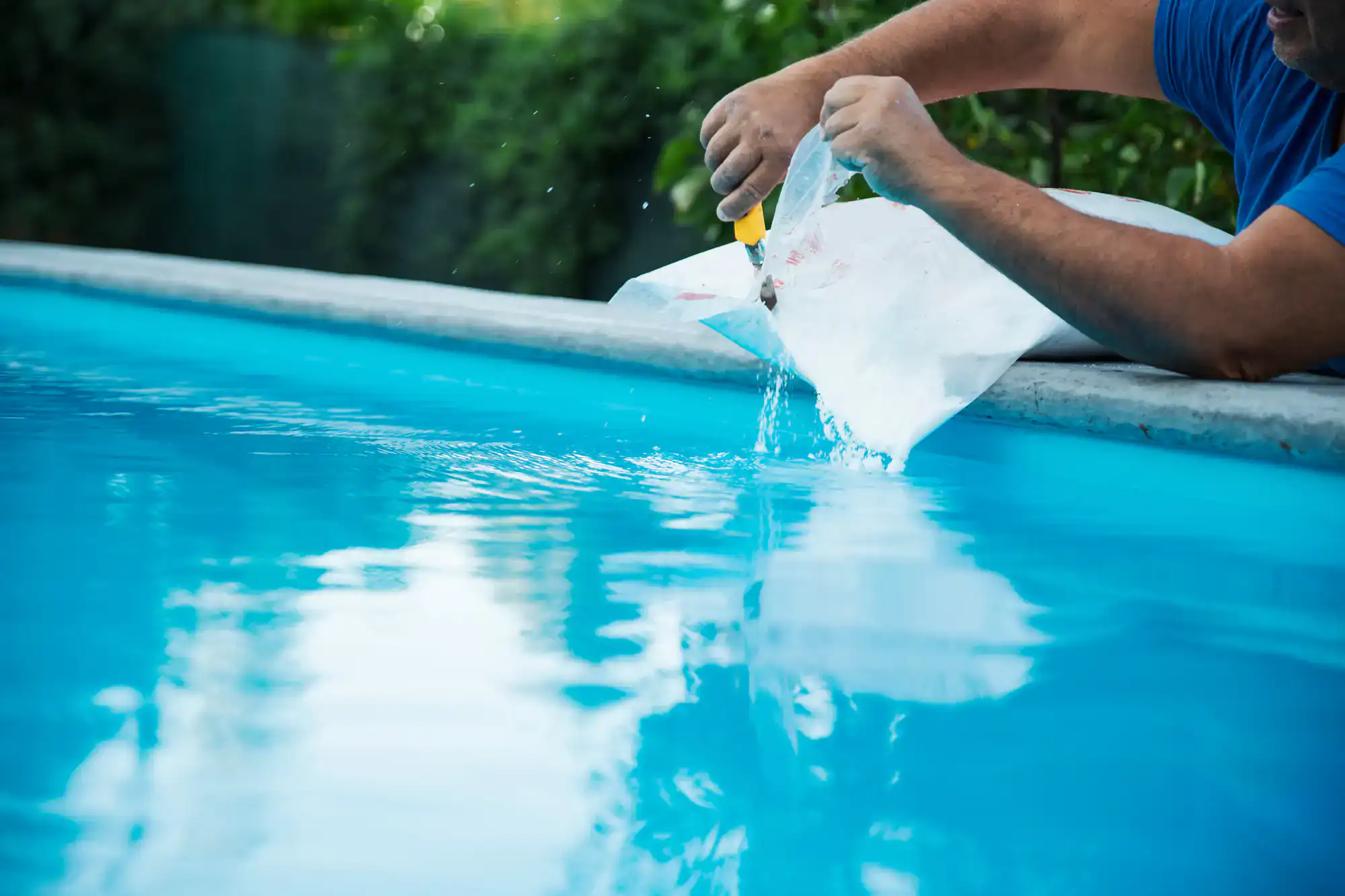
We start by understanding your pool before we touch anything. Every pool has its own history how it was built, how the ground around it has shifted, what the water source looks like, how it’s been maintained. For pools on well water, which is common on rural properties in the Boston area, that means checking iron and manganese levels that can stain surfaces and throw off standard chemical treatment. For pools near longleaf pine stands, it means adjusting filtration protocols before and during spring pollen season, not after the water turns.
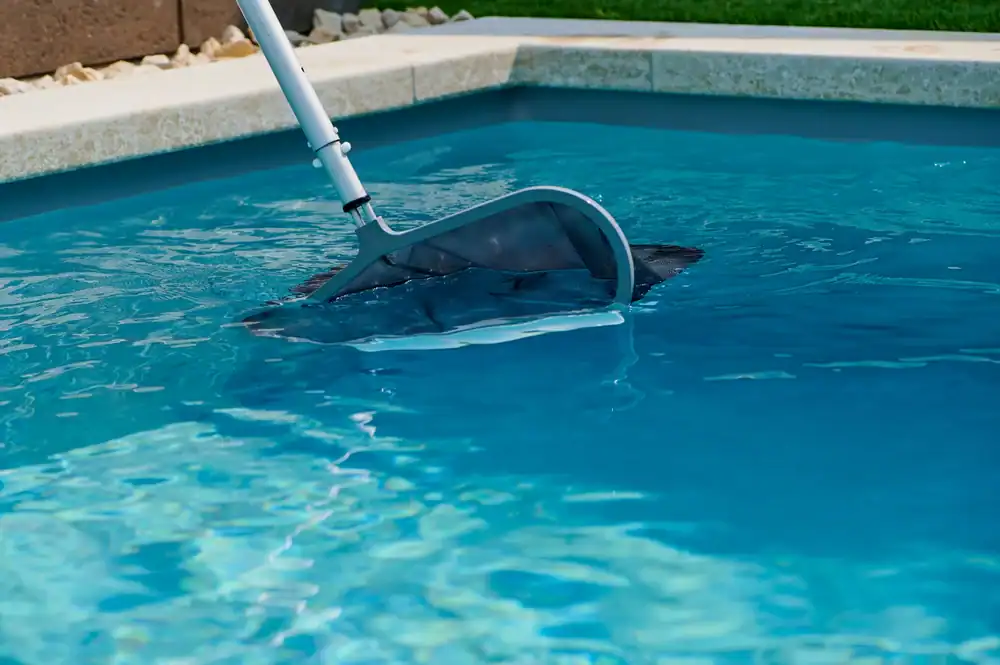
From there, the work depends on what you need. For weekly maintenance, we’re checking chemistry, cleaning surfaces and filters, and inspecting equipment every visit not just dumping chemicals and leaving. For equipment repair, we diagnose the system as a whole, not just the part that’s visibly failing. A pump that’s cycling on and off might be a motor issue, or it might be a pressure problem two components upstream. We find the actual cause.
If you’re looking at new construction or a major renovation, we handle the Thomas County permit process building department coordination, boundary surveys, inspection scheduling so you’re never caught off guard mid-project. Once construction is complete, we transition directly into a maintenance plan, so your pool is cared for by the same people who built it.
Ready to get started?
Pool equipment repair is one of the most common calls we get from Thomas County homeowners and one of the most mishandled services in this market. When a pump, filter, heater, or motor fails, the right fix starts with understanding how the whole system is connected. We don’t swap parts and hope. We diagnose first, explain what we found, and repair with the goal of not seeing that same issue again six months from now.
Weekly pool maintenance in Boston means something more specific than it does in a lot of other markets. Between the extended swim season, the spring pollen surge from the longleaf pines throughout the Red Hills, and the heavy annual rainfall Thomas County receives, your pool’s chemistry and filtration are under constant pressure. Our maintenance visits are calibrated for that not for a pool in a drier climate or a shorter season.
Leak detection is something Boston-area pool owners should take seriously, especially on properties with clay-heavy soil. A slow leak in this ground type doesn’t just waste water it can quietly destabilize the soil around the pool shell over time. We use professional detection methods to find the source accurately, not guesswork. We also handle pool liner replacement, heater installation, and full pool renovation all with the same attention to Thomas County’s specific conditions, permit requirements, and the kind of long-term thinking that keeps a pool running for decades, not just until next season.

The red clay soil throughout the Red Hills region around Boston behaves differently than sandy or loamy soils it expands significantly when saturated with rain and contracts during dry stretches. That seasonal movement puts real stress on pool shells, plumbing joints, and the decking around the pool edge. Over time, it can cause small cracks in plumbing lines or the pool shell itself that are nearly invisible to the eye but lead to slow, ongoing water loss.
The practical impact is that pools in Boston need to be inspected with this ground movement in mind not just checked for obvious equipment failures. If your pool is losing water and you can’t figure out why, or if you’re seeing cracks in the coping or deck that keep coming back after repairs, the soil is likely a contributing factor. Leak detection in this environment requires understanding the local geology, not just running a standard pressure test. That’s the kind of local knowledge that changes how we approach every service call in this area.
In most of South Georgia, weekly professional maintenance is the practical standard for pools that see regular use and Boston is no exception. The combination of a seven-month swim season, subtropical humidity, heavy spring pollen from the longleaf pines throughout Thomas County, and above-average annual rainfall creates consistent pressure on water chemistry and filtration systems. When those factors stack up, a pool that’s slightly out of balance can turn green within 48 to 72 hours.
Bi-weekly service might work during the off-season months when the pool isn’t being used heavily, but during active swim season roughly April through October in this climate weekly visits are what keep a pool consistently clean and safe without requiring emergency chemical treatments. The cost of a single algae remediation job typically exceeds several months of routine maintenance, so staying ahead of the problem is almost always the more cost-effective path. We can talk through what schedule makes sense for your specific pool and how much it gets used.
The most common sign is a pool that’s consistently dropping water beyond what normal evaporation would explain. In South Georgia’s heat, a pool can lose up to a quarter inch of water per day through evaporation alone but if you’re seeing half an inch or more disappearing daily, or if your chemical consumption has increased without a clear reason, a leak is worth investigating. Other signs include wet spots in the soil around the pool, equipment that’s cycling more frequently than usual, or cracks that keep reappearing in the shell or decking.
Professional leak detection goes well beyond a visual inspection or a dye test. We use pressure testing on the plumbing lines and systematic elimination to identify exactly where water is escaping whether it’s a fitting, a return line, the shell itself, or the equipment pad. For Boston-area pools built on clay-heavy soil, this matters more than it does in other regions, because the ground movement that’s common here can open small plumbing cracks that wouldn’t develop in more stable soil conditions. Finding the leak accurately the first time saves you from repeated repair attempts that never address the actual source.
Yes, we install pool heaters and in Thomas County, it makes more practical sense than most people initially expect. Boston’s swim season already runs longer than most of the country, but a heater extends it further on both ends. You’re looking at comfortable swimming from late March through early November with the right equipment, rather than waiting until the water naturally warms up in May. For families who invested in a pool to actually use it, that’s a meaningful difference.
The installation itself matters as much as the equipment you choose. An improperly sized heater, a gas line that doesn’t meet the unit’s BTU requirements, or incorrect startup procedures can cut the lifespan of a heater from ten or more years down to three or four. We size the equipment to your pool’s volume and your usage expectations, handle the connections correctly, and walk you through what the unit needs to keep running efficiently including how to protect it during the occasional hard freeze that does move through Thomas County in January or February. A properly installed heater, maintained correctly, pays for itself over time in extended use and avoided equipment replacement.
A vinyl liner in South Georgia typically lasts between 8 and 12 years under normal conditions, though UV exposure, chemical balance, and how well the liner was originally installed all affect that range significantly. Boston’s long swim season means more UV hours per year than pools in northern states, which does accelerate fading and surface degradation over time. If your liner is showing persistent wrinkles, visible fading, or small tears that keep reappearing, replacement is usually more cost-effective than ongoing patching.
The replacement process starts with accurate measurement and this is where a lot of liner jobs go wrong. A liner that’s even slightly off in its measurements will wrinkle within months of installation, which creates stress points that lead to premature tearing. We measure carefully, order to the correct specifications, and install with the attention to detail that the job requires. The full process typically involves draining the pool, inspecting the walls and floor for any structural issues that should be addressed before the new liner goes in, and then fitting and securing the liner correctly before refilling. The whole process usually takes one to two days depending on pool size and any underlying repairs needed.
We serve the Thomas County area, including Boston. We understand that Boston sits about 10 miles east of Thomasville along US 84, and that for a lot of pool owners out here, finding a company that actually commits to showing up consistently rather than treating small towns as a secondary stop on a bigger route has been the harder part of the search. That’s a real and fair concern, and it’s one we take seriously.
What makes the distance workable is that we’re not a franchise dispatching whoever is available. When we take on a maintenance client or a repair job in the Boston area, we’re building a service relationship, not filling a one-time slot. We know what Thomas County pools deal with the soil conditions, the pollen season, the occasional winter freeze that catches people off guard and we factor all of that into how we schedule and what we look for on every visit. If you want to talk through what regular service would look like for your specific pool and property, reach out and we’ll give you a straight answer on what we can do.