
Hear from Our Customers
Smithville summers start early and run long. From late March through October, you’re looking at nearly eight months of weather that makes a backyard pool one of the most-used things on your property not a seasonal luxury, but a daily reality. That’s a different return on investment than what you’d get in Atlanta or anywhere north of the gnat line. Down here, a pool earns its keep.
The lots in Smithville are one of the reasons this area makes so much sense for inground pool construction. Ranch homes, farmhouses, larger parcels there’s actual space to work with. You’re not trying to squeeze something into a postage-stamp yard. You’re building something real, on land that has room for it, in a community where outdoor living is a year-round way of life.
What changes after the build isn’t just the backyard. It’s where your family spends time. It’s the reason the kids stay home instead of driving toward Albany. It’s the feature that adds genuine, lasting value to a Lee County property especially in a market where families are actively relocating to Smithville for the schools, the space, and the lifestyle. A pool built right, in concrete, on a properly engineered foundation, doesn’t just look good the first summer. It holds up for decades.
Deep Waters Pools was founded in 2014, but the knowledge behind it goes back more than three decades. Before we had a name, our owner was already working hands-on in concrete, plumbing, and pool construction across South Georgia the same region, the same soils, the same climate that Smithville and Lee County homeowners deal with every day. That’s not a marketing angle. That’s just how long it takes to actually know what you’re doing in this part of the state.
We’re based in Douglas, Georgia South Georgia through and through. Not a franchise expanding south from Atlanta. Not a regional chain that learned the area from a map. We operate in the same environment you live in, which means we already understand what Southwest Georgia soil does under a concrete shell, how Lee County’s permitting process works, and what it takes to build something that doesn’t need to be fixed five years later.
If you’re in Smithville whether you’re off Route 118, out toward the Leesburg corridor, or somewhere in between we serve your area and know it well.
It starts with a conversation. You talk through what you want, what your property looks like, and what your budget actually is. We give you a straight answer on what’s realistic not a low number designed to get in the door and inflate later. The estimate you agree to is the one that guides the project.
From there, the permitting process begins. In Lee County, that means coordinating with the county’s Building Inspection department before any excavation starts. If your property runs on a private septic system which is common for homes in and around Smithville there’s also a step with Environmental Health to confirm the pool placement won’t interfere with your drain field. It’s not complicated, but it’s easy to miss if your builder isn’t familiar with how Lee County handles it. We’ve navigated this process across South Georgia enough times that it doesn’t slow the project down.
Once permits are in place, construction moves through a defined sequence: excavation, structural rebar installation, concrete application, plumbing and electrical rough-in, inspections at each stage, and final finishing. We build exclusively in concrete no fiberglass, no vinyl liner shortcuts. When the build is complete, you get a full walkthrough of your equipment and systems before anyone leaves the site. You’ll know how everything works before you take your first swim.
Ready to get started?
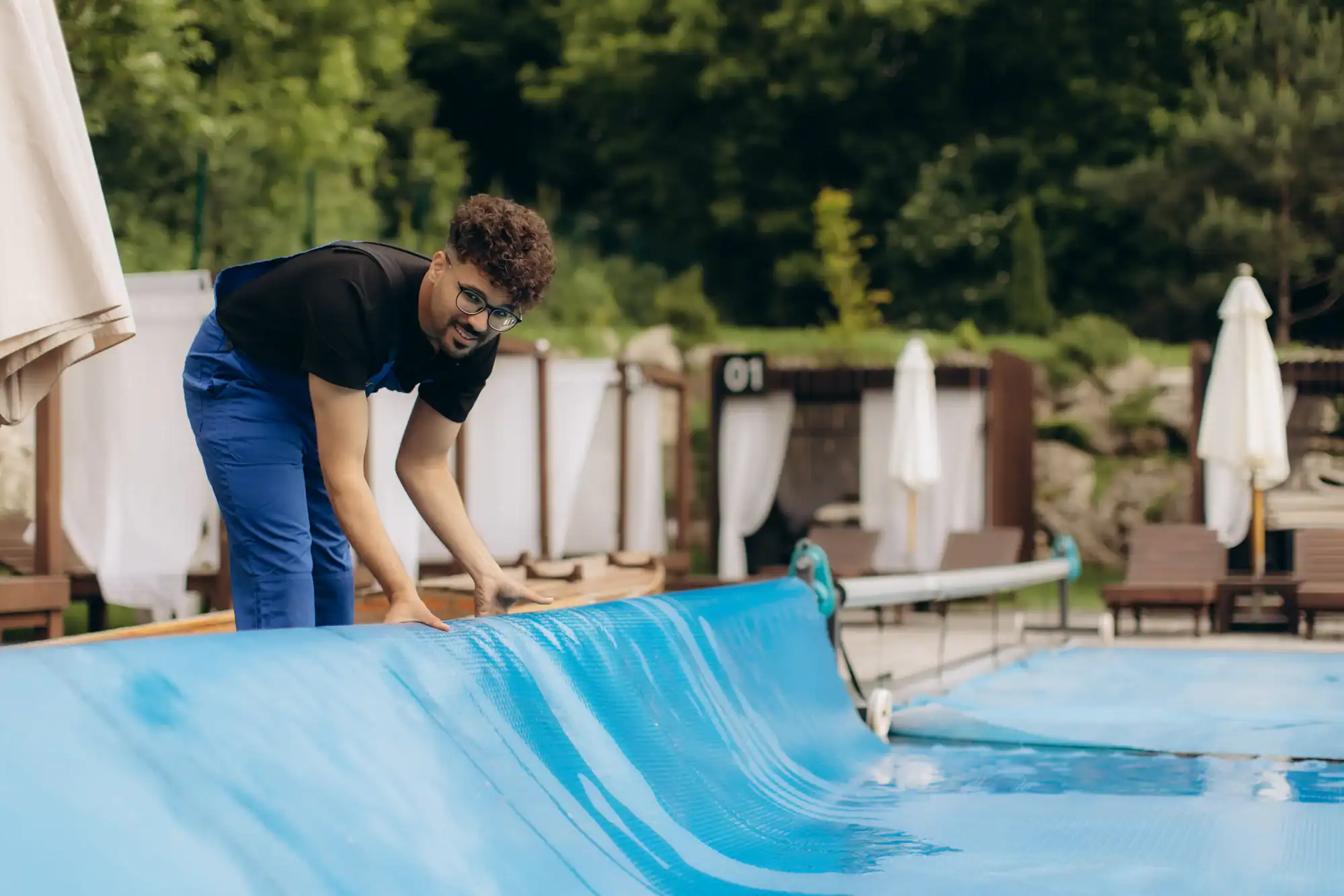
We’re not a build-it-and-disappear operation. The relationship doesn’t end when the final inspection clears. We offer ongoing pool maintenance, emergency pool service, free professional water testing, custom pool covers, and spa and patio services which matters a great deal when you’re in a community like Smithville, where driving to a pool supply store isn’t exactly a quick errand.
Pool chemistry in Southwest Georgia’s heat and humidity requires real attention. High temperatures accelerate chemical consumption, pH drift, and algae growth in ways that cooler climates don’t produce. Getting the balance wrong costs money in wasted chemicals, potential equipment damage, and water that’s uncomfortable or unsafe. The free water testing we provide gives you precise results and a clear action plan, not a rough estimate and a bag of shock to figure out on your own.
For equipment issues, our technicians are trained on all major brands Hayward, Pentair, Jandy, Sta-Rite, and Zodiac, across older and newer models. Whether your pump fails on a Friday afternoon in July or you’re dealing with a heater issue heading into fall, you’re not left searching for someone who’s never seen your equipment before. And because we build exclusively in concrete, you’re starting with a pool that handles Lee County’s soil conditions and seasonal groundwater fluctuations better than fiberglass or vinyl alternatives which means fewer structural issues to chase down the road.
Yes and the permit process in Lee County involves more than one step, which catches some homeowners off guard. Before any excavation begins, you’ll need a building permit through the Lee County Building Inspection department. That triggers a preconstruction review of your proposed pool location, setback distances from property lines, and the overall site plan.
If your property uses a private septic system which applies to a significant number of homes in and around Smithville you’ll also need approval from Environmental Health before construction can start. This step confirms that the pool won’t be placed over or too close to your drain field. It’s not a difficult process, but it does add a coordination layer that a builder unfamiliar with Lee County’s requirements might not account for in the project timeline. We handle both tracks as part of the standard process, so you’re not left figuring out which office to call.
Concrete is the strongest option for this part of Georgia, and it’s the only material we build with. The reason comes down to what’s happening underground. Southwest Georgia soils including the clay and sandy loam compositions common in Lee County and around Smithville shift with moisture and seasonal changes. Areas near waterways like Muckaloochee Creek, which runs along Smithville’s northeast edge, can also experience groundwater pressure fluctuations that affect what’s in the ground.
Fiberglass shells, while faster to install, can shift or pop in high-water-table conditions. Vinyl liner pools are vulnerable to tears when ground movement occurs, and the liner itself typically needs full replacement every five to ten years a cost that adds up fast. Concrete pools are engineered with structural rebar and proper drainage design to handle these conditions. They don’t just hold up the material actually gets stronger as it cures over time. For a Smithville homeowner who plans to stay on their property for twenty or thirty years, that structural durability is the difference between a one-time investment and a recurring expense.
The honest answer is that it depends on where you are in the permitting process and what time of year you start. From the point of permit approval to a completed, inspected pool, most concrete inground pool builds take anywhere from eight to fourteen weeks under normal conditions. The permitting stage in Lee County including any Environmental Health coordination if your property is on septic typically adds a few weeks before construction even begins.
The practical takeaway for Smithville homeowners is this: if you want a pool ready for the start of the Southwest Georgia swim season in late March or April, you should be having the initial conversation in the fall or early winter. Waiting until February or March to start the process almost guarantees you’ll be watching construction instead of swimming when June arrives. We plan projects with that timeline reality built in from day one, so there are no surprises about when the pool will actually be usable.
For most Lee County homeowners, yes but the case isn’t just about the pool itself. It’s about total cost over time. A fiberglass pool typically costs less upfront and installs faster, which is why they’re popular in South Georgia. But fiberglass pools come with limitations: they can’t be fully customized to your yard’s shape or your family’s preferences, they can shift in high-water-table conditions, and they don’t add the same long-term structural value to a property.
Concrete pools cost more at the start, but they’re fully custom, they get stronger as they cure, and they’re built to last thirty-plus years without the structural vulnerabilities that affect fiberglass in Georgia’s soil conditions. In a market like Smithville where families are buying homes to stay, where Lee County’s growth is bringing in buyers who care about long-term property value, and where the swim season runs nearly eight months the return on a concrete pool is real and measurable. You’re not paying for a faster install. You’re paying for something that doesn’t need to be replaced or repaired on a cycle.
Southwest Georgia’s summer heat is hard on pool chemistry in ways that homeowners from cooler climates don’t always anticipate. When temperatures are consistently in the low-to-mid 90s from June through August which is typical for the Albany metro area that Smithville sits within chlorine burns off faster, pH drifts more quickly, and algae growth can go from zero to visible in a matter of days if the balance is off. Staying on top of it isn’t optional; it’s the difference between a pool you can use and one you’re staring at.
Regular maintenance during the swim season typically involves weekly chemical checks and adjustments, filter cleaning on a scheduled basis, equipment inspection, and water testing to catch imbalances before they become problems. We offer professional water testing at no charge which gives you actual numbers to work from, not guesswork. For Smithville homeowners who don’t have a pool supply store nearby, having a service provider who can test accurately and tell you exactly what your water needs is a practical advantage that saves both time and money across a long swim season.
Yes. Equipment failures don’t wait for a convenient time, and in a community like Smithville where the nearest pool supply store isn’t around the corner being without a responsive service provider when something breaks is a real problem. We offer emergency pool service and are trained on all major equipment brands: Hayward, Pentair, Jandy, Sta-Rite, and Zodiac, including older models that some technicians won’t touch.
The most common emergency calls during a South Georgia summer involve pump failures, filter issues, and chemical crises green water or unsafe chemistry that makes the pool unusable right when it’s needed most. We can diagnose and address these situations without you having to track down a technician who’s never seen your equipment setup before. If your pool was built by someone else, that doesn’t matter the service isn’t limited to our own builds. For Smithville homeowners who rely on their pool through a nearly eight-month swim season, having that kind of backup isn’t a bonus. It’s part of what makes owning a pool actually work long-term.