
Hear from Our Customers
Lowndes County health officials don’t mince words about South Georgia summers the heat and humidity combined can be genuinely dangerous. When your backyard is your family’s main outdoor space and the season runs from April through October, a pool stops being a luxury and starts being the most practical thing on your property.
What you get with a custom gunite pool isn’t just a place to cool off. It’s a permanent structure built specifically for your land your soil, your drainage, your setbacks, your layout. That matters more than most people realize before they start the process. A pre-shaped fiberglass shell gets dropped into a hole. A gunite pool gets built into your property, on your terms, to fit exactly what you’ve got.
For homeowners on rural Lowndes County lots around Naylor many of which run larger than a half-acre, sit on septic systems, and have real room to work with that flexibility is the whole ballgame. You’re not squeezing a stock shape into a tight suburban yard. You’re designing something that actually makes sense for your space, your family, and the seven months a year you’ll actually be using it.
We’re based in Douglas, Georgia right down U.S. 84, the same road that runs through Naylor. Our founder spent more than three decades working in concrete, plumbing, and pool construction before we formally opened in 2014. That’s not a marketing angle. That’s just the reality of who shows up on your property.
Every pool we build is handled by the same in-house crew from excavation to completion. No subcontractors. No handoffs. No “that’s not my department” when something needs attention. One team, one point of contact, and one company that pulls every permit and manages every inspection through Lowndes County so you never have to track down a county office or wonder where things stand.
For Naylor homeowners who’ve heard enough stories about pool projects gone sideways, that kind of accountability isn’t a bonus. It’s the baseline.
It starts with your site. Before anything gets designed or priced, we evaluate your specific property where the septic field sits, what the soil looks like, whether any part of your lot carries flood zone considerations, and where a pool can actually go without creating problems down the road. On rural Lowndes County properties around Naylor, these aren’t hypotheticals. They’re real variables that affect where your pool goes and how it gets engineered.
From there, design gets dialed in around your lot and how your family plans to use the space. Once the plan is set, we pull the building permit through Lowndes County in our name not yours. We handle the required inspections, including the rebar inspection that Georgia building code mandates before gunite can be applied. You don’t make a single call to a county office.
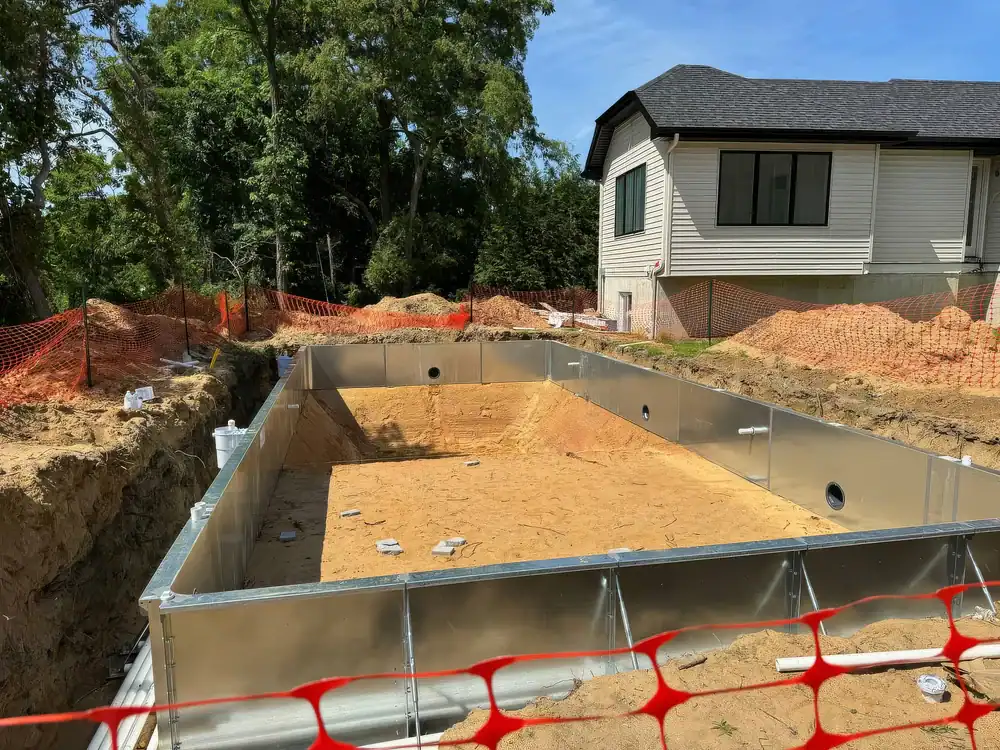
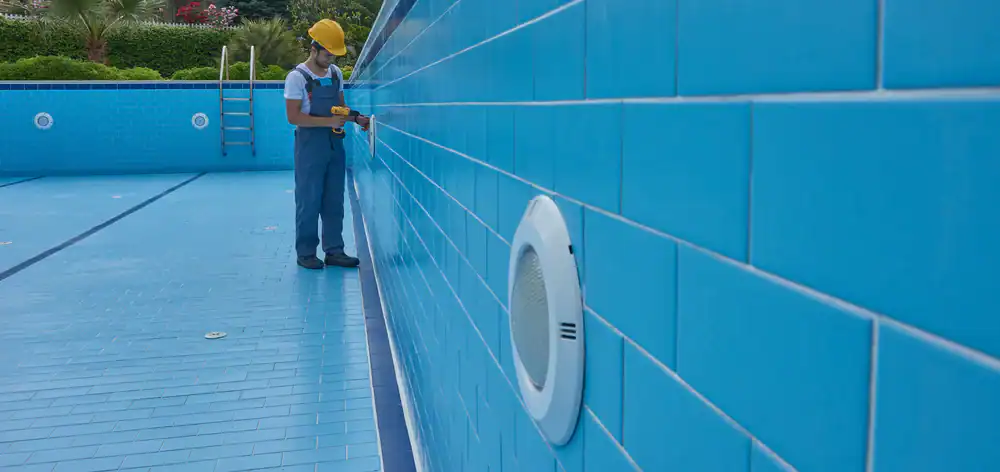
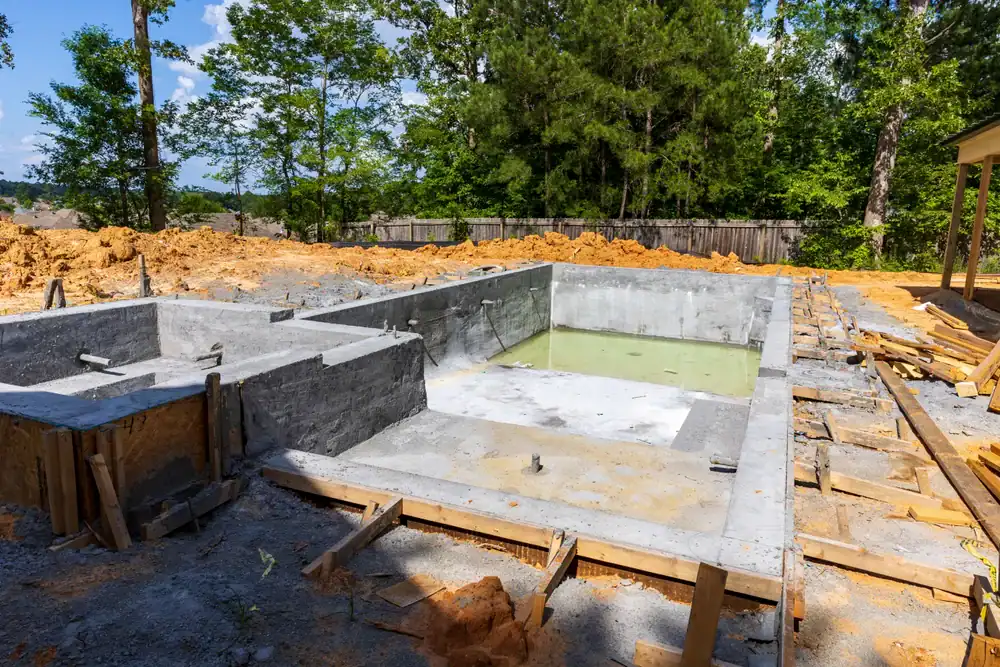
Construction runs through excavation, rebar installation, gunite application, swimming pool plumbing, electrical bonding and grounding, pool deck installation, and equipment setup. The same crew handles every phase. When we’re done, your pool is finished not mostly finished with a punch list of items left to chase down. A custom safety cover is included with every build, standard, not as an add-on.
Ready to get started?
Every pool we build is a complete project, not a base price with a long list of extras. The full scope covers site evaluation, excavation, rebar framework, gunite shell construction, all swimming pool plumbing, NEC Article 680-compliant electrical bonding and grounding, equipment installation, pool deck installation, and a custom safety cover. What’s in the contract is what you pay.
For Naylor homeowners specifically, a few things are worth knowing upfront. If your property is on a septic system and many rural Lowndes County properties are pool drainage has to be planned around it. Georgia law prohibits connecting pool drainage to a septic system, and your septic field’s location directly affects where the pool can be sited. We account for this before excavation starts, not after. Same goes for flood zone designations, which trigger additional Lowndes County permitting requirements that need to be addressed in the design phase.
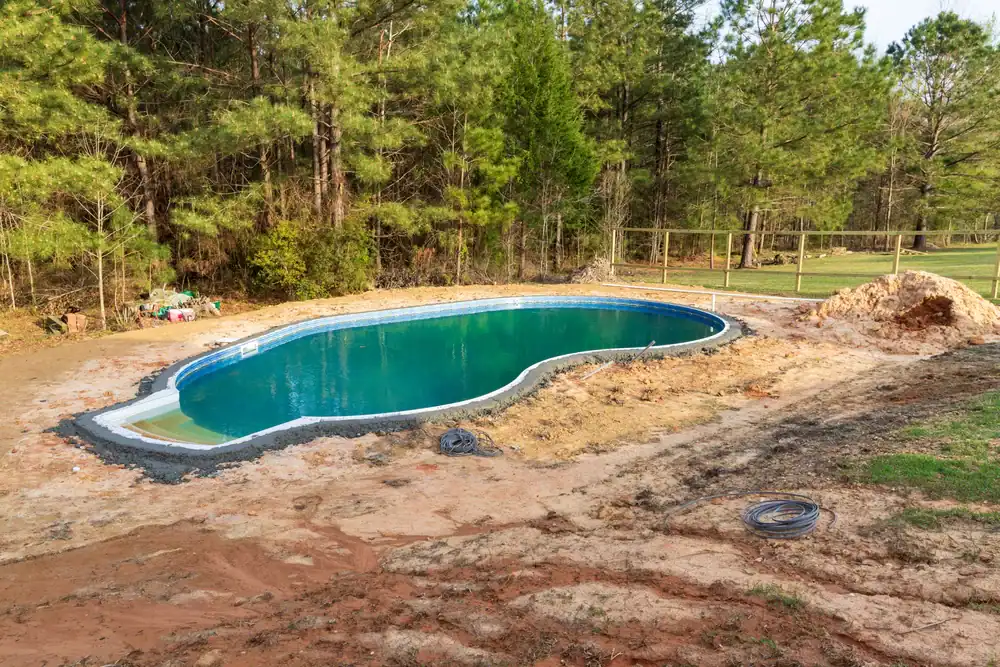
We build gunite exclusively no fiberglass, no vinyl liner pools. That’s a deliberate choice. Gunite is poured and shaped on-site, which means any footprint, any depth, and any configuration is possible. It’s also a structure that gets stronger as it cures and, when properly maintained, lasts 30 or more years. For a rural property where the pool is a long-term investment in both lifestyle and home value, that’s the kind of construction that makes sense.
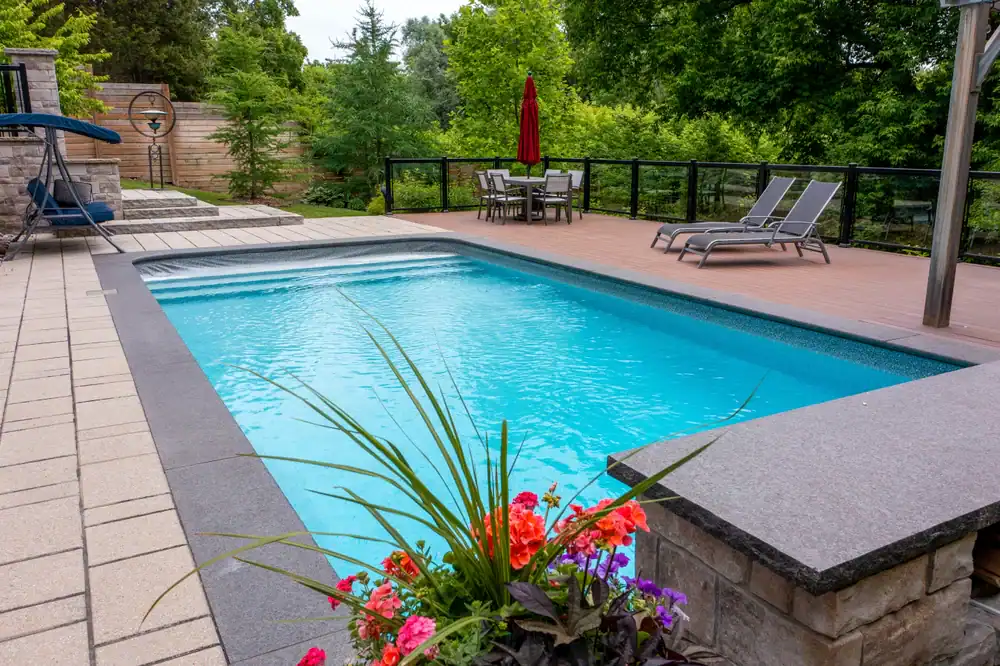
Yes and because Naylor is an unincorporated community, your permit goes through Lowndes County, not a city building department. That distinction matters because the process, the office, and the inspection schedule are all county-managed. A building permit is required for any inground pool construction, and Georgia also requires a separate electrical permit for the bonding and grounding work.
The good news is that we handle all of it. Every permit gets pulled in our name, every inspection gets scheduled and managed by our team, and you never have to navigate the county office on your own. Georgia building code also requires a mandatory rebar inspection before gunite can be applied that’s a step some builders skip or rush, and it’s one we treat as non-negotiable. If you’re on a lot with a flood zone designation, there are additional requirements on top of the standard permit, and those get addressed in the planning phase before anything breaks ground.
The construction phase itself from excavation to a finished, swimmable pool typically runs six to eight weeks. But that’s not the full timeline, and a builder who quotes you six to eight weeks without mentioning everything before it is setting you up for a frustrating experience.
The full timeline from first conversation to finished pool is usually three to six months when you factor in design, site evaluation, and the Lowndes County permitting process, which can take anywhere from two to eight weeks depending on workload and whether your property has any special considerations like flood zone designations or septic system siting. If you want your pool ready for the start of South Georgia’s swim season which opens up in April you’re in a much better position starting the process in the fall or early winter. That’s not a sales pitch, it’s just the math of how the permitting calendar works in Lowndes County.
Fiberglass pools are manufactured off-site in a fixed set of shapes and sizes, then transported and dropped into an excavated hole. What you see in the catalog is what you get and if it doesn’t fit your lot perfectly, you’re adapting your yard to the pool, not the other way around. The gel coat surface also has a lifespan, typically fading or degrading over time and eventually requiring refinishing.
Gunite is different at every level. It’s applied on-site, directly over a rebar framework, which means the shape, size, and depth of your pool are completely open. Any footprint that makes sense for your property is buildable. Gunite also cures and hardens over time it doesn’t degrade the way a fiberglass shell can. For a rural Lowndes County property where you’ve got the space to build something that actually fits your land and your family, gunite is the construction method that gives you real flexibility. It’s also why we build gunite exclusively it’s not a product we offer alongside other options. It’s the only way we build.
Yes, but it requires planning before anything gets designed or priced. Georgia law prohibits pool drainage from connecting to a septic system, which means your pool’s location and drainage plan have to account for where your septic field sits on the property. If a pool gets sited too close to a septic field or without knowing where the field is you can end up with a drainage problem that’s expensive to fix after the fact.
On rural Lowndes County properties around Naylor, septic systems are common, and this is a real pre-construction consideration, not a technicality. We evaluate your site before design begins, which includes identifying your septic field’s location and factoring it into where the pool can go and how drainage gets handled. It’s one of several reasons that a site evaluation matters as much as the design conversation the two things have to happen together, not in sequence, if you want to avoid surprises once excavation starts.
Custom gunite pool projects in the Naylor and Lowndes County area generally run in the range of $60,000 to $90,000 or more, depending on the size, shape, depth, deck design, and any site-specific engineering requirements your property brings to the table. That range covers the full scope excavation, shell construction, plumbing, electrical, equipment, deck, and the custom safety cover that’s included with every build we do.
It’s worth framing that number against what you’re actually getting. Lowndes County median home values have climbed significantly in recent years, with detached homes in the area approaching $300,000 at the upper end of the market. A pool adds roughly 7% to home value in Georgia on average, which in that price range translates to real dollars not a rounding error. More practically, you’re building a structure that your family will use for seven months out of every year, for the next 30-plus years if it’s built right. The cost of doing it wrong or doing it cheap tends to show up sooner than most people expect.
The most important question you can ask any pool contractor is who will actually be on your property. A lot of builders in this region use subcontractors for some or all phases of construction plumbing, electrical, decking which means the person you signed a contract with may not be the person managing the work once it starts. In a small community like Naylor, where you’re letting someone dig up your backyard for six to eight weeks, that matters more than it might in a larger city.
Beyond that, ask specifically who pulls the permits. In Lowndes County, the building permit for a pool should be pulled by the licensed contractor in their name that’s how they take legal responsibility for code compliance. If a contractor asks you to pull your own permit, that’s a signal worth paying attention to. Also ask whether they build gunite or fiberglass, and why. A builder who can explain the difference clearly and tell you exactly what’s included in their contract without a long list of add-ons waiting after you sign is a builder who’s done this enough times to be straightforward about it.