
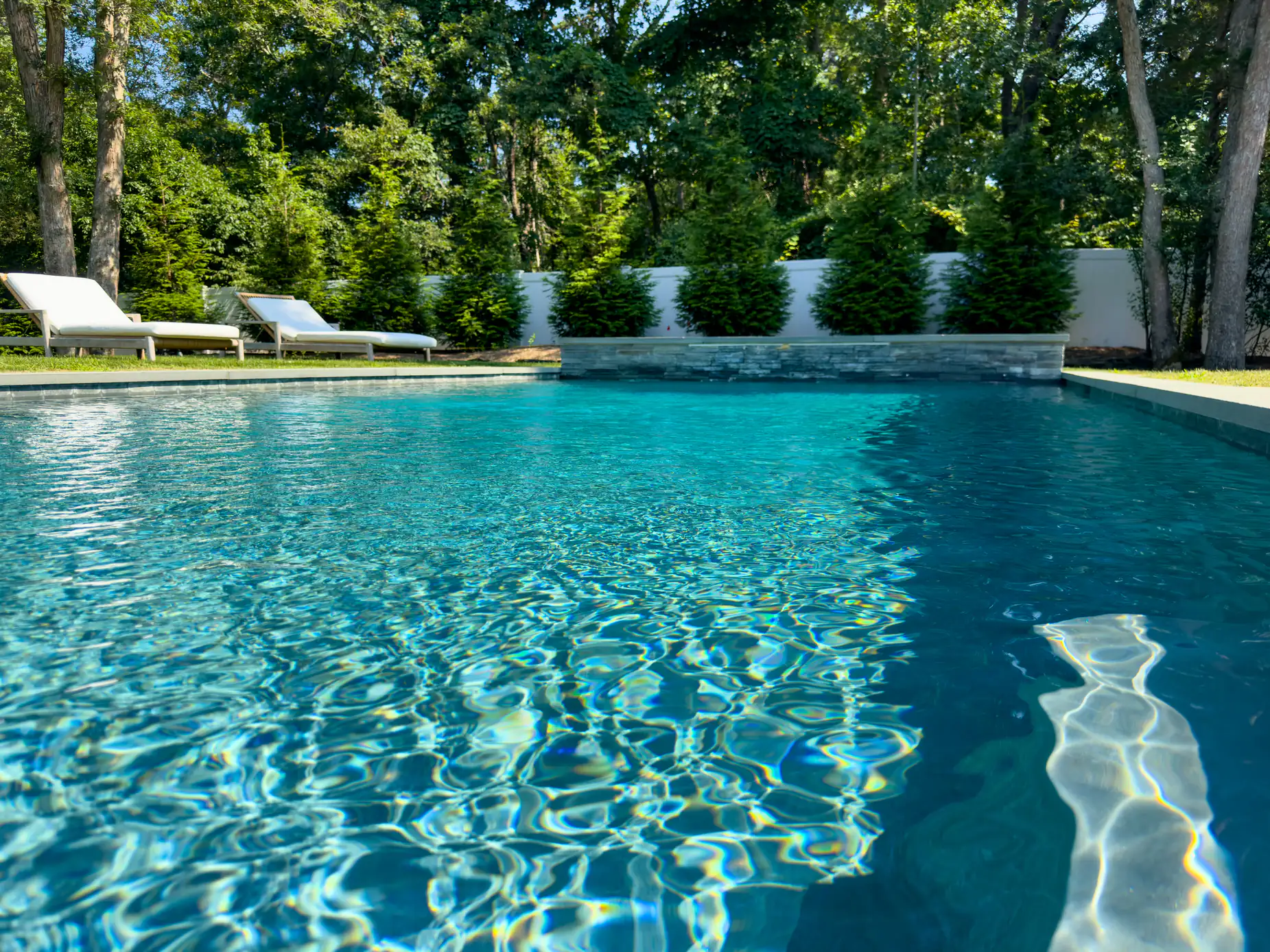
Hear from Our Customers
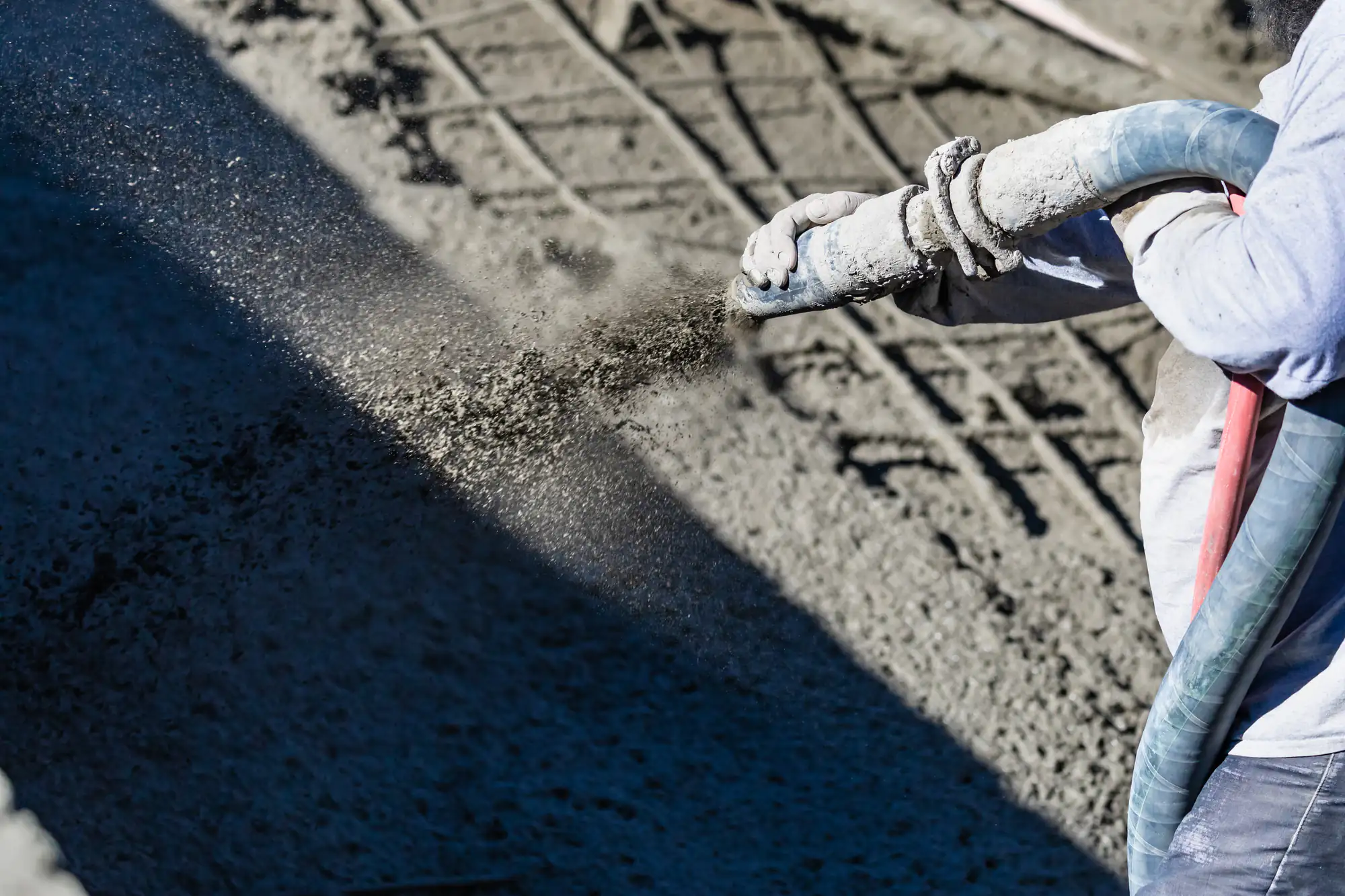
Lake Park sits at the edge of Georgia’s Florida border, and the summers here don’t ease up. When the heat index pushes past 110°F in July, your backyard either has a pool or it doesn’t get used. A well-built gunite pool changes that not just for one summer, but for the next 40 years if it’s done right.
Gunite is the only pool type that can be built in any shape, at any depth, on any lot. That matters here because properties around Twin Lakes and along the US-41 corridor aren’t all flat, square, or simple. A gunite shell is engineered to fit your specific yard not the other way around. And because it’s reinforced concrete, it doesn’t flex, pop, or shift the way a fiberglass insert can when ground conditions change.
Lake Park’s coastal plain soils are actually well-suited for gunite construction they excavate cleanly and don’t carry the same expansive clay problems you find further north in Georgia. What you get is a structurally sound shell built for this specific soil, this specific climate, and a swimming season that runs from March through November without a heater and potentially year-round with one.
We’re based in Douglas, GA and have been building custom inground pools across South Georgia for over 30 years, including throughout Lake Park and Lowndes County. Our team spent decades in concrete, plumbing, and pool construction before ever putting a name on the door and that experience shows in how we work.
What makes us different from most builders in this market is straightforward: we don’t subcontract. Excavation, rebar, gunite application, plumbing, electrical, finishing, decking it’s all done by the same crew. That means one company is responsible for your pool from the first shovel to the final inspection, and that same company is still reachable when you need service five years from now.
We’ve built pools throughout Lowndes County and know the permitting structure here including the specific process required for Lake Park, where building permits run through the City of Valdosta’s Inspections Department, not Lake Park City Hall directly. That’s a detail most out-of-area builders don’t know until it costs their clients weeks.
It starts with a design consultation where we look at your actual lot your soil, your grade, your drainage, and what you want the finished space to feel like. From there, we handle every permit in-house. For Lake Park specifically, that means pulling an approval form from Lake Park City Hall on N. Essa Street first, then processing the building and electrical permits through the City of Valdosta’s Inspections Department. Most homeowners don’t know that’s a two-step process and builders who don’t know it either will cost you weeks before a single shovel hits the ground.
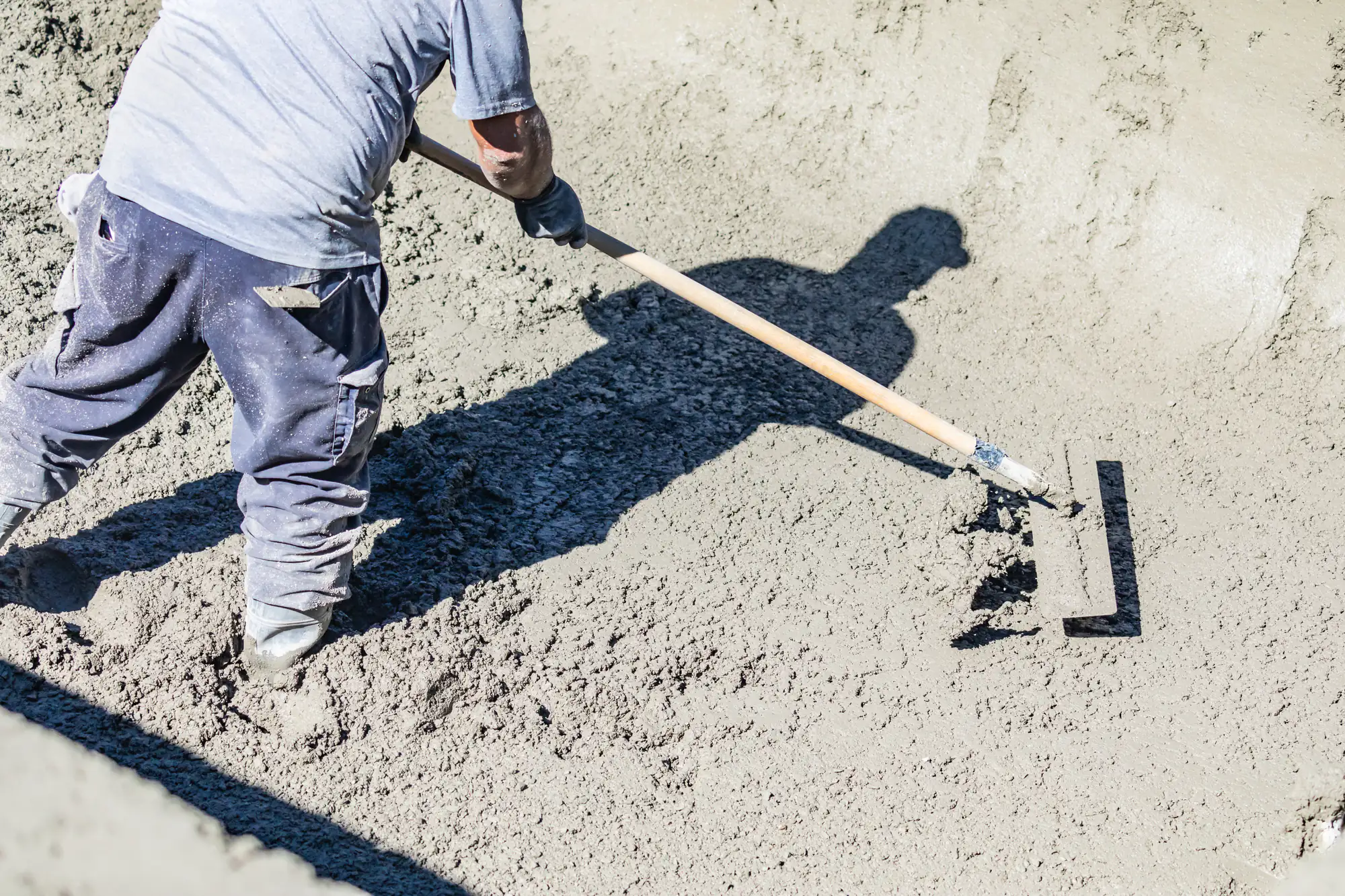
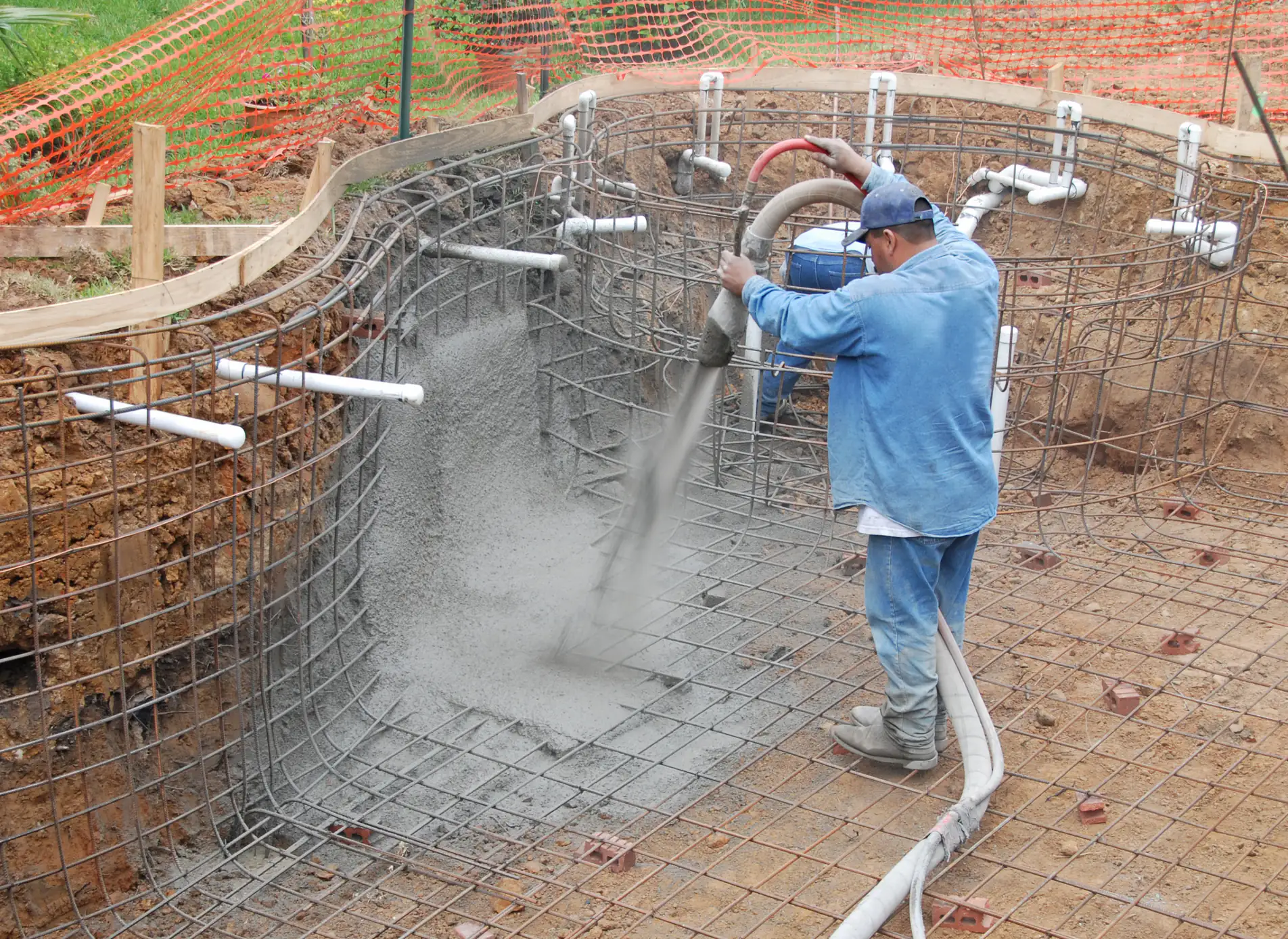
Once permits are approved, excavation begins. The rebar framework goes in next, followed by the gunite application the high-pressure concrete mix that forms the structural shell of your pool. The shell then has to cure properly. This is where shortcuts cause the cracking and surface problems you read about online. We don’t rush it.
After curing, plumbing and electrical are completed by the same in-house crew bonding and grounding done to NEC Article 680 standards. Then comes the finish, the decking, equipment installation, and final inspection. Start to finish, a quality gunite build in Lowndes County takes 3 to 6 months. Any builder promising you 8 to 12 weeks is either cutting corners on cure time or planning to hand your project off and disappear.
Ready to get started?
Every gunite pool we build is a fully custom concrete pool installation not a pre-shaped insert dropped into a hole. The scope includes full excavation, engineered rebar framework, gunite or shotcrete shell application, all in-house plumbing, NEC Article 680-compliant electrical bonding and grounding, surface finishing, coping, decking, and complete equipment installation and startup.
Permits are included. Every required inspection is scheduled and managed by us including the Lake Park-specific approval process through both city hall and the Valdosta Inspections Department. You don’t have to make a single call to a permit office or track down an inspector. That’s handled.
After the build, we offer ongoing maintenance and equipment service for every major brand Hayward, Pentair, Jandy, Sta-Rite, and Zodiac. This matters in Lake Park because your nearest large pool service center is in Valdosta, and having the company that built your pool also available for annual maintenance, equipment repairs, and long-term service means you’re not starting from scratch every time something needs attention. We also service pools we didn’t build, so if you already have a pool that’s been neglected or needs restoration work, that’s something we can assess.
Yes, and the permitting process in Lake Park has a specific step that catches a lot of homeowners and builders off guard. Unlike most Georgia cities where you go directly to the local building department, Lake Park requires you to first obtain an approval form from Lake Park City Hall located on N. Essa Street before the actual building and electrical permits can be processed through the City of Valdosta’s Inspections Department. This arrangement has been in place since July 2023, when Valdosta took over inspection services for Lake Park, Hahira, and Dasher.
Beyond the permit itself, pool construction in Lake Park is also subject to Georgia’s statewide minimum standard codes, which include barrier and enclosure requirements, structural standards, and NEC Article 680 for all electrical bonding and grounding work. We handle every step of this process in-house the Lake Park approval form, the Valdosta permit application, and every required inspection phase. You won’t need to track a single form or schedule a single inspector on your own.
For a residential gunite pool in Lake Park and Lowndes County, most homeowners are looking at somewhere between $75,000 and $150,000, with the majority of projects landing in the $85,000 to $120,000 range. Where your project falls in that range depends on the size of the pool, the depth, the shape, any water features or attached spa, your decking material, and your finish selection.
Site conditions matter too. Properties near Lake Park’s lower-lying areas closer to the natural ponds and lakes the town is named for can have higher water table considerations that affect excavation and drainage planning. A builder who accounts for that upfront will give you a more accurate number than one who quotes you a flat price and figures it out later. We give you a realistic cost picture based on your actual lot and what you actually want to build not a lowball number designed to win the contract.
A properly built gunite pool in Lowndes County takes 3 to 6 months from permit approval to final inspection. That timeline isn’t padding it reflects what the process actually requires. The permit process alone, which in Lake Park involves coordination between city hall and the Valdosta Inspections Department, takes time. Excavation, rebar, and gunite application each have to be completed and inspected before the next phase begins.
The most important phase for timeline integrity is the cure. After the gunite shell is applied, it has to cure fully before plumbing, electrical, and finishing work can proceed. Rushing that window is the single most common cause of surface cracking and structural problems in gunite pools and it’s how some builders hit an 8-to-10-week promise while delivering a pool that needs repairs within two years. If a builder is quoting you a 10-week build, ask them specifically how long they allow for shell cure time. The answer will tell you a lot.
Yes and the soil conditions in Lowndes County are actually well-suited for gunite construction. Lake Park sits on Georgia’s Atlantic Coastal Plain, which means the underlying soil is primarily sandy loam. That type of soil excavates cleanly and doesn’t carry the same shrink-swell behavior you see in the expansive clay soils further north in Georgia. The main site-specific consideration in the Lake Park area is water table depth, particularly on lots that sit close to the natural lakes and low-lying areas throughout the city.
A builder who knows this region will account for water table conditions in the design phase adjusting excavation depth, drainage planning, and shell engineering accordingly. That’s not a reason to avoid gunite; it’s a reason to hire a builder with genuine local experience rather than one applying a one-size-fits-all template. The claim that gunite cracks in Southern soil describes what happens when a builder doesn’t account for local conditions not what happens when the pool is engineered correctly for where it’s being built.
Both gunite and shotcrete are forms of pneumatically applied concrete meaning concrete that’s sprayed at high pressure to form the pool shell. The practical difference is in how the concrete is mixed before application. With gunite, the dry concrete mix is pumped through a hose and water is added at the nozzle just before it hits the rebar framework. With shotcrete, the concrete is pre-mixed with water before it goes through the hose. Both methods produce a structurally sound, reinforced concrete shell when applied correctly.
In practice, the terms are often used interchangeably in the pool industry, and the quality of the finished shell has far more to do with the skill of the crew applying it and the engineering behind the rebar framework than it does with which method is used. We work with both methods and select the approach that makes the most sense for each specific project. What doesn’t change is the in-house crew, the cure time standards, and the structural engineering behind every shell we build.
A properly built gunite pool in Lake Park can last 40 to 50 years or more. The shell itself reinforced concrete doesn’t degrade the way fiberglass or vinyl does. What will need periodic attention over that lifespan is the interior surface finish, which typically holds up 10 to 15 years before replastering is needed, and the mechanical equipment, which has its own service life depending on brand and usage.
Lake Park’s climate is actually one of the better environments for gunite longevity. The mild winters mean the shell isn’t going through the hard freeze-thaw cycles that stress concrete in colder climates. The humid subtropical conditions that make summers so intense here don’t create the same structural stress on a gunite shell that they might on a fiberglass pool, which can expand and contract with temperature swings. With routine maintenance water chemistry, equipment service, and eventual resurfacing a gunite pool built in Lake Park is genuinely a generational investment. We service pools throughout Lowndes County long after the build is complete, so you’re not on your own when that maintenance window comes around.