
Hear from Our Customers
A gunite pool built correctly in Thomas County isn’t something you’re constantly nursing. It holds its shape, holds its finish, and holds its value because it was engineered for the ground it’s sitting in, not poured by a crew that’s never dealt with red clay soil that swells when it rains and pulls back when it dries.
That matters in Thomasville more than most places. The rolling terrain of the Red Hills region isn’t flat, sandy South Georgia soil. It moves. A builder who ignores that and applies the same shell thickness they’d use anywhere else is setting you up for problems that show up two or three years down the road. A builder who accounts for it proper rebar density, correct shell depth, adequate cure time builds you a pool that doesn’t ask for your attention every season.
Thomasville’s climate also works in your favor when the build is done right. You’re sitting near the Georgia-Florida line, which means swimming weather that runs from March well into October or November in a mild year. That’s a long season. A quality gunite pool with the right surface finish and properly balanced water chemistry makes the most of every month of it without the replastering cycle that poorly built concrete pools are known for. Done right, you’re looking at 10 to 15 years before a resurface is even a conversation.
We founded Deep Waters Pools in 2014 out of Douglas, GA but our team had already spent more than 30 years in concrete, plumbing, and pool construction before the company ever launched. That background isn’t a marketing line. It’s the reason we built the company the way we did: no subcontractors, no handoffs, no strangers showing up on your property mid-project.
Every phase of your build excavation, rebar, gunite application, plumbing, electrical, surface finishing, and decking is handled by our in-house team. That’s not standard in this industry, and it’s the single biggest reason quality holds up from start to finish.
Douglas to Thomasville is about 90 miles on US 84. We serve Thomas County because we operate in the same South Georgia environment the same soil, the same permit processes, the same climate. Homeowners near Mitchell Place, out toward the Highway 319 corridor, or on larger acreage properties in the Red Hills region get the same in-house team and the same standard of build.
It starts with a site evaluation and a 3D design rendering. Before any excavation happens, you’ll see exactly what your pool looks like every shape, every depth, every feature designed around your specific property. For homeowners in Thomasville with larger lots, historic homes, or estate-scale grounds, this step matters. You’re not approving a catalog shape. You’re approving a custom design built for your yard.
Once the design is locked in, we handle the permitting. In Thomasville, that means managing the City’s dedicated swimming pool permit application under Article X of the Municipal Code, the electrical permit required under the 2020 National Electrical Code, and all required inspections through the City of Thomasville Building Department. If your property sits in unincorporated Thomas County rather than inside city limits, permitting runs through Thomas County Inspections and Planning instead and the county requires a state-licensed contractor registered with the county office to pull the permit. We handle both jurisdictions. You don’t touch a form.
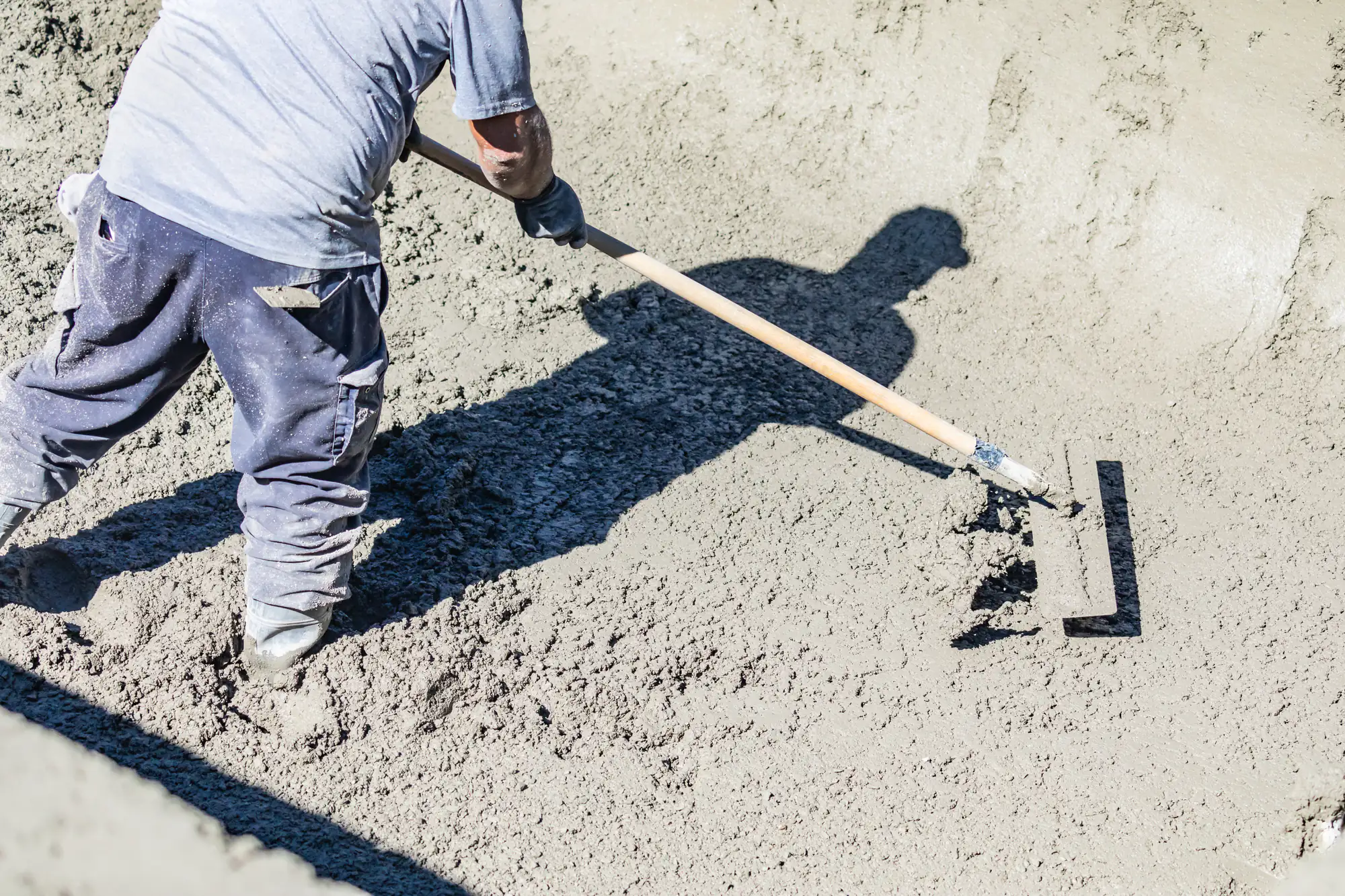
From there, the build sequence runs through excavation, rebar placement, gunite or shotcrete shell application, plumbing, electrical bonding and grounding to NEC Article 680 standards, surface finishing, and decking. Realistically, a complete custom gunite build in this area takes 3 to 6 months from permit to final inspection. Any builder quoting 8 to 12 weeks is either leaving out the permit timeline or cutting corners somewhere in the construction sequence. We give you an honest schedule at the start with clear milestones so you know what’s happening and when.
Ready to get started?
A Deep Waters Pools gunite pool isn’t a base package with a list of add-ons. The full scope of every build includes site evaluation, 3D design renderings, excavation, rebar and gunite shell construction, all plumbing, electrical bonding and grounding to the 2020 NEC Article 680 standard, equipment installation, pool deck construction, and complete permit and inspection management. That’s the standard build. Not an upgrade tier.
For Thomasville homeowners whether you’re in an established neighborhood like Huntington Pointe, on a large-acreage property along the Highway 319 corridor toward Pebble Hill Plantation, or managing a commercial facility that needs a pool built to a higher specification the process is the same. In-house team, no subcontractors, full accountability from excavation to the final walkthrough.
We also service what we build. Hayward, Pentair, Jandy, Sta-Rite, Zodiac if your equipment runs on one of those platforms, we can maintain it, repair it, or replace it. We also take on pool rescue and restoration work for pools that other contractors have walked away from. That full-lifecycle capability is rare among custom builders, and for a Thomas County homeowner making a $75,000 to $150,000 investment, it means the relationship doesn’t end at the final inspection.
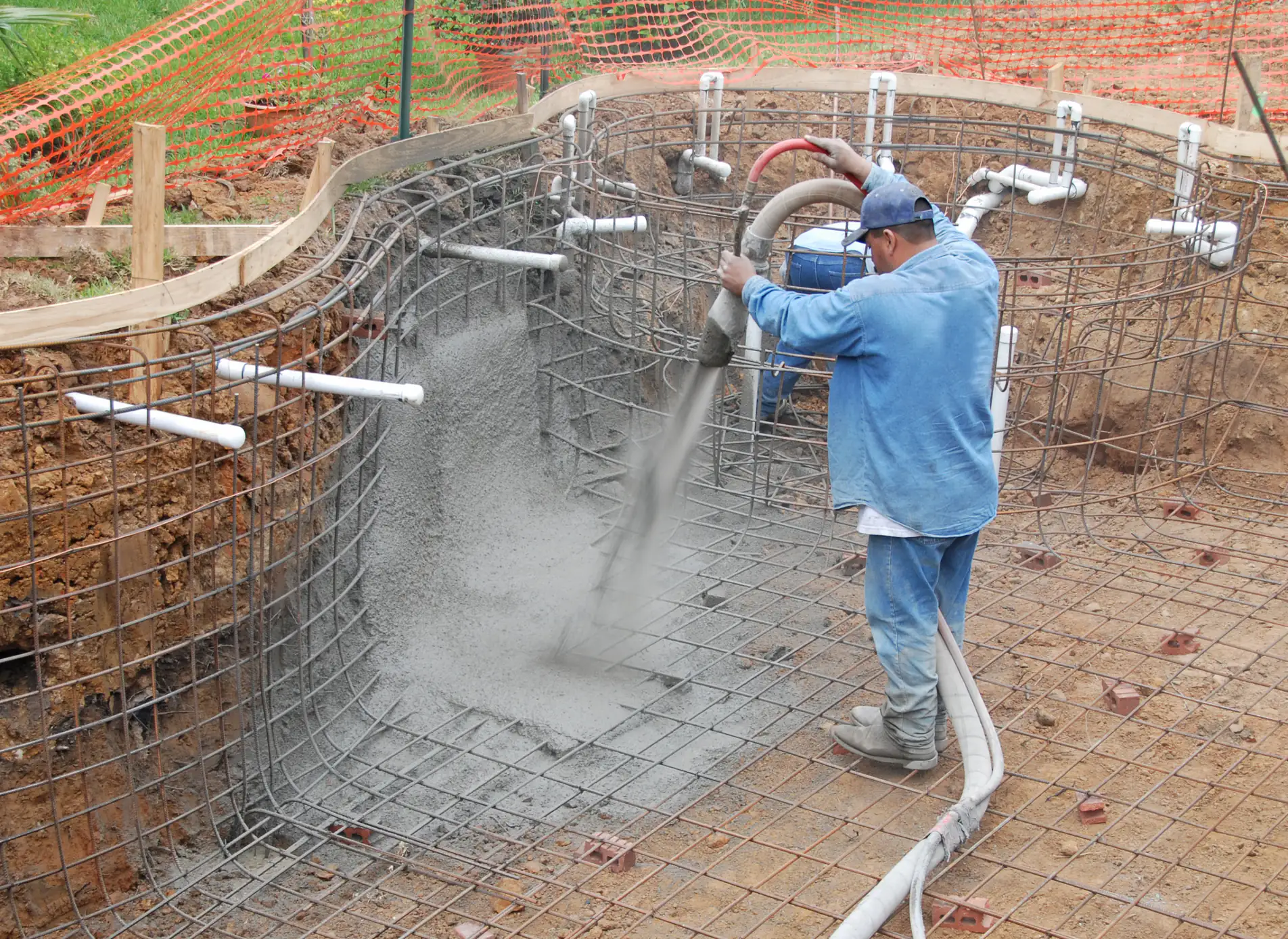
This is probably the most common concern for Thomasville homeowners who’ve done any research and it’s a legitimate one. The Red Hills region has expansive red clay soil that absorbs moisture and swells when it rains, then contracts as it dries out. That soil movement is real, and it does put stress on inground structures if they weren’t built to handle it.
The key word there is “built.” Cracking in gunite pools is almost always a construction failure, not a material failure. When a builder uses the correct rebar density, applies the shell at the proper thickness, and allows adequate cure time before finishing the pool is engineered to flex with normal soil movement rather than fracture from it. The builders whose pools crack in South Georgia clay are the ones who rushed the cure, went too thin on the shell, or used rebar spacing designed for a different soil profile entirely. A gunite pool built specifically for the ground it’s going into, by a team that has worked in this region, doesn’t have that problem.
Thomasville has its own dedicated swimming pool permit category it’s listed separately under Article X of the City’s Municipal Code, alongside residential, electrical, and plumbing permits. You’ll need a building permit for the pool itself and an electrical permit that covers bonding and grounding to the 2020 National Electrical Code standard, including Article 680, which governs electrical safety specifically for swimming pools. Both permits require inspections at multiple stages of construction.
If your property is outside city limits in unincorporated Thomas County, permitting runs through Thomas County Inspections and Planning instead of the City Building Department. The county requires that permits be pulled by a state-licensed contractor who is registered with the county office not the homeowner. We handle the complete permit process for both jurisdictions, including scheduling all required inspections, without the homeowner managing any of it.
For a custom gunite pool in Thomasville and Thomas County, you’re realistically looking at a range of $75,000 to $150,000 depending on size, shape, depth, features, and the complexity of the site. Larger estate-scale properties along the Highway 319 corridor or in the Red Hills plantation area may run toward the higher end of that range, particularly when the design includes water features, custom decking, or commercial-grade equipment.
The Georgia market for gunite construction typically lands in the $75,000 to $150,000 window for a complete, finished pool, factoring in permitting, soil conditions, and the full in-house build model. Annual maintenance after the build runs around $2,700 to $4,000 depending on pool size and equipment. What you’re not paying for, with a properly built gunite pool, is frequent resurfacing a quality shell should go 10 to 15 years before that’s needed, not the 3 to 7 year cycle that poorly built pools produce.
A realistic timeline for a complete custom gunite pool in Thomasville from permit application to final inspection is 3 to 6 months. That range accounts for the City of Thomasville’s permit review process, required inspections at multiple construction phases, excavation and rebar placement, gunite shell application and cure time, plumbing and electrical rough-in, surface finishing, and decking.
The cure time on a gunite shell is not something you can rush without creating long-term problems. The concrete needs adequate time to reach full structural strength before the surface finish goes on and in Thomas County’s humid subtropical climate, that process has to be managed carefully, especially during the summer months when heat and humidity can affect how concrete cures. Builders who quote 8 to 12 weeks are typically not accounting for permitting time or proper cure cycles. If you want to have your pool ready for summer, the smartest move is to start the process in fall or early winter permit queues are shorter, crews have more availability, and the build timeline works in your favor.
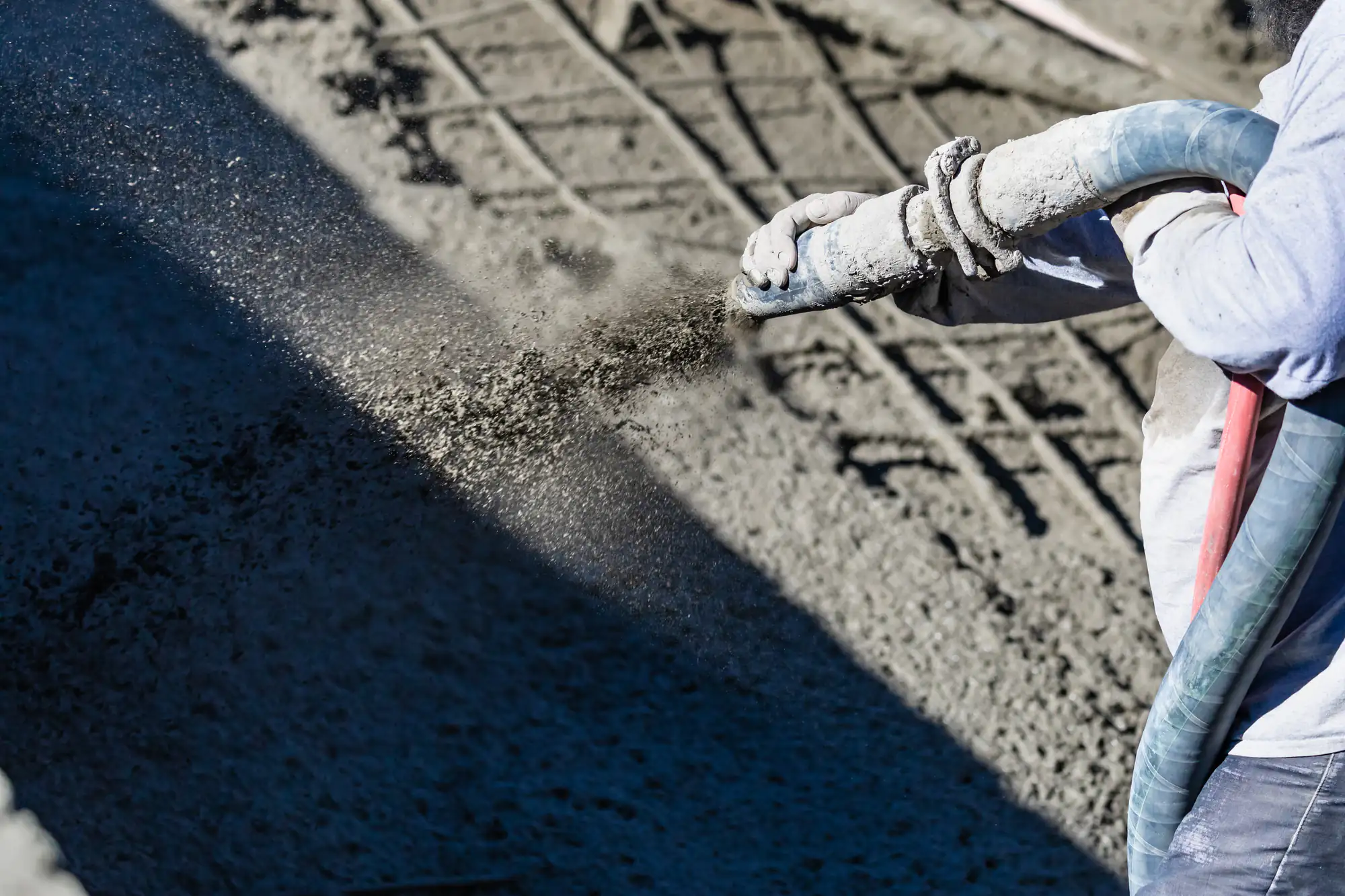
Gunite and shotcrete are both pneumatically applied concrete they’re mixed and sprayed through a hose under pressure, which is what makes them ideal for building custom pool shells in place. The difference is in how the concrete is mixed before it’s applied. With gunite, dry concrete mix is combined with water at the nozzle as it’s sprayed. With shotcrete, the concrete is pre-mixed with water before it enters the hose. Both produce a structurally sound, durable shell when applied correctly by an experienced crew.
In practical terms, the material difference matters less than the applicator. A skilled crew using either method will produce a shell that performs the same way over time. What matters is shell thickness, rebar placement, cure management, and the experience of the team doing the work not which label is on the bag. We use both methods depending on the specific project requirements, and the choice is made based on what’s right for your site and design, not what’s faster or cheaper to apply.
Yes. We build throughout Thomas County, including properties in unincorporated areas outside Thomasville city limits. That includes larger residential lots, estate-scale properties along the Highway 319 corridor toward Pebble Hill Plantation, and rural acreage in the Red Hills region where the terrain and soil conditions require more site-specific planning than a standard residential build.
For properties outside city limits, permitting runs through Thomas County Inspections and Planning rather than the City of Thomasville Building Department, and the county has its own registration requirements for licensed contractors. We are a state-licensed contractor and handle the Thomas County permit process directly including all required inspections the same way we handle city permits. If you’re on a larger property and wondering whether your site presents any particular challenges for gunite construction, a site evaluation is the right first step. That conversation is straightforward, and it gives you real answers about what your specific property requires before any commitments are made.