
Hear from Our Customers
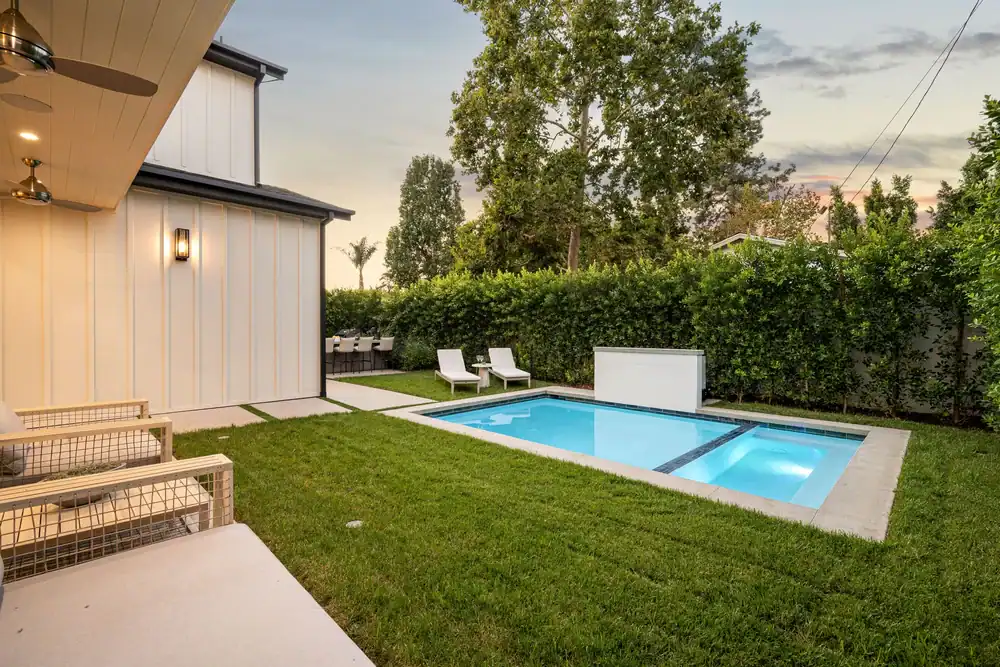
You’re not just adding a pool. You’re creating the spot where your kids will beg to stay home on summer weekends instead of asking to go somewhere else.
The right inground pool installation turns your property into the gathering place—the house where family shows up for holidays and friends ask if they can bring their kids over on Saturday. That’s what happens when the design fits your lot, the construction handles Georgia’s soil movement, and the finished product looks like it was always meant to be there.
Most homeowners in Nicholls and the surrounding Douglas County area see about a 7% increase in property value with a professionally installed concrete pool. But the real return is in how you’ll actually use your backyard instead of just mowing it every week.
We’ve been building inground cement pools in this area since before most of the new subdivisions existed. That’s 30+ years of learning how Georgia soil behaves, which permits Douglas County actually requires, and what construction methods hold up when the ground shifts.
We’re a family-owned operation, which means when you call, you’re talking to someone who actually works on the projects. No call center. No runaround. We handle every pool like it’s going in our own yard because our reputation in this community depends on it.
Licensed, insured, and a member of the Douglas-Coffee County Chamber of Commerce. We’re not the biggest pool company you’ll find, but we’re the one that’ll still answer your calls five years from now.
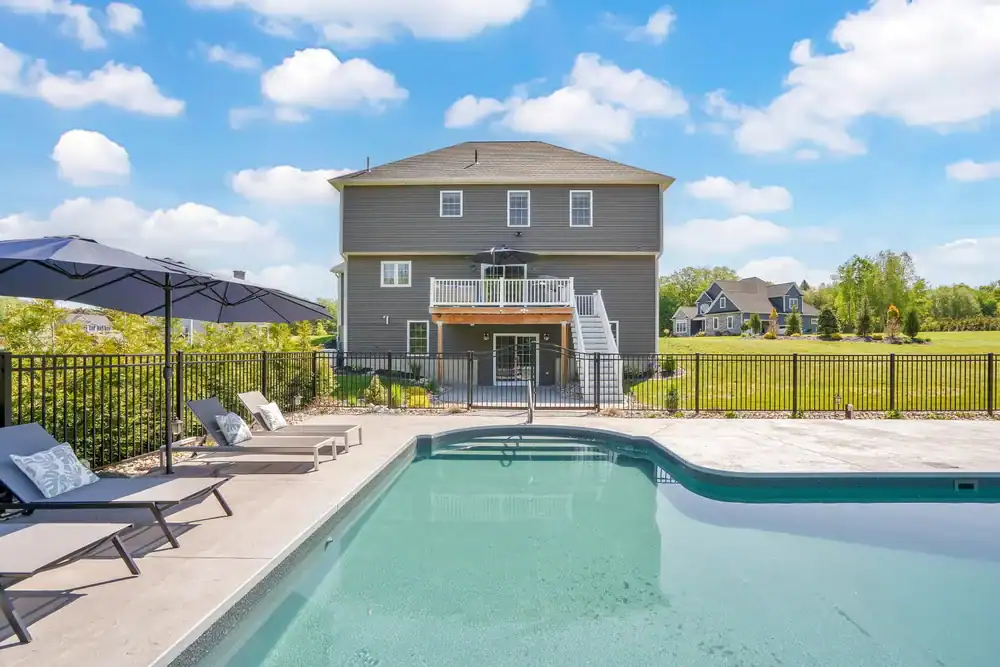
First, we come out to look at your property. Not just measurements—we’re checking drainage, access for equipment, soil conditions, and how the pool will fit with your house and lot lines.
Then we handle the permits. Georgia building codes and Douglas County requirements aren’t simple, but we’ve done this enough times that we know exactly what the building department needs to see. You don’t have to figure out International Swimming Pool and Spa Code compliance or safety barrier regulations—that’s on us.
Once permits clear, excavation starts. We dig, set the steel framework, and shoot the concrete (gunite or shotcrete depending on your specific project). This is where concrete construction makes the difference—it’s engineered to handle soil movement that would crack other pool types. Plumbing, electrical, filtration systems, and finishing work come next.
Timeline runs about 8 to 12 weeks depending on weather. Georgia storms can slow things down, but we’ll keep you updated the whole way through. When we’re done, your yard is cleaned up and you’ve got a pool that’s built to last decades, not just look good for the first summer.
Ready to get started?
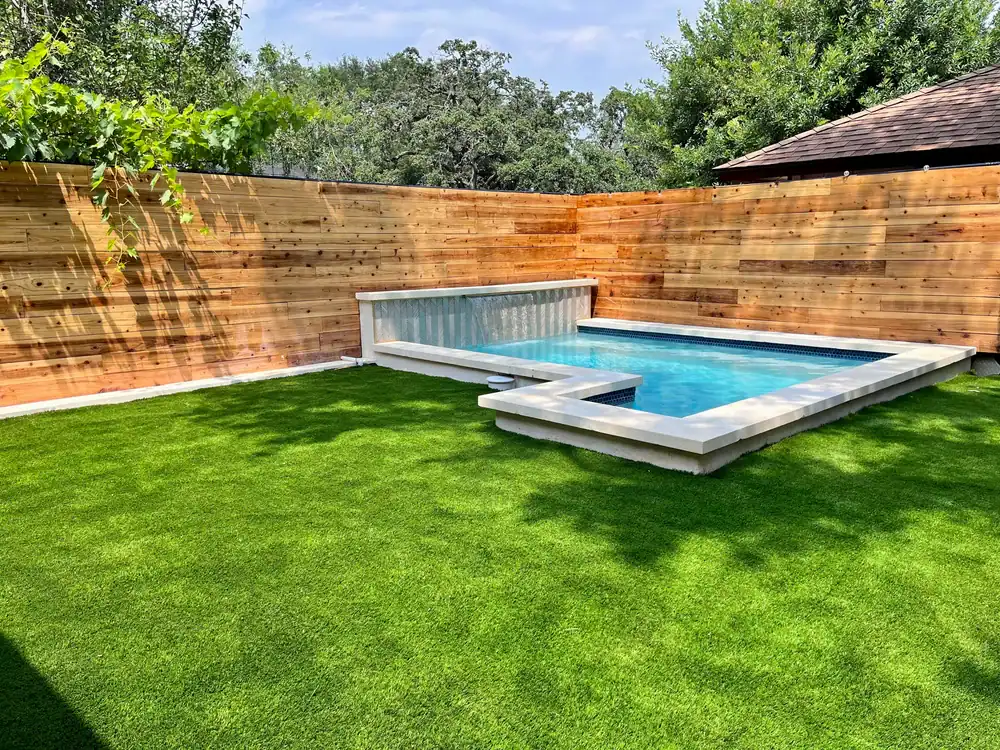
Concrete pools—whether gunite or shotcrete—are the only type that can truly be custom-shaped to your lot. Fiberglass comes in pre-made shells. Vinyl needs a frame. Concrete gets formed on-site to fit your space, your style, and your budget.
In Nicholls and Douglas County, soil conditions vary. Some areas have clay. Some have sand. Some have a mix that shifts seasonally. Concrete construction accounts for that with proper engineering and steel reinforcement. It’s why you see concrete pools from the 90s still going strong while other types need replacement.
You also get unlimited design options. Want a beach entry? Integrated spa? Swim-up bar or built-in seating? Concrete makes it possible. And because we’re local to Douglas County, we know which designs work best with Georgia’s extended warm season—you’ll get more months of use than you would up north.
We handle the full scope: site evaluation, custom design, excavation, steel and concrete work, plumbing, electrical, filtration, decking, and cleanup. You’re not coordinating five different contractors. It’s one team, one timeline, one point of contact.
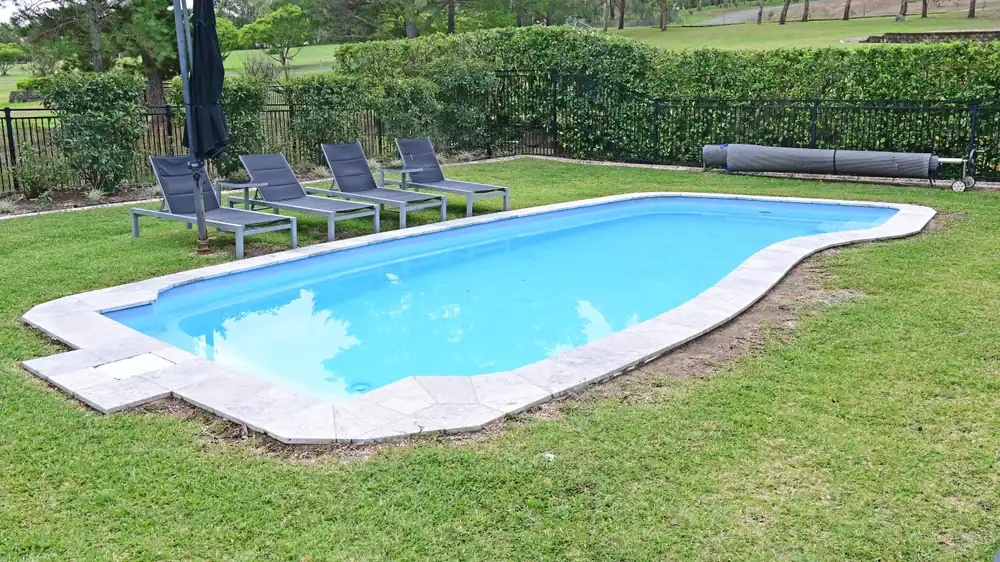
Concrete inground pools in the Douglas County area typically start around $50,000 and go up depending on size, features, and site conditions. A basic rectangular pool with standard finishes sits at the lower end. Add custom shapes, integrated spas, specialty tile, or complex decking and you’re looking at $70,000 to $100,000+.
Your specific cost depends on your lot. If we need to remove trees, deal with challenging access, or handle significant grading, that affects the number. Same goes for upgrades like heating systems, automation, or lighting packages.
We give free estimates after looking at your property. That way you get an actual number based on your situation, not a range pulled from the internet that doesn’t account for Georgia soil conditions or local permit costs.
Both are concrete. The difference is when the water gets added to the mix.
Gunite is dry concrete mix that gets water added at the nozzle when it’s sprayed. Shotcrete is pre-mixed with water before it goes through the hose. Both create a strong, durable shell when applied correctly by experienced crews.
In practical terms for your project, the choice often comes down to the specific job conditions and crew expertise. Some contractors prefer one method over the other. What matters more than the specific technique is proper steel reinforcement, correct mix ratios, and experienced application—all of which we’ve been doing in Douglas County for 30+ years.
Either way, you’re getting concrete construction that’s engineered for Georgia soil and built to handle ground movement better than fiberglass or vinyl liner pools.
Plan on 8 to 12 weeks from permit approval to finished pool. That’s the realistic timeline for custom concrete construction in Georgia.
Weather is the biggest variable. Summer thunderstorms can delay concrete pours or excavation work. We can’t shoot concrete in the rain, and we won’t dig if the ground is too saturated. Most contractors who promise 6 weeks are either cutting corners or setting you up for disappointment.
Permit approval adds time on the front end—usually 2 to 4 weeks depending on how busy the Douglas County building department is. We handle that process, but it’s not something we control the speed of.
If you’re hoping to swim by Memorial Day, you need to start the conversation in February or March. If you’re planning for next summer, fall and winter are actually great times to get on the schedule before the spring rush hits.
Yes. Douglas County requires building permits for inground pool construction, and you’ll need to meet Georgia’s building codes plus the International Swimming Pool and Spa Code.
The permit process covers structural plans, electrical work, plumbing, and safety barriers (fencing requirements to prevent unsupervised access, especially for kids). The county wants to see site plans, setback measurements, and proof that the construction meets engineering standards.
We handle the entire permit process. That means preparing the applications, submitting site plans, coordinating inspections, and making sure everything passes the first time. You don’t need to figure out what the building department requires or take time off work to visit their office.
Skipping permits isn’t worth it. If you ever sell your house, an unpermitted pool creates problems during the sale. Insurance companies can also deny claims if they find out the pool wasn’t permitted. It’s not a shortcut—it’s a liability.
Concrete gives you three things the other types can’t: custom shapes, long-term durability in Georgia soil, and unlimited design options.
Fiberglass pools come in pre-made shells. You’re picking from existing molds, which means your design options are limited and the pool might not fit your lot efficiently. They’re also lighter, which sounds good until Georgia clay starts shifting and the shell moves or cracks. We’ve seen it happen.
Vinyl liner pools need replacement liners every 7 to 10 years at a cost of several thousand dollars each time. The frame can also corrode or shift with soil movement. You’re saving money upfront but paying for it over the life of the pool.
Concrete construction—gunite or shotcrete—gets engineered specifically for your lot and Georgia’s soil conditions. Properly built with steel reinforcement, a concrete pool handles ground movement without cracking. The surface can be refinished if needed, but the structure itself lasts decades. You’re looking at 30+ years of use when it’s done right, and it’s the only type that adds significant resale value to your property.
A professionally installed inground pool typically increases property value by about 7% in Georgia. That’s the average, but your specific return depends on your neighborhood, the quality of the installation, and how well the pool fits your property.
In areas where pools are common and expected, you’ll see stronger returns. In neighborhoods where you’re the only house with a pool, the increase might be smaller because you’re limiting your buyer pool to people who want that feature.
The bigger value isn’t always in the appraisal—it’s in how a pool affects your property’s marketability. Homes with well-maintained pools often sell faster in the spring and summer months because buyers can visualize using it immediately. A poorly built or outdated pool, on the other hand, can actually hurt your sale because buyers see it as a liability or something they’ll need to remove.
That’s why construction quality matters. A concrete pool built to last with proper permits and professional installation is an asset. A cheap install that cracks or leaks becomes a problem you’ll have to disclose and potentially discount for when you sell.