Hear from Our Customers
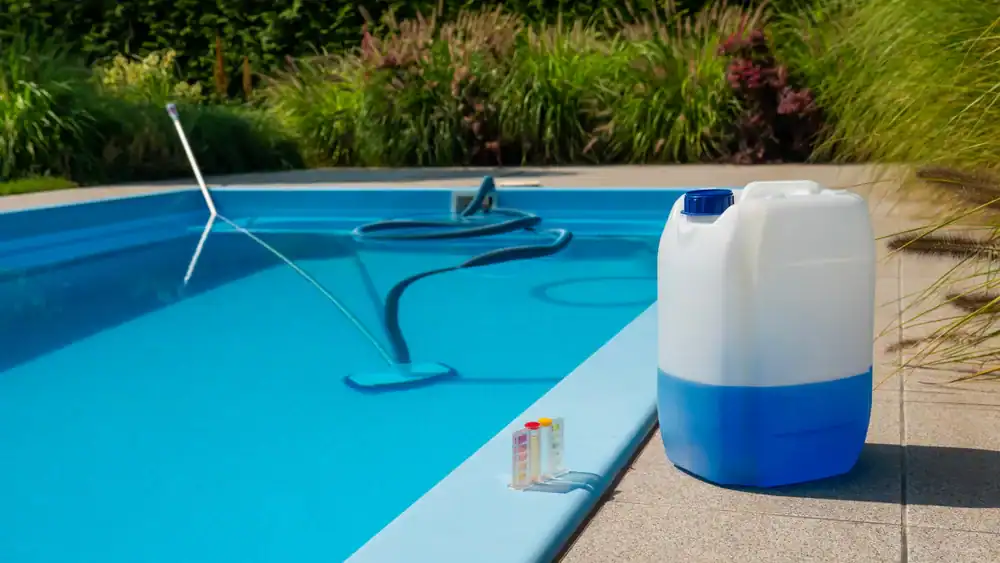
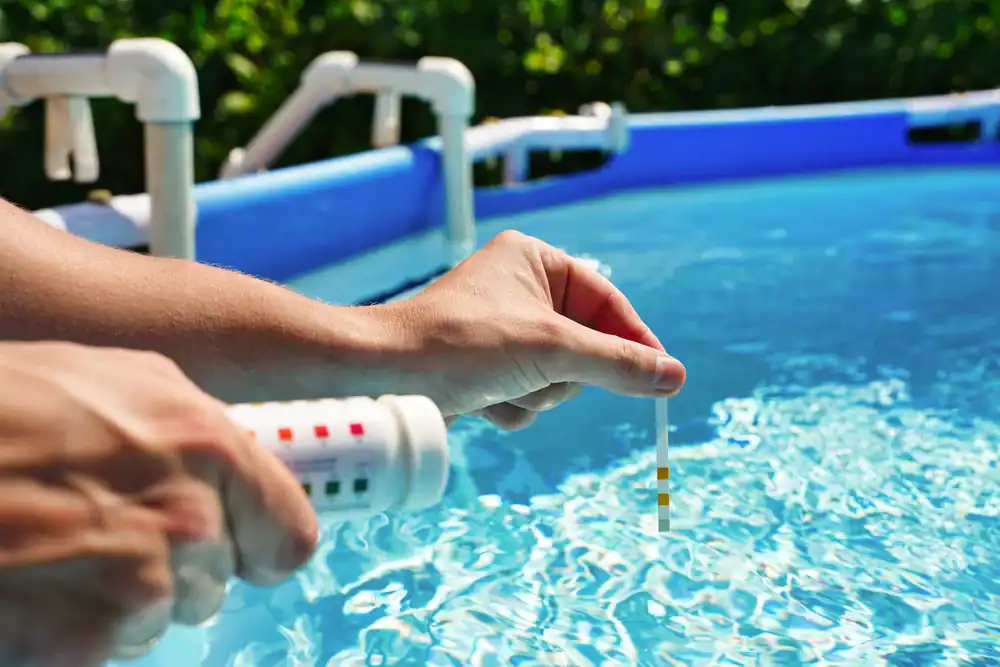
Most pool owners in Nicholls aren’t doing anything wrong they’re just working with incomplete information. Test strips give you five numbers and a color chart. What they don’t tell you is why your chlorine keeps disappearing, why your pH won’t hold, or why the water looks off even after you’ve added everything the pool store recommended. That gap between what you’re seeing and what’s actually happening is exactly where professional water testing does its job.
South Georgia’s long, oppressive summers create some of the most demanding conditions for pool chemistry anywhere in the state. UV radiation from the summer sun can burn through unprotected chlorine in under two hours. When you layer in the organic load from the longleaf pines, oaks, and wiregrass surrounding Nicholls especially during spring pollen season when that yellow-green film coats everything in sight chlorine demand spikes fast and pH becomes harder to hold. A pool that looked fine Monday morning can be on its way to a bloom by Wednesday if the chemistry drifts.
If your home uses well water to fill or top off your pool, there’s another layer most people never account for. South Georgia groundwater carries iron, manganese, and varying mineral levels that standard test strips never detect. Iron in your fill water causes rust-colored staining on pool surfaces. High mineral content throws off calcium hardness and accelerates scaling on plaster and equipment. A comprehensive professional test catches all of it and gives you a clear picture of what’s actually in your water, not just what a strip can approximate.
We’re based in Douglas 13 miles west of Nicholls on Route 32, the same road you drive to the grocery store, the county offices, and General Coffee State Park. This isn’t a franchise reaching into unfamiliar territory. We’re a Coffee County company that has been building and servicing pools in this climate, on this soil, with this water, for over three decades.
Our principals brought more than 30 years of hands-on experience to the company before we formally founded Deep Waters Pools in 2014. That means the person analyzing your water isn’t working off a training manual they’re working off real experience with real South Georgia pools. We know what well water does to a gunite surface over time. We know what a Wiregrass Region pollen season does to pool chemistry. That kind of local knowledge doesn’t come from a certification course.
We’re also licensed and insured, which matters more than it sounds when you’re letting someone handle pool chemicals on your property. No shortcuts, no surprises.
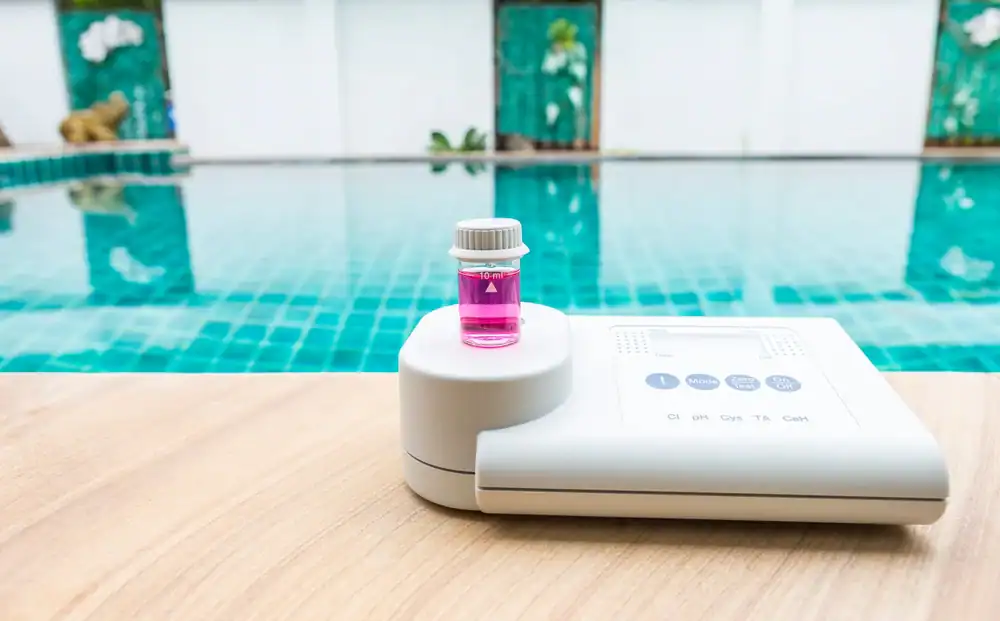
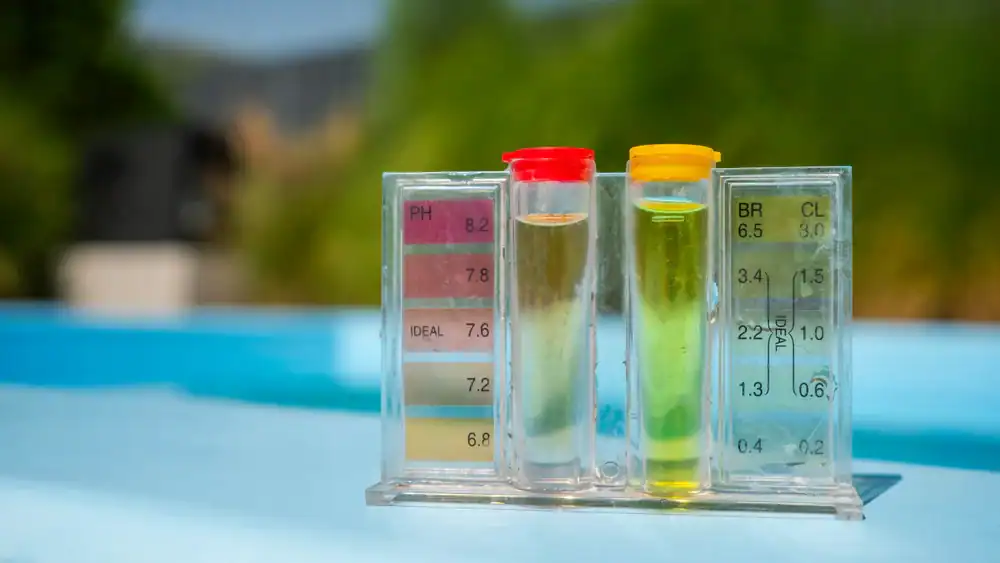
The process starts with a full digital water analysis not a test strip, not a color-match kit. We use digital testing equipment that measures your water’s chemistry with a level of precision that consumer-grade tools simply can’t match. That means accurate readings on free chlorine, total chlorine, pH, total alkalinity, calcium hardness, cyanuric acid, and critically metals like iron and copper that are common in Coffee County well water and almost never tested for with store-bought kits.
Once the analysis is complete, you get a clear explanation of what’s off and why. Not a list of products to buy. An actual explanation: your pH is climbing because of your fill water’s mineral content, your chlorine is burning off because your cyanuric acid level is too low for South Georgia’s UV exposure, your calcium hardness is in a range that’s slowly etching your plaster. That context matters because it changes how you treat the problem and whether the treatment actually sticks.
From there, we walk you through exactly what correction looks like: what needs to be adjusted, in what order, and what to watch for afterward. In a climate where a summer storm can shift your chemistry within hours of a correction, understanding the process is just as important as the fix itself. You leave the conversation knowing what happened, what was done about it, and what to watch for going forward.
Ready to get started?
Professional water testing through our company covers the full picture of what’s happening in your pool not just the basics. Free and total chlorine levels tell you how much sanitizing power you actually have, and whether combined chlorine (chloramines) are building up and causing that eye irritation and chemical smell that people often mistake for too much chlorine. pH level balancing is tested and corrected first, because chlorine loses roughly half its effectiveness when pH climbs above 7.8 a level that South Georgia’s heat and hard well water push toward constantly.
Total alkalinity is checked because it acts as the buffer that keeps pH from swinging after every rain event or bather load and Nicholls gets enough summer thunderstorms that alkalinity management isn’t optional. Calcium hardness testing tells you whether your water is on the corrosive side (quietly eating away at your plaster or grout lines) or the scaling side (depositing white mineral buildup on surfaces and inside your equipment). Cyanuric acid levels are measured to make sure your chlorine is stabilized against UV degradation especially important in a town where pools sit in full South Georgia sun for eight or more hours a day through a long summer.
Metals testing rounds out the analysis for homes on well water in the Nicholls area, where iron and manganese in groundwater are a real and common issue. If your pool has developed rust-colored or brownish staining that doesn’t respond to normal shock treatments, metals in your fill water are almost certainly the cause and it’s a problem that only shows up in a comprehensive professional test.
For most pools in the Nicholls area, professional testing at least once a month during swim season is a reasonable baseline but the honest answer is that South Georgia’s summer conditions push that number higher. When heat index values are regularly above 100°F and you’re getting afternoon thunderstorms two or three times a week, your pool chemistry can shift significantly within 24 to 48 hours of a major weather event. A storm that drops an inch of rain in an hour dilutes your chemicals, drops your pH, and introduces organic matter all at once.
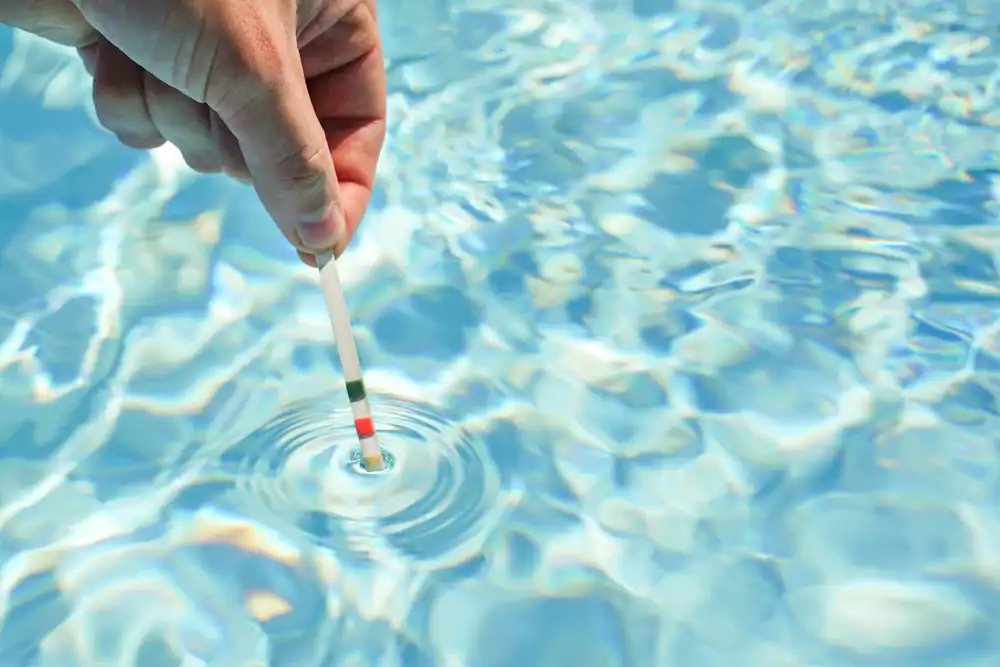
The practical approach most experienced pool owners in Coffee County settle into is professional testing at the start of the season, after any significant storm or extended period of heavy use, and any time something looks or feels off. Test strips between visits are fine for a quick check, but they’re not a substitute for digital analysis when you’re trying to diagnose a real problem. If your pool has been struggling to hold chemistry through the summer, more frequent professional testing early in the season often pays for itself by preventing the bigger issues that come from letting an imbalance run uncorrected.
Shocking a pool that has already turned green is often the right instinct, but it only works if the underlying chemistry is in the right range first. The most common reason a shock treatment fails or makes the water look worse before it looks better is that the pH is too high when you add the chlorine. Chlorine is dramatically less effective above a pH of 7.8, and in South Georgia’s heat, pH climbs fast. You can add chlorine all day and still not have a sanitized pool if the pH isn’t corrected first.
The other issue that comes up frequently in the Nicholls area is low cyanuric acid. If your stabilizer level is too low, the South Georgia sun burns through chlorine faster than you can add it especially in a pool that sits in full sun through a long summer day. The chlorine reads normal in the morning and is nearly gone by afternoon. Algae doesn’t need much of a window to get started. A professional water test identifies which of these factors is actually driving the problem, so you’re treating the cause instead of repeating the same shock cycle every few weeks.
Yes and it’s one of the most commonly overlooked issues for pool owners in rural Coffee County and the Nicholls area. Well water in South Georgia often carries elevated iron, manganese, and varying levels of calcium and magnesium. None of these show up on a standard test strip, and none of them are visible until they’ve already started causing problems.
Iron in fill water is the most immediate concern. It causes rust-colored or brownish staining on pool surfaces staining that often gets misdiagnosed as a chlorine or algae problem and treated with products that don’t address the actual cause. High calcium from hard well water accelerates scaling on plaster surfaces and inside pump and filter equipment over time. Manganese can cause black or purple staining that’s particularly stubborn to remove. A comprehensive professional water test that includes metals analysis tells you exactly what’s in your fill water and what it’s doing to your pool, so you can treat it correctly from the start rather than chasing symptoms that keep coming back.
Calcium hardness is the measure of how much dissolved calcium is in your pool water, and it matters because water is always trying to find chemical equilibrium. If your calcium hardness is too low, the water becomes corrosive it pulls calcium directly from your pool’s plaster, grout lines, and concrete surfaces to satisfy that equilibrium. Over time, this causes etching, roughness, and surface deterioration that’s expensive to repair. If it’s too high, the water deposits calcium as scale on your surfaces, inside your pipes, and on your equipment the white, chalky buildup you sometimes see around jets and on tile lines.
For pools in the Nicholls area, calcium hardness is particularly relevant because of how many homes rely on well water with naturally high mineral content. It’s also affected by evaporation as water evaporates in South Georgia’s summer heat, calcium concentrates in what’s left behind, gradually pushing hardness levels higher. Keeping calcium hardness in the right range (generally 200–400 ppm for plaster pools) protects your pool’s surface from both directions. It’s one of the parameters that a professional test catches early, before the damage shows up visually.
It does and in South Georgia, this matters more than it would in most other parts of the country. Nicholls and the surrounding Coffee County area see significant rainfall during summer, and a single afternoon thunderstorm can introduce enough water volume to meaningfully dilute your pool’s chemical levels. Rainwater is naturally acidic, which pulls your pH down and throws off your total alkalinity. Lower alkalinity makes pH unstable, which means it swings more dramatically with every subsequent bather load, splash-out, or chemical addition.
Beyond dilution and pH, rain events wash organic material into your pool pollen, dirt, leaves, and debris from the wiregrass and pine landscape surrounding Nicholls. That organic load spikes chlorine demand, sometimes dramatically. A pool that was balanced before a storm may be sitting at a fraction of its normal chlorine level within hours of heavy rain, which creates exactly the conditions algae needs to get started. Testing after significant rain events especially during peak summer when temperatures are already pushing chemistry hard is one of the most practical habits a South Georgia pool owner can build.
Pool store testing is better than nothing, but it’s worth understanding what it is and what it isn’t. Most pool store tests use reagent-based or strip-based methods that are reasonably accurate for basic parameters free chlorine, pH, and alkalinity but they have real limitations in precision, especially at the edges of normal ranges where problems actually start. More importantly, pool store recommendations are shaped by what’s on the shelf. The advice you get after a free test is almost always followed by a list of products to purchase, and those recommendations aren’t always the most direct path to fixing the actual problem.
Professional digital water analysis measures your pool’s chemistry with significantly higher precision and covers parameters that most pool store tests skip entirely cyanuric acid, calcium hardness, total dissolved solids, and metals like iron and copper that are common in Coffee County well water. The difference in the conversation afterward is also meaningful: instead of a printout and a product recommendation, you get an explanation of what’s actually happening in your water, why it’s happening, and what the most efficient correction looks like. For a Nicholls homeowner who has already spent money on chemicals that didn’t solve the problem, that clarity is worth a lot.