
Hear from Our Customers
McRae-Helena gets close to nine months of real, usable swim weather every year. That’s not a statistic that’s Tuesday evenings in May, full weekends in September, and kids outside until dark in October. A pool that’s built right handles all of it without constant repairs, fading surfaces, or plumbing that gives out after a few seasons.
The sandy coastal plain soils in Telfair County behave differently than the red clay up in North Georgia. Without proper excavation management and the right backfill approach, you can end up with drainage problems that outlast the construction itself. The Little Ocmulgee River runs just northeast of McRae-Helena, and Sugar Creek cuts along the southwest edge drainage awareness in this part of Georgia isn’t optional. It’s built into how we engineer a quality pool here.
A gunite pool also fits your yard, not the other way around. Unlike fiberglass shells that come in fixed shapes and sizes, gunite is built from scratch on your property. Whether your lot has a slope, limited access, or an unusual shape, the design works around what you actually have not what a manufacturer decided to produce.
We’re based in Douglas about 24 miles southeast of McRae-Helena on US 23/341. This isn’t a company sending crews down from Atlanta. We’re a neighbor with a local reputation that depends on every project we finish in this region.
We started Deep Waters Pools in 2014 for a specific reason: our founder spent over 30 years in pool construction watching South Georgia families get taken advantage of by contractors who overpromised, collected deposits, and disappeared or delivered sloppy work with no accountability. That’s not a backstory for a brochure it’s the reason we operate the way we do.
Every project is managed by the same team from first shovel to final inspection. When you have a question, you call one number. When something needs to be addressed mid-build, there’s one person responsible. In a community like McRae-Helena, where word travels fast and trust takes time to earn, that model matters more than any sales pitch.
It starts with a site evaluation before anything is moved or dug. We assess your soil conditions, drainage patterns, utility locations, and equipment access before a single machine shows up. In McRae-Helena’s sandy coastal plain soils, that evaluation isn’t a formality it directly shapes how excavation is managed and how the pool is engineered to drain and perform long-term.
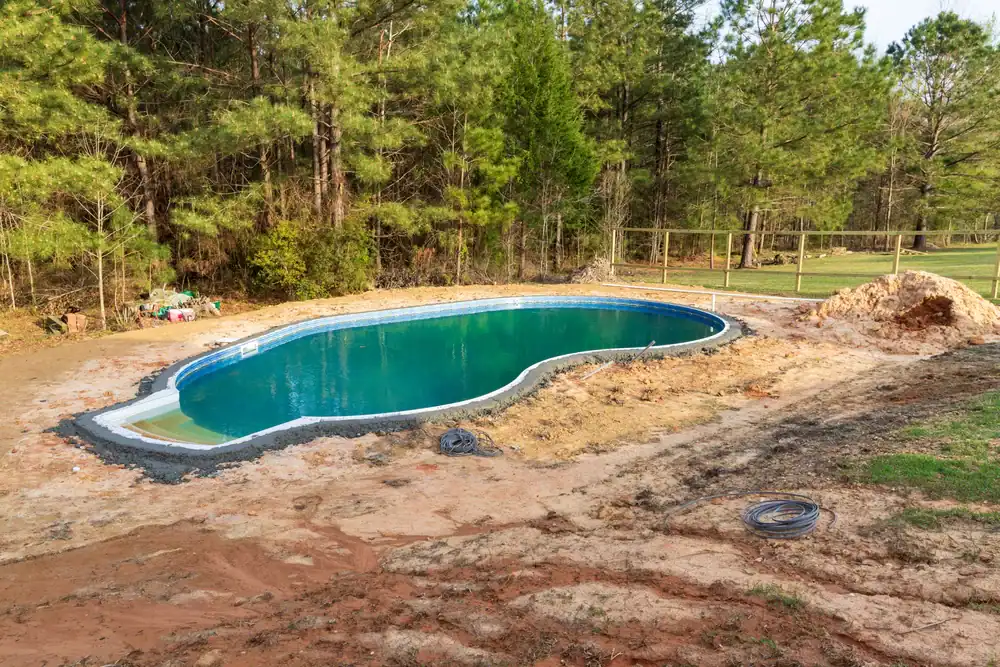
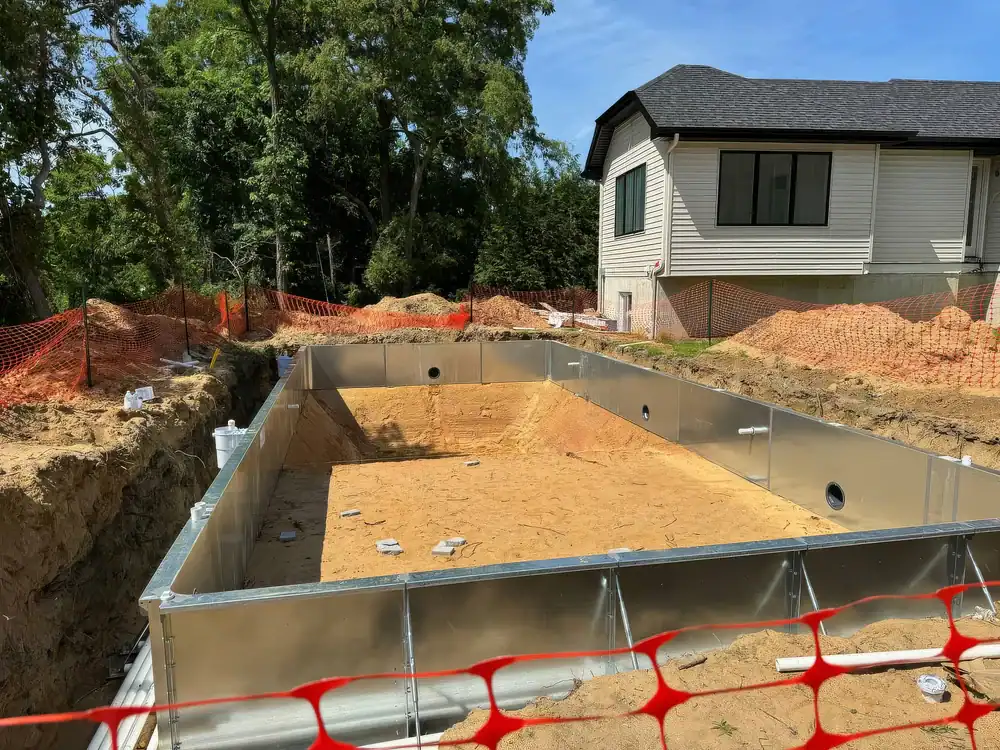
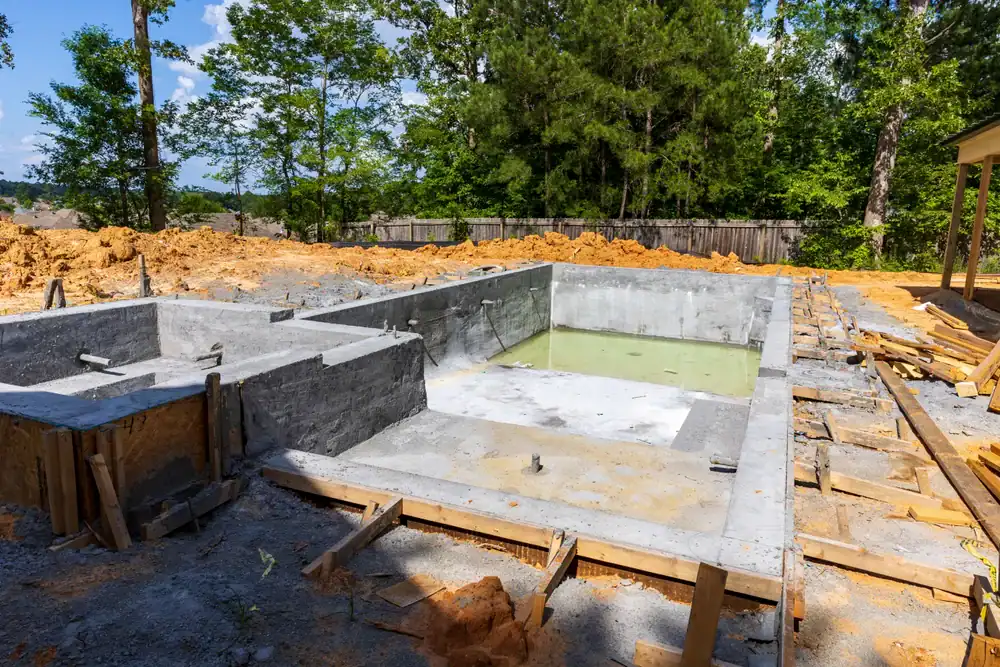
Once the site is cleared, excavation typically takes one to three days. After that, the rebar cage goes in and gets inspected before gunite is applied that inspection is required by Georgia building code and happens before anything gets covered. Gunite application takes one to two days. Swimming pool plumbing and electrical run concurrently over the following week or two, and pool deck installation wraps the project in three to five days once the shell is cured. Start to finish, most builds run six to eight weeks from excavation to water.
We handle every permit in-house the building permit, the electrical permit, and every required inspection along the way. McRae-Helena operates under its own municipal permitting structure as a consolidated city, and navigating both city and county offices is part of what you’re hiring us for. You don’t track paperwork or schedule inspectors. That’s handled. When the final certificate is issued, your pool is fully documented and legally compliant which matters not just today, but at every future property transaction.
Ready to get started?
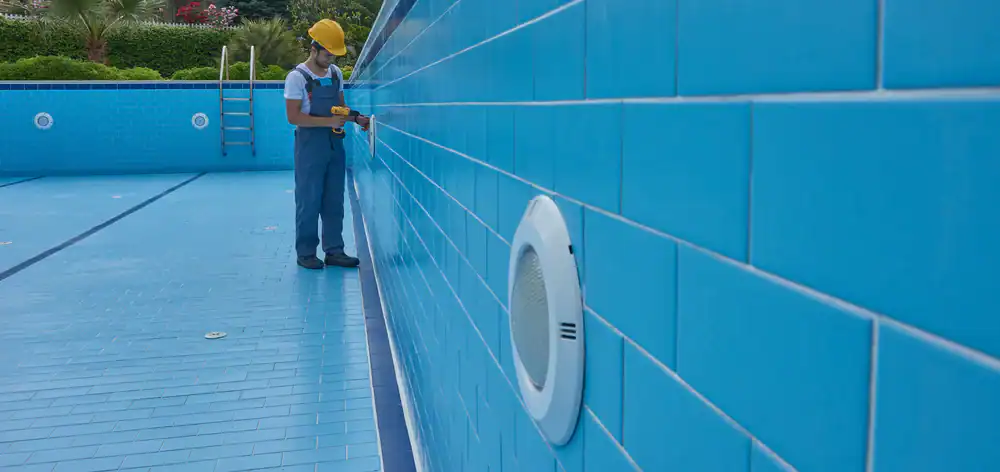
A Deep Waters pool build covers the full scope site evaluation, excavation, rebar and gunite shell, all swimming pool plumbing, electrical bonding and grounding per NEC Article 680, equipment installation, and pool deck installation. There are no handoffs to subcontractors who don’t know your project. The same crew that digs the hole installs the plumbing and finishes the deck.
Deck material options include brushed concrete, pavers, and travertine. In McRae-Helena’s climate hot, humid summers with significant seasonal rainfall deck drainage slope and surface texture aren’t just aesthetic decisions. They affect how the deck performs year after year and how safe the surface is when wet. The right material for your yard depends on your drainage situation, your budget, and how you plan to use the space. That conversation happens before anything is quoted.
Every pool we build is permitted, inspected, and code-compliant under Georgia state requirements and McRae-Helena’s local ordinances. That includes barrier fencing compliance, anti-entrapment drain covers under the Virginia Graeme Baker Pool and Spa Safety Act, and proper bonding and grounding on all electrical systems. A quality gunite pool built to these standards adds an estimated five to eight percent to your property’s value and unlike an unpermitted build, it won’t create problems when it’s time to sell.
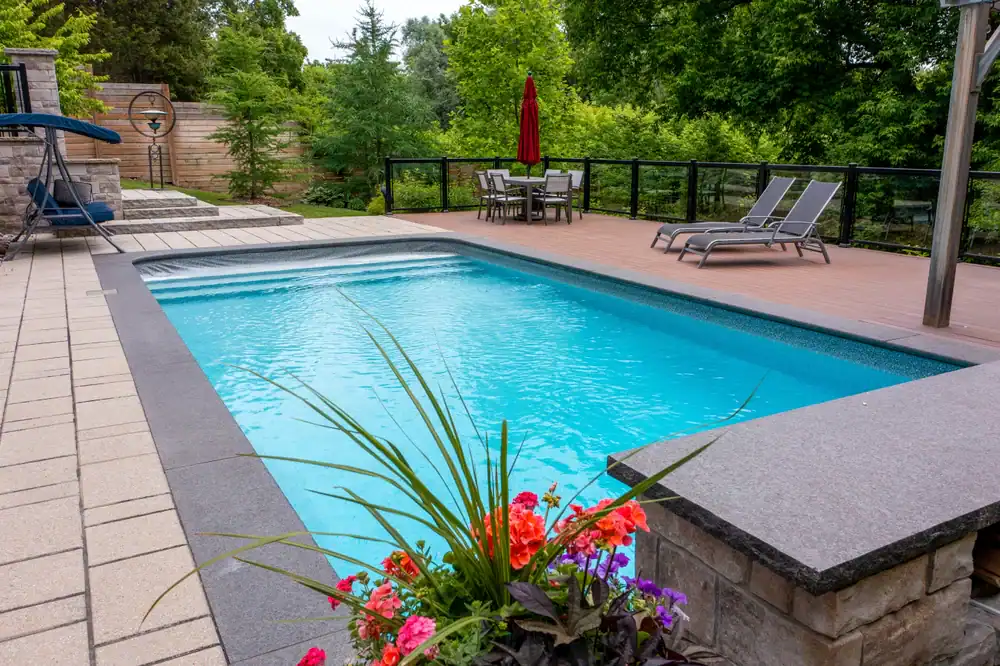
Most residential gunite pool builds in the McRae-Helena area run between $55,000 and $100,000, depending on size, shape, features, and deck material. Custom designs with water features, upgraded finishes, or larger footprints can push past $150,000. That range is wide because no two properties are the same a straightforward rectangle on a flat lot with a brushed concrete deck sits at a very different price point than a freeform design with pavers and a sun shelf on a sloped yard.
The most useful thing you can do early in the process is have a site evaluation done before you get attached to a specific number. Telfair County’s sandy coastal plain soils and drainage conditions can affect excavation complexity and engineering requirements in ways that a phone quote won’t capture. We give you a detailed scope before anything is finalized, so the number you’re quoted is the number you’re building toward not a starting point for surprises.
For a standard residential gunite build, the timeline from excavation to water runs six to eight weeks. Excavation takes one to three days. Gunite application takes one to two days after the rebar cage passes inspection. Plumbing and electrical run concurrently over the following week or two. Deck installation wraps the project in three to five days once the shell has cured properly.
That timeline assumes permits are already pulled and inspections are scheduled in advance which is exactly how we manage every project. Delays almost always come from permit gaps or subcontractor scheduling conflicts, neither of which apply here. McRae-Helena’s mild winters also mean construction can move forward in most months, so if you’re planning ahead for next spring’s swim season, starting the conversation in the fall puts you in a strong position.
Yes all residential inground pool construction in Georgia requires permits before any excavation or land disturbance begins. In McRae-Helena specifically, you’re working within a consolidated city that has its own municipal permitting structure, which means the process can involve coordination between city and county offices depending on where your property sits. That’s not complicated if you know the process, but it’s not something most homeowners want to navigate on their own.
We handle all of it. That means pulling the building permit, the separate electrical permit, and scheduling every required inspection including the pre-gunite rebar inspection that Georgia building code requires before the shell is applied. When the project is complete, you receive a final certificate of occupancy that documents the pool as fully code-compliant. That documentation protects you legally and matters at resale. You won’t be chasing paperwork or wondering if something was missed.
Fiberglass pools are manufactured in a factory as a pre-formed shell, then dropped into an excavated hole. They’re faster to install and cost less upfront, but they come in fixed shapes and sizes and if your lot in McRae-Helena has an unusual shape, limited equipment access, a drainage corridor nearby, or any other site-specific constraint, you may be working around the shell rather than building around your property.
Gunite is built on-site from scratch. The shape, depth, and size are determined by your yard and your design, not by what a manufacturer produced. It’s also significantly more durable a properly built gunite pool lasts 25 to 30-plus years, compared to 15 to 25 years for fiberglass before major repairs become necessary. Given that McRae-Helena’s swim season runs nearly nine months a year, a pool that gets heavy use benefits from the structural integrity gunite provides. The higher upfront cost reflects a longer lifespan and fewer major repair cycles over time.
Start with the basics: verify that the contractor is licensed and insured under Georgia state requirements, and ask for proof of both before signing anything. General liability insurance and workers’ compensation coverage are non-negotiable on a project this size. A contractor who hesitates to provide that documentation isn’t someone you want working on a $60,000-plus project on your property.
Beyond licensing, ask specifically who will be managing and executing the build. In smaller markets like McRae-Helena, it’s common for a contractor to sell the project and then hand it to a series of subcontractors who don’t communicate with each other. That’s where timelines blow up and accountability disappears. Ask whether the same team handles excavation, plumbing, electrical, and decking or whether those are being farmed out. Ask how permits are managed and who schedules inspections. The answers will tell you quickly whether you’re dealing with a builder or a middleman.
It’s actually one of the better times. McRae-Helena’s winters are mild hard freezes are rare and brief which means construction can move forward in most months without significant weather delays. Contractors who are busy through the spring and summer often have more availability in the fall and winter, which can mean better scheduling and more focused project management.
More practically, a pool contracted in October or November can realistically be completed and filled by March or April right at the start of South Georgia’s swim season. Families who wait until April to start the conversation are often looking at a July or August completion, which means missing the first half of the season they were planning for. If you’re serious about swimming next spring, the time to have the site evaluation and get a detailed quote is now, not when everyone else in Telfair County is making the same call.