
Hear from Our Customers
Most pool problems aren’t random. They’re the result of chemistry that drifted slowly, quietly until the water turned green, the equipment started struggling, or the surface started showing wear. A precise water test tells you exactly where things stand before any of that happens.
In McRae-Helena, your pool is dealing with a lot. Summer highs push into the low 90s, and that kind of UV exposure burns through unprotected chlorine faster than most people realize. Add the pollen load from the pine and sand hill landscape surrounding Little Ocmulgee State Park just two miles north, plus the thunderstorms that roll through and dilute your chemicals in a single afternoon and you’ve got a pool that needs more than a test strip and a guess.
The McRae Water System has also flagged contaminants above EPA health guidelines, including PFAS concerns. That matters because the water you’re filling and topping off your pool with already has its own chemical profile. When you know what’s actually in your water calcium hardness, total alkalinity, cyanuric acid levels, chlorine balance you stop throwing chemicals at a problem and start solving it. That’s what our professional pool chemistry analysis gives you.
We’re based in Douglas, GA about 24 miles southeast of McRae-Helena along US 341, the same corridor that connects your community to Hazlehurst and the wider South Georgia region. This isn’t a metro company dispatching someone who’s never driven through Telfair County. We’ve been building and servicing pools here for over three decades, which means we know McRae-Helena and the surrounding area because we’ve worked in it.
Our team brings more than 30 years of hands-on experience in gunite and shotcrete pool construction the pool type most common in South Georgia’s sandy terrain. That background matters for water testing because we understand what’s at stake when calcium hardness is off, when stabilizer is low, or when alkalinity drifts. We’ve seen the surface damage, the equipment failures, and the expensive repairs that follow when chemistry goes unchecked. We’re licensed, insured, and built on a foundation of real field experience not a franchise manual.
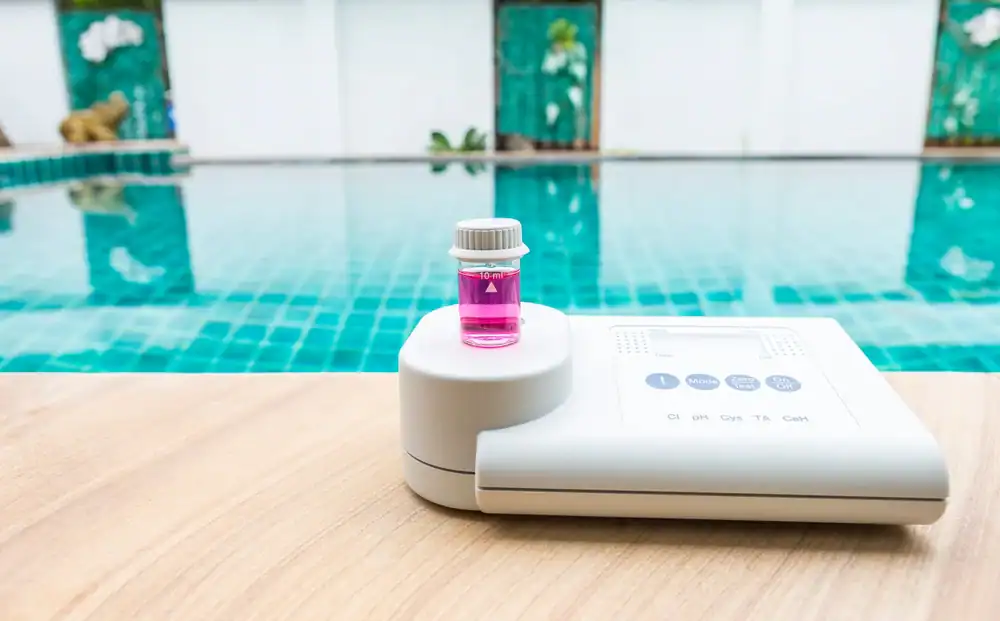
It starts with a water sample and a digital analysis not a color-matching test strip, not a free pool store test designed to sell you something. Our advanced digital water analysis measures every critical parameter to a level of precision that strips simply can’t match: free chlorine, total chlorine, pH, total alkalinity, calcium hardness, cyanuric acid, and metals. Each one tells a different part of the story about what’s happening in your pool right now.
Once the results are in, you get a clear picture of what’s off and why not a printout and a shrug. In McRae-Helena’s climate, that conversation often includes stabilizer levels, because cyanuric acid is what protects your chlorine from being destroyed by South Georgia’s intense summer sun. It also typically includes a look at calcium hardness, since gunite and shotcrete pools in this region’s sandy soil have specific requirements too low and the water starts pulling calcium directly from your plaster finish.
From there, the correction is precise. You’re not adding a little of everything and hoping. You’re adjusting specific parameters based on actual readings, which means the fix holds longer and costs less than the cycle of guessing and retreating that most homeowners end up stuck in.
Ready to get started?
Pool chemistry isn’t a single number it’s a system. When pH drifts above 7.8, your chlorine loses roughly half its sanitizing power even if the reading looks fine. When total alkalinity is unstable, pH swings become unpredictable and harder to correct. When calcium hardness is too low, your plaster surface pays the price. These parameters interact, and a professional water test looks at all of them together.
For McRae-Helena pool owners, a few parameters come up consistently. Cyanuric acid the stabilizer that acts as sunscreen for your chlorine is frequently low in pools that are losing sanitizer faster than expected during summer. Total alkalinity checks matter especially after the heavy rain events that move through Telfair County during storm season, since rainfall dilutes and shifts your water chemistry quickly. And calcium hardness testing is particularly relevant here given the gunite and shotcrete pools common in this area surfaces that are sensitive to water that’s either too aggressive or too saturated.
The only local pool supply option in McRae-Helena is Register’s Pool Supplies on East Avenue, open three hours a day. That’s useful for picking up chemicals but it’s not the same as an independent professional analysis from us that tells you which chemicals you actually need, in what amounts, and why. That’s the difference between treating symptoms and solving the problem.
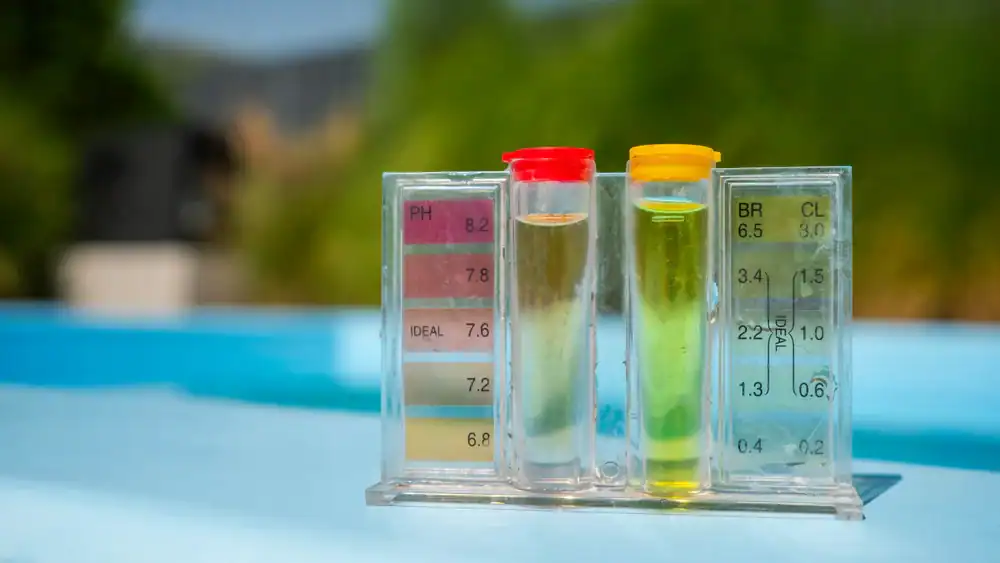
For most pool owners in McRae-Helena, a professional water test at the start of swim season is the baseline but realistically, you should be testing more frequently than that during summer. The combination of South Georgia heat, intense UV exposure, and the heavy thunderstorms that move through Telfair County from June through September creates conditions where your chemistry can shift significantly within 24 to 48 hours of a major rain event.
A good rule of thumb: test professionally at opening, again mid-summer, and after any significant storm or extended period of heavy use. If you’re noticing cloudiness, algae, or eye irritation between those intervals, don’t wait those are signs that something is off and getting worse. The cost of catching it early is a fraction of what you’ll spend on algae remediation or equipment repair if it goes unchecked through a full South Georgia summer.
This is one of the most common frustrations pool owners bring to us, and the answer almost always comes down to one of two things: either the chlorine is being destroyed before it can do its job, or the chemistry surrounding it is off in a way that prevents it from working effectively.
In McRae-Helena’s climate, the most frequent culprit is low cyanuric acid the stabilizer that protects chlorine from UV degradation. Without adequate stabilizer levels, South Georgia’s summer sun can destroy the majority of your chlorine within hours of adding it, leaving your pool effectively unsanitized by afternoon even if you dosed it in the morning. The second common cause is pH that’s crept too high, which dramatically reduces chlorine’s ability to kill algae and bacteria regardless of how much you add. We identify which issue you’re actually dealing with through professional water testing so you’re correcting the root cause instead of buying more chlorine and watching it disappear.
Calcium hardness is one of the most overlooked parameters in residential pool chemistry, and it causes some of the most expensive damage when it’s ignored. The basic dynamic is this: water that’s too low in calcium is chemically aggressive it will pull calcium from wherever it can find it, which in a gunite or shotcrete pool means your plaster finish. Over time, that leads to etching, roughness, and surface deterioration that requires resurfacing to fix.
On the other side, water with calcium hardness that’s too high deposits scale white, chalky buildup on your pool surfaces, tile line, and inside your equipment. That scaling clogs filters, reduces heater efficiency, and shortens the lifespan of your pump and other components. For pool owners in McRae-Helena and the broader Telfair County area, where gunite and shotcrete pools are the standard, getting calcium hardness right isn’t optional it’s the difference between a pool that holds up for decades and one that needs costly repairs within a few years.
Not really and the difference matters more than most people think. Free pool store testing exists to generate a product recommendation. The business model depends on selling chemicals, so the output of a free test is almost always a list of things to buy. That’s not inherently dishonest, but it’s not the same as an independent diagnostic that’s focused on identifying what’s actually wrong and correcting it precisely.
Our professional digital water analysis measures parameters that basic store tests often miss or underreport combined chlorine (the compound that causes eye irritation and that familiar “pool smell”), accurate cyanuric acid readings at elevated levels, and metals like copper and iron that can stain surfaces and interfere with sanitization. In McRae-Helena, where the only local pool supply option has a three-hour daily window and a retail focus, an independent professional test from us gives you an unbiased picture of your pool’s chemistry and a correction plan that isn’t tied to what’s on the shelf.
More than most people account for. Every significant rain event dilutes your pool water which sounds harmless, but what it actually does is lower your chemical concentrations across the board. Total alkalinity drops, pH shifts, and your chlorine level falls. In a pool that was balanced before the storm, a heavy South Georgia rain can push the chemistry far enough off that algae starts developing within a day or two if nothing is adjusted.
The Little Ocmulgee River runs just northeast of McRae-Helena, and Sugar Creek passes through the city’s southwest border which means pools in and around the city also deal with elevated organic material in the environment, especially during wet seasons. Leaves, pollen, and biological debris increase the organic load in your pool and spike chlorine demand beyond what the rain dilution alone would cause. Testing after major storm events rather than sticking to a fixed schedule is one of the most practical things you can do to stay ahead of chemistry problems during Telfair County’s summer storm season.
Yes, and it’s something most pool owners don’t think about until they’re dealing with a recurring problem they can’t explain. The McRae Water System, which serves residents throughout McRae-Helena, has reported contaminants above EPA health-based guidelines including PFAS concerns. Beyond those specific issues, municipal water carries its own mineral profile: calcium content, alkalinity levels, and trace metals that vary by source and treatment process.
Every time you fill your pool or top it off after evaporation or a rain event, you’re introducing that water’s chemical characteristics into your pool. Over time, those baseline inputs affect your calcium hardness, your total dissolved solids, and how your pool responds to treatment. A professional water test that accounts for what’s actually in your local fill water gives you a more accurate starting point than a generic chemistry chart that wasn’t built around your specific water supply. It’s one of the reasons we produce better long-term results for McRae-Helena pool owners than following a standard dosing schedule that wasn’t built around your specific water supply.