You’ve been thinking about it for months, maybe years. That empty backyard space where you picture summer afternoons, family barbecues, and the kind of memories that stick with your kids forever. Pool construction in Cogdell, GA isn’t just about digging a hole and filling it with water—it’s about understanding your property, your family’s needs, and the unique challenges that come with building in rural South Georgia. This guide walks you through what actually matters when you’re ready to make that backyard dream happen, from choosing the right construction approach to the day you take your first swim.
The first decision you’ll face isn’t about size or shape—it’s about construction type. In South Georgia, you have three main options, each with distinct advantages depending on your situation and long-term goals.
Concrete pools offer unlimited design flexibility. You can create virtually any shape, add custom features like built-in seating or spa areas, and choose from countless finish options. They’re built to last decades with proper construction and care.
Fiberglass pools come pre-manufactured and are installed as single units. They’re quicker to install, require less ongoing maintenance, and have smooth surfaces that naturally resist algae growth. However, you’re limited to existing molds and standard sizes.
Drive through any established neighborhood in South Georgia, and most pools you’ll see are concrete. This isn’t just tradition—it’s practical engineering that accounts for local conditions.
Concrete pools handle Georgia’s notorious red clay better than other construction types. Our clay soil shifts and settles with weather changes, but properly constructed concrete pools are engineered to withstand these ground movements. The construction process involves steel reinforcement and specialized techniques developed specifically for Southern soil conditions.
Our climate also favors concrete construction. Hot, humid summers followed by occasional winter freezes require materials that expand and contract without compromising structural integrity. Quality concrete pools actually get stronger over time, not weaker.
Investment-wise, concrete pools require higher upfront costs—typically starting around $40,000 for straightforward installations in the Cogdell area. But when you factor in the 30+ year lifespan and unlimited customization possibilities, most families find the numbers work in their favor. You’re not just buying a pool; you’re creating a permanent backyard feature that adapts to your changing needs.
Construction timelines for concrete pools typically run 6-8 weeks, depending on design complexity and weather cooperation. This includes excavation, steel placement, concrete application, plumbing and electrical work, and finishing touches that make your pool uniquely yours.
Building in Cogdell comes with specific considerations that separate experienced local contractors from those just passing through. Understanding these factors upfront prevents costly surprises and timeline delays.
Soil conditions around Cogdell require careful evaluation before any excavation begins. The high clay content makes digging more challenging and often requires specialized equipment that inexperienced contractors don’t anticipate. We factor these conditions into both timeline and cost estimates from day one.
Permitting in Clinch County follows specific regulations for residential swimming pools. Any structure intended for swimming that holds water over 24 inches deep requires proper permits and safety compliance. This includes mandatory fencing requirements and specific equipment placement standards.
Utility considerations become critical in rural areas like Cogdell. Before construction starts, we must locate and mark all underground utilities—septic systems, well lines, electrical service, and propane connections. In some properties, these existing systems impact pool placement options and require creative design solutions.
Site access often gets overlooked during initial planning but significantly impacts both cost and timeline. Construction equipment needs clear access to your backyard. Properties with narrow driveways, mature landscaping, or tight spaces between buildings require additional planning and sometimes specialized equipment.
Weather patterns in South Georgia allow year-round construction, but summer afternoon thunderstorms can disrupt schedules. We build realistic buffer time into our timelines and communicate proactively about weather-related adjustments.
Understanding what actually happens during pool construction helps you ask the right questions and know when things are progressing normally. Pool construction follows a proven sequence that we’ve refined through hundreds of projects.
The process begins with design finalization and permitting, which typically takes 2-3 weeks. During this phase, you’ll lock in your pool’s size, shape, features, and exact placement. We handle permit applications and arrange utility marking.
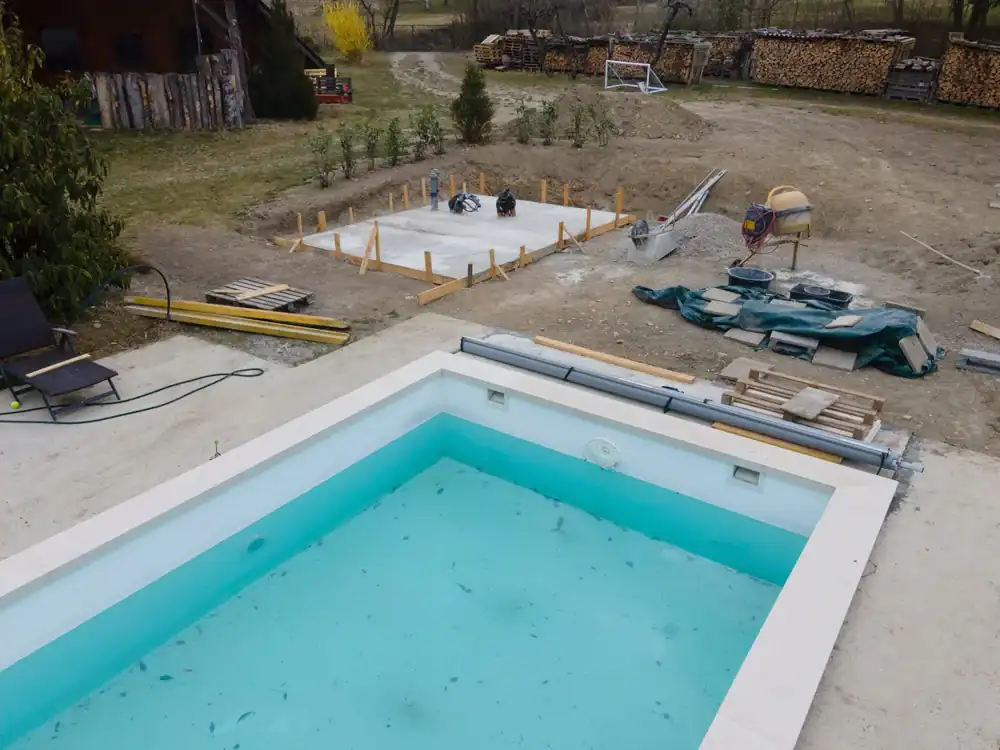
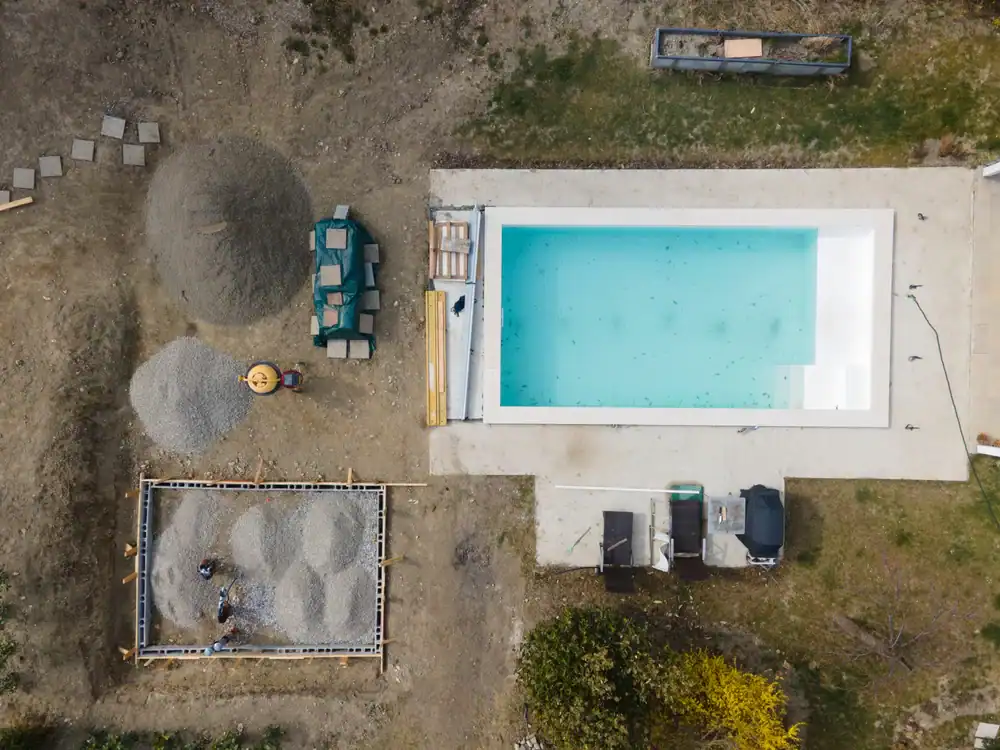
Excavation usually happens over 1-2 days for most residential pools. This is when your backyard transforms dramatically and the project becomes undeniably real. Steel reinforcement follows immediately, creating the structural framework that gives your pool its strength and longevity.
Excavation day brings excitement and anxiety in equal measure. Watching heavy equipment reshape your backyard makes the project feel real, but it also reveals site conditions that weren’t apparent during initial planning.
In South Georgia, excavation commonly uncovers dense clay layers, extensive tree root systems, or unexpected underground obstacles. We expect these discoveries and adjust our approach without panic or blame. We know how to handle clay removal efficiently, manage root systems properly, and work around utility lines that weren’t marked accurately.
The excavated area appears much larger than your finished pool dimensions because workers need room to install steel reinforcement and access all areas during construction. When the hole looks enormous, that’s normal and necessary—not a mistake.
Steel placement typically happens within 24 hours of excavation completion, weather permitting. This critical step creates the skeleton that provides your pool’s structural integrity for decades. Rebar gets positioned according to precise engineering specifications, with extra attention to high-stress areas like steps, benches, and equipment attachment points.
Plumbing and electrical rough-in work happens simultaneously with steel placement. This includes main drain connections, skimmer lines, return jets, and electrical conduits for lighting and equipment. Getting these systems right during construction prevents expensive corrections that require breaking concrete later.
The concrete application—called gunite or shotcrete—transforms the steel framework into a solid pool shell. This process typically requires one full day and demands skilled operators who understand proper concrete placement, density, and finishing techniques that ensure long-term durability.
After concrete cures for several days, finishing work begins. This phase determines how your pool looks, feels, and functions for years to come, making contractor expertise absolutely critical.
Plumbing and electrical connections get completed and thoroughly tested. Pool equipment like pumps, filters, and heaters are installed and connected to your home’s electrical panel. In South Georgia’s climate, many families choose variable-speed pumps for energy efficiency and extended equipment life that pays for itself over time.
Interior finishing comes next and significantly impacts both appearance and maintenance requirements. Options include traditional plaster, aggregate finishes, or tile applications. Each choice offers different durability, maintenance needs, and aesthetic qualities. Plaster provides classic appeal at lower cost, while aggregate finishes deliver superior durability and color options that resist fading.
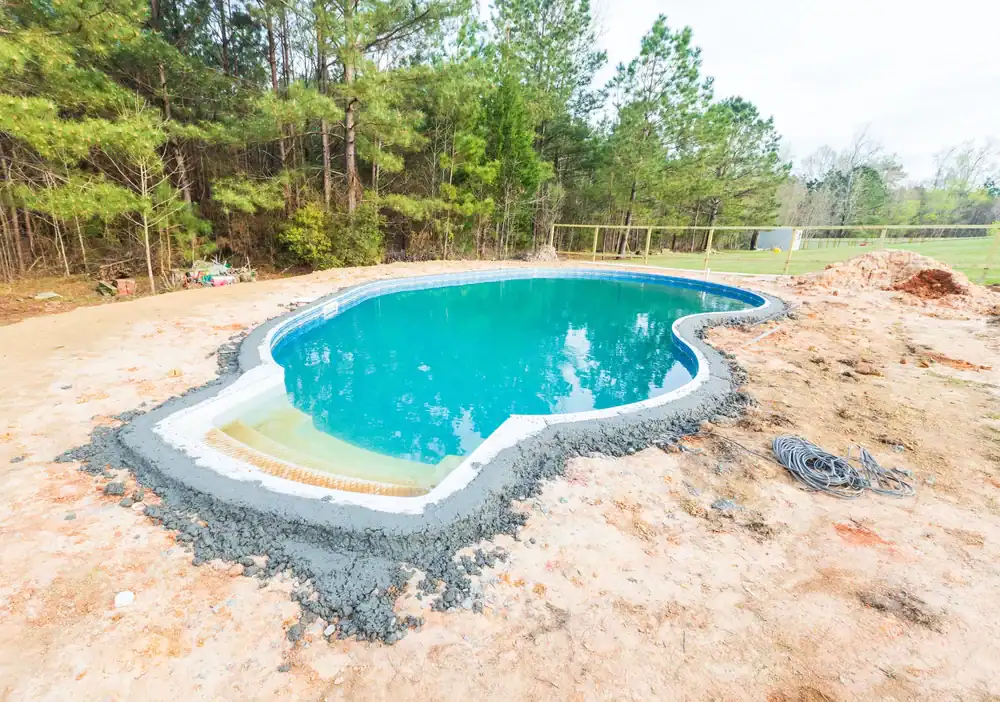
Coping and decking installation frames your pool and creates the visual transition between water and landscape. Material choices include stamped concrete, natural stone, brick pavers, or specialized pool decking. The right choice depends on your home’s architecture, personal preferences, and long-term maintenance willingness.
Final inspections ensure everything meets local building codes and safety requirements. This covers electrical systems, safety fencing, equipment installation, and water circulation. Only after passing all inspections can your pool be filled and balanced for use.
The startup process requires several days as water chemistry balances and all equipment cycles properly. We provide comprehensive instructions on basic maintenance procedures, equipment operation, and troubleshooting common issues.
Pool construction represents a major investment in your family’s lifestyle and your property’s long-term value. Success depends entirely on choosing contractors who understand local conditions and have proven experience with projects similar to yours.
Look for builders who’ve worked in South Georgia for years and can show you completed projects in similar settings. Experience with local soil conditions, county permitting processes, and climate considerations makes the difference between smooth projects and expensive problems.
When you’re ready to move forward with your pool construction project, we bring over 30 years of hands-on experience to families throughout South Georgia. We understand what it takes to build pools that last and create the backyard memories your family deserves.