Dark bottom pools, infinity edges, and tanning ledges are reshaping luxury backyard design in 2026. See what's working in Coffee County, GA.
Walk through any new construction neighborhood in Georgia and you’ll notice something. The bright blue pools are disappearing. In their place, you’re seeing deep grays, charcoals, midnight blues, and even true blacks dominating modern pool aesthetics.
Dark bottom pools aren’t just a visual trend. They’re solving real problems that homeowners care about. The darker finish absorbs more sunlight, which means your water stays naturally warmer—sometimes 5 to 10 degrees warmer than a traditional light-colored pool. That’s less money spent on heating and more comfortable water earlier in the season, which matters in Coffee County, GA where you want to maximize your swim season from spring through fall.
The other benefit? Darker surfaces hide imperfections better. Minor stains, slight discoloration, and everyday wear don’t show up as obviously against a graphite or deep blue finish. You’re still cleaning your pool on the same schedule, but it looks cleaner between maintenance sessions.
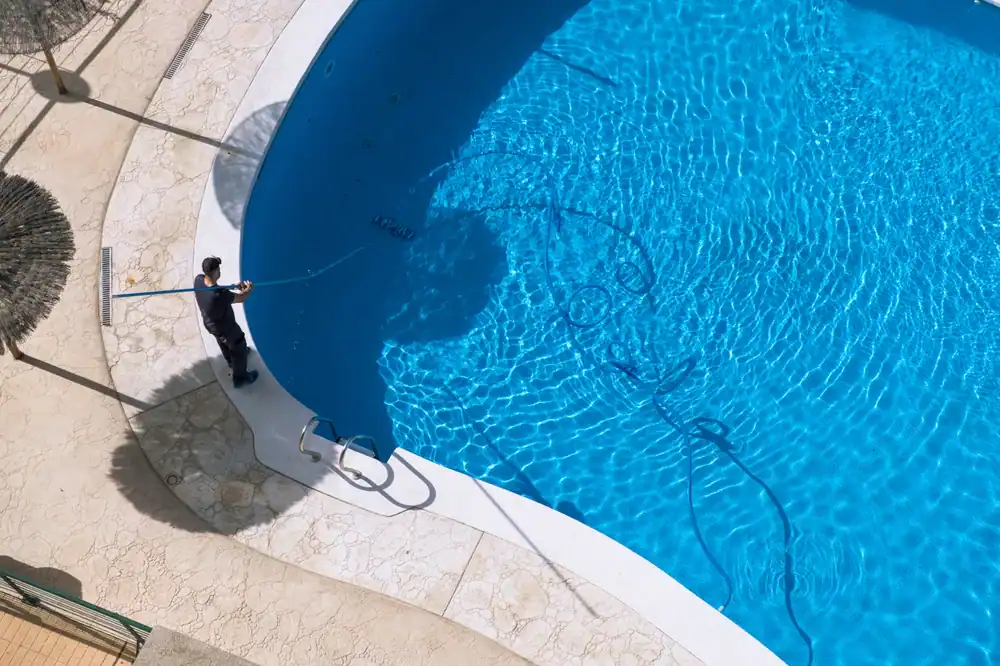
The main concern people bring up is visibility. If the water looks darker, can you still see the bottom clearly? The short answer is yes, but it depends on your lighting and water clarity.
Darker finishes do change depth perception slightly, especially in deeper areas. If you have young kids who are still learning to swim, that’s worth considering. The solution we recommend is adding underwater LED lighting and clear depth markers. The lighting doesn’t just solve the visibility issue—it also makes the pool look stunning at night, with the dark surface creating a mirror-like effect that reflects the lights beautifully.
Another thing to know is that not all dark finishes are created equal. Pebble and aggregate finishes tend to hold up better over time than standard plaster. They’re more durable, offer better texture for slip resistance, and the color stays more consistent as the pool ages. Concrete with a quality dark plaster is the most common choice in Coffee County, GA because it balances cost with longevity and withstands Georgia’s soil conditions.
Some municipalities have regulations around pool colors for safety reasons, though it’s uncommon. It’s worth checking with your local building department before finalizing your design. Most areas don’t restrict it, but it’s better to confirm early than redesign later. We handle this during the permit process anyway.
If you’re worried about heat, darker pools do absorb more warmth—which is great in spring and fall, but can make the water warmer than you’d like in peak summer. That’s where shade structures, water features, or a good pool cover come into play. You’re managing temperature either way, but with a dark pool, you’re starting from a warmer baseline, which actually reduces your heating costs over the course of the year.
Graphite gray is probably the most popular choice right now for modern pool aesthetics. It gives you that contemporary, sophisticated look without going as dramatic as true black. The water takes on a deep, reflective quality that shifts throughout the day as the light changes. It pairs well with natural stone decking and contemporary landscaping, which works beautifully with Coffee County, GA’s mix of traditional and modern homes.
Deep blue finishes—think navy or midnight blue—are close behind. They still feel like a pool, but with more depth and richness than traditional light blue. This option works well if you want a darker aesthetic but aren’t ready to commit to gray or black. It also complements a wider range of architectural styles, from modern to more traditional homes.
True black pools are the boldest choice in pool design trends right now. They create a dramatic, lagoon-like appearance that mimics natural bodies of water. When paired with rock features, waterfalls, or lush landscaping, the effect is striking. Black finishes work especially well with infinity edges because the dark water blends seamlessly into the horizon or surrounding landscape.
Emerald and deep teal are gaining traction for homeowners who want that resort-style backyard vibe. These colors evoke tropical resorts and natural lagoons. They’re not as common as graphite or navy, which means your pool will stand out in the neighborhood while still feeling timeless.
Pebble finishes in darker tones are also trending. These aren’t solid colors—they’re blends of dark pebbles that create texture and visual dimension. The multi-tone effect shifts as light moves across the water, adding interest without needing high-maintenance surface patterns. Pebble finishes are durable, slip-resistant, and age well, which is why they’re popular for luxury pool construction in Georgia.
One thing to keep in mind: darker finishes may cost slightly more upfront than standard white or light blue. The materials themselves can be pricier, and not all pool builders have extensive experience working with them. That’s where choosing a builder with a proven track record in custom inground pools matters. You want someone who understands how these finishes behave over time in Georgia’s climate and can guide you toward the right material for your specific use case.
Want live answers?
Connect with a Deep Waters Pools expert for fast, friendly support.
Infinity edges used to be something you only saw at high-end resorts or on properties with dramatic views. That’s changed. Residential infinity pools are showing up more frequently in pool design trends, and for good reason—they create a visual effect that’s hard to match with any other design feature.
The concept is simple. Water flows over one edge of the pool into a catch basin, then recirculates back. The result is a seamless, horizon-blending look that makes the water appear endless. It’s dramatic, it’s elegant, and it works especially well on properties with elevation changes or scenic backdrops, which many Coffee County, GA properties have with their tree-lined lots and natural landscapes.
Geometric shapes are also dominating 2026 pool design trends. Rectangles, L-shapes, and clean-lined layouts are replacing the freeform, curvy pools that were popular a decade ago. These shapes complement modern architecture, maximize usable swimming space, and work better with automatic covers and lap swimming.
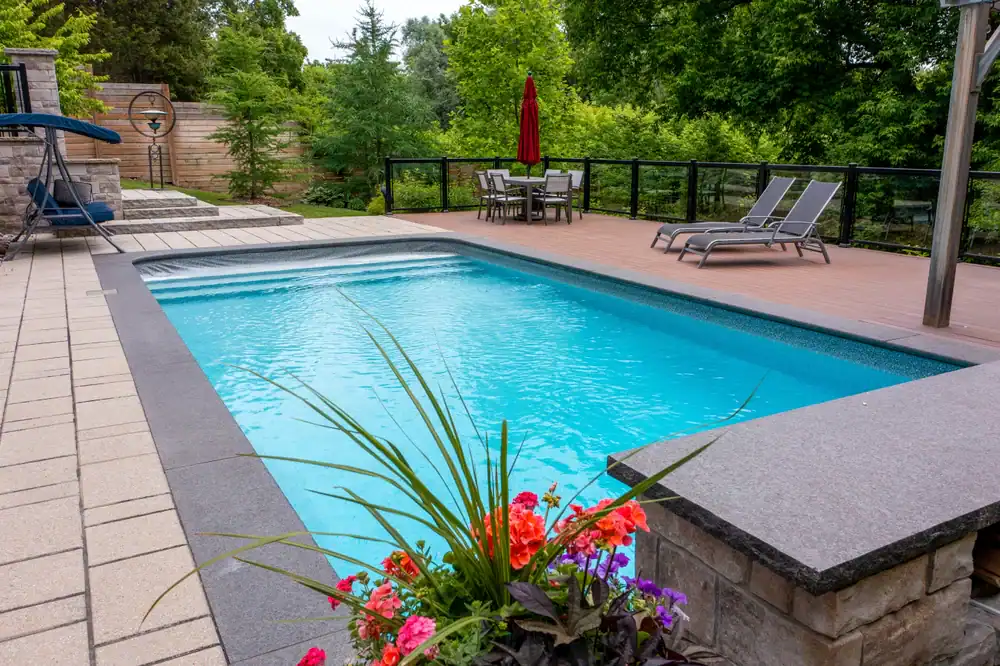
Coffee County, GA yards vary widely in size and layout. Some properties have wide, open backyards perfect for resort-style pools. Others are working with narrower lots or irregular shapes. Geometric pools adapt to these spaces better than freeform designs.
A rectangular pool fits cleanly into most property lines and leaves room for decking, landscaping, and other outdoor features. If you’re planning an outdoor kitchen, fire pit, or seating area, a geometric pool gives you defined zones to work with. Everything feels intentional rather than squeezed in. This matters when you’re trying to create a complete outdoor living space, not just a pool.
L-shaped pools are great for properties where you want to separate the deep end from a shallow play area or tanning ledge. You’re creating distinct zones within the pool itself—one section for swimming laps or diving, another for lounging or supervising kids. This layout works well for families who use their pool in different ways throughout the day.
Geometric shapes also age well. Trends come and go, but clean lines and simple forms tend to stay relevant. If you’re thinking about resale value down the road, a well-designed rectangular or geometric pool appeals to a broader range of buyers than a highly customized freeform shape. That matters in Coffee County, GA’s shifting real estate market.
From a construction standpoint, geometric pools are often more straightforward to build, which can mean fewer complications during installation and a more predictable timeline. In Coffee County, GA, where weather delays are common during Georgia’s summer storm season, anything that simplifies the build process is worth considering. Most custom pool projects here take 8 to 12 weeks from permit approval to completion, and geometric designs help keep that timeline realistic.
One thing that’s changed in 2026 is how geometric pools are being softened. We’re rounding interior corners, adding offset spas, or integrating tanning ledges to create a more welcoming, resort-like feel without losing that clean, architectural look. You’re getting the best of both worlds—modern structure with comfortable, livable details that make the pool feel less rigid and more inviting.
Infinity edges aren’t just about looks, though the visual impact is undeniable. They also add a soothing sound element—the gentle flow of water cascading over the edge creates a calming background noise that enhances the entire backyard experience. It’s one of those details that turns a pool into a retreat.
From a design perspective, infinity edges work best when they’re oriented toward a view or a focal point. If your Coffee County, GA property backs up to trees, a pond, or open space, positioning the infinity edge to face that direction creates a seamless transition between your pool and the natural surroundings. Even without a dramatic view, an infinity edge can be positioned to face your outdoor living area, making it a striking visual centerpiece.
The engineering behind infinity edges is more complex than a standard pool. You need a catch basin, additional plumbing, and a pump system that can handle the recirculation. This adds to the upfront cost, but it also means you’re working with a builder who has experience with more advanced pool construction. That expertise tends to carry through the entire project, from excavation to final finishes.
One consideration is maintenance. Infinity edges require regular attention to keep the catch basin clean and the water flow consistent. Leaves, debris, and dirt can accumulate in the basin, so you’ll need to clean it out periodically. It’s not difficult, but it’s an extra step compared to a standard pool. If you’re already planning for regular pool maintenance, it’s a minor addition to your routine.
Another factor is property slope. Infinity edges work best on properties with some elevation change. If your yard is completely flat, you can still create the effect, but it may require more excavation and grading to achieve the right look. We can assess your property and let you know what’s feasible based on Coffee County, GA’s typical soil conditions and terrain.
Infinity edges have seen a 28% rise in residential installations over the past year, according to industry data. That growth is driven by homeowners who want a pool that feels like a destination rather than just a place to swim. If that resonates with you, it’s worth exploring whether your property and budget can accommodate the feature. When paired with dark pool finishes and modern geometric shapes, infinity edges create one of the most striking looks in current pool design trends.
The trends shaping 2026 aren’t random. They’re driven by how people actually use their pools, what materials hold up over time in Georgia’s climate, and what features deliver both immediate enjoyment and long-term value. Dark bottom pools, infinity edges, tanning ledges, and geometric shapes aren’t going anywhere because they solve real problems while looking great.
If you’re planning a pool in Coffee County, GA, the key is choosing features that align with how you’ll actually use the space. A dark graphite finish might be perfect if you want modern pool aesthetics and natural heat retention. An infinity edge makes sense if your property has a view worth framing. A tanning ledge is worth the investment if you see yourself lounging more than swimming laps.
The best pool design is one that feels right for your property, your lifestyle, and your budget. When you’re ready to move forward, we can walk you through what works in Coffee County, GA and help you create a resort-style backyard that delivers on both style and substance.
Summary:
Share: