Thinking about adding fire pits or waterfalls to your pool? Here's what actually works in 2026—and what you need to know before you build.
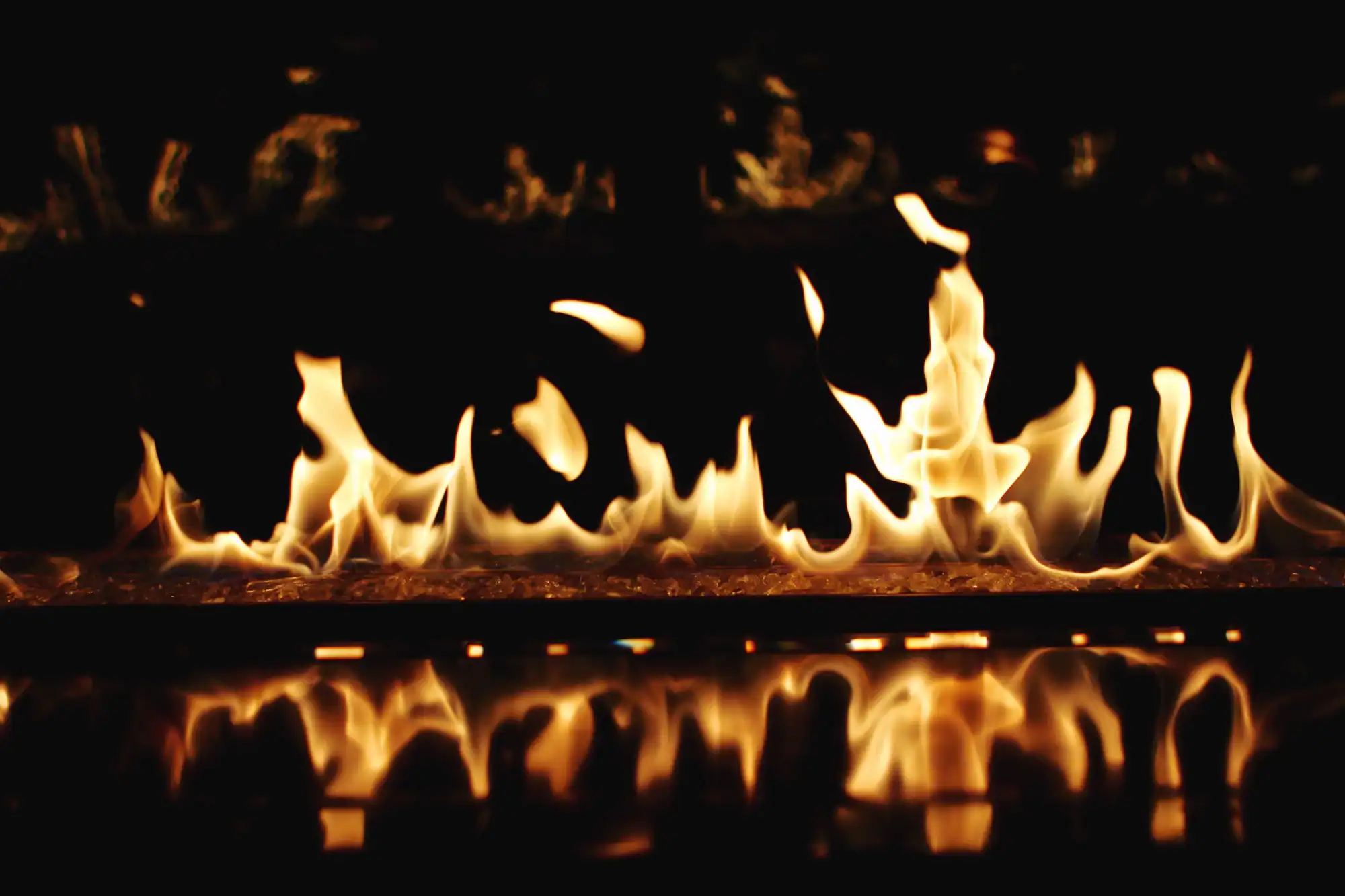
The pool industry has shifted. What used to be considered “luxury add-ons” are now standard requests for custom pool builds across Coffee County, GA. Fire pits, fire bowls, waterfalls, and integrated lighting aren’t just aesthetic upgrades—they’re functional elements that extend how and when you use your outdoor space.
The reason is simple. Georgia’s climate supports outdoor living well beyond summer, but once the sun sets or temperatures dip, most pools sit unused. Fire features solve that problem by adding warmth and ambiance that keeps people outside longer. Waterfalls do something different—they bring movement, sound, and improved water circulation. When you combine both elements, you create a multi-sensory environment that feels more like a resort than a backyard.
The 2026 trend isn’t about adding every feature available. It’s about choosing elements that work together and fit your lifestyle. A family with young kids might prioritize a rock waterfall with natural stone and a separate fire pit area for evening s’mores. Someone focused on entertaining might lean toward sleek fire bowls positioned at pool corners paired with a modern sheer descent waterfall. The key is understanding what each feature actually does before you commit.
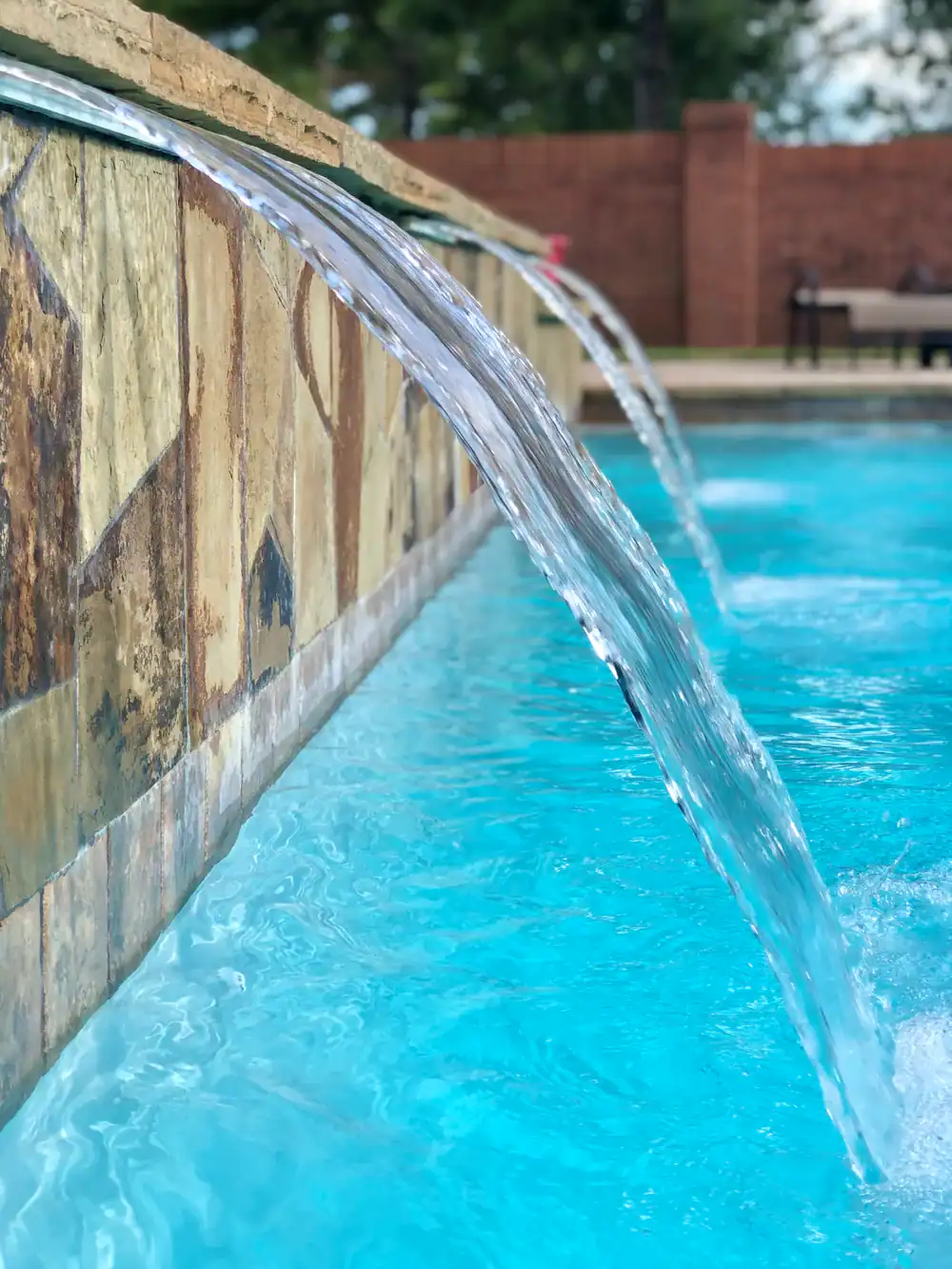
Waterfalls aren’t one-size-fits-all, and the style you choose sets the tone for your entire pool design. Rock waterfalls are the most popular option in Coffee County, GA, especially for homeowners who want that natural, lagoon-style look. These use stacked stone or faux rock to create cascading water flows that blend with landscaping. They work well with curved pool shapes and tropical plantings.
Sheer descent waterfalls are the opposite—clean, modern, and architectural. Water flows in a smooth sheet from a raised wall or ledge, creating a glass-like curtain effect. These pair beautifully with geometric pools and contemporary homes. They’re also easier to maintain than rock waterfalls since there are fewer crevices for debris to collect.
Scuppers are a more compact option. These are narrow spouts—often made from copper, stainless steel, or stone—that channel water into the pool from a raised wall or spa. They add visual interest without overwhelming smaller spaces. You can install multiple scuppers at different heights to create a layered effect.
Rain curtains take it a step further. Mounted on pergolas or overhangs, they create a vertical sheet of water that looks dramatic and feels immersive. They require existing structure above the pool, which can increase installation costs if you’re building from scratch.
Grottos are the most elaborate option—small cave-like structures integrated into rock waterfalls where swimmers can sit or hide behind the water flow. Kids love them, but they add significant cost and complexity to the build.
Here’s what matters most when choosing: your pool’s shape, your home’s architecture, and how much maintenance you’re willing to handle. Rock waterfalls require more cleaning but deliver that natural aesthetic. Sheer descents are low-maintenance and modern. Scuppers offer flexibility without committing to a large feature. The wrong choice won’t just look off—it’ll create frustration every time you use the pool.
Fire features around pools fall into a few main categories, and each serves a different purpose. Fire bowls are the most popular choice for 2026. These are freestanding or built-in bowls—typically 24 to 36 inches in diameter—that sit at pool corners, on raised walls, or integrated into the deck. They burn natural gas or propane and can be combined with water features to create a “fire and water bowl” where flames rise from the center while water cascades over the edges into the pool.
Fire pits are larger and designed for gathering. Positioned on the pool deck or in a separate seating area, they provide warmth and a natural focal point for conversation. Recessed fire pits can be covered with aluminum lids when not in use, turning the space into additional seating or table area. This works well for homeowners with limited deck space who need flexibility.
Fire walls and fire columns make a bold architectural statement. These are vertical features—often 4 to 8 feet tall—that create a dramatic backdrop, especially when paired with LED lighting. They work best with larger pools and modern designs.
Outdoor fireplaces are less common around pools but effective for creating distinct zones. Place one near a covered seating area or outdoor kitchen, and it becomes a year-round gathering spot that extends usability beyond swim season.
The cost range is wide. Basic fire bowls start around $1,000 to $1,500 for materials and installation. Mid-range options with electronic ignition and custom finishes run $2,000 to $3,000. High-end custom installations—especially those integrating water features or multiple fire elements—can exceed $4,000 and reach $10,000 for elaborate designs.
Here’s the part most people miss: fire features need proper gas line installation, and in Georgia, that often requires a licensed professional and permits. If you’re adding fire pits or fire bowls to an existing pool, you’re looking at higher labor costs for trenching and running lines. Plan for this during new construction, and you’ll save significantly. Also consider placement carefully—fire bowls positioned too close to seating areas can create uncomfortable heat, while those placed too far lose their visual impact.
Want live answers?
Connect with a Deep Waters Pools expert for fast, friendly support.
The biggest mistake homeowners make is treating fire and water features as separate decisions. They’re not. These elements need to work together visually and functionally, or the whole design feels disjointed. This is where understanding custom pool features as a cohesive system becomes critical.
Start with scale. Features that are too large overpower your pool and make the space feel crowded. Features that are too small get lost and fail to create impact. A 30-foot pool doesn’t need a 10-foot waterfall. A 50-foot pool will make a single 24-inch fire bowl look like an afterthought.
Proportion also depends on your deck size and surrounding landscape. If you have a compact backyard, a sheer descent waterfall and two fire bowls might be all you need. Larger properties can handle rock waterfalls, multiple fire features, and integrated spa areas without feeling cluttered.
Next, consider sight lines. Where will you see these features from inside your home? From the pool deck? Fire and water elements should be visible from your main living areas and outdoor seating zones. Placing a fire feature on the far side of the pool where no one sits wastes its potential.
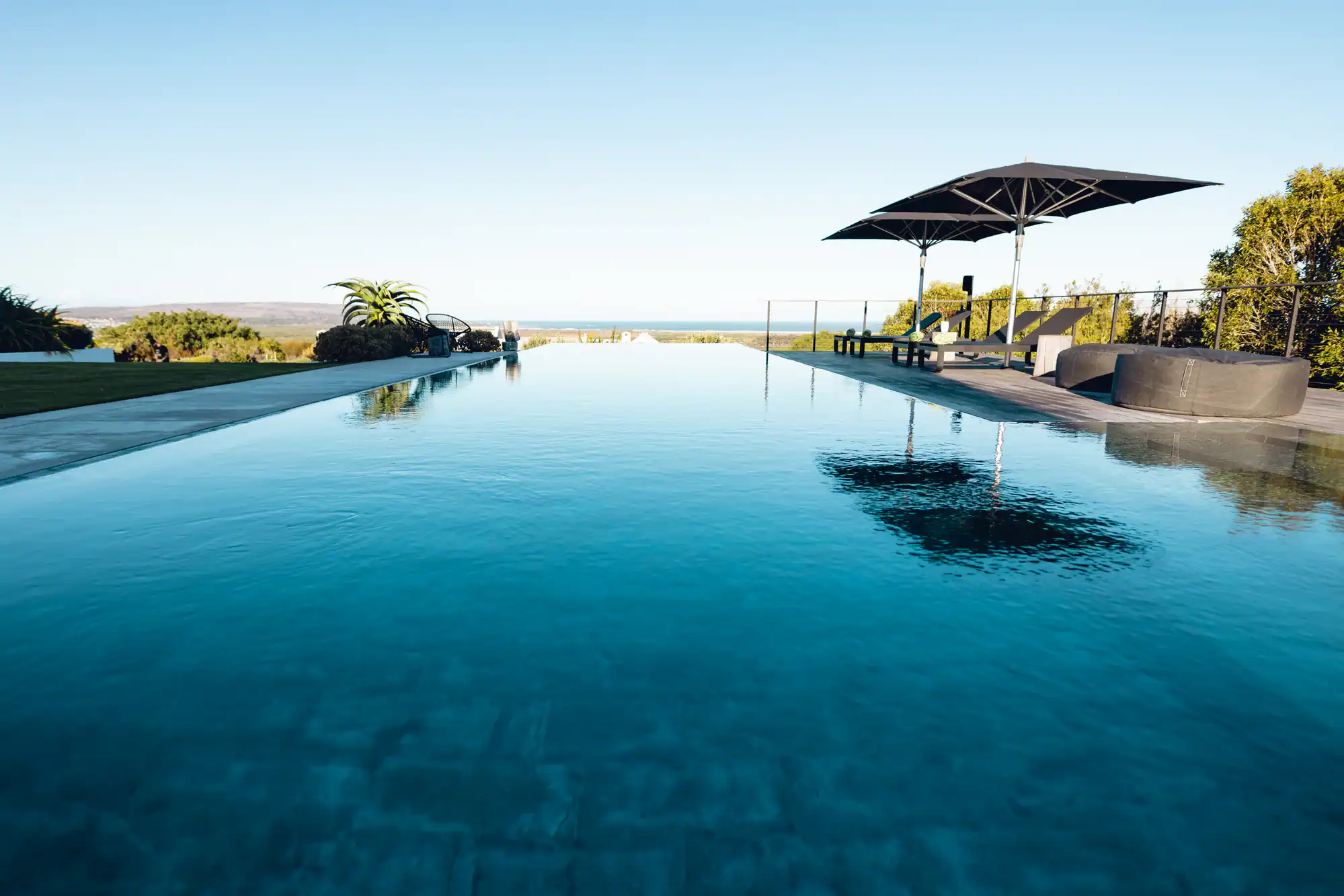
Lighting isn’t optional—it’s what makes fire and water features work after dark. Without proper illumination, your waterfall disappears at sunset, and your fire bowls become the only light source, creating harsh shadows.
LED lighting systems have transformed pool design. Modern LEDs are energy-efficient, long-lasting, and fully programmable. You can change colors, adjust brightness, and sync lighting to music—all from your smartphone. Color-changing LEDs installed beneath sheer descent waterfalls create a glowing curtain effect that shifts from blue to purple to amber throughout the evening.
Underwater spotlights positioned to shine up through waterfalls highlight the water flow and create movement. Accent lights around fire bowls emphasize the contrast between flame and water. Perimeter lighting along pool edges and steps ensures safety while adding ambiance.
The key is restraint. Don’t light every surface. Instead, focus on highlighting specific features—your waterfall, fire bowls, and key architectural elements. This creates depth and drama without overwhelming the space.
Integrated automation systems let you control everything from one app. Set schedules so lights turn on at sunset, adjust colors for different occasions, or create preset “scenes” for family nights versus adult entertaining. This level of control makes your investment more functional and enjoyable.
One practical note: plan your electrical and plumbing during the design phase. Retrofitting lighting into an existing pool means cutting into decking, running new conduit, and potentially replastering—all expensive and disruptive. Get it right during construction, and you’ll avoid those headaches.
Let’s talk real numbers. Pool waterfalls range from $2,000 to $8,800 depending on size, materials, and complexity. A basic rock waterfall with standard stone might land around $3,000 to $5,000. A custom sheer descent with integrated LED lighting and raised feature wall can reach $7,000 to $8,800. Rain curtains requiring structural support often exceed $9,000.
Fire bowls average $1,000 to $4,000 per installation. Entry-level models made from concrete or steel cost $1,000 to $1,500. Mid-range cast iron or composite bowls run $2,000 to $3,000. Custom designs with water integration, electronic ignition, and premium finishes exceed $4,000. If you’re installing multiple fire features or creating an elaborate display, expect costs to climb toward $10,000.
Water features typically consume 10 to 15 percent of your total pool budget. If you’re building a $50,000 pool, allocating $5,000 to $7,500 for fire and water elements is reasonable and proportional.
Here’s the critical part: timing matters more than most people realize. Installing features during new pool construction costs significantly less than retrofitting them later. During construction, we have open access to plumbing, electrical, and structural elements. Adding a waterfall means integrating it into the pool shell before concrete is poured. Installing fire bowls means running gas lines while trenches are already open.
Retrofitting an existing pool is a different story. You’re cutting into finished decking, trenching through landscaping, potentially modifying the pool structure, and coordinating multiple trades. Labor costs double or triple. A waterfall that would cost $4,000 during construction might run $7,000 to $10,000 as a retrofit. Fire features requiring new gas lines can add $2,000 to $3,000 in trenching and installation alone.
If you’re on the fence about adding these features, ask yourself this: will you regret not having them in two years? If the answer is yes, include them now. The upfront cost difference is real, but it’s far less painful than the retrofit alternative. And if budget is tight, prioritize the features you’ll use most. A single well-placed fire pit and a sheer descent waterfall can deliver more impact than multiple mediocre elements.
Fire and water features aren’t about following trends—they’re about creating outdoor living spaces that you’ll actually use beyond the occasional swim. When designed properly, these elements extend your pool’s functionality into cooler evenings, add visual drama that increases property value, and turn your backyard into a gathering spot that feels intentional and complete.
The decisions you make now—whether to include a rock waterfall or sheer descent, where to position fire bowls, how to integrate lighting—will affect how you experience your pool for the next 20 years. Get the scale right, plan for proper installation during construction, and choose features that match how you’ll actually use the space.
If you’re planning a custom pool in Coffee County, GA and want to explore fire and water features that make sense for your property, we can walk you through the options. We’ve been building custom inground cement pools for over 30 years, and we know what works in Georgia’s climate and what doesn’t. Reach out when you’re ready to start the conversation.
Summary:
Share: