We're bringing 2026's biggest construction trends to Coffee County, GA—smart automation, sustainable materials, and eco-luxe design that actually saves you money.
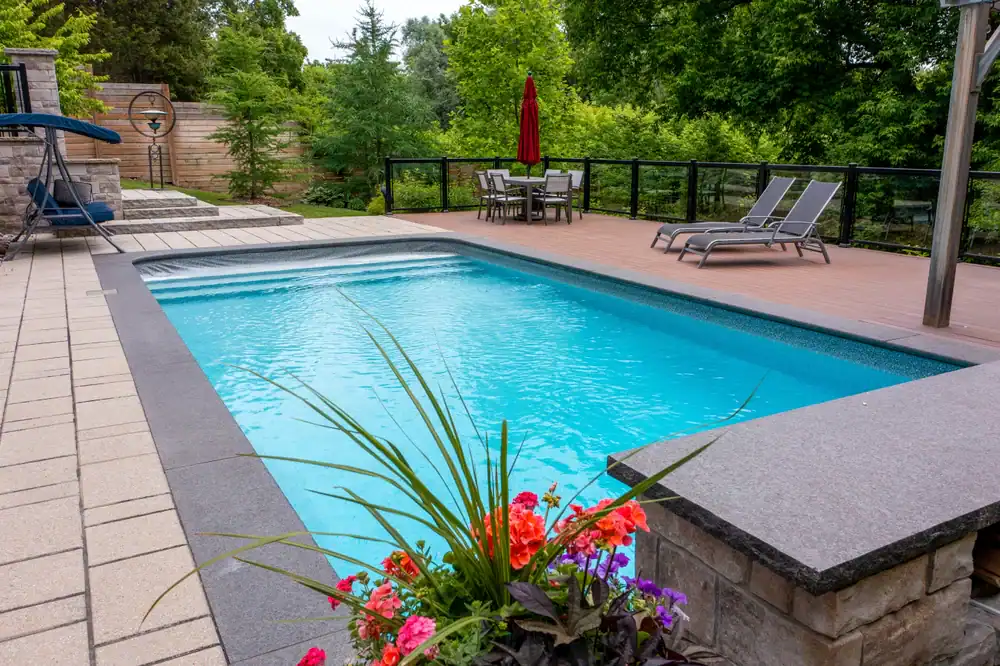
Pool construction in 2026 is shaped by technology adoption, sustainability demands, and real operational costs. Homeowners aren’t just asking for a place to swim—they want systems that manage themselves, materials that don’t deplete resources, and equipment that won’t double their electric bill.
Smart technology has moved from luxury add-on to standard expectation. App-controlled systems now monitor water chemistry in real time, adjust pump speeds automatically, and send alerts before small issues become expensive repairs. Automation isn’t about convenience anymore—it’s about protecting your investment and reducing the hours you spend maintaining it.
Sustainability is the second driver. Eco-conscious materials like locally sourced stone, recycled glass tiles, and natural filtration systems are gaining traction because they perform better long-term and align with how people want to live. Carbon-neutral pool designs that integrate solar power and variable-speed pumps aren’t niche concepts—they’re becoming the baseline for quality construction in Coffee County, GA and across Georgia.
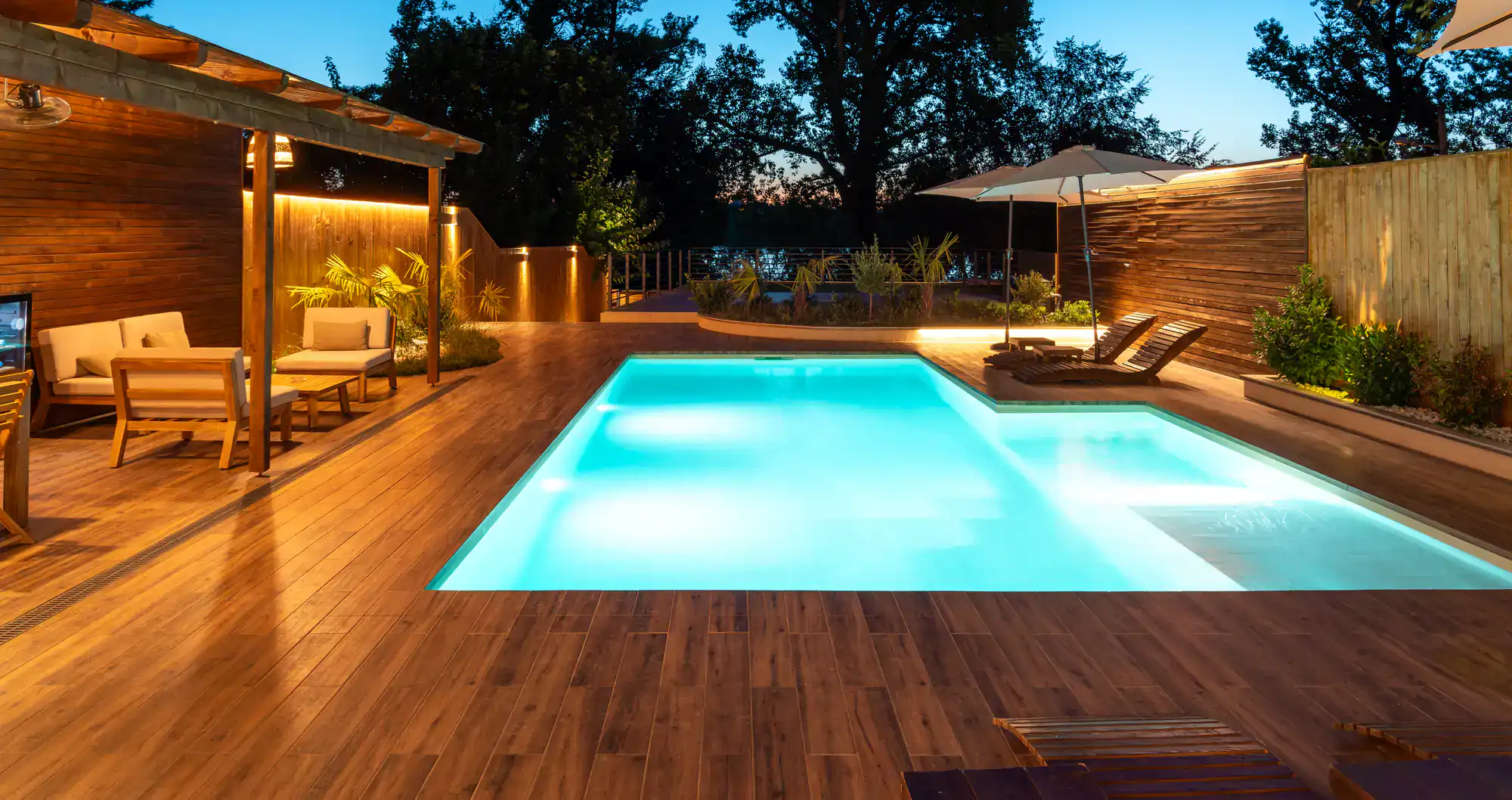
AI-integrated pool systems are eliminating the guesswork from water management and equipment operation. Instead of manually testing pH levels and adjusting chemicals every few days, sensors embedded in your pool track water quality continuously and send data to your smartphone. When chlorine drops or alkalinity shifts, the system alerts you—or in some cases, doses the chemicals automatically.
These systems learn your pool’s patterns over time. They track how weather affects water temperature, how swimmer load impacts chemical balance, and when equipment needs attention before it fails. The result is fewer emergency service calls, lower chemical waste, and water that’s consistently balanced without you lifting a finger.
Variable-speed pumps managed by AI platforms can reduce energy consumption by up to 85% compared to traditional single-speed models. The system adjusts flow rates based on what’s actually needed—gentle circulation overnight, higher speeds during filtration, precise control for water features. You’re not running equipment at full throttle when half power would do the job.
Voice-activated controls through Alexa or Google Assistant are becoming standard on new builds. You can adjust lighting, activate cleaning cycles, or change water temperature without opening an app. For families juggling schedules, this level of automation means your pool is always ready when you are, without the daily maintenance routine that used to come with ownership.
The cost of these systems has dropped significantly as adoption increases. What used to require $10,000 in custom integration now comes standard on mid-range automation packages. If you’re building in 2026, smart systems aren’t an upgrade—they’re part of the baseline conversation with any quality builder.
Sustainable building materials in 2026 aren’t just about reducing environmental impact—they’re about durability, lower maintenance, and long-term cost savings. Natural stone sourced locally eliminates the energy required for long-distance shipping and chemical processing. Materials like limestone, travertine, and granite offer heat resistance and slip-safe surfaces that hold up to Georgia’s climate without constant sealing or replacement.
Recycled glass tiles are becoming a go-to choice for pool interiors and waterline accents. They’re made from post-consumer glass, require less energy to produce than traditional ceramic tiles, and offer visual depth that shifts with light throughout the day. The durability rivals or exceeds conventional materials, meaning fewer repairs and replacements over the pool’s lifespan.
Bamboo is emerging as a sustainable option for decking and pergola structures around pool areas. It grows faster than traditional hardwoods, absorbs more carbon dioxide during growth, and rivals the tensile strength of steel when properly treated. For homeowners looking to integrate shade structures or privacy screens, bamboo offers an eco-conscious alternative that doesn’t sacrifice structural integrity.
Reclaimed wood and composite decking made from recycled materials are replacing pressure-treated lumber in many high-end builds. These materials resist moisture damage, don’t require chemical treatments, and often last longer than their conventional counterparts. The upfront cost may be slightly higher, but the reduction in maintenance and replacement costs makes them a smarter long-term investment.
Natural pool filtration systems use gravel beds and aquatic plants instead of heavy chemical treatments. While they require more space—typically splitting the pool into swimming and regeneration zones—they eliminate the need for chlorine purchases, reduce skin and eye irritation, and create a mini-ecosystem that maintains itself once balanced. For families with sensitivities or strong environmental values, natural pools offer a chemical-free alternative that’s gaining traction in South Georgia.
EPDM rubber liners and bentonite clay are replacing traditional concrete in some natural pool builds. These materials create watertight seals without the energy-intensive production process of concrete. They’re particularly effective in areas with sandy soil or high water tables, where conventional construction methods require additional sealing and reinforcement.
Want live answers?
Connect with a Deep Waters Pools expert for fast, friendly support.
Carbon-neutral pool construction in 2026 focuses on eliminating fossil fuel dependence and integrating renewable energy from day one. Solar-powered systems now handle circulation, heating, and filtration without drawing from the grid. Panels installed on roofs or nearby structures capture energy during the day, storing it in battery systems that keep equipment running after sunset.
Variable-speed pumps paired with smart scheduling reduce energy waste by running equipment only when needed and at optimal speeds. Instead of a pump running at full capacity 24/7, automation adjusts output based on time of day, weather conditions, and actual filtration requirements. The energy savings are substantial—often cutting pool-related electricity costs by 70% or more compared to older single-speed systems.
Smart backyard automation extends beyond the pool itself. Integrated systems now coordinate lighting, water features, irrigation, and climate control across your entire outdoor space. You can program scenes that adjust multiple elements at once—dimming lights, activating waterfalls, and adjusting temperature with a single command. This level of integration improves usability while optimizing energy consumption across all systems.
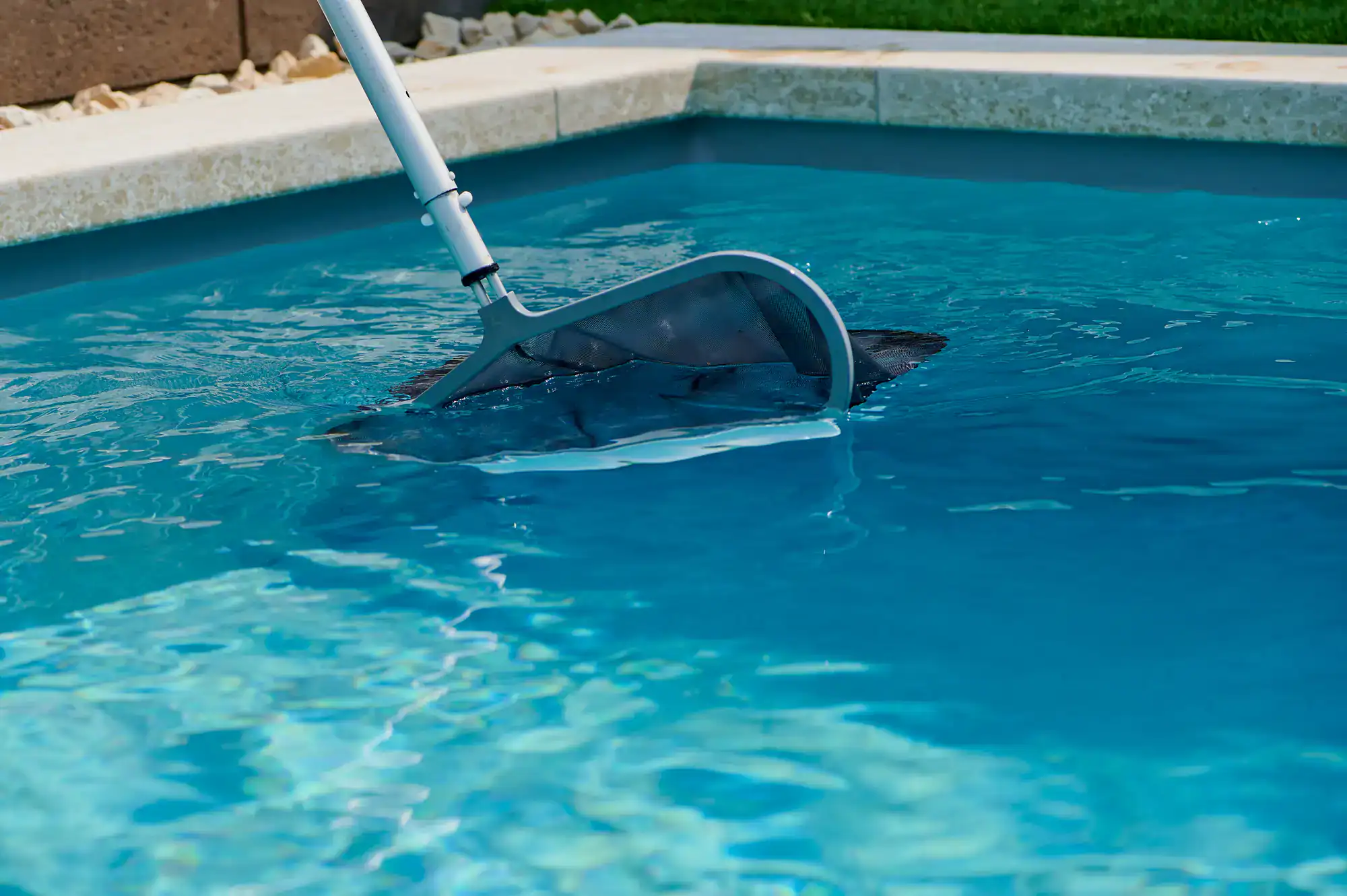
Eco-luxe pool design combines environmental responsibility with high-end aesthetics and functionality. In Coffee County, GA, this means pools that look stunning, perform efficiently, and align with sustainable living principles without sacrificing the features families actually want.
Dark pool finishes—deep blues, charcoals, and blacks—are dominating the eco-luxe aesthetic in 2026. These finishes absorb more solar heat, naturally warming the water and reducing the need for supplemental heating. They create a sophisticated, modern look that contrasts beautifully with natural stone decking and landscaping. The visual effect mimics natural bodies of water, giving your backyard a lagoon-like quality that feels more organic than traditional light-blue pools.
Tanning ledges and built-in lounge areas are being integrated directly into pool shells during construction. These shallow zones serve multiple purposes: they provide safe play areas for young children, offer seating for adults who want to cool off without fully swimming, and improve accessibility for guests with mobility limitations. From a sustainability standpoint, they maximize usable space without increasing the pool’s overall footprint or water volume.
Infinity edges and vanishing borders are being designed with water recirculation systems that minimize evaporation and waste. The overflow water is captured, filtered, and returned to the pool rather than draining away. This closed-loop approach reduces water consumption while maintaining the visual drama of a borderless pool that appears to merge with the landscape.
Native landscaping around pool areas reduces water usage and maintenance requirements while supporting local ecosystems. Plants like ornamental grasses, native wildflowers, and drought-resistant shrubs thrive in Georgia’s climate without constant irrigation or chemical fertilizers. They attract pollinators, provide natural privacy screening, and create a cohesive design that blends the pool area with the surrounding environment.
Permeable pavers for pool decks allow rainwater to filter through the surface rather than running off into storm drains. This reduces erosion, recharges groundwater, and eliminates standing water that can become breeding grounds for mosquitoes. The pavers themselves often incorporate recycled materials and last 50 years or more—far longer than traditional concrete that cracks and requires replacement every 10-15 years.
LED lighting systems have become standard in eco-luxe designs, consuming up to 80% less energy than traditional halogen bulbs while lasting five times longer. Modern LEDs offer programmable color options, dimming capabilities, and integration with smart home systems. You can create custom lighting scenes for different occasions—soft ambient lighting for evening relaxation, bright task lighting for pool parties, or synchronized color displays for special events.
Smart backyard automation systems in 2026 offer centralized control over every element of your outdoor space through a single interface. Instead of managing separate apps for pool equipment, lighting, irrigation, and climate control, unified platforms coordinate everything from your smartphone or voice assistant.
Pool automation hubs like iAquaLink, Pentair IntelliConnect, and Hayward OmniLogic dominate the market because they integrate seamlessly with existing equipment while offering room for future upgrades. These systems handle filtration schedules, chemical dosing, temperature control, and equipment diagnostics. When something goes wrong—a clogged filter, low water level, or equipment malfunction—the system alerts you before the problem escalates into an expensive repair.
Automated pool covers reduce heat loss, minimize evaporation by up to 95%, and improve safety when the pool isn’t in use. Modern covers integrate with automation systems, opening and closing on schedule or via voice command. They’re particularly valuable in Georgia’s variable climate, where overnight temperature drops can significantly cool pool water without proper coverage.
Smart irrigation systems coordinate with pool automation to optimize water usage across your entire property. Sensors monitor soil moisture, weather forecasts, and plant needs, adjusting watering schedules automatically. This prevents overwatering that can affect pool chemistry and eliminates the waste of running sprinklers during rain. The integration ensures your landscaping stays healthy while your pool maintains proper water levels.
Robotic pool cleaners with AI navigation map your pool’s dimensions and track cleaning coverage to ensure no area is missed. They operate independently of your main filtration system, reducing wear on pumps and filters while providing more thorough cleaning. Many models integrate with automation platforms, allowing you to schedule cleaning cycles remotely or activate them on demand when you notice debris.
Water chemistry monitoring systems use digital sensors to track pH, chlorine, alkalinity, and other parameters in real time. When levels drift outside optimal ranges, the system can automatically dose chemicals or alert you to take action. This precision reduces chemical waste, prevents over-treatment that damages equipment and irritates skin, and ensures your pool is always swim-ready without daily manual testing.
The cost of comprehensive automation has decreased as technology matures and adoption increases. A full smart pool system that would have required $15,000-$20,000 five years ago now typically runs $8,000-$12,000 installed. Given the energy savings, reduced maintenance costs, and extended equipment lifespan, most systems pay for themselves within 3-5 years while dramatically improving the ownership experience.
Pool construction in 2026 is fundamentally different than it was even three years ago. The integration of smart technology, sustainable materials, and energy-efficient systems isn’t optional anymore—it’s what separates quality builders from those still operating on outdated methods. If you’re considering a pool in Coffee County, GA, the decisions you make now about automation, materials, and energy systems will affect your costs, maintenance burden, and enjoyment for the next 20 years.
We bring over 30 years of hands-on construction experience to these emerging trends, combining proven craftsmanship with forward-thinking technology and sustainable practices. The shift toward smarter, more efficient pools isn’t just good for the environment—it’s better for your wallet, your schedule, and your family’s long-term enjoyment of your backyard.
If you’re ready to explore how these trends apply to your specific property and goals, we can walk you through the options that make sense for your budget, your lot, and how you actually want to use your outdoor space. The future of backyard living is here, and it’s more accessible than you might think.
Summary:
Share: