
Hear from Our Customers
Quitman sits in USDA hardiness zone 9a. From April through October, temperatures push into the 90s and the humidity makes your backyard feel like a waiting room. A well-built inground pool doesn’t just cool you off it changes how you use your property for the better part of the year.
That matters even more when your home is on a larger lot, a rural parcel off US 221, or one of the older properties near North Court Street. These aren’t cookie-cutter suburban yards. They have mature live oaks, established landscaping, and soil conditions that require a builder who actually evaluates the site before anything gets dug. Brooks County’s Coastal Plain soils a mix of sandy loam and clay expand and contract with moisture. A pool that isn’t engineered for that movement will show it. Cracks, shifting, surface damage all of it avoidable when the builder knows what they’re working with before the first shovel goes in.
A gunite pool built the right way in Quitman can last 30 to 40 years. That’s the kind of return that makes sense for a homeowner who’s invested in their property long-term not someone looking for the cheapest option that’ll need replacing in a decade.
We were founded in 2014, but the experience behind Deep Waters Pools goes back more than three decades. Our founder spent 30-plus years in concrete, plumbing, and pool construction across South Georgia before starting the company which means the projects we take on today aren’t where we’re learning the trade. That part’s already done.
We’re based in Douglas and serve the full South Georgia corridor, including Brooks County and the Quitman area. We’ve worked in the same humid subtropical climate, on the same Coastal Plain soils, under the same Georgia building codes that apply right here in Quitman. When we talk about soil conditions or permit requirements in Brooks County, we’re not guessing we’ve been in this region long enough to know what the ground does and what the county expects.
If you’re on a rural acreage property outside Quitman, an older home near the historic district, or anywhere in between, we’ll evaluate your specific site before we ever talk price.
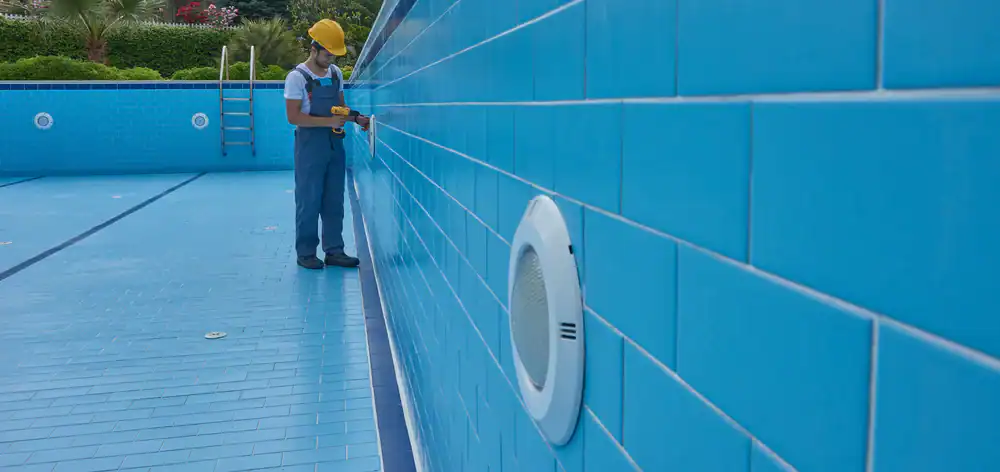
It starts with a site evaluation. Before any design gets drawn up, we look at your property the soil composition, drainage patterns, existing landscaping, utility lines, and access. For Quitman properties, that step matters more than most people realize. Older lots near the historic district often have mature tree root systems and tighter access points. Rural parcels may have well or septic considerations that affect how plumbing gets routed. We account for all of it before the plan is finalized.
Once design is locked in, we handle every permit building, electrical, and plumbing through the Brooks County Development Services Office on South Highland Road and, for city properties, through the City of Quitman permit office on East Screven Street. You don’t make a single call to the county. That’s on us.
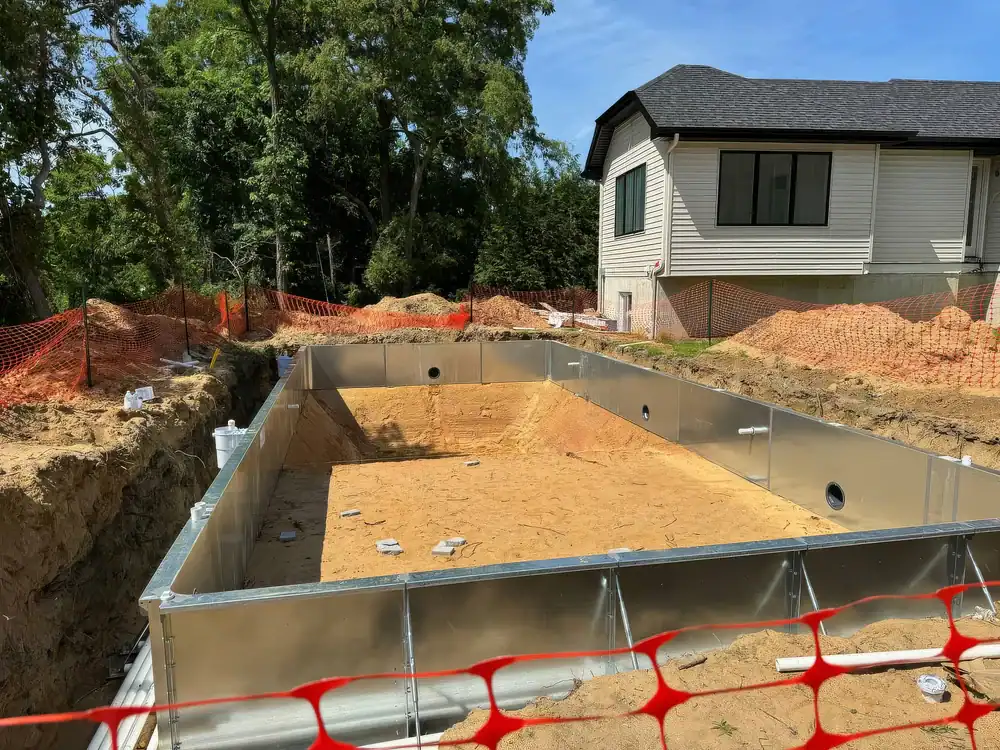
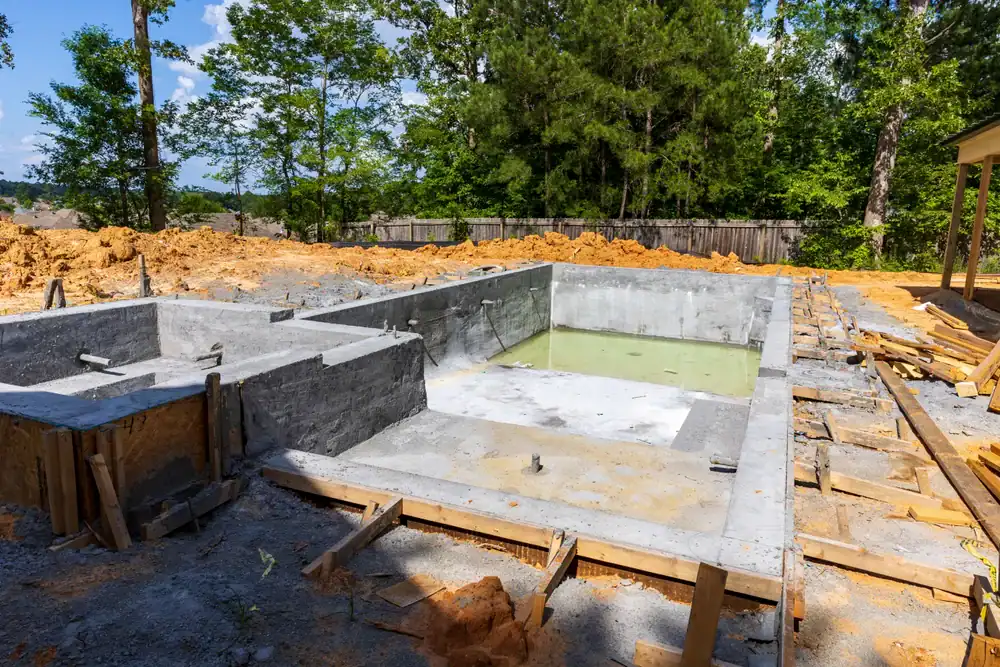
Construction runs with the same crew from excavation through deck installation. No handoffs, no subcontractors showing up with a clipboard they’ve never seen before. The rebar goes in, the county inspects it per Georgia code, and then the gunite shell gets applied. Swimming pool plumbing and NEC Article 680-compliant electrical work follow, then the deck gets built and finished. When we hand it over, it includes a custom safety cover not as an add-on, just as part of the job.
Ready to get started?
Every pool we build is fully custom gunite not a fiberglass shell pulled off a truck, not a vinyl liner that’ll need replacing in ten years. Gunite is formed on your property, shaped to your land, and engineered for the way your family actually uses a pool. That flexibility matters when you’re working with a non-standard lot, an acreage property, or a yard that doesn’t fit a catalog shape.
What’s included in every build: site evaluation, full excavation, rebar and gunite shell, all swimming pool plumbing, code-compliant electrical, pool deck installation, and a custom safety cover. The permit process Brooks County building, electrical, and plumbing permits, plus all required inspections is handled by us, in our name. If something needs attention down the road, the crew that built it is the crew that knows it.
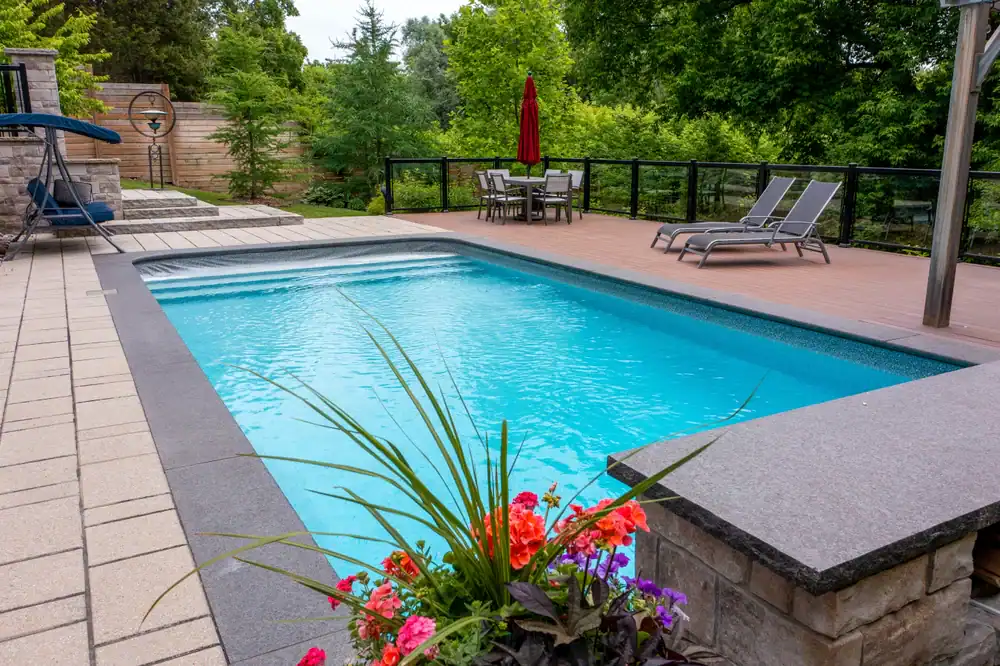
For Quitman homeowners, pool deck installation is often where the project really comes together. Whether you’re working with a historic property that has existing hardscape or a wide-open rural lot with room to design from scratch, the deck gets built to fit the space not forced into a standard layout. We also work in zone 9a year-round, so if you’re ready to start in the fall or winter, there’s no reason to wait until spring.
Yes, and it’s not a single permit it’s several. Pool construction in Quitman requires a building permit, an electrical permit, and a plumbing permit. For properties within the city limits, those go through the City of Quitman permit office at City Hall on East Screven Street. For properties in the unincorporated county, permitting runs through the Brooks County Development Services Office on South Highland Road.
On top of the permits, Georgia building code requires a rebar inspection before gunite can be applied so the county has to sign off on the steel framework before the shell goes in. There’s also a final inspection once the work is complete. Missing any of these steps can create real problems at resale or with your homeowner’s insurance. We handle every permit and schedule every inspection in-house, so you’re not left navigating a process you’ve never dealt with before.
From permit approval to the first swim, most custom gunite pool builds in Quitman take somewhere between 8 and 14 weeks, depending on the scope of the project and how quickly permits move through the county. Brooks County’s Development Services Office processes permits on their own timeline, and that lead time needs to be factored in before physical construction begins especially if you’re hoping to be swimming by a specific date.
Weather is the other variable. Quitman’s summers bring afternoon thunderstorms that can delay excavation and gunite application on a day-by-day basis. The good news is that South Georgia’s mild winters zone 9a means frost is rare allow construction to continue year-round. A pool started in November or December can realistically be complete before spring. If you want it ready by Memorial Day, the conversation needs to start well before the new year.
It comes down to the ground and the timeline. Brooks County’s Coastal Plain soils are a mix of sandy loam and clay, and clay moves. It expands when it’s wet and contracts when it dries out. A fiberglass shell is a rigid, pre-manufactured form that doesn’t adapt to that movement which is why fiberglass pools in clay-heavy soils can shift, pop, or develop stress cracks over time. Gunite is applied directly to the excavated shell, with a rebar framework that’s engineered for the specific site conditions. It doesn’t arrive pre-shaped and hope for the best.
The other factor is longevity. Vinyl liner pools need a new liner every 10 to 15 years. Fiberglass gel coats fade and require resurfacing. A properly built gunite pool, maintained with correct water chemistry, is designed to last 30 to 40 years. For a Quitman homeowner who’s in their property for the long haul especially on a historic lot or a rural acreage property that lifespan is the more honest investment.
It can, but it requires more planning than a standard suburban lot. Many of the older properties near Quitman’s historic district particularly along North Court Street and the surrounding blocks have mature live oaks, established camellia plantings, and original hardscape that wasn’t designed with a pool in mind. Root systems from large trees can extend well beyond the canopy, and excavation that isn’t carefully planned can cause significant damage to trees that took decades to grow.
The pre-construction site evaluation is where this gets sorted out. We look at root zones, access points, drainage patterns, and existing hardscape before any design is finalized. The goal is a pool that fits the character of the property not one that forces the property to accommodate a standard template. If there are constraints on placement, depth, or deck configuration, you’ll know before anything is drawn up, not after the excavation crew shows up.
Custom gunite pool construction in the Quitman area typically ranges from $60,000 to $90,000 or more, depending on size, shape, depth, deck design, and site-specific factors. Rural properties with longer utility runs or more complex excavation will generally land toward the higher end. Smaller, straightforward builds on accessible lots can come in lower.
What matters most is knowing exactly what’s in the number before you sign anything. A quote that doesn’t include permits, electrical, plumbing, the deck, or the safety cover isn’t a real quote it’s a starting point that’ll grow. Every Deep Waters Pools contract covers the full scope: site evaluation, excavation, rebar, gunite shell, all plumbing and electrical, pool deck installation, permit fees, and a custom safety cover. The number you agree to is the number you pay. If something isn’t in the contract, it doesn’t get added later.
In most South Georgia markets, a well-built inground pool adds meaningful value estimates from Georgia real estate data suggest somewhere in the range of 5 to 7 percent on residential property value. In Quitman specifically, the answer depends on the property type. On an acreage parcel or a larger rural lot where outdoor living is already a priority, a custom gunite pool tends to be a strong value-add. Buyers looking at those properties are often already thinking about outdoor amenities.
On older or historic properties in town, the value equation is a little more nuanced the pool needs to fit the character of the property and not overwhelm the yard. A pool that’s scaled and designed correctly for a historic Quitman lot can be a genuine selling point. One that dominates a smaller yard or clashes with the existing landscape is harder to recoup. That’s another reason the site evaluation matters: understanding what works for your specific property before you commit to a design.