
Hear from Our Customers
When your pool is on a real maintenance schedule, you stop reacting and start enjoying it. No more showing up on a Saturday to find green water. No more scrambling for chemicals the day before people come over. You open the gate, the water’s clear, and that’s the end of the story.
Quitman’s summers are genuinely tough on pool chemistry. Highs near 90°F burn through chlorine faster than most people expect, and the afternoon thunderstorms that roll through Brooks County in July and August don’t just bring rain they dilute everything you just balanced. A pool that looked perfect on Monday can be a problem by Thursday. That’s why consistent, professional maintenance matters more here than it does in most places.
The older inground pools along North Court Street and throughout Quitman’s historic neighborhoods carry their own maintenance considerations aging equipment, shifting soils, fittings that have been in the ground for decades. Catching a slow leak or a failing seal early costs a fraction of what it costs to ignore it for another season. That’s the real value of having someone who knows what they’re looking at, showing up regularly and paying attention.
We founded Deep Waters Pools in 2014 in Douglas, GA but the experience behind the company goes back over 30 years. We spent those decades doing the actual work: concrete, plumbing, custom pool construction, and everything in between. When we started Deep Waters, we weren’t building a business from scratch we were putting a name on something we’d already spent a career proving.
Douglas sits about 50 miles from Quitman along US 84 the same road that runs straight through the center of town. That’s not a coincidence. We’ve been serving South Georgia communities along this corridor for years, and Brooks County is a natural part of that footprint. The same coastal plain soils, the same climate patterns, the same afternoon storm activity that makes pool chemistry a moving target all summer long.
We’re fully licensed and insured, service all major equipment brands Hayward, Pentair, Jandy, Sta-Rite, and Zodiac and handle everything from weekly maintenance to leak detection to heater installation. One company. No runaround.
It starts with an honest assessment of where your pool is right now. Before any maintenance schedule begins, one of our technicians comes out to evaluate your water chemistry, inspect your equipment, and flag anything that needs attention whether that’s a minor adjustment or something that’s been quietly getting worse for a season or two. You get a clear picture of what you’re working with before any ongoing service begins.
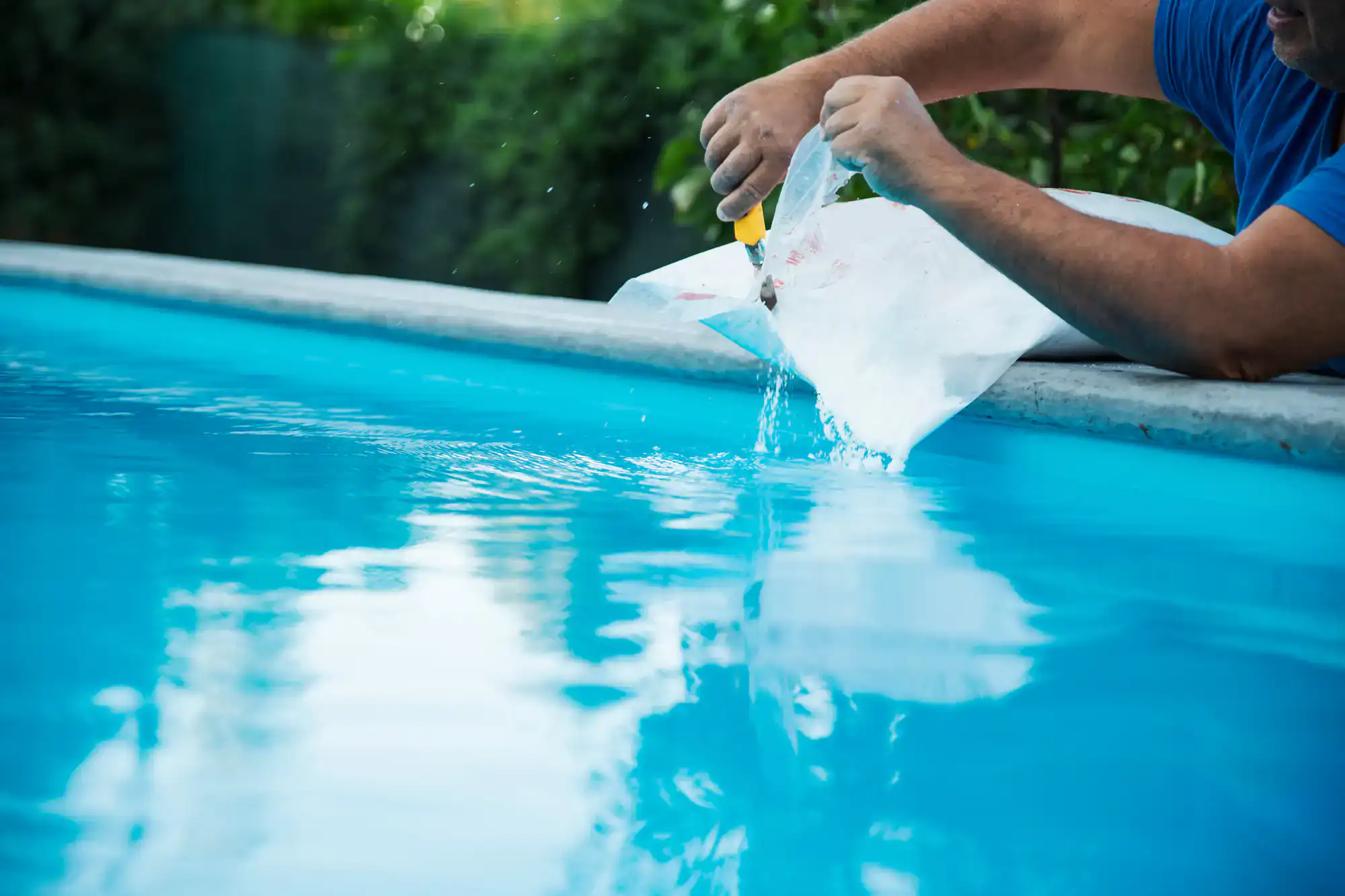
From there, weekly maintenance visits follow a consistent process: professional-grade water testing across all the key parameters pH, free and combined chlorine, alkalinity, calcium hardness, and stabilizer followed by precise chemical adjustments based on actual readings, not guesswork. In Quitman’s summer heat, that precision matters. Consumer test strips can give you a false sense of security. A pool that tests “fine” on a strip can still be quietly eroding your surfaces or running chemistry that’s unsafe to swim in.
For equipment repair, leak detection, liner replacement, or heater installation, the process is the same: a clear diagnosis first, a straight explanation of what’s needed and why, and work that’s done right without unnecessary upsells. Brooks County Development Services handles permitting for pool construction and renovation in this area, and we’re familiar with what that process requires so if your project needs a permit, that’s not going to be a surprise or a delay.
Ready to get started?
Weekly pool maintenance is the foundation but it’s far from the only thing Quitman pool owners need. We cover the full range: weekly maintenance and chemical balancing, pool equipment repair, leak detection, pool liner replacement, heater installation, filter cleaning, and pool covers. If your pool needs it, one call handles it.
Pool equipment repair covers all major brands, which matters in a market where many service companies only work on the brands they sell. Whether your pool was built five years ago or twenty-five, we can service whatever’s running it. Leak detection is something a lot of Brooks County homeowners put off longer than they should South Georgia’s sandy loam and clay subsoils shift with the moisture cycles, and slow leaks at plumbing penetrations can compromise the surrounding ground for months before the water bill gives it away. Catching it early is almost always significantly cheaper than addressing what comes after.
Heater installation and maintenance is worth mentioning specifically because Quitman’s mild winters are easy to underestimate. The shoulder months October, November, March are swimmable with a functioning heater and not without one. Pool heaters that get annual maintenance regularly reach 8 to 12 years of service life. Without it, that number drops to 3 to 5. Post-storm service is also a real need here after Hurricane Idalia, Tropical Storm Debby, and Hurricane Helene all moved through this area in back-to-back seasons, the demand for post-storm pool assessment and remediation in Brooks County is not theoretical.

In most of the country, you can make a case for biweekly maintenance during slower seasons. In Quitman, that’s a harder argument to make. From roughly March through October, the combination of sustained heat, high humidity, and frequent afternoon thunderstorms creates conditions where pool chemistry shifts faster than most homeowners expect. Chlorine burns off quickly in 90-degree heat, and a single storm can dilute a week’s worth of careful balancing overnight.
Weekly professional maintenance during the active season is the standard for a reason it keeps small chemistry problems from becoming green pool emergencies, and it keeps equipment issues from going unnoticed until they become expensive. During the cooler months, some homeowners do move to a less frequent schedule, but that’s a conversation worth having based on your specific pool, equipment, and usage rather than a blanket rule.
A proper maintenance visit covers more than adding chemicals and leaving. It starts with professional-grade water testing not consumer test strips, which are notoriously imprecise measuring pH, free chlorine, combined chlorine, total alkalinity, calcium hardness, and stabilizer levels. Based on those actual readings, chemicals are adjusted in the right amounts for current conditions.
Beyond chemistry, a maintenance visit should include skimming the surface, checking and cleaning the skimmer and pump baskets, inspecting equipment for anything that looks off, and brushing walls and steps as needed. In South Georgia’s climate, algae pressure is real and consistent during the summer months, so staying ahead of it through regular brushing and proper chemistry is far more practical than treating a full algae bloom after the fact. The goal of every visit is that the pool is ready to swim in and the equipment is running the way it should.
The bucket test is the standard starting point. Fill a bucket with pool water and set it on a step so it’s partially submerged. Mark the water level inside the bucket and on the pool wall. After 24 hours, compare the two. If the pool lost more water than the bucket, you likely have a leak rather than normal evaporation. In Quitman’s summer heat, evaporation alone can account for a quarter inch of water loss per day so the comparison matters.
If the bucket test points to a leak, professional leak detection is the next step. Guessing at the source and repairing the wrong thing is a common and expensive mistake. Inground pool leak detection typically runs $300 to $1,000 depending on complexity, and repairs generally range from $500 to $1,500. In Brooks County’s soil conditions sandy loam over clay subsoil that shifts with the moisture cycles leaks at plumbing penetrations are worth finding early, because the longer they run, the more the surrounding ground is affected.
After a significant rain event, your pool chemistry is essentially starting over. Large volumes of rainwater dilute chlorine, raise pH, and lower alkalinity which creates the exact conditions algae needs to take hold fast. If you’re seeing green water after one of the storms that moves through Brooks County in the summer, the first thing to do is not panic and not start dumping chemicals in without testing first.
The right approach is a full water test to understand exactly what’s out of balance before adding anything. Shocking the pool with the wrong chemistry particularly if the pH is way off wastes product and can make the problem worse. A professional assessment after a major storm gets you back to clear water faster and more efficiently than trial and error with store-bought chemicals. We offer post-storm service for exactly this situation, and given that Quitman has been in the path of multiple named storms in recent seasons, it’s a service call that comes up more than people expect.
Most inground vinyl liners last somewhere between 10 and 15 years under normal conditions, though that range shifts based on how well the water chemistry has been maintained over time. Consistently unbalanced water particularly low pH is one of the fastest ways to shorten a liner’s life. In South Georgia’s climate, where chemistry management is an ongoing challenge through the summer months, liners that haven’t had professional maintenance tend to show wear earlier than they should.
Signs that a liner is approaching replacement include fading, wrinkling, visible cracks or tears, and water loss that can’t be explained by evaporation or equipment issues. When it’s time, the installation process matters as much as the liner itself. An improperly installed liner bubbles, wrinkles, or pulls away from fittings and those problems show up quickly. We’ve been doing liner replacements in South Georgia for years, and the standard is straightforward: it goes in right the first time, or it doesn’t leave the job site.
Yes and the geography makes sense. We’re based in Douglas, GA, which sits about 50 miles from Quitman along US 84. That’s the same US 84 that runs directly through the center of town, connecting these two South Georgia communities along a straightforward corridor. Brooks County has been part of our service area because the conditions here the climate, the soil type, the storm exposure are consistent with what we’ve been working in across South Georgia for over 30 years.
The concern behind this question is usually reliability: will a company based in another county actually show up on schedule, or will Quitman customers end up at the bottom of the priority list? That’s a fair thing to ask. We built our reputation on showing up consistently, on schedule, without homeowners having to chase us down. That doesn’t change based on which county the pool is in. If you’re in Brooks County and you want a service call or a maintenance schedule, the process is the same as it is for any other customer on our route.