
Hear from Our Customers
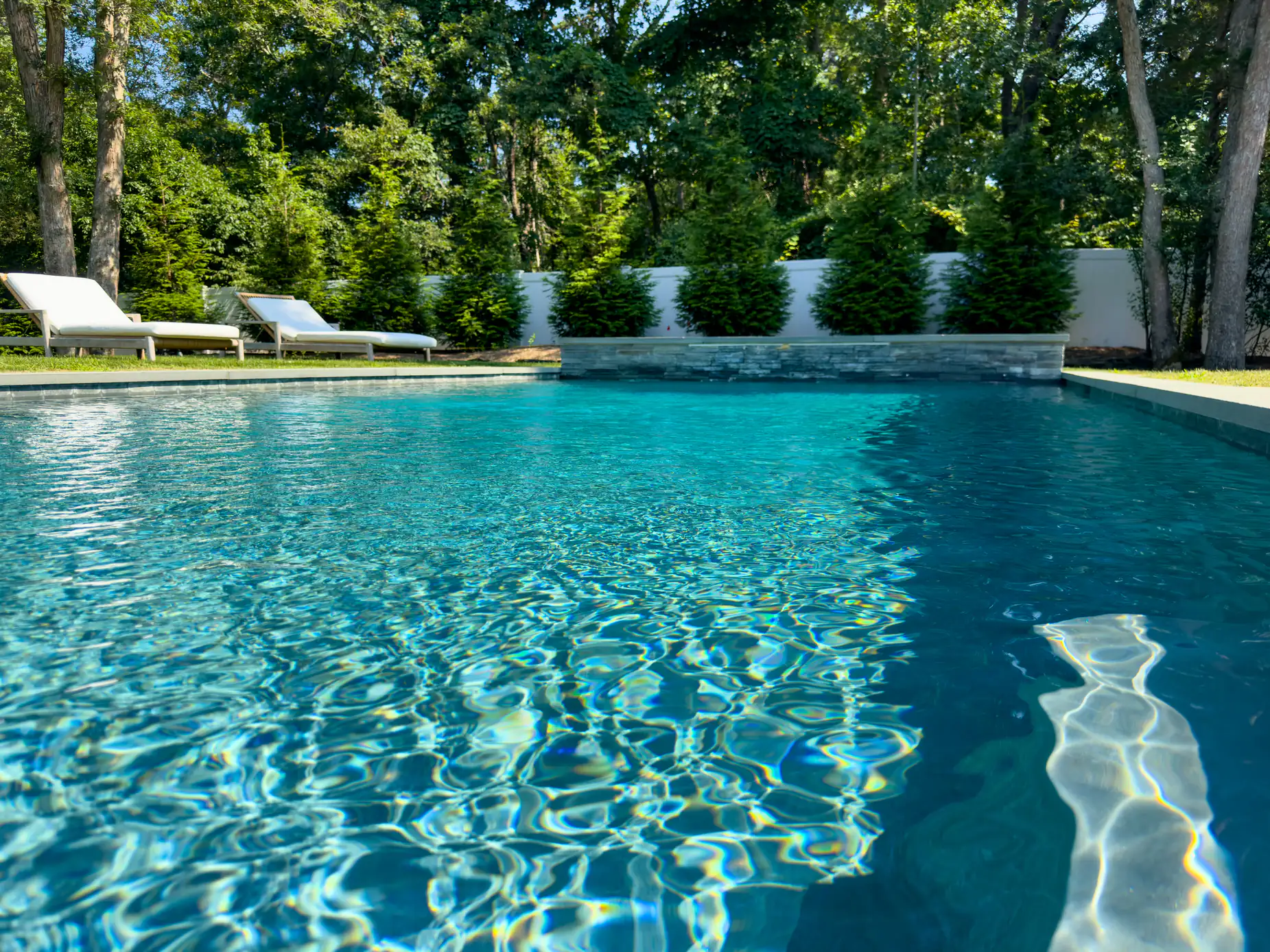
Central Georgia summers don’t ease up. From June through August, you’re looking at 90-plus degrees with humidity that makes it feel worse. A well-built gunite pool in Montrose isn’t a luxury add-on it’s the most practical upgrade you can make to a property you’ve already invested in. And with a swimming season that runs roughly April through October, you’re getting nearly seven months of use out of it every year.
The homes in the Montrose area carry a mean value north of $324,000. A custom gunite pool adds roughly 7% to your property value in Georgia that’s a documented number, not a marketing guess. You’re not just building something to enjoy this summer. You’re adding real value to a home that’s already worth protecting.
What makes gunite the right call here specifically is the land. Most properties around Montrose sit on larger lots with more design flexibility than you’d find in a tighter Dublin subdivision. That means more shape options, more placement options, and fewer setback headaches. Gunite can be built in any configuration freeform, geometric, L-shaped, whatever actually fits your yard and it’s engineered to hold up against the sandy loam over clay subsoil that runs through this part of the Coastal Plain. A pool built right for this ground will still be performing 30 years from now.
We founded Deep Waters Pools in 2014, but our team had already spent more than 30 years building pools, doing concrete work, and running plumbing across Georgia before the company ever had a name. That history matters when you’re hiring someone to dig up your backyard and spend the next several months building something that’s supposed to last decades.
Most pool builders subcontract the work. Excavation goes to one crew, rebar to another, gunite to a third, plumbing and electrical to whoever’s available. We don’t operate that way. Every phase from the first shovel in your Montrose yard to the final electrical inspection is handled by the same in-house team. That’s not a small thing. It’s the reason accountability doesn’t fall through the cracks.
We also handle every permit in-house. Laurens County requires both a building permit and a separate electrical inspection before your pool can be legally powered up Georgia Power won’t activate service without Building Inspection Department sign-off. You won’t be making calls to the county, scheduling inspectors, or figuring out paperwork. That’s handled.
It starts with a site visit. Before anything is designed or priced, we look at your actual property the grade, the soil, the setbacks, where utilities run, how the yard drains. In Montrose and the surrounding Laurens County area, the Coastal Plain soils mean sandy loam at the surface with clay layers underneath. That subsoil profile affects how the shell is engineered, where the rebar goes, and how the footing is designed. A builder who skips that step is guessing.
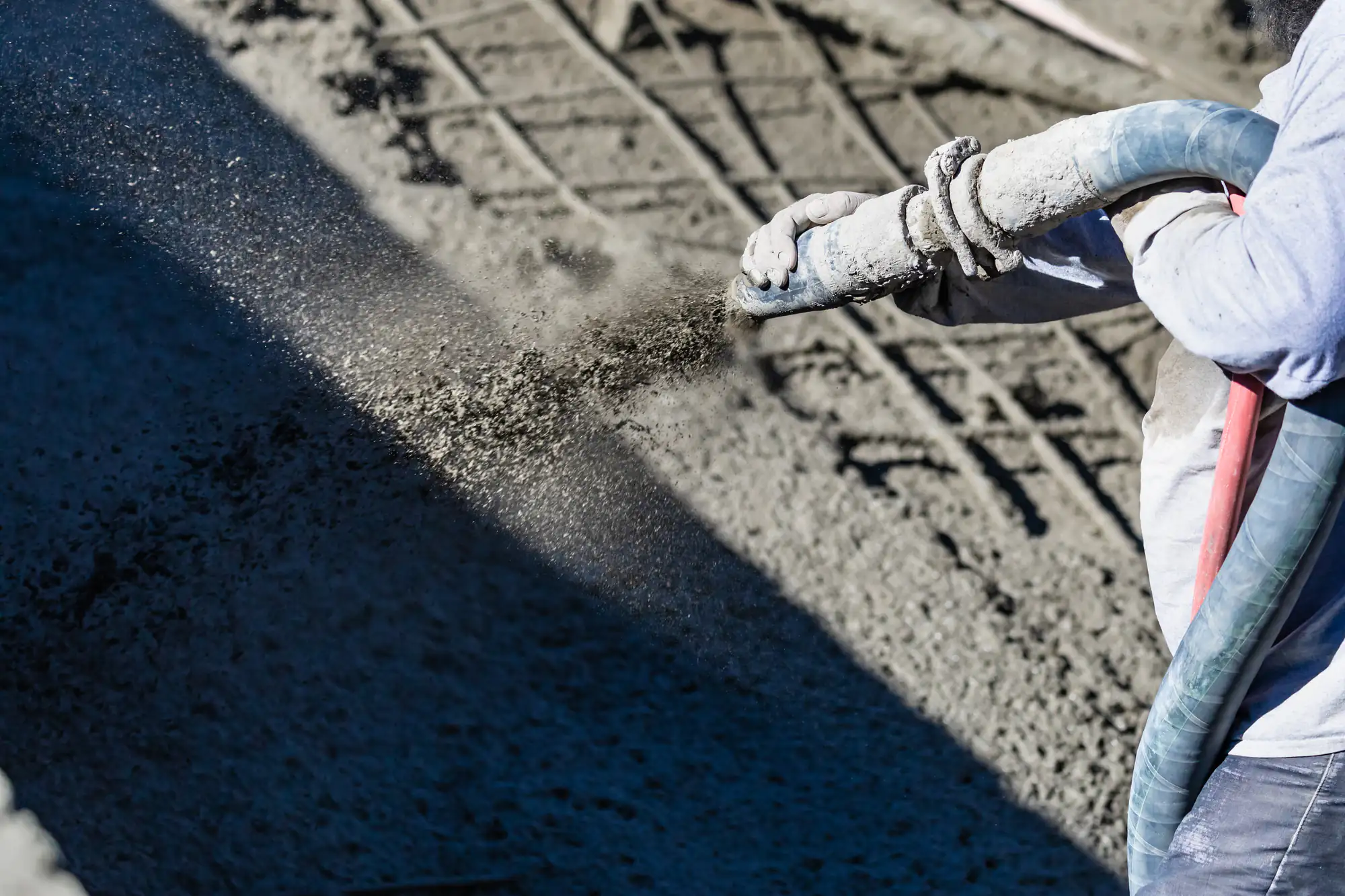
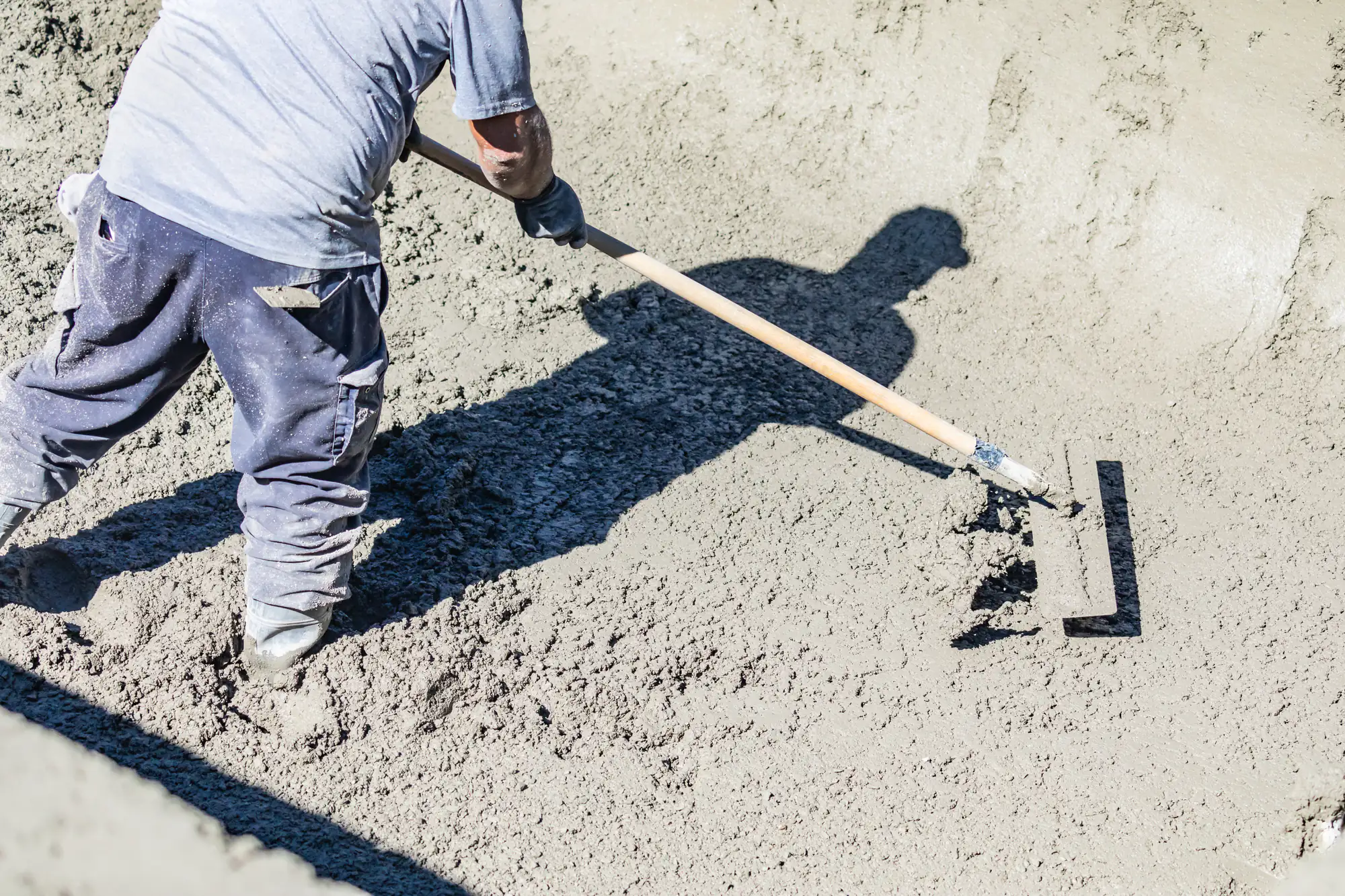
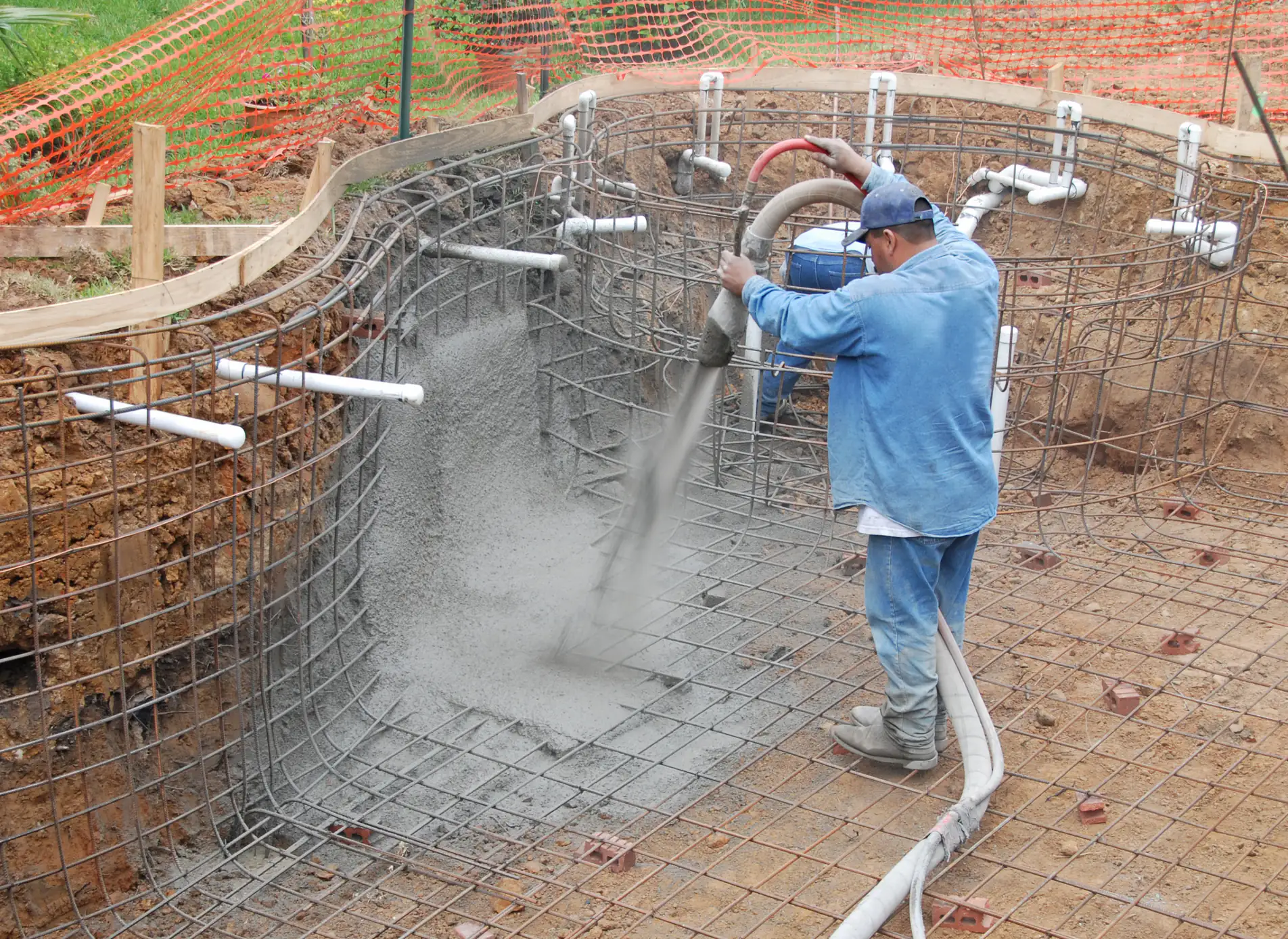
Once the design is finalized and permits are pulled building permit and electrical, both handled in-house through the Laurens County Building Inspection Department excavation begins. After the dig, the steel rebar framework goes in, inspected before a single layer of gunite is applied. The gunite itself is pneumatically applied at high pressure, building up the shell in layers until the walls reach the right thickness. Then it cures. Rushing the cure is one of the most common ways a pool ends up needing replastering in five years instead of fifteen. We don’t rush it.
After curing, plumbing and electrical are installed and inspected. Then the interior finish goes on plaster, pebble, or tile depending on what you’ve selected followed by decking, coping, and equipment installation. From permit approval to a pool you can swim in, a realistic timeline is three to six months. That’s the honest number. Anyone quoting you eight weeks on a custom gunite pool is setting you up for a bad experience.
Ready to get started?
Every gunite pool we build is a fully custom concrete pool installation not a pre-shaped fiberglass shell dropped into a hole, not a vinyl liner stretched over a frame. The shape, depth, and layout are designed around your specific property. If your lot in Montrose has an unusual grade or an awkward footprint, that gets accounted for in the design, not worked around.
Structurally, every shell we build includes adequate rebar density, correct wall thickness, and a properly constructed bond beam. These aren’t upsells they’re what separates a pool that holds up from one that develops cracks in the first few years. The gunite is applied by the same crew that frames and inspects the steel, so there’s no communication gap between what was engineered and what gets built.
On the equipment side, we install and service all major brands Hayward, Pentair, Jandy, Sta-Rite, and Zodiac. That matters in Montrose specifically because there’s no local pool supply or service infrastructure in town. When something needs attention after the build, you have one phone number. The team that built your pool is the same team that maintains it. All electrical work is bonded and grounded per NEC Article 680 the federal safety standard for pool electrical systems and every project closes with a passed electrical inspection before the equipment is powered up.
The honest answer is three to six months from permit approval to a finished, swim-ready pool. That range accounts for the full process permitting through Laurens County, excavation, rebar and steel installation, gunite application, curing time, plumbing, electrical, interior finishing, and decking. Each of those phases has a minimum time requirement if you want the pool to hold up long-term. The curing phase alone requires adequate time before the interior finish goes on, and cutting it short is one of the most common reasons pools need early replastering.
If you hear a builder quote you six to eight weeks on a custom gunite pool, ask them to walk you through how that timeline accounts for the Laurens County permit process, the required electrical inspection, and proper gunite curing. The math usually doesn’t work. Starting your project in the fall October or November is the smart move if you want to be swimming by April or May in Montrose. Permit queues are shorter, crews are more available, and you’ll hit the pool season ready instead of waiting through it.
Cracking in gunite pools is a builder problem, not a material problem. The soils in central Georgia’s Coastal Plain including the sandy loam over clay subsoil that runs through Laurens County and Montrose do experience some moisture-driven movement in the clay layers. A pool shell that isn’t engineered for those conditions, one with insufficient rebar density, walls that are too thin, or a bond beam that wasn’t built correctly, can develop cracks over time. That’s a construction failure, not a gunite failure.
A properly engineered gunite shell built with the right wall thickness, adequate rebar, correct footing design, and full curing time handles normal soil movement without cracking. We engineer every shell for the specific site conditions of the project, which means the soil profile of your Montrose property gets factored into the structural design before the first shovel breaks ground. The pools that crack are the ones where the builder guessed, cut corners on rebar, or rushed the cure. That’s what you’re actually evaluating when you compare bids.
Laurens County requires a building permit before any pool construction begins. Beyond that, a separate electrical inspection is required and this one has a real consequence attached to it. Georgia Power and the local EMCs will not activate electrical service to the pool without Building Inspection Department sign-off. That means a pool built without proper electrical permitting and inspection cannot be legally powered up through normal channels. It’s not a technicality you can work around later.
We handle every permit and every inspection in-house. That includes the building permit, the electrical permit, and coordination with the Laurens County Building Inspection Department reachable at (478) 272-4755 through every required inspection phase. You don’t fill out a form, schedule an inspector, or make a single call to the county. The permit process is managed from start to finish, and the project doesn’t close until every inspection is passed and signed off. For a homeowner with a job and a family, that’s not a minor convenience it’s one less thing that can go wrong.
For a residential custom gunite pool in central Georgia, you’re generally looking at a range of $75,000 to $150,000 depending on size, shape, depth, finish selections, and site-specific factors. Properties in the Montrose area tend to have larger lots than you’d find in tighter suburban settings, which gives you more design flexibility but it also means excavation scope, decking square footage, and equipment placement can vary significantly from one project to the next. Those variables affect the final number in real ways.
What you’re paying for in that range is a permanent, fully custom concrete pool built to the specific conditions of your property. That’s different from a fiberglass shell that comes in a fixed shape and gets dropped into a hole, or a vinyl liner pool that will need its liner replaced every eight to twelve years. A properly built gunite pool, with the right engineering and finish, has a structural lifespan measured in decades. The property value return in Georgia runs around 7%, which on a home valued in the $300,000-plus range common in the Montrose area is a meaningful number before you factor in a single summer of use.
Both can work, but they’re not the same product and they’re not right for the same situation. Fiberglass pools come in pre-manufactured shapes you pick from a catalog, and the shell gets delivered and installed. The installation is faster, and the surface is smooth. The tradeoff is that you’re locked into whatever shapes and sizes the manufacturer offers, the shell can pop or shift if it’s not properly backfilled, and you have less control over the structural outcome.
Gunite gives you complete design freedom. Any shape, any depth, any configuration that fits your yard. For properties in the Montrose area where lots tend to be larger and the terrain varies that flexibility matters. The argument you’ll sometimes hear that gunite requires replastering every three to seven years comes from poorly built pools, not from the material itself. A quality gunite pool with a proper interior finish needs resurfacing every ten to fifteen years. The difference between those two timelines is almost entirely about who built it and how.
Yes, we serve Montrose and the broader Laurens County area. We’re based in Douglas, GA, and operate across South and Central Georgia the same Coastal Plain region that includes Laurens County. That geographic overlap isn’t just a service area designation. It means our team has direct, hands-on experience with the soil conditions, climate patterns, and permit processes specific to this part of Georgia. Montrose isn’t a stretch of our service area it fits squarely within the region we’ve been building in for years.
For Montrose homeowners specifically, that local knowledge matters in practical ways. The Laurens County permit process, the electrical inspection requirement, the clay subsoil conditions common to this part of the Coastal Plain these aren’t things our team is encountering for the first time on your project. And because we also maintain what we build, you’re not left searching for a service provider after the project closes. In a town with no local pool service infrastructure, having the builder on call for equipment service and maintenance is worth factoring into your decision before you sign anything.