
Hear from Our Customers
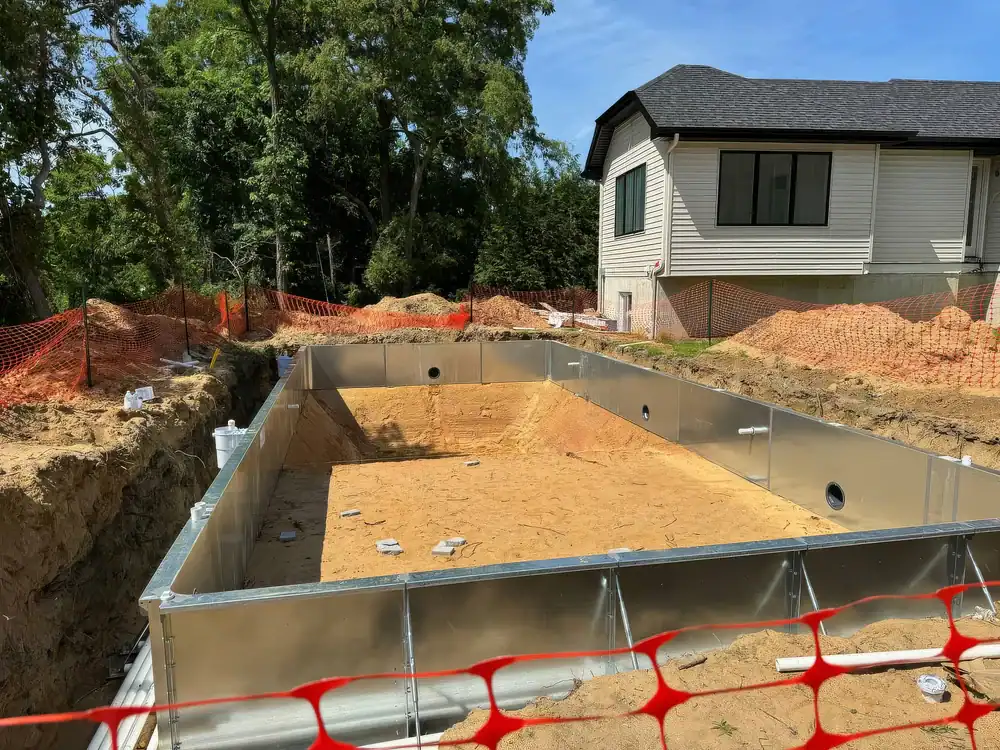
You get a pool that was built for where you live. Not a fiberglass shell that arrived on a flatbed in a fixed shape and got dropped into whatever space was available. A gunite pool is built on your property, from the ground up, shaped around the actual footprint of your yard including the slope, the mature trees, the outbuilding in the corner, and the septic system that creates setback requirements on the east side. That’s not a small thing when you’re on a rural lot in western Laurens County near Montrose.
The other thing you get is durability that matches the climate here. Summers in this part of Georgia run long and hot Laurens County sits about 100 miles inland, which means no coastal breeze to take the edge off. When it’s 93 degrees in July and the humidity is sitting heavy, a pool isn’t a luxury. It’s what makes your backyard usable for seven months of the year. A properly built gunite shell gets stronger with age and doesn’t need liner replacements every decade the way vinyl pools do.
And because we handle every permit through Laurens County the building permit, the electrical permit, the septic review through Environmental Health what you’re left with at the end is a clean, fully permitted asset on your property title. No complications when it’s time to sell. No surprises at the county office.
Deep Waters Pools was founded in 2014, but the experience behind it goes back more than three decades. Our founder spent 30-plus years working in concrete, plumbing, and custom pool construction across Georgia before opening the business which means by the time your project starts, you’re working with someone who has already built pools on clay-heavy Coastal Plain soil, navigated county permitting offices across the region, and seen what happens when a pool shell isn’t engineered for Georgia’s seasonal ground movement.
We’re based in Douglas, Georgia, and serve the central and southeast Georgia corridor including Laurens County and the communities along the US 80 corridor between Montrose and Dublin. Every build uses the same crew from excavation through the final deck installation. We don’t bring in subcontractors for plumbing, electrical, or any other phase. The people who break ground on your pool are the same people who hand you the keys when it’s done.
That’s not a standard practice in this industry. It’s a deliberate choice and it’s the reason our projects don’t have the coordination gaps and mid-project surprises that define most pool construction horror stories.
It starts with a site evaluation. Before any equipment shows up, we assess the property lot dimensions, soil conditions, existing structures, and the location of any septic system that creates setback requirements. In rural western Laurens County, where properties tend to be larger acreage lots rather than tight subdivisions, this step matters more than people expect. The pool’s footprint is engineered to the actual land, not the other way around.
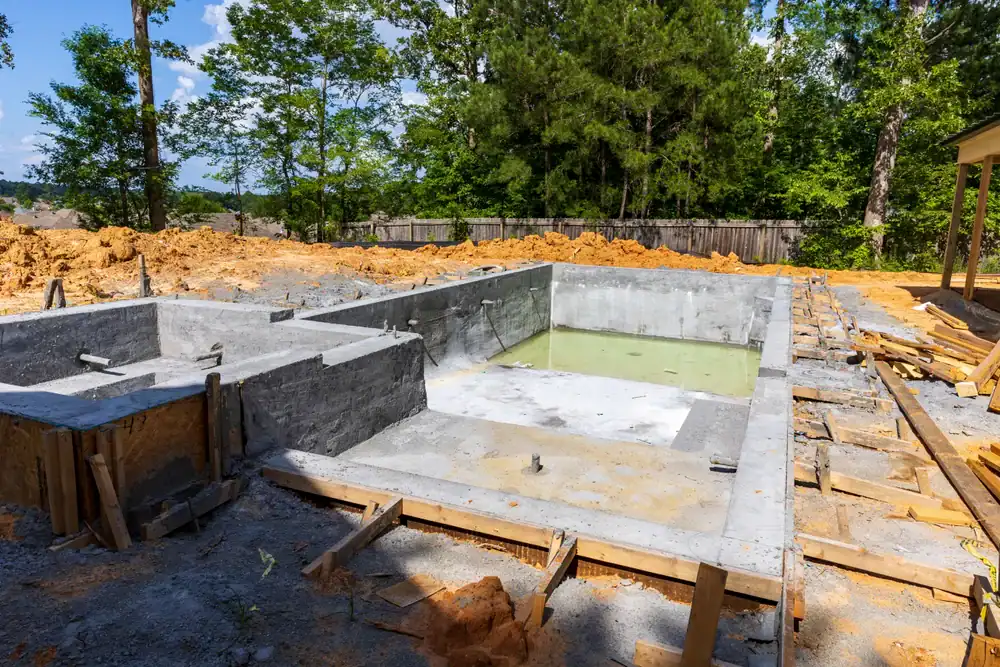
Once the design is confirmed, we pull every required permit through Laurens County. That includes the building permit through the Commissioner’s Office, the electrical permit, and the septic review through Laurens County Environmental Health. You don’t have to navigate that multi-agency process yourself it’s handled. When the permits are in hand, excavation begins. The rebar cage goes in next, and here’s where Georgia building code requires a mandatory inspection before a single layer of gunite is applied. That inspection happens, gets passed, and gets documented every time.
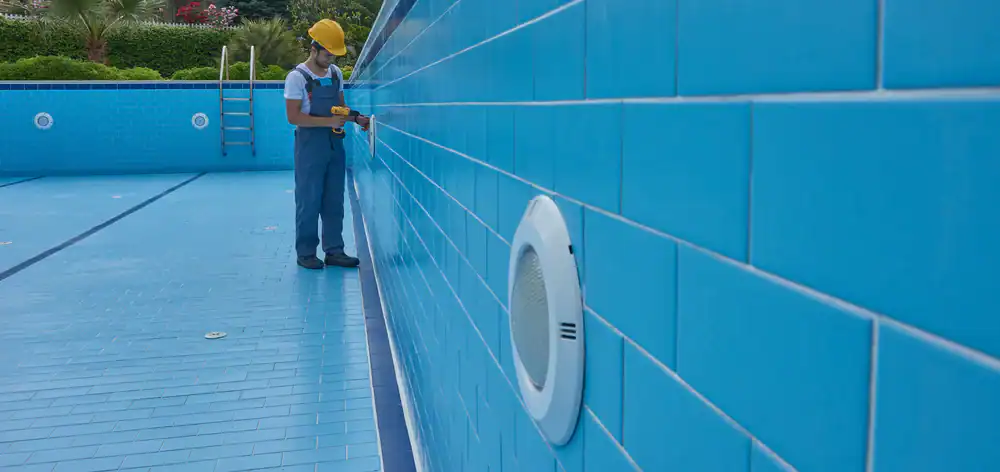
After the rebar inspection clears, the gunite shell is applied, the plumbing is installed, and the electrical bonding and grounding are completed to NEC Article 680 standards. Deck installation follows, and every build includes a custom safety cover as standard. Laurens County’s mild winters mean construction can proceed year-round so if you’re signing a contract in the fall, there’s a real path to being ready to swim before Georgia’s heat arrives in April.
Ready to get started?
We build custom gunite inground pools exclusively. No fiberglass. No vinyl liner. That’s a deliberate specialization gunite is the only pool type that can be built in any shape, any size, at any depth, engineered to the specific property it’s going on. For homeowners on rural Laurens County lots where the yard doesn’t conform to a catalog, that flexibility isn’t a selling point. It’s a necessity.
Every build is all-inclusive from the start. The contract covers site evaluation, excavation, the full rebar cage, gunite shell application, all swimming pool plumbing, NEC Article 680-compliant electrical bonding and grounding, equipment installation, pool deck installation, and a custom safety cover. Georgia requires a minimum 4-foot barrier fence with self-closing, self-latching gates we walk every Montrose customer through those requirements as part of the permitting process so there are no compliance gaps after the build is complete.
The median home value in the 31065 ZIP code sits around $231,800. A pool build represents a significant portion of that and a properly permitted, professionally built gunite pool adds real value to the property rather than complications at resale. The all-inclusive contract structure exists specifically so that the number you see at the start is the number that holds. No surprise soil conditions charges, no permit fees tacked on at the end, no equipment upgrades that weren’t disclosed upfront.
Yes and the permitting process in Laurens County involves more than one agency, which catches a lot of homeowners off guard. You’ll need a building permit through the Laurens County Commissioner’s Office, an electrical permit for the pool’s bonding and grounding system, and a septic review through Laurens County Environmental Health if your property has an existing septic system. Address verification through the Laurens County E-911 Office is also part of the process.
We handle every step of this in our name not yours. That matters because when a contractor pulls the permit themselves, they’re legally accountable for the work meeting code. It also means you’re not spending time on hold with the county building department trying to figure out which office handles what. The permits get pulled, the inspections get scheduled, and you get notified when each phase clears. That’s the standard process on every build in Laurens County.
Custom gunite pool construction in the Laurens County area typically runs in the range of $60,000 to $80,000 for a complete build covering excavation, rebar, gunite shell, plumbing, electrical, equipment, deck installation, and a custom safety cover. The exact number depends on pool size, shape, depth, and any site-specific factors like slope or existing structures that affect excavation complexity.
What matters more than the starting number is what’s included. A low bid that doesn’t account for permit fees, electrical work, or deck installation isn’t a low bid it’s an incomplete one. We give you an all-inclusive contract from the start so the number you agree to is the number you pay. For homeowners in the 31065 ZIP code where a pool represents a meaningful percentage of total property value, that transparency is the difference between a confident investment and a stressful one.
From signed contract to finished pool, a typical custom gunite build takes approximately 8 to 12 weeks, depending on permit timelines, site conditions, and weather. In Laurens County, the multi-agency permitting process building permit, electrical permit, septic review adds some front-end time compared to counties with a single-agency process. We manage that process in-house, which keeps it moving as efficiently as possible.
One advantage of building in central Georgia is the climate. Unlike northern markets where frozen ground halts excavation for months, Laurens County’s mild winters allow construction to continue year-round. A homeowner in Montrose who signs a contract in October has a realistic path to being pool-ready by April before the heat that makes a pool worth having arrives in full force. If your goal is to swim by Memorial Day, starting the conversation in the fall is the right move.
Because fiberglass shells come in fixed shapes and fixed sizes and a lot of properties in western Laurens County don’t fit a fixed shape. Rural lots with irregular footprints, mature trees, existing outbuildings, or septic systems that create setback requirements on one side of the yard can’t be accommodated by a pre-formed shell that arrives on a flatbed truck. You end up compromising the pool to fit the product instead of building the product to fit your property.
Gunite is built on-site from scratch, which means the shape, size, and depth are engineered to your specific lot. There’s no catalog to flip through and no standard dimensions to conform to. Beyond the fit, gunite is structurally the strongest pool type available. It gets stronger as it cures over time and doesn’t carry the surface degradation issues that fiberglass gel coat develops after years of Georgia’s UV exposure and heat. For a homeowner who plans to stay in their home for decades, it’s the option that holds up.
Generally, yes but the way it adds value depends heavily on how it was built and whether it was permitted correctly. A properly engineered, fully permitted gunite pool built by a licensed contractor who pulled the permits in their own name is a clean asset on your property title. Georgia real estate data suggests a well-built inground pool adds approximately 7% to residential property value in markets like Laurens County.
An unpermitted pool or one built with a homeowner-pulled permit that the contractor didn’t stand behind is a different story. It tends to surface as a liability during a sale, requiring retroactive inspections, potential remediation, or price reductions to account for the buyer’s risk. In a community like Montrose where homeowners tend to stay in their properties for a long time, the difference between a permitted pool and an unpermitted one shows up clearly on the closing table.
It can if the pool isn’t engineered for it. Laurens County sits in Georgia’s Coastal Plain region, where soils tend to be a mix of sandy loam and clay. Clay soils expand when they absorb moisture and contract during dry periods. That seasonal movement cycle puts stress on a pool shell that wasn’t built to account for it. Over time, a shell that wasn’t properly engineered for clay soil movement can crack, shift, or develop structural problems that are expensive to fix and difficult to catch before they get worse.
The way to address it is in the rebar cage design and the gunite application the structural foundation of the pool before the shell is sealed. Georgia building code requires a mandatory inspection of the rebar cage before any gunite is applied, specifically to verify that the structural engineering is sound before it gets buried. We build to that inspection every time, and the 30-plus years of experience behind our company includes working with Georgia’s soil conditions across the region. That’s not a generic credential it’s the specific kind of experience that keeps a pool from cracking five years after it’s built.