
Hear from Our Customers
A pool that gets skipped for two weeks in a Tift County summer isn’t just a little cloudy it’s green, it smells, and it’s not safe for anyone to swim in. Temperatures pushing 91°F burn through chlorine faster than most homeowners expect, and the afternoon thunderstorms that roll through the Tifton area almost every summer evening dilute your water chemistry overnight. By the time you notice the problem, it’s already expensive to fix.
Weekly professional service changes that equation entirely. Your water gets tested with real equipment not a strip dipped in and eyeballed and adjusted based on what it actually needs that week. Equipment gets checked while it’s running, so small problems get caught before they become a failed pump on a Saturday in August.
A lot of the pools in Unionville have been in the ground since the 1970s and ’80s. Older concrete pools develop specific issues over time slow leaks, aging liners, pump motors that are running harder than they should. Catching those things early, during a routine visit, costs a fraction of what it costs to deal with them after something fails completely. That’s the real value of consistent service not just a clean pool, but a pool that keeps working.
Deep Waters Pools was founded in 2014 out of Douglas, Georgia but the experience behind it goes back more than three decades. We spent 30-plus years working hands-on in concrete, plumbing, and custom pool construction across South Georgia before the business ever took its first call. That’s not a tagline. It means when one of our technicians shows up at a home off US 41 in Unionville, they’ve seen every version of what a South Georgia pool looks like after 40 years in clay-heavy soil and humid subtropical heat.
We’re fully licensed and insured in Georgia, family-owned, and built around the kind of accountability that only comes when your name is actually on the business. There’s no franchise behind it, no call center routing your service requests. When something needs attention, you reach a person who cares about getting it right.
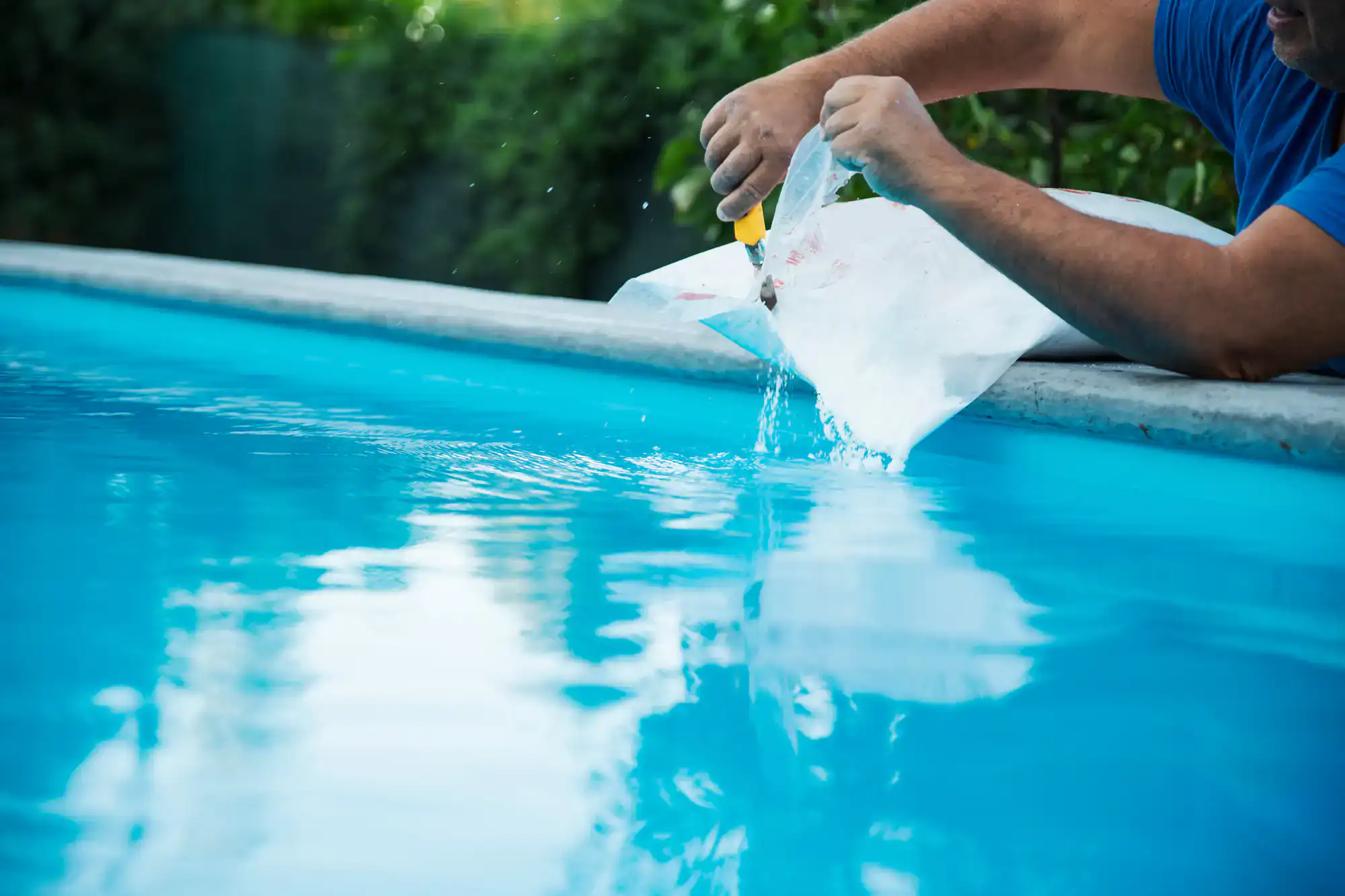
It starts with a real assessment of your water. Not a quick glance actual testing that measures chlorine, pH, alkalinity, and stabilizer levels so adjustments are precise, not approximate. South Georgia’s swim season runs from roughly March through October, and what your pool needs in June after a week of 90-degree days and three afternoon storms is different from what it needs in April. Service gets calibrated to what’s actually happening, not a fixed formula applied the same way every time.
From there, the physical work gets done skimming, brushing, vacuuming, filter checks, and equipment inspection. If something looks off with a pump, a heater, or a filter, you hear about it before it becomes a failure. For Unionville homeowners dealing with older pool infrastructure, that equipment check is often where the most important conversations happen.
For new construction or major repair work, we handle the permitting process through Tift County since Unionville is unincorporated, that means coordinating with Tift County’s building department and Environmental Health division, not the City of Tifton. You don’t have to figure out which agency to call or what forms to pull. That part gets handled.
Ready to get started?
We cover the full range of what residential pool ownership actually requires. Weekly maintenance includes water testing and chemical balancing, skimming, brushing, vacuuming, and equipment inspection everything that keeps a pool safe and swimmable through Tift County’s long summer season. For homeowners in Unionville who want their pool handled start to finish without managing multiple contractors, that’s exactly what this service is built to do.
Beyond weekly service, our repair and renovation work covers pool equipment repair across all major brands Hayward, Pentair, Jandy, Sta-Rite, and Zodiac so whatever’s installed on your equipment pad, it can be diagnosed and fixed without a runaround. Leak detection is available for pools showing unexplained water loss, which is a real and common issue in Unionville’s older housing stock where ground movement in South Georgia’s clay soils stresses pool shells and plumbing connections over time. Liner replacement, tile and coping repair, filter service, heater installation, and custom safety covers round out the full service menu.
If you’re thinking about a new inground pool, we handle custom concrete pool construction with 3D design renderings and manage the Tift County permitting process from start to finish. Emergency service is available when something breaks and waiting until Monday isn’t an option.

In South Georgia’s climate, weekly service isn’t a upsell it’s genuinely what the environment demands. Tift County summers combine sustained heat above 90°F with regular afternoon thunderstorms, and that combination is hard on pool water. Chlorine burns off faster in high heat, and every time it rains, fresh water dilutes your chemistry and resets the balance you worked to achieve. A pool that gets serviced every two weeks in July in this climate is a pool that’s probably green by the second week.
Weekly visits also give our technicians the chance to catch equipment issues while they’re developing a pump that’s running louder than usual, a filter that’s losing pressure, a heater that’s cycling inconsistently. Catching those things early during a routine visit is far less expensive than dealing with a full failure mid-summer. For most Unionville homeowners with active pools, weekly service through the March-to-October swim season is the right call.
A proper weekly maintenance visit covers more than skimming leaves off the surface. It starts with water testing measuring chlorine, pH, total alkalinity, and stabilizer levels with professional-grade equipment and then adjusting chemicals based on what the water actually needs that week. In South Georgia’s heat, those numbers move around more than most homeowners expect, so precise testing matters.
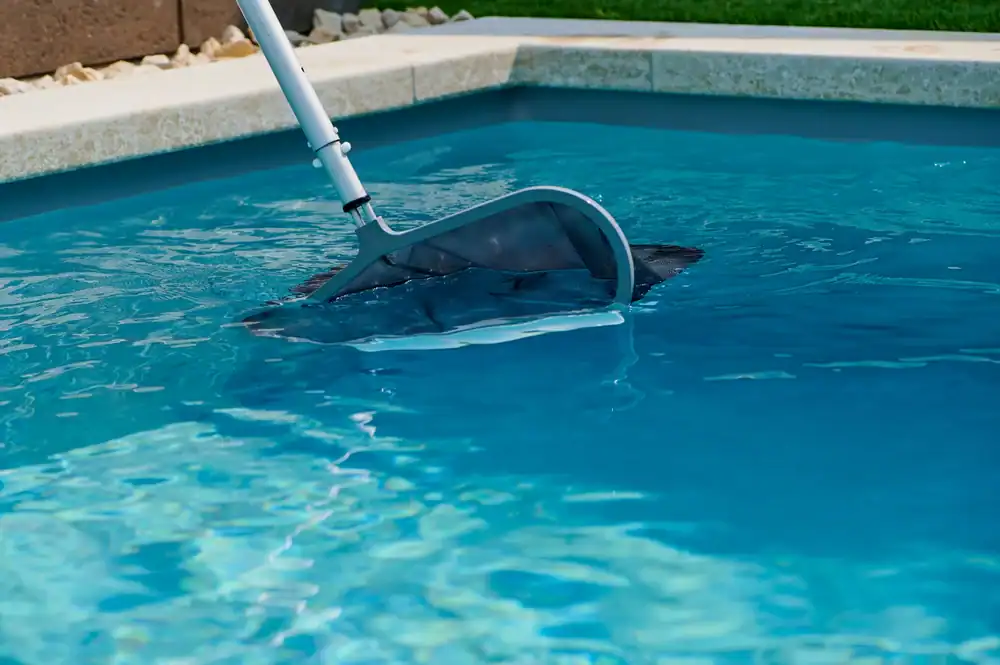
After chemistry, the physical cleaning work happens: skimming the surface, brushing the walls and floor to prevent algae from taking hold, vacuuming debris, and cleaning out the skimmer and pump baskets. Equipment gets checked while it’s running pump pressure, filter performance, and any visible signs of wear or developing problems. The goal is to leave your pool clean, balanced, and with nothing quietly going wrong that you’ll find out about the hard way later.
Green water is almost always an algae problem, and algae grows when chlorine levels drop low enough to stop controlling it. In Tift County’s summer heat, that can happen faster than most people realize especially after a stretch of hot days or a run of afternoon storms that dilute the water. Once algae establishes itself, a simple dose of chlorine usually isn’t enough to clear it. It takes a shock treatment at the right concentration, followed by brushing to break up the algae colonies, and then consistent chemistry maintenance to prevent it from coming back.
The key is not letting it get to that point in the first place. A pool that’s professionally tested and balanced every week doesn’t give algae the window it needs to take hold. If your pool is already green, it can be remediated but it takes more time, more product, and more work than keeping it balanced from the start. If you’re in Unionville and dealing with a recurring green pool problem, the fix is usually more consistent service, not a different chemical.
Some water loss from a pool is normal evaporation in South Georgia’s summer heat can account for a quarter to half an inch per day, sometimes more during hot, dry stretches. The way to tell the difference is the bucket test: fill a bucket with pool water, set it on a step so it’s partially submerged, and mark both the bucket water level and the pool water level. After 24 hours, if the pool has lost significantly more water than the bucket, you likely have a leak.
In Unionville’s older housing stock, leaks are a legitimate concern. Clay-heavy South Georgia soils shift seasonally expanding when wet, contracting during dry periods and that ground movement stresses pool shells, plumbing connections, and fittings over time. A slow leak can go undetected for months while quietly running up your water bill and potentially causing damage to the surrounding deck or structure. Professional leak detection goes beyond watching the water level it identifies the actual source so the right repair gets made, not just a patch on the symptom.
In South Georgia, a pool heater serves a specific and practical purpose: it extends your swim season into the shoulder months when air temperatures are comfortable but water temperatures have dropped below what most people want to swim in. March and October are the clearest examples it’s warm enough to be outside and enjoy the backyard, but the water is sitting in the low 60s without a heater. For families with kids, that gap between “nice outside” and “too cold to swim” is exactly where a heater pays for itself in usable pool days.
A properly sized and installed gas or propane heater can last 8 to 12 years. An improperly sized or poorly installed one might last three to five. Getting the installation right correct BTU sizing for your pool volume, proper placement, and correct venting makes a real difference in both performance and longevity. We handle heater installation in Tift County and can walk you through what sizing makes sense for your specific pool before any equipment gets purchased.
Yes Unionville is an unincorporated community in Tift County, and we service residential pools throughout the area, including properties outside Tifton’s city limits. For homeowners in unincorporated Tift County, it’s worth knowing that permitting and inspections for pool work run through Tift County’s building department and Environmental Health division rather than the City of Tifton. That’s a distinction that matters when you’re scheduling construction or major repair work, and we handle it directly so you don’t have to navigate the county process on your own.
Unionville’s proximity to the US 41 corridor and Henry Tift Myers Airport puts it well within our service area, and the community’s mix of older homes and established pools is exactly the kind of work we were built for. If you’re not sure whether your address falls within the service area, the fastest way to find out is to call but the answer for most Tift County residential properties is yes.