
Hear from Our Customers
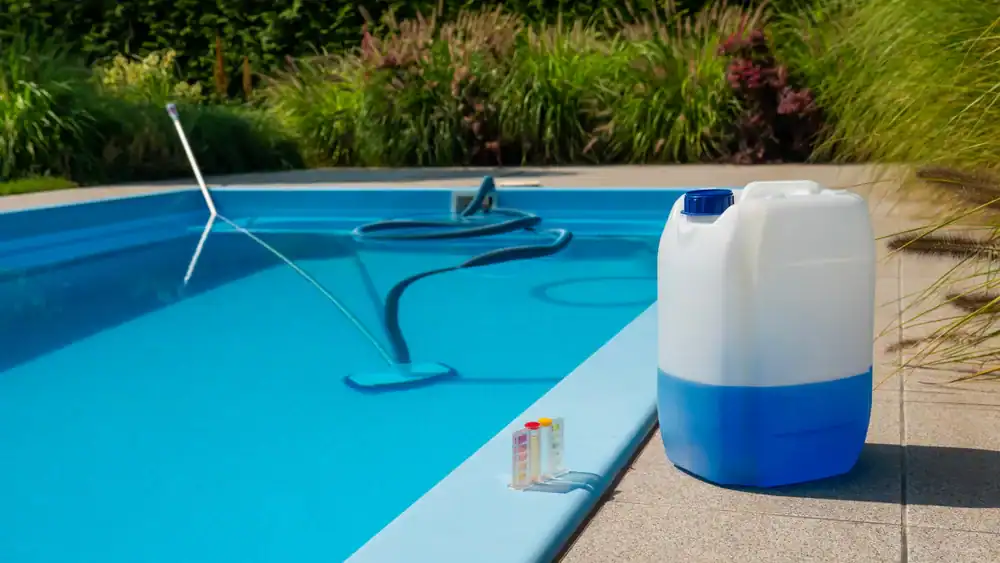
Most pool problems in the Chatterton area don’t start with a dirty pool they start with chemistry that’s quietly drifting in the wrong direction. By the time the water turns cloudy or green, the imbalance has usually been building for days. A professional water test catches that drift early, before it costs you a weekend and a bag of shock.
Here in eastern Coffee County, the conditions are genuinely demanding. Every spring, the wiregrass and pine landscape dumps pollen into your pool in waves and that organic load burns through free chlorine fast. Then summer rolls in with temperatures pushing past 90°F and afternoon thunderstorms that dilute your chemicals and swing your pH within hours. Your pool doesn’t get a break, and neither does your chemistry.
What changes after a professional test is simple: you know exactly what’s happening in your water pH, chlorine levels, calcium hardness, total alkalinity, cyanuric acid, and more and you have a clear, specific plan to fix it. No guessing, no over-treating, no driving a water sample down GA Hwy 32 to a store that’s going to upsell you products you may not need. Just an accurate read and a real answer.
We’re based out of Douglas, GA about 12 miles west of Chatterton on GA Hwy 32. This isn’t a regional franchise dispatching someone from three counties over. The people who show up to your Chatterton property know Coffee County, know the local water supply, and have been building and servicing pools in this part of South Georgia for over 30 years.
That experience matters when it comes to water testing because chemistry doesn’t exist in a vacuum. The water coming out of your tap in Coffee County has its own characteristics mineral content, baseline pH, hardness levels that affect your pool from the moment it’s filled. A technician who understands local source water calibrates your chemistry to where it actually starts, not where a textbook says it should.
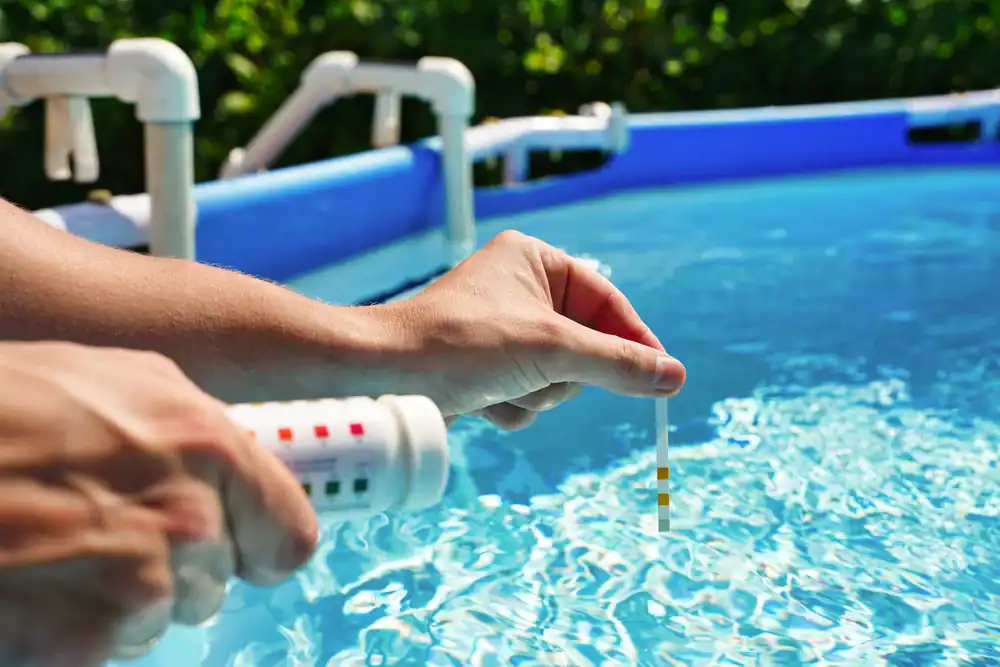
We’re licensed, insured, and we use digital water analysis equipment not color-matching strips. When you get a reading from us, it’s accurate. And when we tell you what your pool needs, it’s based on what we actually found in your water, not a generic recommendation off a shelf.
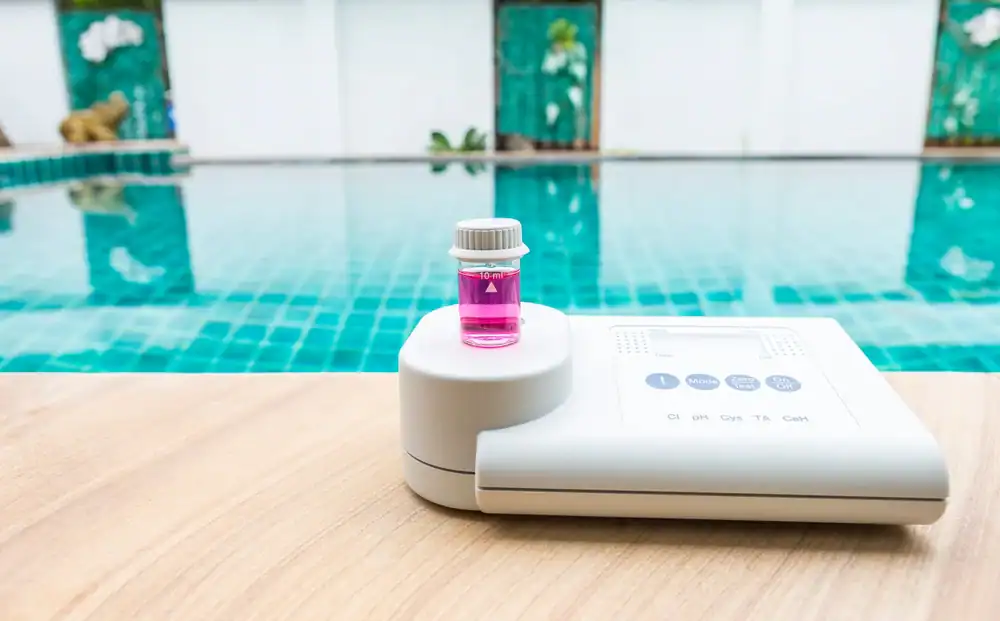
It starts with a visit to your property. No dropping off samples, no waiting in line at a store. We come to your Chatterton-area pool, collect a water sample directly from the source, and run it through digital analysis equipment that measures every parameter that matters free chlorine, total chlorine, pH, total alkalinity, calcium hardness, cyanuric acid, salt levels, total dissolved solids, and metals.
Each of those numbers tells a specific story. pH determines whether your chlorine is actually working when it climbs above 7.8, chlorine loses roughly half its effectiveness, which is why pools in South Georgia’s summer heat can look like they need more chemicals when what they actually need is a pH correction first. Calcium hardness tells us whether your water is slowly eating your pool’s surface or depositing scale on it. Cyanuric acid tells us whether your chlorine is being protected from UV or burning off in two hours flat under the Coffee County sun.
Once we have the full picture, we walk you through what we found and what needs to happen. You’ll know exactly which levels are off, by how much, and what the correction looks like not a vague recommendation, but a specific plan. Timing matters here too: after a heavy rain or during peak pollen season, chemistry can shift quickly, so we’ll also talk through how often testing makes sense for your pool’s specific situation.
Ready to get started?
Every professional water test we perform covers the full picture not just the basics. We test free and total chlorine, pH, total alkalinity, calcium hardness, cyanuric acid, salt concentration, total dissolved solids, and metals. That last one matters more than most people realize: metals like copper and iron show up in pool water from source water, corroding equipment, and chemical reactions and they’re completely invisible until they stain your pool surface or turn your water an odd color.
For pools in the Chatterton and eastern Coffee County area, calcium hardness testing is especially relevant. Water that’s too low in calcium is corrosive it pulls minerals from your pool’s plaster or gunite surface to compensate, causing pitting and etching that gets expensive to repair. Water that’s too high deposits white scale that stains surfaces and clogs filters over time. Neither problem shows up in your water’s appearance until real damage has already been done. Digital testing catches both before they become a repair bill.
Cyanuric acid the stabilizer that protects chlorine from UV breakdown is another area where professional testing pays for itself quickly. In South Georgia’s intense summer sun, unprotected chlorine can be gone in under two hours. But if CYA builds up too high (common in pools using stabilized chlorine tablets), chlorine becomes ineffective even at normal levels. It’s one of the most common hidden causes of a pool that tests “fine” but stays green and it’s something test strips measure poorly. We measure it precisely, every time.
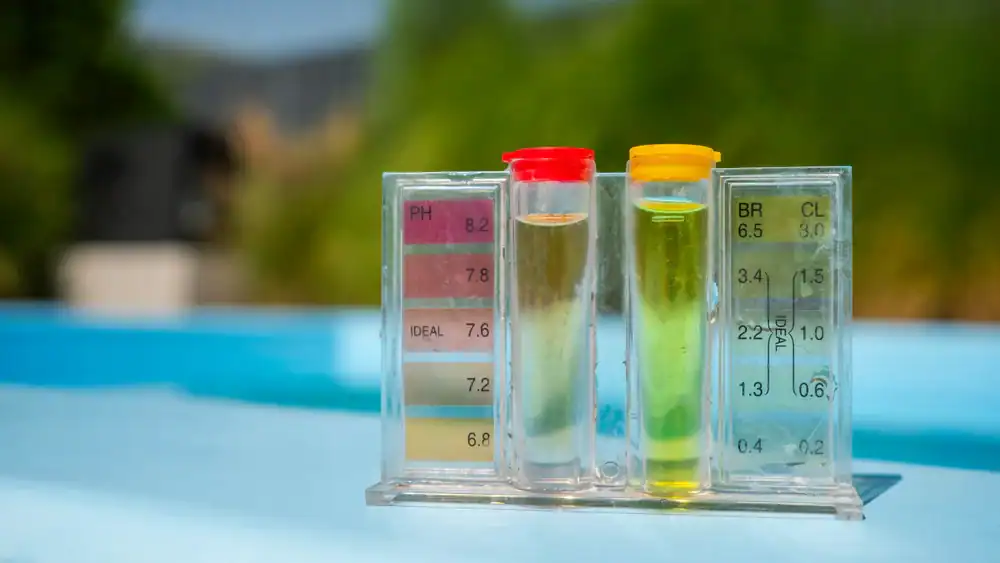
For most pool owners in Chatterton and eastern Coffee County, professional water testing makes sense at least two to three times per season but the honest answer depends on your specific situation. If you’re running your pool through South Georgia’s full summer, the combination of extreme heat, intense UV, and frequent afternoon thunderstorms means your chemistry can shift significantly within 24 to 48 hours. A heavy rain event can dilute your chemicals, lower your pH, and introduce enough organic material to spike chlorine demand all at once.
At minimum, we recommend professional testing at the start of pool season, again at peak summer, and once more heading into fall when you’re thinking about how to carry the pool through the cooler months. Coffee County winters are mild enough that many pool owners here keep their pools running year-round, which means chemistry management doesn’t stop in October. If you’ve had a major storm, a visible algae issue, or you’ve added a significant amount of water to the pool, that’s also a good trigger for a professional test rather than waiting for a scheduled visit.
This is one of the most common frustrations we hear from pool owners in Chatterton and Coffee County, and the answer almost always comes down to one of two things: pH is too high, or cyanuric acid has built up too much. When your pH climbs above 7.8, chlorine loses a significant portion of its sanitizing power so you can pour chlorine into the pool all day and barely make a dent in algae growth. The water isn’t short on chlorine; it’s short on effective chlorine.
The cyanuric acid issue is subtler but just as common. Many pool owners in South Georgia use stabilized chlorine tablets, which contain CYA built in. Over time, CYA accumulates in the water and once it gets too high, it locks chlorine into an ineffective state even when your test strip says chlorine levels look normal. This is called chlorine lock, and it’s essentially invisible without precise testing. Digital water analysis measures your CYA level accurately, which is something test strips do a poor job of. Once we know exactly where your pH and CYA stand, fixing a recurring green pool is usually straightforward.
Free pool store tests are designed around one outcome: selling you products. That’s not a criticism it’s just how the model works. The test is the entry point to a product recommendation, and the recommendation is usually broad enough to cover a range of possible issues rather than your specific ones. If you’ve ever walked out of a pool store with a bag of this and a bottle of that and still had the same problem two weeks later, you’ve experienced this firsthand.
What we do is different in a few meaningful ways. First, we come to your property there’s no pool store in Chatterton, and driving a sample down GA Hwy 32 to Douglas and back takes time you may not have. Second, we use digital water analysis equipment that gives precise numerical readings across all nine parameters, not a color-matching strip read under fluorescent lights. Third, our recommendation at the end of the test isn’t tied to what’s on a shelf it’s tied to what we actually found in your water. The goal is to solve the problem, not sell the product.
In South Georgia, yes and more than most people expect. The afternoon and evening thunderstorms that roll through Coffee County throughout summer aren’t light rain events. They’re heavy, fast, and they introduce a significant volume of water into your pool in a short period of time. That dilutes your chemicals across the board, lowers your pH (rainwater is naturally acidic), and carries organic debris pollen, dust, runoff that increases chlorine demand almost immediately.
A pool that was balanced before a major storm can be noticeably off within hours afterward. If you’re seeing cloudiness, a slight color change, or your pool just doesn’t look right after a heavy rain, that’s your signal to test rather than guess. Adding chemicals based on how the water looks rather than what a test actually shows is how you end up over-treating one parameter while another stays out of range. A post-storm professional test takes the guesswork out completely and tells you exactly what the rain changed and what needs to be corrected.
It affects it from the very first fill. The municipal water supply in the Douglas area which most Coffee County pool owners use has documented mineral and chemical characteristics that set the baseline for your pool’s chemistry before you add a single product. Calcium hardness, total dissolved solids, and pH all start at whatever level your source water brings in, and those starting points determine how your pool’s chemistry behaves over time.
If your source water comes in with low calcium hardness, for example, your pool water will trend corrosive meaning it will slowly pull calcium from your plaster or gunite surface to find equilibrium. That causes pitting and surface damage that’s expensive to repair and completely preventable with the right chemistry management from the start. A professional test that accounts for local source water characteristics rather than just comparing your readings to a generic national standard gives you a much more accurate picture of what your pool actually needs. This is one of the areas where local knowledge genuinely matters.
The honest answer is that it depends on how much time and money you’ve already spent on the DIY approach. If your pool chemistry has been consistent and trouble-free, test strips and basic home kits can maintain that. But if you’ve been dealing with recurring algae, cloudy water, or chemistry that won’t stay balanced especially through a Coffee County summer the cost of continued guessing almost always exceeds the cost of a professional test.
Here’s the practical math: a single algae remediation treatment, a damaged pump from corrosive water, or a resurfacing job caused by long-term calcium imbalance all cost significantly more than a professional water test. For pool owners in Chatterton who don’t have a pool store nearby and are relying on test strips read in direct sunlight and South Georgia heat, the accuracy gap between DIY and digital professional testing is real. Strips degrade in heat and UV before you even use them which means the reading you’re making chemical decisions on may already be wrong. One accurate test that identifies the actual root cause of a recurring problem can save you months of wasted chemical spending.
Other Services we provide in Chatterton