
Hear from Our Customers
Most pool owners in Pearson aren’t dealing with a chemical problem they’re dealing with a water source problem they don’t know about yet. Atkinson County took over the city’s water and sewer system in 2025 after years of burst pipes, boil-water notices, and discoloration issues. That same water fills your pool. When the source is unstable, your pool chemistry is already compromised before you add a single chemical.
If your pool is on well water, the picture isn’t simpler. South Georgia wells are known for elevated iron and manganese, acidic pH, and hardness that swings by season. Iron turns your water orange-brown. Acidic water eats plaster from the inside out. And none of that shows up on a test strip until the damage is already done.
What professional water testing actually gives you is a clear, complete picture every parameter, real numbers, plain language. You know exactly where your pH stands, whether your calcium hardness is protecting your pool’s finish or attacking it, whether your chlorine is actually working or just sitting in the water doing nothing. That clarity is what keeps a pool looking right, running right, and lasting longer which matters a lot more when your pool represents a meaningful share of your home’s value in a market like Pearson.
We’re based in Douglas, about 18 miles up U.S. 221 from Pearson close enough to know this area, close enough to actually show up when you need us. This isn’t a franchise operation or a call center dispatching technicians from a training manual. The people behind Deep Waters Pools have been building and servicing pools across South Georgia for more than 30 years, in the same heat, the same pollen, the same clay-and-pine landscape that defines Atkinson County and Pearson.
That construction background matters more than most people realize. When you’ve spent decades pouring gunite pools and finishing them with pebble and quartz surfaces, you understand how water chemistry and pool materials interact at a level that a chemical-only service provider simply can’t match. We don’t just test your water we understand what your specific pool surface needs, what your local water source is likely doing to it, and what it takes to actually fix the problem rather than just sell you something.
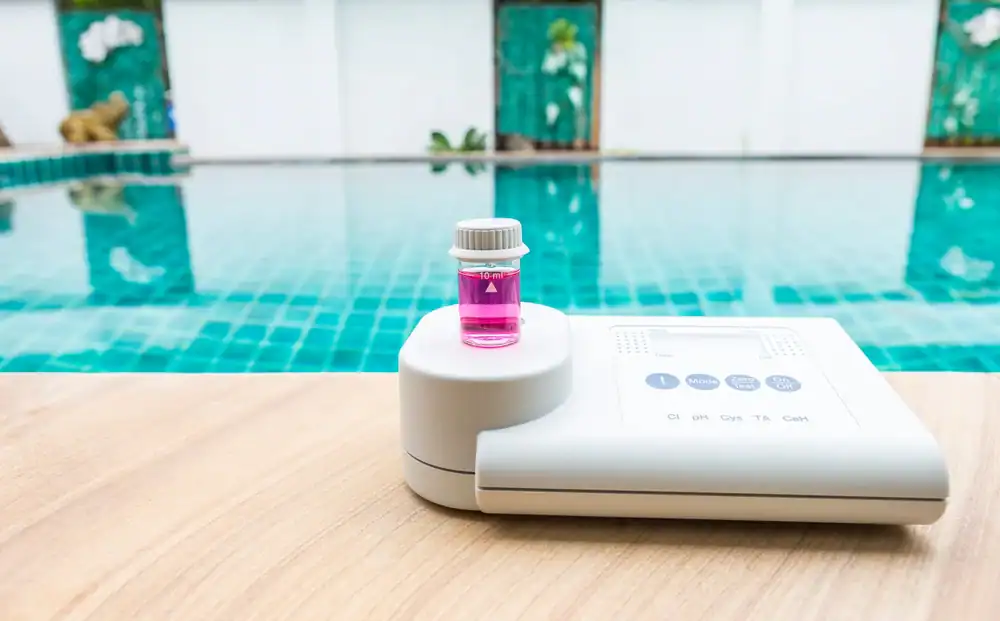
The process starts with a digital water analysis not a color-matching test strip, not a quick dip and a vague recommendation. Advanced digital testing measures your free chlorine, total chlorine, pH, total alkalinity, calcium hardness, cyanuric acid, and total dissolved solids with the kind of precision that actually tells you something useful. In Pearson specifically, the test also screens for metals like iron, copper, and manganese because whether you’re on city water or a private well in rural Atkinson County, those minerals are a real and common issue.
Once the numbers are in, you get a plain-language breakdown of every parameter what it means, what it should be, and what needs to happen to get it there. No jargon, no bag of mystery chemicals handed to you at the door. If your pH is low and your plaster is at risk, you’ll know that. If your cyanuric acid is too high and your chlorine has stopped working, you’ll know that too. The correction plan is specific, not generic.
Timing matters here more than in most places. South Georgia’s summer thunderstorm season which runs hard through Atkinson County from May into September can shift your pool’s chemistry significantly within 24 to 48 hours of a heavy rain. The pine forest and agricultural landscape surrounding most Pearson properties adds organic load that spikes chlorine demand and destabilizes pH faster than a suburban pool would see. We build that seasonal reality into every service, not just a fixed schedule.
Ready to get started?
Every water test we perform covers the full chemistry picture free chlorine, total chlorine, combined chlorine (chloramines), pH, total alkalinity, calcium hardness, cyanuric acid, total dissolved solids, and a metals screen for iron, copper, and manganese. That last piece is especially relevant in Pearson, where both the municipal water system and rural well water in Atkinson County are known to carry elevated metals. Staining on your pool walls or equipment isn’t always a maintenance failure sometimes it’s a source water problem, and you can’t fix it without knowing it’s there.
Calcium hardness testing gets specific attention because it directly affects your pool’s surface. Gunite and plaster pools the durable, long-lasting type most commonly built across South Georgia need calcium hardness maintained between 200 and 400 ppm. Too low, and the water becomes corrosive, pulling calcium directly out of your pool’s finish. Too high, and you get white mineral scaling on every surface it touches. Either condition causes real, expensive damage over time. The test catches both.
After the analysis, you receive a complete correction plan with specific product recommendations and dosing not a general suggestion to “add some shock and see what happens.” If follow-up testing is needed to confirm the chemistry has stabilized, that’s built into the process. Our goal isn’t a one-time fix. It’s a pool that stays balanced through Pearson’s long, hot swim season and beyond.
Yes, and it’s worth taking seriously. Atkinson County officially took over Pearson’s water and sewer system in 2025 after years of infrastructure failures burst pipes, boil-water notices, and water discoloration that prompted the county to switch from gas to liquid chlorine. When you fill or top off your pool with city water during a period of infrastructure instability, you may be starting with water that has elevated metals, inconsistent pH, or other anomalies that basic test strips won’t catch.
Iron and manganese are the most common culprits. Iron causes orange-brown staining on pool surfaces and equipment. Manganese causes dark, almost black staining. Both are difficult and expensive to remove once they’ve set into a plaster or pebble finish. A professional water test that includes a metals screen tells you what’s actually in your fill water before it becomes a visible problem and gives you a specific treatment plan to address it rather than just masking the symptoms.
For most pool owners in Atkinson County, professional testing at least once at the start of the season and once mid-summer is a reasonable baseline but the honest answer is that South Georgia’s conditions push that number higher than most people expect. Pearson’s summer thunderstorm season runs from roughly May through September, and a single heavy rain event can dilute your chemicals enough to create algae-friendly conditions within 48 hours. If you’re seeing a lot of storm activity, a follow-up test after a significant rain isn’t overkill it’s practical.
The pine forest and agricultural landscape surrounding most properties in this area also contributes a higher-than-average organic load. Pollen, debris, and runoff from surrounding fields push chlorine demand up and make pH harder to stabilize. If you’re on well water, seasonal changes in your water table can shift your water’s hardness and metal content enough to affect pool chemistry. More frequent testing during peak season isn’t a sales pitch it’s just what the local environment requires.
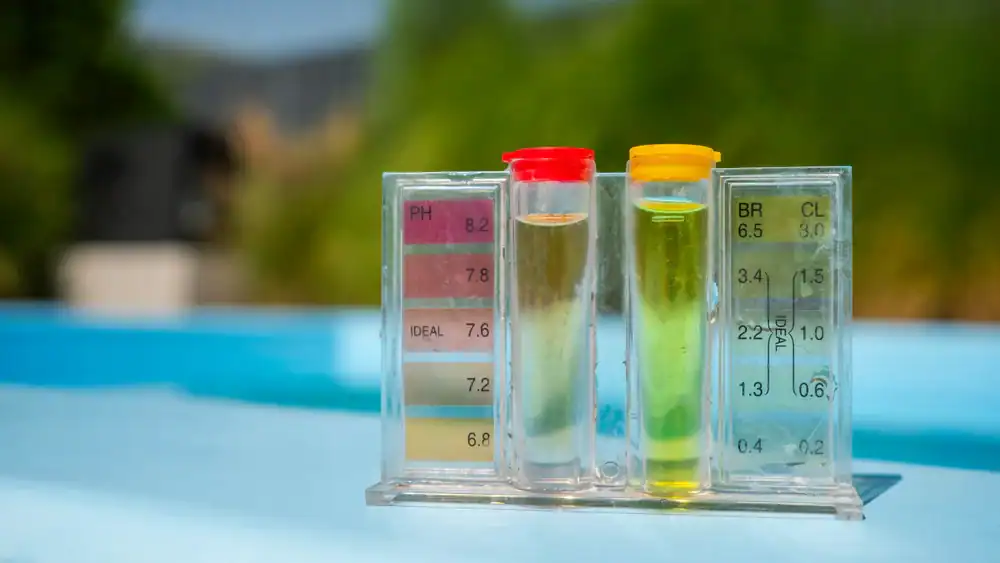
Test strips measure a narrow range of parameters and do it with limited precision. They can tell you something is roughly in range, but they can’t tell you whether your chlorine is actually free and active or whether it’s been consumed by combined chloramines and is no longer doing anything useful. They also can’t detect metals, measure total dissolved solids, or give you an accurate cyanuric acid reading all of which can cause cloudy or discolored water even when the strip looks acceptable.
In Pearson specifically, cloudy water is often a metals issue tied to source water either from the municipal system during periods of infrastructure instability or from iron-rich well water on rural Atkinson County properties. It can also be a TDS problem, where dissolved solids have built up over time to the point where the water simply can’t hold clarity regardless of what chemicals you add. Digital water analysis catches all of these. A strip won’t.
Calcium hardness is one of the most important and most overlooked parameters in pool chemistry especially for gunite and plaster pools, which are the most common construction type across South Georgia. When calcium hardness drops too low, the water becomes chemically aggressive. It starts pulling calcium out of whatever it can find which is your pool’s plaster or pebble finish. That process is called etching, and it creates a rough, pitted surface that’s not just ugly but also harder to keep clean and more susceptible to algae growth.
When calcium hardness runs too high, the opposite happens. Dissolved calcium starts dropping out of the water and depositing on every surface it contacts your pool walls, your tile line, your filter, your heater. That white scaling is hard to remove and can clog equipment over time. South Georgia’s hot summers accelerate both problems because heat affects how water holds minerals in solution. Keeping calcium hardness in the right range between 200 and 400 ppm is one of the most effective things you can do to protect your pool’s surface and extend the life of your equipment.
Heavy rain does several things to your pool chemistry at once, and none of them are helpful. It dilutes your chlorine, drops your pH, lowers your alkalinity, and introduces organic contaminants pollen, debris, agricultural runoff all at the same time. When chlorine levels fall and pH shifts into a range where chlorine becomes less effective, algae can establish itself quickly. In a warm, sunny environment like Atkinson County in the summer, that process can happen within 24 to 48 hours of a significant storm.
The pine forest landscape surrounding most Pearson-area properties makes this worse than it would be in a more suburban setting. Pine pollen is abundant from early spring through summer, and as it decomposes in pool water it releases organic acids that further destabilize pH and consume chlorine. If your cyanuric acid levels aren’t properly maintained, your chlorine is also burning off rapidly under direct South Georgia sun so by the time rain hits, your chemical reserves are already lower than they should be. A professional test after a major storm gives you real numbers so you can correct specifically, not just shock the pool and hope for the best.
Yes. Douglas is about 18 miles from Pearson via U.S. 221 the same route Atkinson County residents already travel regularly for medical care at Coffee Regional Medical Center, shopping, and other services. That proximity makes us a genuinely local option for Pearson pool owners, not a distant metro company with no real connection to this area.
It also matters that there is currently no pool water testing specialist operating in Atkinson County. If you’ve been looking for local help and coming up empty, that’s not a coincidence the service simply hasn’t existed here. We fill that gap with 30-plus years of South Georgia pool experience, digital testing equipment, and a team that understands the specific water quality challenges this area presents. Whether your pool is dealing with municipal water instability, well water iron issues, or the chemistry chaos that follows a South Georgia thunderstorm season, the expertise is real and the drive down U.S. 221 is one we’re willing to make.